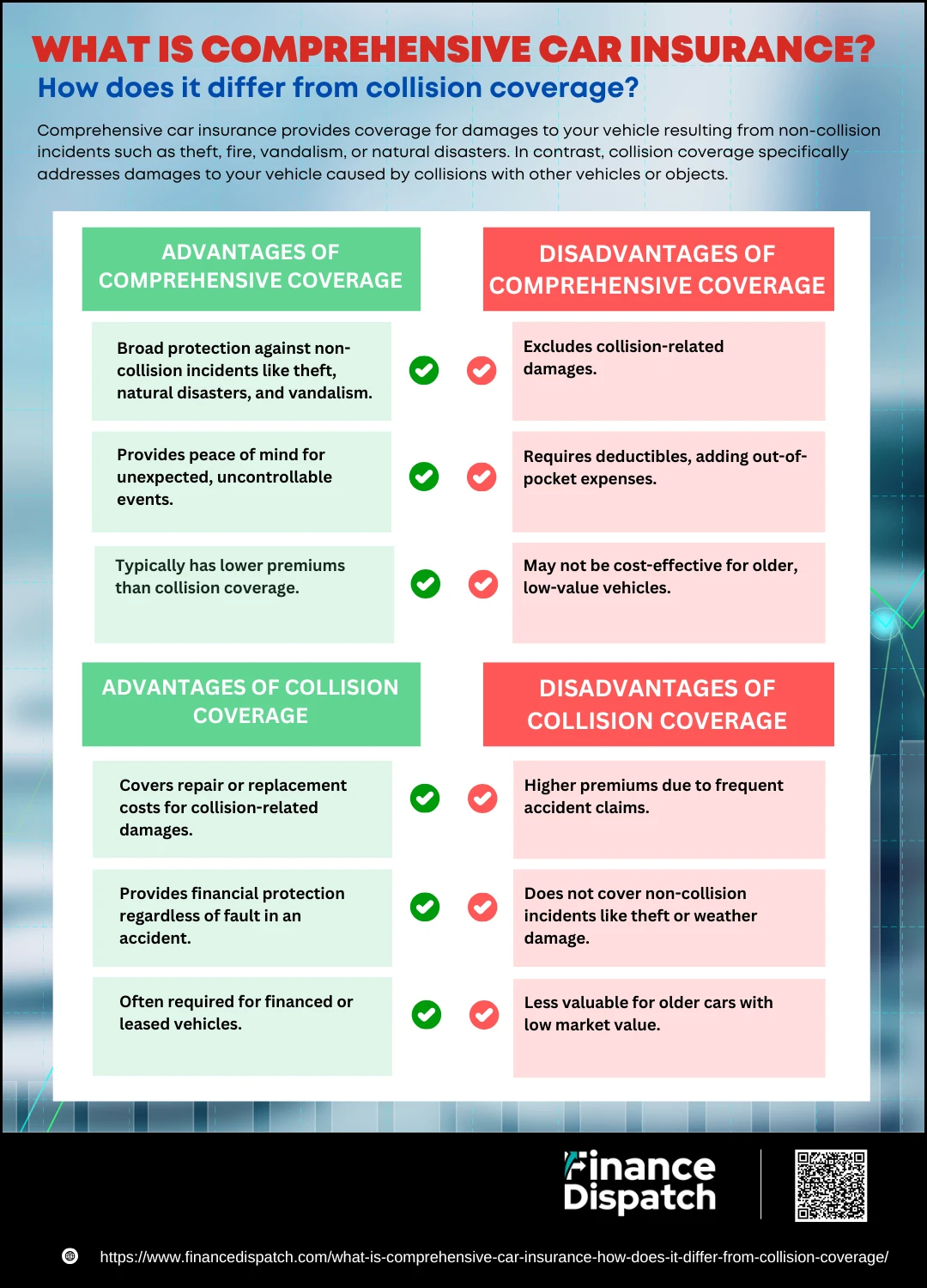
Collision and comprehensive auto insurance are optional physical damage coverages that protect your own vehicle against accidents, weather events, theft, and vandalism, functioning independently of liability insurance which only pays for damage you cause to others. While liability insurance is mandated by most states, lenders and lessors typically require you to carry both collision and comprehensive policies until your vehicle is entirely paid off. Navigating these two distinct coverage types requires understanding what specific perils each policy addresses, how deductibles influence your premium costs, and how claims are processed after an incident occurs.
The Foundation of Auto Insurance: Liability vs. Physical Damage
To understand collision and comprehensive coverage, you must first separate them from liability insurance. Automobile insurance is structurally divided into two primary categories: protection for third parties and protection for your own property.
Liability coverage—which includes bodily injury liability and property damage liability—pays for injuries and property damage you cause to other people when you are at fault in a car accident. It does not spend a single dollar repairing your own car. If you back into a telephone pole or cause a multi-vehicle highway collision, your liability coverage handles the other parties' expenses.
Physical damage coverage, by contrast, fills this gap for your own vehicle. It is split explicitly into two components:
- Collision insurance: Covers damage to your car resulting from a collision with another vehicle or an object, such as a tree, guardrail, or building.
- Comprehensive insurance: Covers damage to your car from incidents other than collisions, traditionally referred to in the industry as "other than collision" events. This includes theft, fire, hitting an animal, hail, floods, and windshield cracks.
Purchasing both collision and comprehensive coverage provides a financial safety net often marketed as "full coverage." However, full coverage is a colloquial term rather than a formal insurance product, as it rarely includes specialized riders like gap insurance or roadside assistance unless explicitly added.
What Is Collision Insurance?
Collision insurance pays to repair or replace your vehicle if it is damaged in a crash with another vehicle or an object, regardless of who is at fault.
Core Scenarios Covered by Collision Insurance
- Multi-Vehicle Accidents: A rear-end collision, a T-bone crash at an intersection, or a sideswipe on the highway.
- Single-Vehicle Accidents: Striking a guardrail, a telephone pole, a fence, or a parked car.
- Rollovers: If your vehicle flips over on the road or off-road, collision insurance covers the extensive structural damage.
- Pothole Damage: Severe damage sustained from hitting a deep pothole that bends your axle, damages your suspension, or cracks your oil pan.
What Collision Insurance Does Not Cover
Collision insurance is strictly limited to vehicular impacts and physical rollovers. It will not cover mechanical breakdowns, engine failures, wear and tear, or damage caused by environmental perils like hail or a falling tree branch. Furthermore, it does not cover damage inflicted on other drivers' vehicles; that is the function of your property damage liability coverage.
What Is Comprehensive Insurance?
Comprehensive insurance covers physical damage to your car caused by events outside of your control—essentially, incidents that happen when your car is parked, moving and striking an animal, or subjected to acts of nature.
Core Scenarios Covered by Comprehensive Insurance
- Theft and Vandalism: If your car is stolen and never recovered, comprehensive insurance pays the actual cash value of the vehicle. If thieves slash your tires or smash your windows, it covers the repairs.
- Animal Strikes: Hitting a deer, elk, or other animal is universally classified under comprehensive insurance rather than collision, recognizing that evasive maneuvers can be unpredictable.
- Weather and Acts of Nature: Hailstorms that dent body panels, floods that submerge the engine, hurricanes, tornadoes, and earthquakes.
- Falling Objects: A tree limb falling on your roof during a windstorm, or stray construction debris flying off an overpass and landing on your windshield.
- Glass Damage: Windshield cracks and chips from flying road debris kicked up by passing semi-trucks.
What Comprehensive Insurance Does Not Cover
Comprehensive insurance does not cover accidents involving other cars, stationary objects like guardrails, or vehicle rollovers. Those incidents fall strictly under collision coverage. It also excludes routine maintenance, tire wear, and internal mechanical or electrical failures.
Collision vs. Comprehensive Insurance Comparison
To clearly distinguish how these two coverages operate, review the comparison table below:
| Feature | Collision Insurance | Comprehensive Insurance |
|---|---|---|
| Primary Purpose | Covers damage from vehicle-to-vehicle or vehicle-to-object crashes. | Covers non-collision, unpreventable, and environmental perils. |
| Common Claim Examples | Rear-end collisions, striking a guardrail, rollovers, severe pothole impacts. | Deer strikes, hail damage, theft, vandalism, windshield cracks, floods. |
| Fault Dependency | Applies whether you caused the accident or the other driver was at fault. | Not applicable to fault; covers events largely outside human control. |
| Deductible Requirement | Requires paying a chosen deductible before payouts begin. | Requires paying a chosen deductible before payouts begin. |
| Lender Requirement | Mandatory if your car is financed or leased. | Mandatory if your car is financed or leased. |
The Mechanics of Deductibles and Premiums
When you purchase collision and comprehensive policies, you must select a deductible for each. The deductible is the out-of-pocket amount you agree to pay toward vehicle repairs before your insurance company covers the remaining balance.
How Deductibles Affect Your Costs
- Higher Deductibles, Lower Premiums: Choosing a $1,000 deductible means you assume more financial risk, which lowers your monthly or semi-annual insurance premium.
- Lower Deductibles, Higher Premiums: Choosing a $250 or $500 deductible transfers more financial risk to the insurer, increasing your regular premium payments.
When filing a claim, your insurer subtracts your deductible from the total repair cost. For example, if a hailstorm causes $3,500 worth of damage to your car and your comprehensive deductible is $500, the insurance company sends you a check for $3,000.
Separate Deductibles for Each Coverage
It is important to note that collision and comprehensive maintain separate deductibles. You can configure them differently based on your risk tolerance and financial situation. For instance, drivers living in rural areas prone to deer strikes might opt for a low comprehensive deductible ($250) while maintaining a higher collision deductible ($1,000) to keep overall premiums manageable.
Financial Considerations: When to Drop Collision and Comprehensive
Because collision and comprehensive coverages are optional under state law (unless required by a lender), vehicle owners frequently grapple with whether to maintain them as an older car depreciates.
The 10% Rule of Thumb
A common industry guideline states that if the annual cost of your collision and comprehensive coverage exceeds 10% of the vehicle’s total market value, you should consider dropping these coverages.
For example, if an older sedan has an actual cash value of $3,000, and your annual collision and comprehensive premiums total $500, you are paying a significant percentage of the car's worth just for physical damage protection. If the car is totaled, the maximum payout from the insurer is its market value minus your deductible. If your deductible is $1,000, a total loss payout would net you only $2,000, making the ongoing insurance expense mathematically disadvantageous.
Evaluating Your Emergency Savings
Before dropping physical damage coverage, evaluate your personal financial liquidity. Ask yourself a straightforward question: If this car is totaled tomorrow, do I have the cash reserves to purchase a replacement vehicle outright? If the answer is no, keeping collision and comprehensive insurance is essential, even on a modest vehicle, to prevent sudden transportation destitution.
Common Misconceptions About Physical Damage Coverages
Policyholders frequently encounter misunderstandings regarding what physical damage insurance entails. Clarifying these myths prevents unexpected financial surprises during the claims process.
- Myth: "Full coverage means everything is paid for." As noted earlier, "full coverage" is an informal term. It does not cover mechanical breakdowns, rental car costs (unless rental reimbursement is added), or the difference between your loan balance and your car's market value (which requires gap insurance).
- Myth: "If someone hits me and flees, my liability insurance pays for my car." If you are the victim of a hit-and-run driver and do not catch their license plate or insurance information, your liability insurance provides zero assistance for your vehicle. You must rely on collision coverage (or uninsured motorist property damage, depending on state regulations) to fix your car.
- Myth: "Comprehensive insurance covers my medical bills if I hit a deer." Comprehensive insurance covers only vehicle damage. Personal injuries sustained in an animal strike or any other accident are covered under your Personal Injury Protection (PIP), Medical Payments (MedPay), or health insurance policies.
Frequently Asked Questions
Is collision insurance required by law?
No state government legally mandates collision or comprehensive insurance. State laws only require liability insurance to protect other motorists from your driving. However, if you finance, lease, or take out a loan on your vehicle, your lender or leasing company will contractually require you to carry both collision and comprehensive coverage until the debt is fully satisfied.
Does comprehensive insurance cover mechanical failure?
No. Comprehensive insurance strictly covers external, unpreventable environmental perils and sudden incidents like theft, fire, animal strikes, and storms. Normal mechanical wear and tear, transmission failures, engine blowouts, and electrical malfunctions are excluded and must be handled out-of-pocket or through an extended warranty.
Why is hitting an animal covered under comprehensive instead of collision?
Insurers classify animal strikes—such as hitting a deer, bird, or livestock—under comprehensive insurance because these events are generally considered acts of nature and unpredictable. Insurance ratemakers recognize that drivers often swerve to avoid animals, leading to accidents that are distinct from standard vehicle-to-vehicle or stationary object collisions.
How is my car's payout value determined if it is totaled?
When your car is declared a total loss, the insurance company calculates its Actual Cash Value (ACV) immediately before the accident occurred. ACV factors in the vehicle's year, make, model, mileage, overall condition, and local market sales data for comparable vehicles. It does not pay what you originally paid for the car, nor does it necessarily reflect what it costs to buy a brand-new replacement model.
Should I file a claim for minor scratches or hail dents?
You should carefully compare the repair estimate against your deductible before filing a claim. If a dent repair costs $600 and your deductible is $500, the insurance company will only pay $100, while your claim history records an incident that could potentially trigger a rate increase at your next policy renewal. For minor damages close to or below your deductible, paying out-of-pocket is often the more prudent financial choice.
Next Steps and Actionable Advice
Review your current auto insurance declarations page today to verify your coverage levels and deductibles. If you own your vehicle outright and it has depreciated significantly, calculate its market value using reputable automotive valuation tools to determine whether maintaining collision and comprehensive coverage still makes financial sense. For vehicles with active loans or those you rely on daily without replacement savings, maintain these policies while actively managing your deductibles to balance monthly cash flow with adequate asset protection.