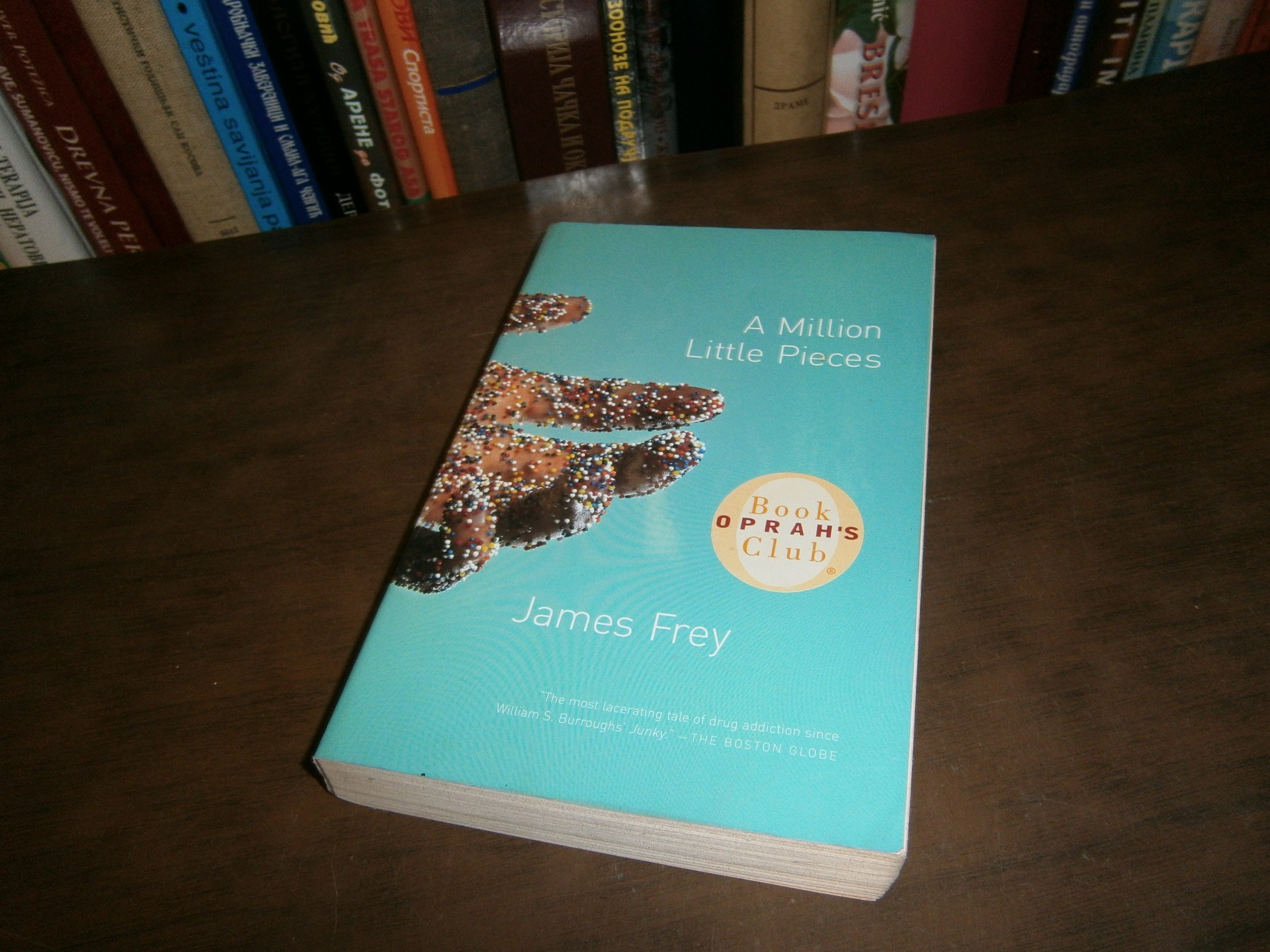
While A Million Little Pieces was originally marketed and sold as a non-fiction memoir, it is not a strictly true story. Following a 2006 investigation by The Smoking Gun, author James Frey admitted to fabricating significant portions of the book, including his criminal record, the circumstances of a root canal, and several pivotal life events.
The story of A Million Little Pieces remains one of the most significant scandals in the history of modern publishing. When it was released in 2003, the book was hailed as a raw, visceral account of drug addiction and recovery. Its popularity skyrocketed in 2005 after being selected for Oprah’s Book Club, turning James Frey into a literary sensation. However, the subsequent revelation that much of the narrative was embellished or outright invented sparked a global debate about the ethics of the "memoir" genre and the boundaries of creative nonfiction. As of 2026, the book is generally classified as a semi-fictionalized account or a "fictionalized memoir," usually accompanied by a mandatory publisher’s note clarifying its factual inaccuracies.
The Rise of James Frey and the Memoir Phenomenon
James Frey’s A Million Little Pieces arrived at a time when the "misery memoir" was becoming a dominant force in the publishing industry. The book chronicles the experiences of a 23-year-old alcoholic and drug addict who checks into a residential treatment center in Minnesota. Frey’s writing style was distinctive—sparse, aggressive, and devoid of traditional punctuation—which lent the narrative an air of immediate, unvarnished truth.
In late 2005, Oprah Winfrey selected the book for her influential book club, calling it a "visceral" and "transformative" read. This endorsement sent the book to the top of the New York Times Best Seller list, where it remained for months. Millions of readers connected with Frey’s supposed journey of overcoming addiction without the traditional "Twelve Step" programs, finding inspiration in his portrayed "iron will." At this height of its popularity, the book was accepted as an absolute historical record of Frey's life.
The Smoking Gun Investigation: "A Million Little Lies"
The downfall of the book's status as a "true story" began in January 2006. The investigative website The Smoking Gun published a report titled "A Million Little Lies: Exposing James Frey’s Fiction Addiction." The investigators spent six weeks looking into Frey’s past, specifically focusing on the criminal history he detailed in the book.
Frey had claimed in the book to have been incarcerated for three months following a violent altercation with police involving a car and a crack pipe. He also described himself as a wanted man in multiple states. The Smoking Gun unearthed police records, court documents, and interviews with law enforcement officials that painted a completely different picture. Instead of three months in jail, Frey had spent approximately five hours in a precinct station after a minor traffic incident. The "violent confrontation" was, according to official records, a much more mundane encounter.
The Impact of the Findings
The investigation did not just debunk Frey's criminal record; it questioned the foundational reality of his persona. If the legal troubles were fabricated, readers began to wonder what else in the 400-plus page memoir was a lie. This prompted a media firestorm that eventually led Frey back to the very place that secured his success: Oprah Winfrey’s stage.
Key Fabrications: Comparing the Book to Reality
To understand why A Million Little Pieces is no longer considered a true story, one must look at the specific discrepancies identified by investigators and later confirmed by Frey himself. The fabrications were not minor "slips of memory" but appear to have been calculated narrative choices intended to increase the dramatic stakes of the memoir.
| Topic of Claim | Claim in the Memoir | Verified Fact / Reality |
|---|---|---|
| Criminal Record | Frey claimed to have been in jail for 87 days for various felonies. | He spent about five hours in a police station for minor offenses. |
| The Train Accident | He claimed to be involved in a crash that killed two high school girls. | He was never involved in the accident; he lived in the same town. |
| The Root Canal | Claimed he had a multi-hour root canal with no anesthesia. | Experts and Frey later admitted this was medically improbable/fabricated. |
| Wanted Status | Claimed he was a "fugitive" wanted in three states. | There were no active warrants for his arrest in the states mentioned. |
| The Character "Lilly" | Described a tragic, intense romance ending in her suicide. | Details of the relationship and her death were heavily embellished or altered. |
The Root Canal Controversy
One of the most famous scenes in the book involves Frey undergoing a root canal without anesthesia because his recovery program forbade the use of any pain medication. Medical professionals immediately questioned this, noting that such a procedure would cause a level of pain that could lead to shock or a heart attack, and that no dentist would perform it under those conditions. Frey eventually admitted that the intensity and duration of the event were exaggerated for dramatic effect.
The Death of the High School Girls
Frey wrote extensively about the guilt he carried regarding a train accident that killed two girls he knew in high school. He implied a level of proximity and involvement that suggested he was a central figure in the tragedy. Investigation revealed that while the accident did happen in his hometown, Frey was not present, was not involved, and the police records showed no connection between him and the event.
The Oprah Confrontation and the Public Apology
On January 26, 2006, James Frey appeared on The Oprah Winfrey Show alongside his publisher, Nan Talese of Doubleday. In a televised event that is still studied in media and ethics courses today, Winfrey confronted Frey about the lies. She famously stated that she felt "betrayed" and that Frey had "lied to millions of people."
During the broadcast, Frey admitted that he had "embellished" certain parts of the story and "distilled" his experiences. He conceded that he had portrayed himself as "much worse than I was" to create a more compelling narrative of redemption. This confrontation effectively ended the debate: the book was no longer a "true story" in the eyes of the public or the industry.
Legal Repercussions and the Publisher's Note
The fallout from the Frey scandal extended beyond public embarrassment. It led to a landmark legal settlement and a permanent change in how the book is sold.
The Class Action Lawsuit
In the months following the revelation, several readers filed class-action lawsuits against Frey and his publisher, Random House (the parent company of Doubleday). The plaintiffs argued that they had purchased the book under the false pretense that it was a factual memoir. In 2007, a settlement was reached where the publisher agreed to offer refunds to any reader who had purchased the book before the controversy broke, provided they could prove they bought it believing it was true. This was a rare instance of a publisher being held financially accountable for the factual accuracy of a memoir.
The Mandatory Disclaimer
Since 2006, all editions of A Million Little Pieces have been required to include a "Note to the Reader." In this note, Frey admits to altering facts and creating composite characters. He writes:
"I made several changes to the details of my life and the lives of the people I was in treatment with... I altered my criminal record, which I have no excuse for, and I would like to apologize to the people I have disappointed."
This note serves as a legal and ethical barrier, ensuring that no new reader in 2026 can claim they were misled into believing the story is a 100% accurate historical record.
The Definition of "Truth" in Creative Nonfiction
The James Frey controversy forced the literary world to grapple with the definition of "truth." In the genre of creative nonfiction, some leeway is generally expected. Authors often reconstruct dialogue they cannot perfectly remember or change the names of minor characters to protect their privacy. These are considered acceptable narrative tools.
However, the Frey case established a "line in the sand." There is a fundamental difference between "emotional truth" (the subjective feeling of an experience) and "factual truth" (events that can be verified by public record). Frey argued that while he lied about the facts, the "essence" of his addiction and recovery was true. The public and the publishing industry largely rejected this defense, concluding that once an author fabricates criminal records and significant life events, the work moves from "memoir" into "fiction."
The Legacy of the Scandal in 2026
Twenty years after the initial scandal, the impact of A Million Little Pieces is still visible in the publishing industry. The "Frey Effect" led to several systemic changes:
- Vetting and Fact-Checking: Publishers now employ more rigorous vetting processes for memoirs, particularly those that make extraordinary claims about criminal history or medical miracles.
- The "Memoir" Label: Authors and agents are now much more cautious about using the label "memoir." Many books that contain significant embellishments are now marketed as "autobiographical fiction" or "inspired by a true story" to avoid legal liability.
- Reader Skepticism: The scandal fostered a permanent sense of skepticism among readers. The assumption that a memoir is "true" by default has been replaced by an understanding that many memoirs are highly curated and potentially semi-fictionalized.
Despite the controversy, the book remains in print. Some readers still value it as a work of fiction or a powerful metaphor for the struggle of addiction, even if they recognize that the specific events did not happen to James Frey in the way he described.
Frequently Asked Questions
Is James Frey still a writer?
Yes, James Frey continued his career as a writer after the scandal. He transitioned primarily into fiction and screenwriting. He founded Full Fathom Five, a "young adult" book packaging company responsible for the I Am Number Four series (published under the pseudonym Pittacus Lore). His later works have been marketed clearly as fiction.
Can I get a refund for the book in 2026?
No. The window for the class-action lawsuit refund closed in late 2007. The settlement was specifically for readers who purchased the book before the fabrications were revealed in 2006.
Why did James Frey lie about his jail time?
Frey admitted during his interview with Oprah that he wanted to create a "tougher" persona. He believed that by making his criminal history more severe, the story of his recovery would seem more dramatic and inspirational to readers. He essentially "mythologized" his own life to fit the tropes of the redemption narrative.
Is the movie version of A Million Little Pieces true?
The 2018 film adaptation, starring Aaron Taylor-Johnson, is based on the book. Like the book, it follows the narrative Frey wrote, including the fabricated elements. Because the film is a work of cinema, it is classified as fiction and does not carry the same "truth" requirements as the original memoir was supposed to.
Are the characters in the book real people?
Most characters in the book are either composite characters (a mixture of several real people) or are based on individuals whose details have been significantly changed. For example, "Lilly" was based on a real person, but Frey admitted to altering the timeline and nature of their relationship and her eventual death.
Practical Recommendation: How to Read the Book Today
If you are planning to read A Million Little Pieces in 2026, it is best to approach it as a work of autobiographical fiction rather than a historical memoir.
To get the most out of the experience while staying grounded in reality, follow these steps:
- Read the Author’s Note first: Most modern copies (including digital versions) include the disclaimer at the beginning. Understanding what Frey admits to changing will help you distinguish between his themes and his fabrications.
- Focus on the themes, not the facts: The book is often praised for its depiction of the feeling of withdrawal and the psychological toll of addiction. These "internal truths" are what many readers find valuable, even if the "external facts" (like the root canal or jail time) are false.
- Compare it to verified memoirs: If you are looking for an accurate historical account of addiction, consider reading memoirs that have undergone more rigorous fact-checking, such as Beautiful Boy by David Sheff or Tweak by Nic Sheff.
By treating A Million Little Pieces as a story "inspired by" real events rather than a "true story," readers can still engage with the text without being misled by its historically debunked claims.