A large deductible on auto or homeowners insurance is considered a form of self-insurance because the policyholder agrees to personally assume a specific portion of financial risk. By opting for a higher out-of-pocket cost during a claim, you retain the risk for smaller losses while utilizing the insurance company only for catastrophic protection.
Choosing a high deductible is a strategic financial decision that balances immediate premium savings against potential future costs. In the insurance landscape of 2026, where repair costs and property values have stabilized following the volatility of the early 2020s, understanding this "risk retention" model is essential for effective wealth management. When you select a $2,500 deductible instead of a $500 one, you are effectively telling the insurer that you are financially capable of covering the first $2,500 of any loss. In exchange for this "self-insured" layer, the insurance provider rewards you with significantly lower monthly or annual premiums.
Defining Self-Insurance in a Personal Finance Context
To understand why a large deductible qualifies as self-insurance, one must first define what self-insurance actually entails. In the purest sense, self-insurance is the act of setting aside a dedicated pool of money to pay for potential losses rather than purchasing an insurance policy from a third party. Large corporations often do this for health benefits or workers' compensation, calculating that it is cheaper to pay claims directly than to pay an insurer’s overhead and profit margins.
For an individual, total self-insurance is rarely practical for high-value assets like a home or a new vehicle because the maximum potential loss (the total destruction of the house or a multi-million dollar liability lawsuit) exceeds the average person's liquid net worth. However, a large deductible acts as a "partial self-insurance" mechanism. It creates a hybrid model where the individual is responsible for the "frequency" layer of risk (small, common accidents), and the insurance company is responsible for the "severity" layer (major disasters).
As of 2026, financial advisors increasingly categorize the first several thousand dollars of property risk as a personal liability. By treating the deductible as a self-insured layer, homeowners and drivers can shift their mindset from "seeking reimbursement for every scratch" to "protecting against financial ruin."
The Mechanics of Risk Retention and Transfer
Insurance is fundamentally the transfer of risk. When you buy a policy with a $0 deductible, you have transferred 100% of the financial risk to the insurer. When you choose a $5,000 deductible on a homeowners policy, you have retained $5,000 of that risk.
How Deductibles Shift Financial Liability
The deductible is the threshold at which the insurance company’s liability begins. In a self-insurance framework, the policyholder must have the liquidity—the cash on hand—to cover this amount at any moment. If a storm damages your roof in 2026 and the repairs cost $8,000, a $5,000 deductible means you are "the insurance company" for the first $5,000, and the actual carrier covers the remaining $3,000.
This shift is beneficial to the insurance company because it eliminates "nuisance claims." Small claims are expensive for insurers to process; the administrative cost of adjusting a $1,000 claim can sometimes approach the cost of the repair itself. By encouraging policyholders to self-insure through high deductibles, companies can keep their operational costs lower, which is then reflected in the premium.
The Relationship Between Deductibles and Premiums
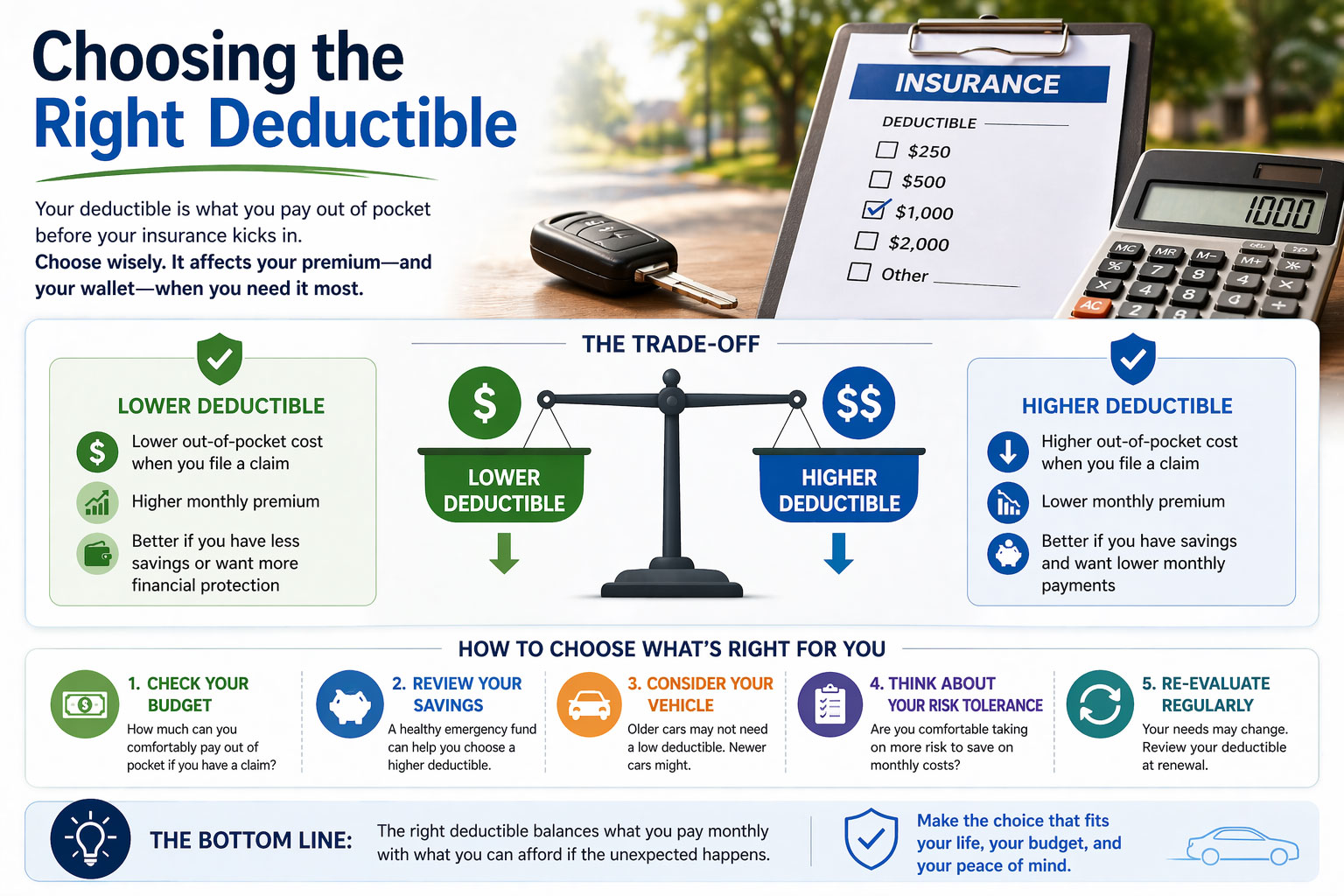
There is an inverse relationship between the size of the deductible and the cost of the premium. As the deductible increases, the premium decreases. This happens for two reasons:
- Lower Payouts: The insurer pays less on every claim.
- Moral Hazard Reduction: When a policyholder has "skin in the game" via a large deductible, they are statistically more likely to take better care of their property to avoid the high out-of-pocket cost of a claim.
Why Homeowners and Drivers Choose High-Deductible Self-Insurance
In the current 2026 economic environment, maximizing cash flow is a priority for many households. Opting for a large deductible is one of the most effective ways to reduce recurring monthly expenses without sacrificing essential coverage.
Premium Savings and the Break-Even Point
The primary motivation for self-insuring a portion of the risk is the immediate reduction in the premium. However, a savvy consumer must calculate the "break-even point" to ensure the self-insurance strategy is mathematically sound.
For example, if increasing an auto insurance deductible from $500 to $2,000 saves you $300 per year in premiums, it will take five years of claim-free driving to "break even" ($1,500 total savings to cover the $1,500 increase in risk). If you go ten years without a claim, you have "earned" $3,000 in savings, which more than covers the deductible if an accident finally occurs. According to data from the National Association of Insurance Commissioners (NAIC), consumers who maintain high deductibles over a 20-year period almost always spend less in total (premiums + deductibles) than those with low deductibles.
Claims History and Long-term Rate Stability
Another advantage of self-insuring small losses is the preservation of a clean claims history. In 2026, insurance algorithms are more sensitive than ever to claim frequency. Filing two or three small claims for $1,000 each can lead to a non-renewal notice or a massive "surcharge" on future premiums. By having a large deductible, you are forced to self-insure these small incidents, which keeps them off your official CLUE (Comprehensive Loss Underwriting Exchange) report, maintaining your status as a "preferred" risk.
Evaluating the Risks: Is This Strategy Right for You?
While the math often favors high deductibles, this form of self-insurance is not without peril. The fundamental requirement for any self-insurance scheme is solvency.
If you choose a $5,000 deductible but do not have $5,000 in a liquid savings account, you aren't "self-insuring"—you are "under-insuring." In the event of a loss, you might be unable to complete necessary repairs, which could lead to further damage (like mold in a leaky roof) or the repossession of a vehicle you cannot afford to fix.
Suitability Factors for 2026
- Emergency Fund Status: You should have the full deductible amount set aside in a high-yield savings account or a money market fund.
- Asset Age and Value: For an older car where the total value is only slightly higher than the deductible, you are effectively self-insuring the entire vehicle.
- Lender Requirements: If you have a mortgage or an auto loan, your lender may have a "maximum allowable deductible" (often $1,000 or $2,500). You must ensure your self-insurance strategy complies with your loan covenants.
Comparison of Deductible Levels and Risk Profiles
The following table illustrates how deductible choices function as different levels of self-insurance for a standard homeowners policy in 2026.
| Deductible Amount | Level of Self-Insurance | Annual Premium Impact (Est.) | Financial Strategy |
|---|---|---|---|
| $500 | Minimal | Highest Cost | Transferring almost all risk; best for those with low liquidity. |
| $1,000 | Standard | Moderate Cost | The "default" balance for most middle-class households. |
| $2,500 | Moderate | 15-20% Savings | Requires a dedicated emergency fund; avoids small claim filing. |
| $5,000 | High | 25-35% Savings | Significant self-insurance; intended for high-net-worth or high-cash-flow individuals. |
| $10,000+ | Sophisticated | 40%+ Savings | Pure catastrophe coverage; policyholder acts as the primary insurer for all minor/moderate losses. |
Note: Estimated savings are based on 2026 national averages and vary significantly by geography and carrier risk appetite.
Strategies for Managing a Self-Insured Position
If you decide to move toward a high-deductible model, you should treat it with the same discipline as a professional risk manager.
Building the "Deductible Fund"
The most effective way to manage a large deductible is to "pay yourself" the premium savings. If moving to a higher deductible saves you $50 a month, set up an automated transfer of that $50 into a dedicated "Insurance Deductible" account. Over time, this account will grow to cover the deductible itself, making the risk retention effectively "cost-free" from a cash-flow perspective.
Understanding Percentage Deductibles
In 2026, many homeowners policies, especially in coastal or wind-prone areas, have moved away from flat-dollar deductibles to percentage deductibles. A 2% deductible on a $500,000 home means you are self-insuring the first $10,000 of a loss. It is critical to review your policy declarations page annually to understand exactly how much self-insurance you are carrying, as inflation in home rebuilding costs can cause your "percentage-based" self-insurance burden to rise automatically.
Professional Advice Limitation
This information is provided for educational purposes regarding insurance structures and does not constitute specific legal, financial, or tax advice. Insurance regulations vary by jurisdiction. In the United States, state insurance departments (such as the California Department of Insurance or the New York Department of Financial Services) oversee these rules. Consult with a licensed insurance broker or financial planner to determine the appropriate risk retention level for your specific situation.
Common Mistakes in High-Deductible Planning
- Focusing Only on the Premium: Many consumers choose the highest possible deductible to fit a monthly budget without considering if they can actually pay the deductible during a crisis.
- Forgetting About Multi-Vehicle Losses: In a natural disaster like a hailstorm, you might have to pay deductibles on both your home and two vehicles simultaneously. A $2,500 "self-insurance" layer can quickly become a $7,500 total liability.
- Ignoring the "Gap": In auto insurance, if you have a high deductible and your car is totaled, the insurer pays the Actual Cash Value (ACV) minus your deductible. If you owe more on the loan than the ACV, your high deductible increases the "gap" you must pay out of pocket.
Frequently Asked Questions
Is a high deductible always better if I have the money?
Not necessarily. It depends on the "cost of insurance" for that specific layer. If an insurer only charges $20 a year to move from a $1,000 deductible to a $500 deductible, it would take 25 years of no claims to break even. In that case, the "risk transfer" is so cheap that self-insuring doesn't make sense. You must always look at the specific premium credit offered for the higher deductible.
Can I use a Health Savings Account (HSA) to pay my auto or home deductible?
No. HSAs are strictly for qualified medical expenses as defined by the IRS. You cannot use HSA funds to cover self-insured portions of property or casualty insurance. You should use a standard high-yield savings account for your property insurance deductible fund.
Does a large deductible affect how the insurance company handles my claim?
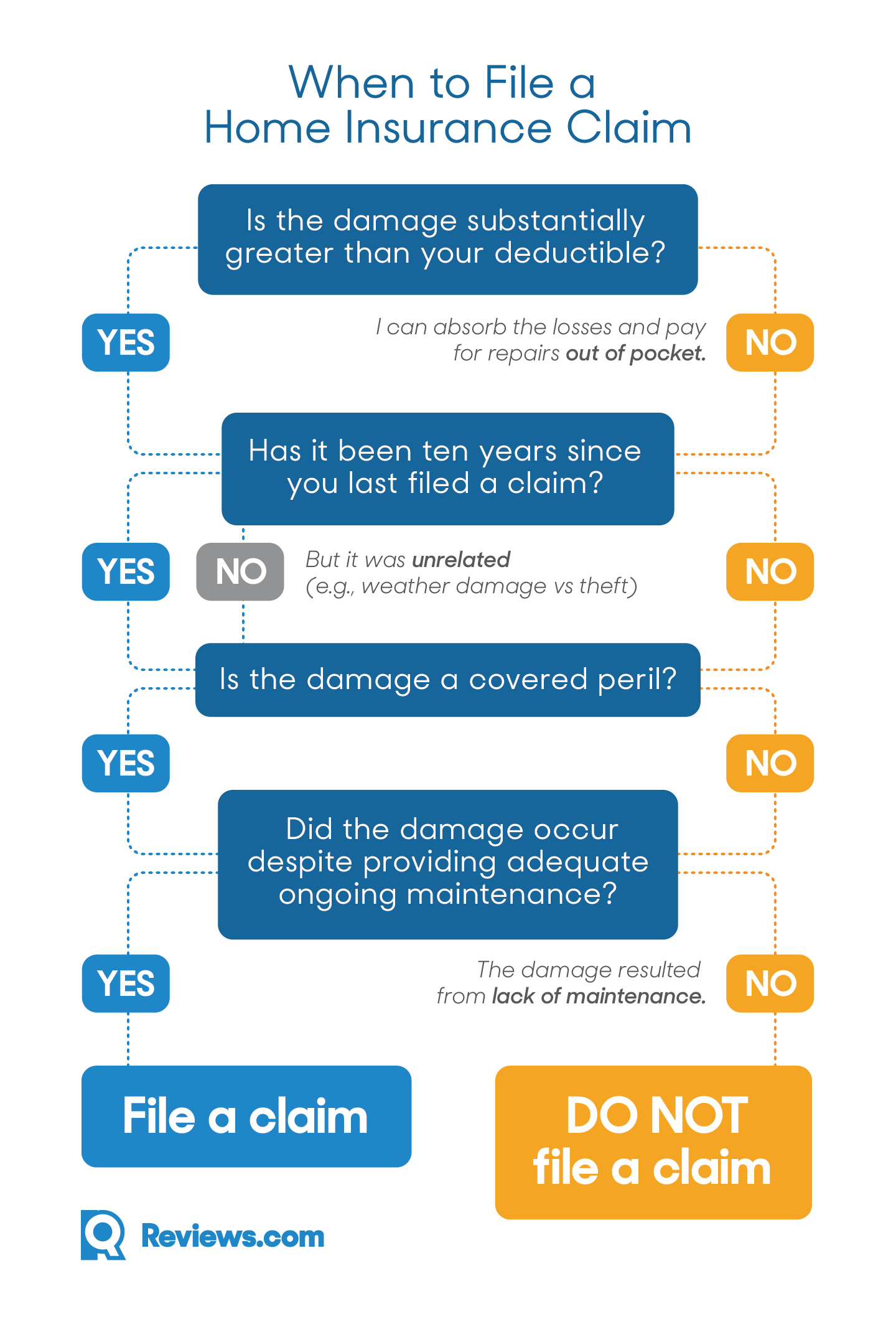
Legally, no. The insurance company has a fiduciary duty to adjust the claim fairly regardless of the deductible. However, if the total damage is only slightly above your deductible (e.g., $2,700 in damage with a $2,500 deductible), the insurer may only pay $200. This often makes the claim not worth filing due to the potential for future rate increases.
What is a "disappearing deductible" and is it still self-insurance?
A disappearing deductible is a policy feature where the insurer reduces your deductible by a certain amount (e.g., $100) for every year you don't have an accident. This is a hybrid form of self-insurance where the "risk retention" layer shrinks over time as a reward for good behavior. While it reduces your out-of-pocket risk, you usually pay a slightly higher premium for this feature.
Can my mortgage lender force me to have a low deductible?
Yes. Lenders have a financial interest in your property. If you cannot afford to repair the home because of a $10,000 deductible, their collateral is at risk. Most conventional mortgages limit the allowable deductible to a certain percentage of the dwelling coverage (often 1% to 5%) or a flat dollar amount.
Final Recommendation
For most disciplined savers in 2026, moving toward a higher deductible is a prudent financial move. The "self-insurance" model allows you to capture the "profit" that the insurance company would otherwise make on small claims.
Next Action: Review your current insurance declarations pages. Calculate the annual premium savings offered by your agent for moving to the next deductible tier (e.g., from $1,000 to $2,500). If the savings allow you to "break even" within four to five years, and you have the cash reserves available, instruct your agent to increase the deductible. Simultaneously, set up an automated savings transfer to ensure your "self-insurance" fund is fully capitalized.