Slavery in 19th-century Arkansas was a foundational economic and social system characterized by the forced labor of over 111,000 individuals by 1860. Concentrated largely in the fertile Delta and river valleys, enslaved people fueled the state's cotton-based economy while enduring harsh legal codes and seeking liberation through resistance and the turmoil of the American Civil War.
The Evolution of Slavery in the Arkansas Territory and Early Statehood
The institution of slavery in Arkansas did not begin with the 19th century, but it expanded exponentially during this era. While the French and Spanish had brought enslaved Africans to the region in the 1700s, the population remained small until the United States acquired the land via the Louisiana Purchase in 1803. As Arkansas moved from a frontier territory to a state in 1836, the demand for labor to clear land and cultivate cash crops led to a massive influx of enslaved people.
In 1820, the first federal census of the Arkansas Territory recorded only 1,617 enslaved persons. By the time Arkansas achieved statehood in 1836, that number had climbed toward 5,000. However, the most explosive growth occurred between 1840 and 1860. During this twenty-year period, the enslaved population grew from roughly 20,000 to over 111,000. This growth was driven by the "Cotton Kingdom" expansion, where planters from the Old South—specifically Tennessee, Mississippi, and Alabama—migrated to the Arkansas Delta, bringing their enslaved "property" with them.
The political landscape of 19th-century Arkansas was dominated by the interests of the slave-holding class. The Missouri Compromise of 1820 had designated Arkansas as a "slave territory," ensuring that the institution would be legal. When the state constitution was drafted in 1836, it explicitly protected the right to own slaves and prohibited the General Assembly from passing laws to emancipate them without the consent of the owners.
The Geography of Labor: Delta Plantations vs. Upland Farms
The experience of enslaved people in Arkansas varied significantly based on geography. The state was effectively divided into two distinct economic zones: the lowlands (the Delta and the Gulf Coastal Plain) and the uplands (the Ozark and Ouachita mountains).
The Delta and River Valleys
In the southeastern and eastern parts of the state, particularly in counties like Chicot, Phillips, and Jefferson, slavery mirrored the large-scale plantation systems of the Deep South. In these regions, the soil was exceptionally fertile, and the proximity to the Mississippi and Arkansas Rivers allowed for easy transport of cotton. By 1860, Chicot County was the only county in Arkansas where the enslaved population outnumbered the white population.
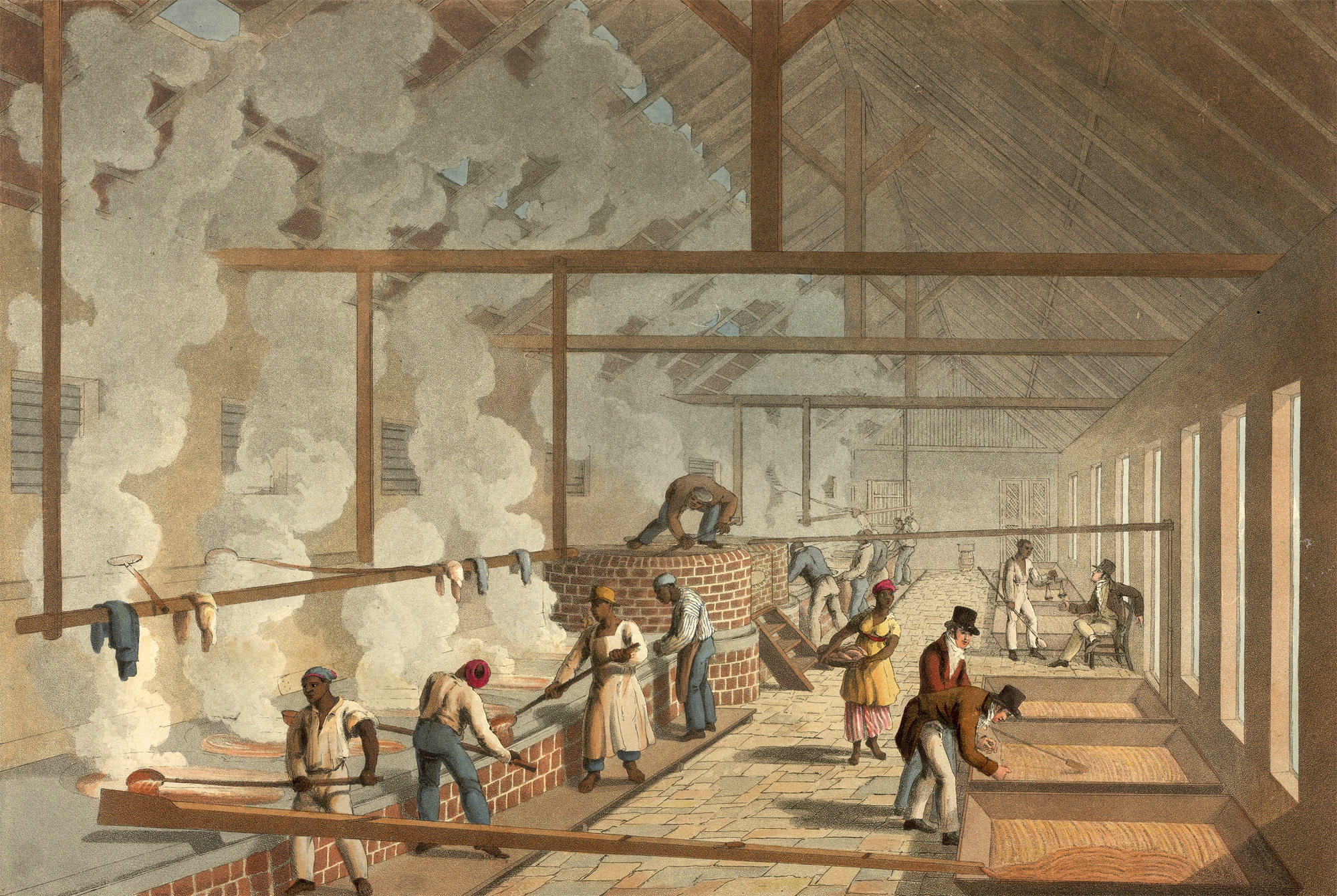
On these large plantations, enslaved people worked under the "gang system," where groups were forced to labor from sunup to sundown under the supervision of an overseer. The work was grueling, involving the clearing of cypress swamps, the tilling of heavy clay soil, and the relentless cycle of planting and picking cotton.
The Upland and Mountain Regions
In the Ozark and Ouachita mountains of northern and western Arkansas, slavery looked different but was no less restrictive. Farms were smaller, and most slaveholders owned fewer than five people. In these areas, enslaved individuals often worked alongside their owners in "mixed farming," growing corn, wheat, and raising livestock.
Because the holdings were smaller, enslaved people in the uplands often faced a different kind of psychological strain: isolation. On a large Delta plantation, an enslaved person might be part of a community of hundreds. In the mountains, they might be the only person of color for miles, making it much harder to maintain family ties or cultural traditions.
Legal Status and the Arkansas Slave Codes
The legal framework of 19th-century Arkansas was designed to strip enslaved people of their humanity and transform them into "chattel"—moveable property. The Arkansas Slave Codes were a series of laws that governed every aspect of an enslaved person's life.
Key Legal Restrictions included:
- Property Rights: Enslaved people could not own property, enter into contracts, or legally marry. Although many formed families and considered themselves married, these unions had no protection under the law; families could be separated at any time through sale or inheritance.
- Movement and Assembly: Enslaved individuals were prohibited from leaving their master's premises without a written pass. They were also forbidden from assembling in large groups, particularly for religious services, unless a white person was present to monitor the gathering.
- Literacy: While Arkansas did not have a state-wide law explicitly banning the teaching of enslaved people to read (unlike some other Southern states), social pressure and local ordinances effectively discouraged it. Literacy was viewed as a tool for rebellion.
- The Judicial System: An enslaved person could not testify against a white person in court. While there were laws against the "excessive" murder or maiming of a slave, these were rarely enforced because the only witnesses were usually other enslaved people whose testimony was inadmissible.
As the mid-century approached, the laws became even more restrictive. In 1859, the Arkansas legislature passed the "Free Negro Expulsion Act," which required all free Black people to leave the state or face being sold into slavery. This was a desperate attempt by the pro-slavery government to remove any examples of Black autonomy that might inspire those still in bondage.
Living Conditions, Culture, and Resistance
Despite the oppressive environment, enslaved people in Arkansas built vibrant cultures and developed various methods of resistance.
Housing and Nutrition
Living conditions were generally poor. Enslaved people typically lived in one-room log cabins with dirt floors and stick-and-mud chimneys. Their diet was often limited to "three p's": pork, peach brandy (rarely), and Peck (cornmeal). Many supplemented this by hunting, fishing, or maintaining small "Sunday gardens" after their official work hours were over.
Cultural Preservation and Religion
Religion served as a cornerstone of survival. While many owners encouraged Christianity to preach a message of "servants, obey your masters," enslaved people often held secret "hush harbor" meetings. In these private gatherings, they blended African traditions with Christian themes of Exodus and deliverance, finding hope in the story of Moses leading his people out of bondage.
Methods of Resistance
Resistance was not always a violent uprising. It often took the form of "silent sabotage." This included:
- Breaking tools or "losing" equipment to slow down production.
- Feigning illness to avoid labor during peak harvest times.
- Secretly learning to read and write.
- Running away, though Arkansas’s geography made this difficult.
The "Underground Railroad" was less organized in Arkansas than in the Border States. To reach a free state, an enslaved person in Arkansas had to travel hundreds of miles through hostile territory. Many runaways chose instead to hide in the dense swamps of the Delta, living as "maroons" for weeks or months before being captured or forced back by hunger.
Arkansas Slave Population Growth (1820–1860)
The following table illustrates the rapid expansion of the enslaved population in Arkansas leading up to the Civil War.
| Census Year | Total State Population | Enslaved Population | Percentage of Total |
|---|---|---|---|
| 1820 | 14,273 | 1,617 | 11.3% |
| 1830 | 30,388 | 4,576 | 15.1% |
| 1840 | 97,574 | 19,935 | 20.4% |
| 1850 | 209,897 | 47,100 | 22.4% |
| 1860 | 435,450 | 111,115 | 25.5% |
The Impact of the Civil War and the Road to Freedom
The outbreak of the Civil War in 1861 marked the beginning of the end for slavery in Arkansas. Although the state seceded and joined the Confederacy, the arrival of Union troops in 1862 and 1863 fundamentally disrupted the plantation system.
The Emancipation Proclamation
President Abraham Lincoln’s Emancipation Proclamation, effective January 1, 1863, technically freed all enslaved people in Confederate-held territory. While it did not immediately liberate those in the Arkansas interior, it changed the purpose of the war. As Union forces captured Little Rock in September 1863, thousands of enslaved people fled their plantations and sought refuge behind Union lines.
Contraband Camps and the USCT
These refugees were often housed in "contraband camps" in cities like Helena and Little Rock. While conditions in these camps were often dire due to disease and lack of supplies, they represented the first taste of freedom. More importantly, Black men in Arkansas began to enlist in the United States Colored Troops (USCT).
Approximately 5,500 Black men from Arkansas served in the Union Army. These soldiers participated in significant engagements, such as the Battle of Poison Spring (1864), where they faced brutal treatment from Confederate forces. Their service was a powerful statement of their claim to citizenship and rights.
Final Abolition
Slavery in Arkansas did not officially end for everyone until the conclusion of the war and the ratification of the 13th Amendment in 1865. However, the 1864 Arkansas Constitution, drafted by a pro-Union government in Little Rock, had already moved to abolish slavery within the state's jurisdiction.
Historical Legacy and Documentation
The history of 19th-century Arkansas slaves is preserved through various primary sources, though much of the record is told from the perspective of the slaveholders (tax records, probate files, and census data). One of the most significant resources for understanding the personal experiences of the enslaved is the WPA Slave Narratives. During the 1930s, the Federal Writers' Project interviewed elderly former slaves, many of whom lived in Arkansas. These narratives provide firsthand accounts of the cruelty of the auction block, the rigors of plantation labor, and the joy of emancipation.
Organizations such as the Arkansas State Archives and the Black History Commission of Arkansas continue to work on digitizing these records to help descendants trace their genealogy—a task made difficult by the fact that enslaved people were rarely listed by surname in census records prior to 1870.
Frequently Asked Questions
How many slaves were in Arkansas at the start of the Civil War?
In 1860, there were 111,115 enslaved people in Arkansas. This accounted for roughly 25% of the state's total population. Most were concentrated in the river valley and Delta regions where cotton production was highest.
Did Arkansas have large plantations like those in Mississippi?
Yes. While many Arkansas slaveholders owned only a few people, the Delta region (specifically counties like Chicot and Phillips) featured large-scale plantations. In Chicot County, for example, the enslaved population was larger than the white population, with some planters owning hundreds of people.
What was the "Free Negro Expulsion Act" of 1859?
This was a law passed by the Arkansas legislature that required all free Black people to leave the state by January 1, 1860. If they did not leave, they were to be arrested and sold into slavery for one year; if they still refused to leave after that, they would be enslaved permanently.
How did enslaved people in Arkansas contribute to the Union war effort?
Over 5,000 Black men in Arkansas joined the United States Colored Troops (USCT). They served as soldiers, scouts, and laborers. Their presence was vital to the Union's control of the Mississippi River and the eventual collapse of the Confederate infrastructure in the state.
Where can I find records of enslaved ancestors in Arkansas?
The primary sources for research include the 1850 and 1860 "Slave Schedules" of the federal census, though these usually list people by age and gender rather than name. Other sources include county probate records (wills and estates), deed books (records of sales), and the WPA Slave Narratives.
Next Steps for Researchers
To gain a deeper understanding of this period, visit the Mosaic Templars Cultural Center in Little Rock or explore the digital collections of the Encyclopedia of Arkansas. For those conducting genealogical research, focusing on the 1870 census—the first to list formerly enslaved people by name—and working backward through the probate records of known slave-holding families in specific counties is the most effective strategy.