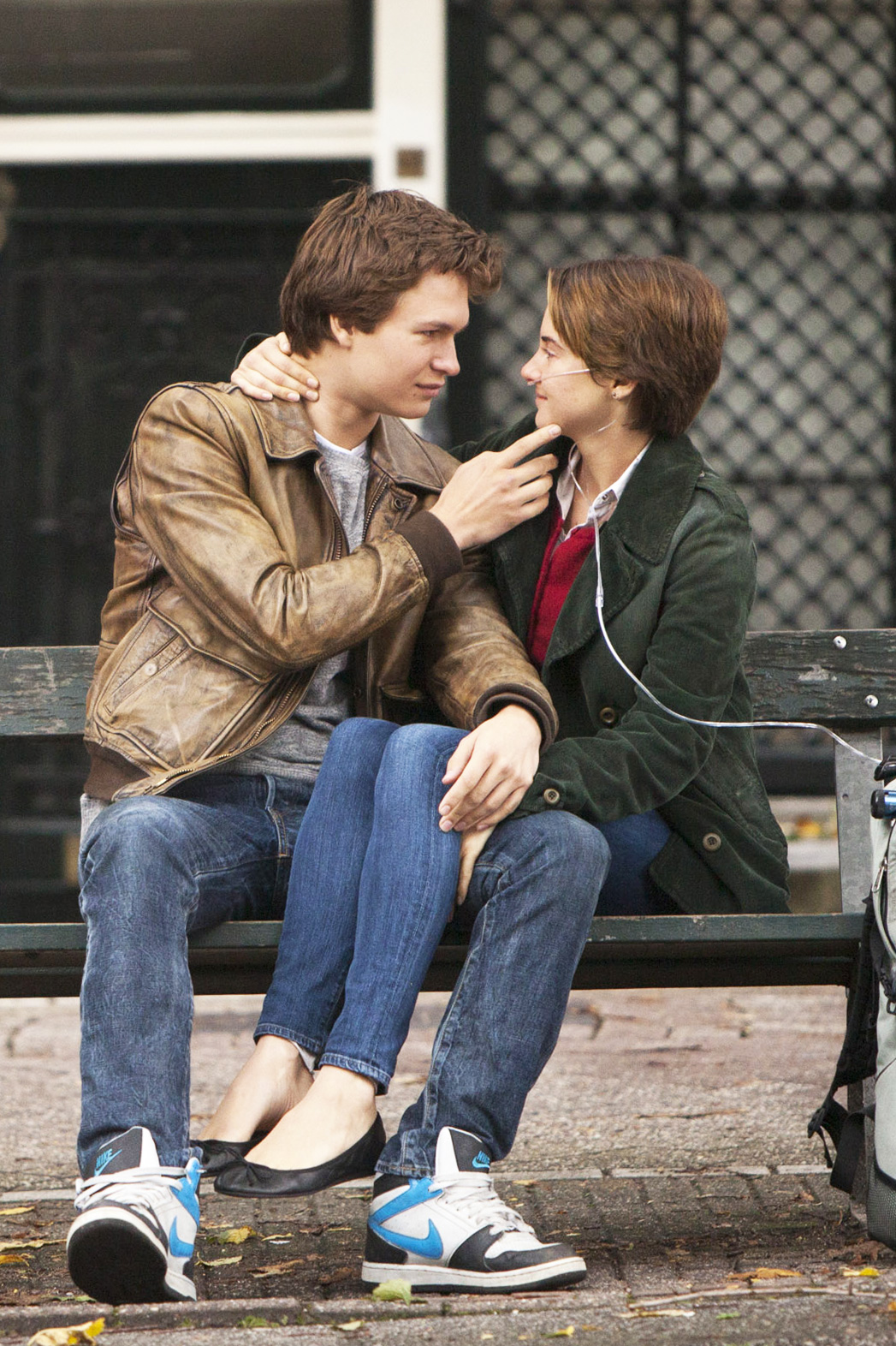
In the 2014 cinematic adaptation of John Green’s novel The Fault in Our Stars, Ansel Elgort delivered a star-making performance as Augustus "Gus" Waters. Portraying a charismatic, witty, and deeply romantic teenager in remission from osteosarcoma, Elgort captured both the grand idealism and quiet tragedy of the character, launching his Hollywood career into mainstream prominence.
The Character of Augustus Waters: Metaphors, Charisma, and Vulnerability
Augustus Waters is one of the most recognizable figures in young adult literature and film. Introduced as an eighteen-year-old former high school basketball star who lost his right leg to osteosarcoma, Gus possesses a larger-than-life personality designed to shield him and those around him from the grim realities of terminal illness. When he meets Hazel Grace Lancaster (played by Shailene Woodley) at a cancer patient support group, his charming demeanor and philosophical outlook instantly alter the trajectory of both their lives.
Elgort’s portrayal of Gus balances bravado with poignant vulnerability. On the surface, Gus is confident, quick with witty quips, and obsessed with leaving behind a meaningful legacy. He carries an unlit cigarette between his lips as a symbolic defense mechanism—a metaphor he famously explains to Hazel: "You put the killing thing right between your teeth, but you don't give it the power to kill you." This physical habit serves as a visual anchor for his internal struggle for agency in a world where his body has already failed him once.
Beyond the swagger, Elgort highlights the acute fear of obscurity that drives Gus's actions. Unlike Hazel, who accepts her mortality with quiet pragmatism and worries primarily about the grief she will leave behind, Gus desperately wants his life to matter on a grand scale. Elgort conveys this dual nature effectively, showing how Gus’s theatrical gestures—such as using his single wish from a children's wish-granting foundation to take Hazel to Amsterdam—are fueled by a deep desire to give Hazel joy and to forge a memory that outlasts his physical existence.
On-Screen Dynamics: Chemistry with Shailene Woodley
A crucial element of the film's critical and commercial success was the palpable dynamic between Ansel Elgort and Shailene Woodley. Interestingly, prior to filming The Fault in Our Stars, the duo had just starred together in Divergent (2014), where they played brother and sister Caleb and Tris Prior. Transitioning from siblings to romantic leads required a shift in onscreen energy, but their pre-existing familiarity paid major dividends on screen.
Director Josh Boone noted during the film's promotional release that their organic rapport facilitated authentic intimacy. Hazel and Gus do not share a standard cinematic teen romance; their relationship is rooted in intellectual banter, mutual honesty regarding illness, and shared coping strategies. Elgort’s warmth on screen allows Hazel—who has spent years emotionally isolating herself to minimize the fallout of her impending death—to gradually lower her defenses.
Hazel Grace Lancaster (Shailene Woodley) <---> Augustus Waters (Ansel Elgort) | | +-----> Shared Vulnerability <---------+ +-----> Intellectual Banter <----------+ +-----> Emotional Transformation <-----+
The progression of their romance relies heavily on reactive acting. In scenes where Hazel reads aloud from her favorite novel, An Imperial Affliction, Elgort portrays Gus not merely as a passive listener, but as someone actively captivated by Hazel's mind. This mutual respect turns their ultimate heartbreak into a shared journey rather than a one-sided tragedy.
Key Scenes and Dramatic Turning Points
Ansel Elgort’s performance is marked by distinct thematic shifts across the narrative. His portrayal transitions from charming lightheartedness to raw physical and emotional ruin as Gus’s health deteriorates in the film's third act.
1. The Support Group Meeting
The introduction of Augustus Waters sets the foundation for his character arc. As he locks eyes with Hazel across the "Heart of Jesus" support group circle, Elgort conveys instant curiosity and charm. His bold delivery of his existential fear—that he will be forgotten—establishes the thematic backbone of the story immediately.
2. The Amsterdam Trip and Meeting Peter Van Houten
The journey to Amsterdam to meet the reclusive author of An Imperial Affliction, Peter Van Houten (played by Willem Dafoe), represents the peak of Gus's romantic romanticism. Elgort shines in the formal dinner scene at Oranjee, radiating genuine happiness. However, when the meeting with Van Houten devolves into verbal abuse by the alcoholic author, Elgort subtly shows the cracks in Gus's optimistic armor, highlighting his instinct to defend Hazel from disappointment.
3. The Gas Station Scene
Widely considered the emotional crux of Elgort’s performance, the late-night scene at the gas station marks a complete breakdown of Gus's composure. Trapped in his car, suffering from a severe infection caused by the recurrence and rapid spread of his cancer, Gus calls Hazel in desperation. Elgort strips away all pretense of charisma, displaying sobbing helplessness, physical agony, and shame. This scene grounds the character in agonizing realism, showing the devastating physical toll of terminal illness.
4. The Pre-Funeral Eulogy
Before his passing, Gus requests that Hazel and his best friend Isaac (Natt Wolff) read their eulogies to him in the empty basement of a church. Sitting in his wheelchair, listening to Hazel describe their "infinity within the numbered days," Elgort uses subtle facial expressions and silent tears to convey acceptance, gratitude, and love, giving the film its most poignant resolution.
Book vs. Film: How Elgort Brought John Green’s Creation to Life
Adapting a beloved literary character for the screen comes with high expectations from fans. John Green’s novel presents Augustus Waters through Hazel's retrospective narration, emphasizing his poetic dialog and dramatic flair. Elgort had to translate Green's highly stylized dialogue into realistic spoken speech without losing its literary charm.
| Character Aspect | John Green's Novel | Ansel Elgort's Film Adaptation |
|---|---|---|
| Physical Appearance | Deep blue eyes, tall, athletic build, mahogany hair. | Tall (6'4"), charismatic presence, expressive eyes matching character descriptions closely. |
| Dialogue Delivery | Philosophical, verbose, occasionally pretentious. | Grounded and conversational, making high-level metaphors feel natural for a teenager. |
| Emotional Arc | Heavy internal struggle regarding legacy reported by Hazel. | Expressed visually through physical deterioration, posture changes, and vocal tone shifts. |
| Humor & Mannerisms | Constant wink, crooked smiles, performative video game commentary. | Improvised physical charm, distinct mannerisms (e.g., handling the cigarette metaphor). |
Elgort’s adaptation preserved the core elements of the novel while adjusting subtle mannerisms to suit the visual medium. His ability to deliver romantic lines without slipping into melodrama preserved the authenticity of Green's writing.
Critical Reception and Box Office Impact
Upon its release in June 2014, The Fault in Our Stars achieved massive commercial and critical success. Produced on a modest budget of approximately $12 million, the film grossed over $307 million worldwide, cementing its status as a major cinematic landmark for young adult adaptations.
Critics widely praised Elgort’s performance:
- Critical Praise: Reviewers highlighted Elgort's ability to maintain Gus's charm without making him appear arrogant. His transition into the heavy dramatic material of the film's final act was noted as a compelling demonstration of acting range.
- Awards and Recognition: Elgort won multiple fan-voted awards for his role, including the Teen Choice Award for Choice Movie Actor: Drama, Choice Movie Breakout Star, and the MTV Movie Award for Best Breakthrough Performance.
- Cultural Footprint: The film solidified Elgort as a leading actor of his generation, making Augustus Waters a definitive pop-culture figure of 2010s cinema.
Career Trajectory: Life After Augustus Waters
The massive success of The Fault in Our Stars altered Ansel Elgort’s career trajectory. Prior to 2014, Elgort had minor roles in films such as the 2013 remake of Carrie and the Divergent series. Gus Waters established him as a viable lead actor capable of driving major theatrical releases.
Following The Fault in Our Stars, Elgort expanded his range across diverse genres:
- Action and Crime Drama: He played the titular lead in Edgar Wright’s acclaimed action film Baby Driver (2017), earning a Golden Globe nomination for Best Actor in a Motion Picture – Musical or Comedy.
- Musical Cinema: Elgort starred as Tony in Steven Spielberg’s 2021 adaptation of West Side Story, showcasing his background in dance and vocal performance.
- Television: He took on the role of journalist Jake Adelstein in HBO Max's crime drama series Tokyo Vice, demonstrating long-form dramatic acting in a complex, multi-lingual production.
Looking back from 2026, his work in The Fault in Our Stars remains the foundational role that established his emotional resonance on screen.
Key Lessons from Elgort's Performance for Aspiring Actors
Analyzing Elgort’s work as Augustus Waters offers several valuable insights into character interpretation and screen acting:
- Embrace Character Flaws: Elgort did not play Gus as a flawless romantic prince. He leaned into Gus's vanity, fear of irrelevance, and occasional dramatic overconfidence, making his ultimate breakdown far more impactful.
- Master the Physicality: Playing a character living with an amputation and progressing illness requires careful physical technique. Elgort paid attention to limps, posture changes, and the physical exhaustion associated with late-stage illness.
- Trust the Co-Star: Emotional scenes succeed through mutual vulnerability. Elgort's performance elevated because he listened actively to Woodley, allowing their dynamic to drive the narrative momentum.
Frequently Asked Questions
How old was Ansel Elgort when he filmed The Fault in Our Stars?
Ansel Elgort was born on March 14, 1994. Filming for The Fault in Our Stars took place in late 2013, making Elgort 19 years old during production. The film was released in June 2014, shortly after his 20th birthday.
Had Ansel Elgort read the book before getting the role?
Yes, Elgort was a fan of John Green's novel prior to being cast. During the audition process, his genuine passion for the source material and his deep understanding of Gus's internal motivation helped him stand out to director Josh Boone and author John Green.
Did Ansel Elgort do his own stunts for the athletic flashback scenes?
Elgort has a background in athletics and dance, allowing him to easily handle the physical requirements of the pre-illness basketball scenes shown in flashbacks and home videos within the film.
What is the significance of the cigarette metaphor used by Elgort’s character?
The unlit cigarette serves as an existential symbol of control. By holding an unlit cigarette in his mouth, Augustus metaphorically takes a lethal element and refuses to give it the power to harm him, reflecting his desire to maintain power over his life despite his cancer diagnosis.
How did the author, John Green, react to Elgort’s performance?
John Green was frequently on set during production and expressed strong praise for Elgort’s portrayal. Green noted that Elgort captured both the performative arrogance and deep vulnerability of Augustus Waters as originally envisioned in the book.
Conclusion and Recommended Viewing
Ansel Elgort’s performance as Augustus Waters in The Fault in Our Stars remains a defining moment in 2010s cinema. By balancing wit, dramatic gravity, and emotional vulnerability, Elgort gave life to a literary icon and earned his place as a versatile lead actor.
For film students, literature enthusiasts, and general viewers, rewatching The Fault in Our Stars offers a clear study in effective book-to-film character translation. Pay close attention to Elgort's physical acting changes between the opening scenes in Indianapolis and the dramatic third act to appreciate how subtle shifts in posture, voice, and facial expression convey a character's internal journey.