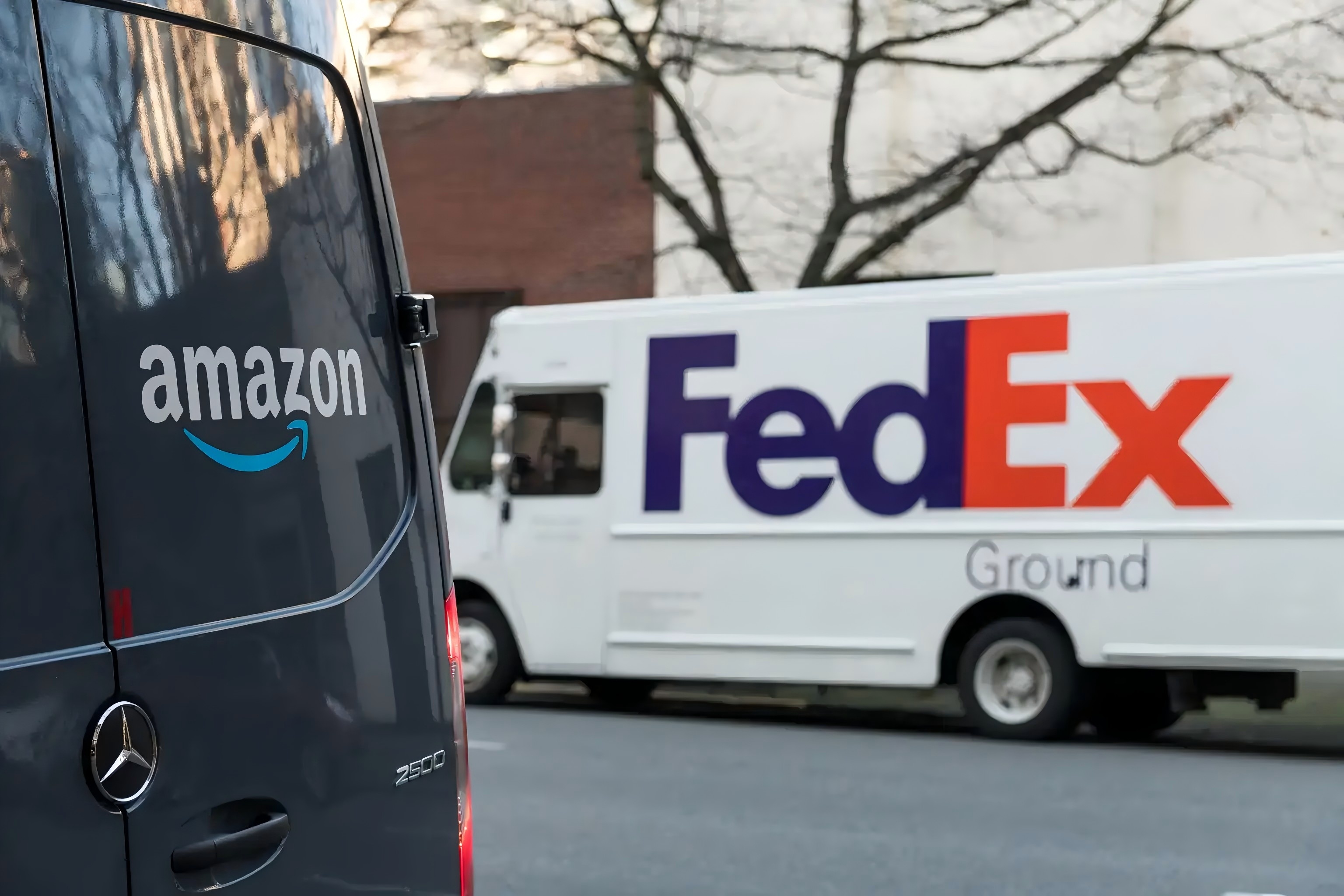
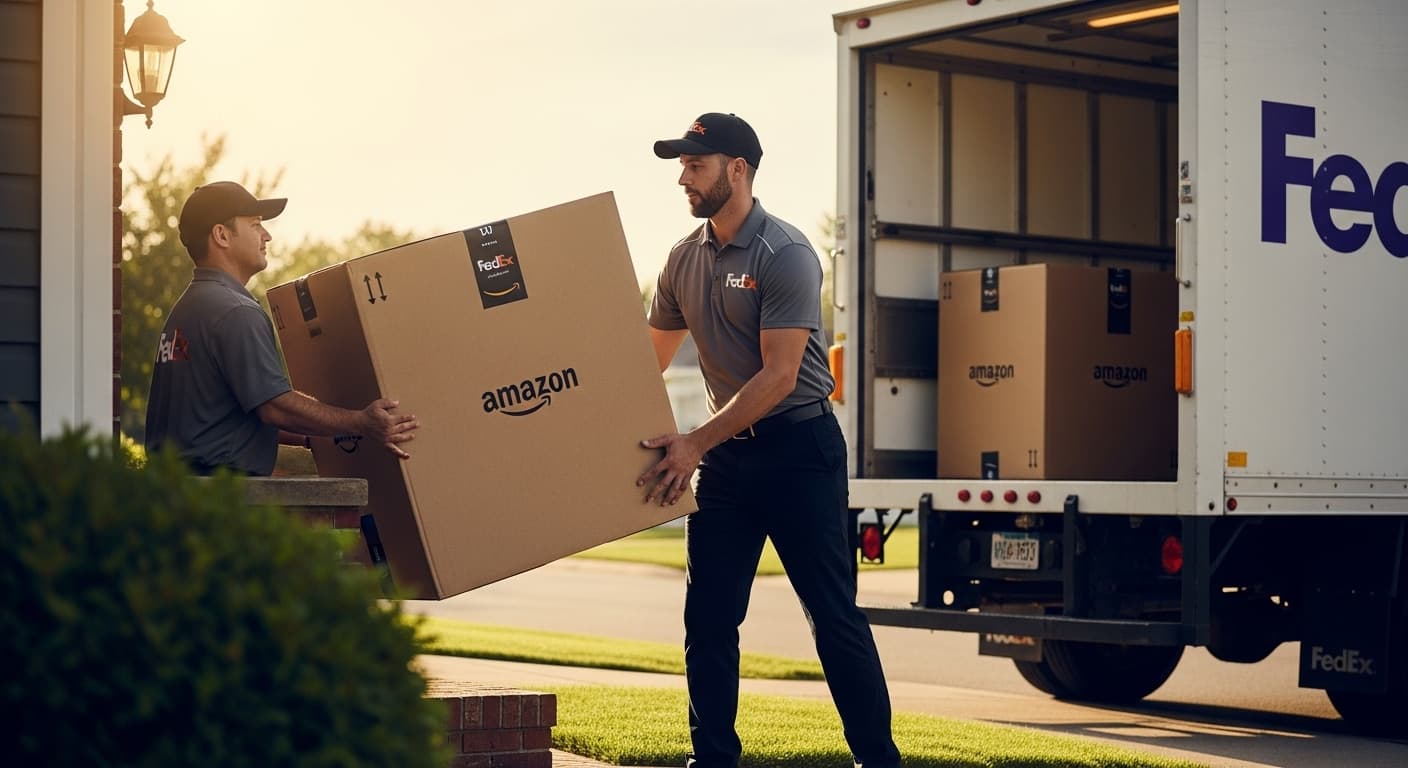
Amazon currently uses FedEx for a targeted portion of its delivery operations in 2026, primarily through its "Buy with Prime" service and third-party merchant fulfillment. While Amazon relies heavily on its own logistics network (AMZL), FedEx serves as a vital strategic partner for international shipping, regional overflow, and independent sellers who manage their own inventory.
For years, the relationship between these two logistics giants has fluctuated between direct competition and necessary cooperation. To understand how your package arrives today, it is essential to distinguish between items shipped directly by Amazon and those fulfilled by independent merchants using Amazon’s platform. In 2026, the logistical landscape is more integrated than ever, yet the "divorce" of 2019 still shapes how these companies interact.
The Evolution of the Amazon-FedEx Relationship
The history of Amazon and FedEx is one of the most studied dynamics in modern supply chain management. In 2019, the relationship hit a historic low when FedEx famously opted not to renew its domestic delivery contracts with Amazon. At the time, FedEx sought to distance itself from a partner that was rapidly becoming its largest competitor. Amazon was aggressively building out its own fleet of planes, branded vans, and "last-mile" delivery contractors.
However, by 2024 and 2025, the market reached a point of pragmatic reconciliation. As e-commerce volumes continued to climb, Amazon realized that even its massive internal network had limits during peak seasons. Conversely, FedEx recognized that the "Buy with Prime" initiative—which allows merchants to sell on their own websites while offering Prime benefits—represented a massive volume of high-margin shipping that they could not ignore.
In 2026, the relationship is defined by "interoperability." FedEx is no longer the primary carrier for Amazon’s internal household deliveries, but it is a preferred carrier for millions of Third-Party Sellers (3PS) and international logistics routes where Amazon’s own infrastructure remains developing.
How FedEx Fits Into the Amazon Ecosystem Today
While you may not see a FedEx truck at your door for every Amazon Prime order, the carrier remains deeply embedded in the broader Amazon ecosystem through several specific channels.
Buy with Prime Integration
The "Buy with Prime" program is the primary driver of FedEx usage within the Amazon sphere in 2026. This service allows independent online retailers to offer Amazon Prime shipping speeds and checkout experiences on their own non-Amazon websites. Because many of these retailers already have established pickup contracts with FedEx, Amazon integrated FedEx into the Buy with Prime multi-channel fulfillment (MCF) suite. This allows a merchant to store inventory in Amazon warehouses but use FedEx’s specialized ground or air networks to reach the customer.
Seller Fulfilled Prime (SFP)
Seller Fulfilled Prime allows high-performing third-party merchants to display the Prime badge on their Amazon listings while shipping the products from their own warehouses. To maintain the strict delivery windows required for the Prime badge, these sellers often rely on FedEx Priority or FedEx Ground. Amazon provides the software infrastructure to generate these labels, ensuring that FedEx’s tracking data is synced directly with the customer’s Amazon account.
International and Specialized Logistics
Amazon’s own airline, Amazon Air, has expanded significantly by 2026, but it still lacks the global reach of the FedEx Express network. For many cross-border transactions—particularly those originating in Europe or parts of Asia—Amazon frequently taps into FedEx’s international infrastructure. Additionally, for oversized or hazardous materials (HAZMAT) that may exceed the capacity or safety protocols of standard Amazon delivery vans, FedEx’s freight and specialized handling services remain a go-to solution.
Comparing Amazon’s Primary Carriers in 2026
To understand why a package might arrive via FedEx versus Amazon Logistics or UPS, it helps to look at the strengths of each carrier in the current market.
| Carrier | Primary Role for Amazon | Delivery Speed | Tracking Integration | Best For |
|---|---|---|---|---|
| Amazon Logistics (AMZL) | Internal Prime orders | Same-Day / Next-Day | Real-time map tracking | High-density urban areas |
| FedEx | SFP & Buy with Prime | 1–3 Business Days | Integrated via API | Regional/Specialty items |
| UPS | Primary backup carrier | 1–5 Business Days | High reliability | Rural and business addresses |
| USPS | "Last-mile" support | 2–7 Business Days | Standard tracking | P.O. Boxes and remote areas |
Why Your Amazon Order Might Arrive via FedEx
There are several technical and operational reasons why your 2026 Amazon order might be handled by FedEx rather than an Amazon-branded van.
- Merchant-Owned Inventory: If the item is "Sold and Shipped by [Third Party]," the merchant chooses the carrier. FedEx is a top choice for small-to-medium businesses due to its reliable pick-up schedules.
- Geographic Necessity: While Amazon Logistics covers over 90% of the U.S. population in 2026, certain rural pockets are still more efficiently served by FedEx’s established hub-and-spoke network.
- Capacity Balancing: During peak shopping events like Prime Day or the holiday season, Amazon’s internal systems automatically redirect "overflow" volume to partners like FedEx and UPS to prevent delivery delays.
- Heavy or Bulky Goods: Items like furniture, large appliances, or exercise equipment often exceed the weight limits of the standard Amazon "blue van." FedEx Ground and FedEx Freight are better equipped to handle these "non-conveyable" items.
Tracking and Managing FedEx-Amazon Shipments
When FedEx handles an Amazon shipment, the tracking experience differs slightly from a standard Amazon Logistics delivery. While Amazon Logistics provides a "number of stops away" map, FedEx tracking typically provides milestone updates (e.g., "Arrived at Hub," "Out for Delivery").
How to Track
You can track these packages directly within the "Your Orders" section of the Amazon app. However, for more granular data, including the ability to redirect a package or request it be held at a FedEx Office location, users should use the FedEx tracking number (usually 12 or 15 digits) on the FedEx website or mobile app.
FedEx Delivery Manager
In 2026, Amazon customers whose packages are handled by FedEx can leverage FedEx Delivery Manager. This free service allows you to:
- Provide specific delivery instructions (e.g., "Leave behind the side gate").
- Request a "Hold at Location" at retailers like Walgreens or Dollar General.
- Receive precise delivery window notifications that are often more accurate than the broad "by 8 PM" estimate on the Amazon dashboard.
Technical Specifications of the Partnership
From a technical SEO and logistics standpoint, the integration between Amazon and FedEx relies on complex API (Application Programming Interface) connections. When a seller prints a FedEx label through Amazon’s "Buy Shipping" service, several things happen simultaneously:
- Rate Shopping: Amazon’s algorithm compares FedEx’s negotiated rates against other carriers to ensure the seller meets the Prime delivery promise at the lowest cost.
- Data Synchronization: FedEx’s servers send real-time webhooks to Amazon, updating the package status the moment it is scanned at a sorting facility.
- Predictive Analytics: By 2026, AI-driven systems predict potential weather or mechanical delays in the FedEx network, allowing Amazon to proactively adjust delivery estimates shown to the customer before they even place the order.
Pros and Cons of FedEx for Amazon Deliveries
While many customers prefer the convenience of Amazon’s own drivers, there are distinct advantages to FedEx’s involvement in the chain.
Advantages
- Infrastructure Reliability: FedEx has decades of experience navigating complex weather patterns and global logistics hurdles that Amazon’s younger network is still mastering.
- Secure Pick-up Options: The ability to redirect an Amazon package to a secure FedEx pickup point is a significant deterrent against "porch piracy."
- Professional Handling: For high-value electronics or fragile items, FedEx’s industrial sorting processes are often perceived as more robust than the high-speed, high-pressure environment of local Amazon delivery stations.
Disadvantages
- Tracking Gaps: Sometimes there is a lag between a FedEx scan and the update appearing on the Amazon interface, leading to customer confusion.
- Delivery Windows: FedEx typically delivers during standard business hours (8 AM to 8 PM), whereas Amazon Logistics often operates much later into the evening and earlier in the morning.
- Return Complexity: If a package arrives via FedEx, the return process might involve dropping it off at a FedEx location, whereas "Amazon-fulfilled" items can often be returned at Whole Foods or Kohl’s without a box or label.
Common Mistakes and Troubleshooting
One common mistake customers make in 2026 is attempting to use Amazon’s "Map Tracking" for a FedEx delivery. Map tracking is a proprietary feature of the Amazon Flex and Amazon Logistics apps; it does not apply to third-party carriers. If you do not see the van icon on your screen, it is a clear indicator that a partner like FedEx is handling the delivery.
If a FedEx-Amazon package is marked as "Delivered" but is nowhere to be found:
- Check the Proof of Delivery (PoD): FedEx often takes a photo of the package at your door. This is accessible through the FedEx tracking portal, not always the Amazon app.
- Verify the Carrier: Ensure the package wasn't handed off to the USPS for the "final mile," a practice known as FedEx Ground Economy (formerly SmartPost), which is still used for some low-priority Amazon shipments.
- Wait 24 Hours: In 2026, logistics systems occasionally "pre-scan" packages as they enter the final delivery vehicle, causing them to appear delivered a few hours before the truck actually reaches your address.
Frequently Asked Questions
Can I choose FedEx as my preferred carrier on Amazon?
No, Amazon does not currently allow customers to select a specific carrier for standard or Prime orders. The shipping algorithm selects the carrier based on the warehouse location, the destination, the item's dimensions, and the required delivery speed. However, if you buy from a third-party seller, you can often contact them directly to request a specific carrier before the item ships.
Why did Amazon stop using FedEx in 2019?
The split was largely strategic. Amazon was moving to become a direct competitor in the logistics space, and FedEx decided to focus on other e-commerce clients (like Walmart and Target) rather than supporting the growth of its primary rival. The current 2026 relationship is a "limited partnership" rather than the all-encompassing contract that existed prior to 2019.
Does FedEx deliver Amazon packages on Sundays?
Yes, in many residential areas, FedEx Ground delivers seven days a week. If your Amazon order is shipped via FedEx Home Delivery, it is eligible for Sunday arrival. This is one of the reasons Amazon continues to use FedEx for regional shipments where Amazon Logistics might not have Sunday coverage.
Is FedEx used for Amazon returns?
Yes, but it depends on the return method you select. While Amazon encourages the use of its own drop-off points (like Amazon Hub Lockers), you can still choose to print a FedEx return label for many items. In 2026, this usually incurs a small fee unless the item was defective or the error was on Amazon's part.
How do I know if FedEx is bringing my Amazon package?
Once your order ships, go to "Track Package" in your Amazon account. Look for the tracking number and the carrier name listed directly under the progress bar. If it starts with a string of numbers (and no letters like "TBA"), it is likely a FedEx or UPS tracking number.
Summary of Next Actions
If you are expecting an Amazon delivery and notice it is being handled by FedEx, the most proactive step you can take is to sync the tracking number with the FedEx mobile app. This provides a higher level of control over the delivery than the standard Amazon interface.
For third-party sellers using Amazon, ensure your FedEx account is properly linked in Seller Central to take advantage of Amazon’s negotiated "Buy Shipping" rates, which remain highly competitive in 2026. By understanding this multi-carrier landscape, you can better manage your expectations for delivery times and security.