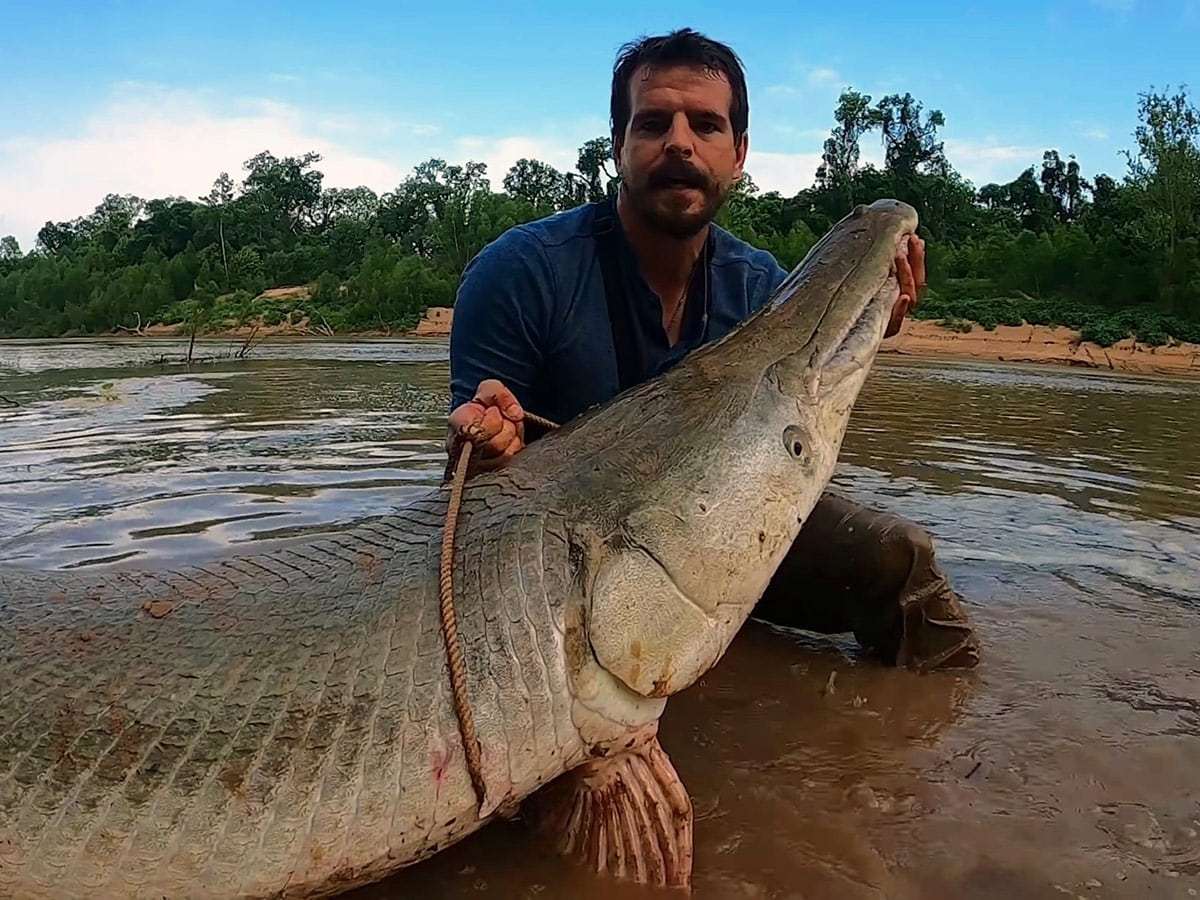
Despite their fearsome appearance and massive size, there are no documented instances of unprovoked alligator gar attacks on humans. These prehistoric fish are generally docile and avoid human interaction, with the vast majority of reported injuries occurring accidentally when anglers attempt to handle or land the fish during a catch-and-release or harvest scenario.
Understanding the Alligator Gar (Atractosteus spatula)
The alligator gar is one of the largest freshwater fish in North America and a true "living fossil," with an ancestry tracing back over 100 million years to the Early Cretaceous. In 2026, it remains a subject of both fascination and misplaced fear. Known scientifically as Atractosteus spatula, the alligator gar is distinguished by its elongated snout and a double row of sharp, needle-like teeth in its upper jaw, which contributes to its intimidating, crocodilian appearance.
While they can grow to lengths of 8 to 10 feet and weigh upwards of 300 pounds, their temperament is far from aggressive. They are apex predators in their ecosystems, primarily inhabiting the sluggish backwaters of large rivers, bayous, and reservoirs in the Southeastern United States, particularly in the Mississippi River basin and Gulf Coast states. Their diet consists almost exclusively of fish—often forage species like gizzard shad—and occasionally waterfowl or small mammals that happen to be floating on the surface. They do not view humans as prey, nor do they exhibit territorial aggression toward swimmers or divers.
Assessing the Risk: Reported Cases and Misidentifications
When discussing "alligator gar attacks," it is vital to distinguish between a predatory strike and an incidental injury. Over a century of recorded wildlife interactions in North America shows a remarkable lack of evidence for the former.
The Problem of Misidentification
In many instances where a person is bitten in murky freshwater, the alligator gar is blamed simply because it is one of the few creatures in the water perceived as "scary" enough to cause harm. However, research and wildlife official reports frequently point toward the American alligator (Alligator mississippiensis) or even large snapping turtles as the actual culprits. Unlike the alligator gar, the American alligator is a territorial reptile that can be aggressive toward humans, particularly during nesting seasons.
In the turbid waters of the Gulf Coast, visibility is often near zero. A swimmer who brushes against a large, rough-scaled creature may panic and assume an attack is imminent. The alligator gar's scales are ganoid—diamond-shaped, bone-like plates covered in a glass-like substance called ganoine. These scales are incredibly tough and abrasive. Simply bumping into a 200-pound gar can cause skin abrasions that look like "scrapes," which are sometimes misinterpreted as bite marks.
Incidental Injuries During Fishing
The only verified "attacks" or bites involving alligator gar in 2026 are categorized as defensive or accidental. These occur almost exclusively within the context of trophy fishing. When an angler pulls a large gar onto a boat or a bank, the fish will thrash violently to return to the water. Given its size and strength, a thrashing gar can easily strike a person with its snout. Because their teeth are designed to hold onto slippery fish, any contact with human skin during a struggle can result in deep lacerations. These are not "attacks" in the sense of a shark or a wolf; they are the desperate movements of a wild animal in distress.
Why the Alligator Gar Does Not Hunt Humans
The biology and hunting mechanics of the alligator gar are ill-suited for preying on large mammals like humans. Understanding these physical limitations helps demystify the risk.
- Feeding Mechanism: Alligator gar are "sit-and-wait" predators. They often drift near the surface, looking like a log, and wait for a fish to swim by. They then use a rapid sideways strike to impale the prey on their teeth. This mechanism is calibrated for small, fast-moving targets, not for the heavy, dense musculature of a human.
- Jaw Structure: While their jaws are powerful, they are designed for gripping and holding rather than shearing. Unlike sharks, which have serrated teeth meant for cutting through flesh and bone, gar have conical teeth meant for puncturing and retaining.
- Metabolism: As cold-blooded ectotherms, alligator gar have relatively slow metabolisms. A large gar does not need to eat frequently, and when it does, it prefers the path of least resistance—typically smaller fish that are easy to swallow whole or in large chunks.
Safety Protocols for Anglers and Swimmers
While the risk is statistically negligible, being around any large wild animal requires respect and caution. As of 2026, wildlife agencies such as the Texas Parks and Wildlife Department (TPWD) provide guidelines for safe interactions.
For Swimmers and Divers
If you encounter an alligator gar while swimming or diving, do not panic. These fish are generally shy and will swim away once they detect human presence. Splashing excessively might attract their curiosity, as it mimics the vibrations of a struggling fish, but even then, they are more likely to flee once they realize the source is a large human.
- Avoid Murky Water at Night: Most large freshwater predators are more active during low-light hours.
- Do Not Feed Wildlife: Feeding fish or alligators can cause them to lose their natural fear of humans, creating dangerous situations for both the animals and people.
For Anglers: Safe Handling Practices
Most alligator gar injuries occur at the "end of the line." To prevent accidents, follow these steps:
- Use Proper Tools: Long-handled pliers are essential for removing hooks. Never put your hands near the mouth of a gar, even if it appears exhausted.
- Support the Weight: If lifting the fish for a photo, use two hands to support its body. A thrashing fish can easily break its own jaw or injure the person holding it.
- Control the Head: Use a rope or a specialized landing tool if necessary, but avoid harming the gills or eyes.
- Eye Protection: When landing a large fish, there is always a risk of lures or hooks snapping back toward the face.
Alligator Gar vs. Common Freshwater Threats
To put the risk into perspective, it is helpful to compare the alligator gar with other species that inhabit similar waters.
| Feature | Alligator Gar | American Alligator | Bull Shark |
|---|---|---|---|
| Primary Habitat | Freshwater / Brackish | Freshwater / Brackish | Saltwater / Freshwater |
| Diet | Fish, Crustaceans | Fish, Mammals, Birds | Fish, Mammals, Rays |
| Human Aggression | Non-aggressive | Territorial / Predatory | Aggressive / Predatory |
| Teeth Type | Conical (Puncturing) | Conical (Crushing) | Serrated (Shearing) |
| Confirmed Attacks | 0 (Unprovoked) | Frequent (Annual) | Frequent (Annual) |
| Risk to Swimmers | Extremely Low | Moderate to High | High (in specific areas) |
The Role of the Alligator Gar in the Ecosystem
The fear of alligator gar attacks historically led to "eradication" programs where the fish were slaughtered as "trash fish" or "monsters." In 2026, we recognize that these fish are vital to the health of our waterways. As apex predators, they help regulate the populations of other species, including invasive common carp and buffalo fish.
Their presence is an indicator of a healthy, functioning aquatic ecosystem. Large, older gar (some can live to be over 50 years old) are particularly important for maintaining genetic diversity within their populations. Contemporary conservation efforts, supported by organizations like the U.S. Fish and Wildlife Service, focus on sustainable harvest limits and habitat restoration rather than the demonization of the species.
Frequently Asked Questions
Has anyone ever died from an alligator gar attack?
There are no verified historical or contemporary records of a human death caused by an unprovoked alligator gar attack. Fatalities in freshwater environments are much more likely to be caused by drowning, boating accidents, or, in very rare cases, American alligator attacks.
Can alligator gar bite through boots or wetsuits?
While their teeth are sharp, they lack the "sawing" action of a shark or the massive "crushing" pressure of an alligator. A large gar could puncture a wetsuit or a rubber boot if it thrashed against it, but it is unlikely to bite through heavy protective gear with the intent to cause harm.
Are the eggs of an alligator gar poisonous?
Yes, this is a significant safety fact. While the meat of the alligator gar is edible and enjoyed by many, their eggs (roe) contain an ichthyotoxin that is highly toxic to humans and other mammals if ingested. This is a defense mechanism to prevent predators from eating their offspring.
Why do people think they are dangerous?
The "monster" reputation is largely a product of sensationalist media and the fish's prehistoric appearance. In the mid-20th century, many states encouraged the killing of gar because they were thought to compete with "game fish" like bass, a theory that has since been debunked by stomach-content analysis.
What should I do if I am bitten by an alligator gar?
In the unlikely event of a bite (usually during fishing), treat the wound immediately. Gar inhabit environments rich in bacteria, and even a small puncture can lead to a serious infection like cellulitis or sepsis. Clean the wound thoroughly with soap and water and seek medical attention for antibiotic treatment and a tetanus shot.
Practical Recommendation
If you live in or visit an area inhabited by alligator gar, the best course of action is to enjoy their presence as a rare glimpse into Earth's biological past. There is no need to avoid swimming in waters where gar are present, provided you follow standard water safety guidelines. For those interested in fishing, ensure you are equipped with the heavy-duty tackle and safety gear required to handle these giants humanely and safely. By replacing fear with education, we can ensure the survival of this magnificent species while safely enjoying our natural waterways.