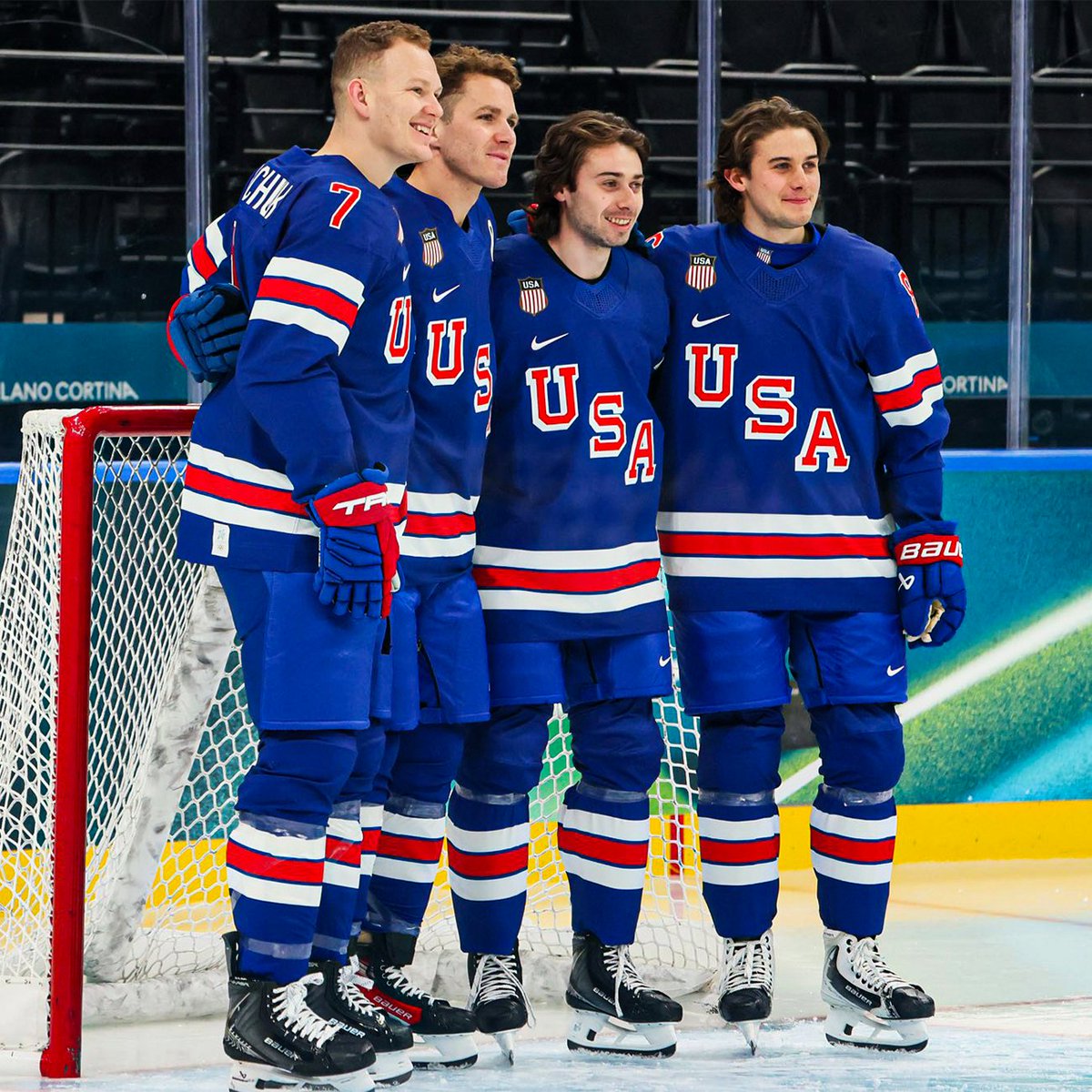
As of 2026, all three Hughes brothers—Quinn, Jack, and Luke—are recognized elite talents in professional ice hockey, but they are not currently active members of a single Team USA squad. While each brother has represented the United States in various international capacities throughout their respective careers, they do not hold permanent roster spots on a standing Team USA, as the roster is determined on a tournament-by-tournament basis by USA Hockey.
Understanding the Structure of USA Hockey Selection
To understand why the Hughes brothers are not simply "on" Team USA, it is essential to first understand how the organization functions. Unlike professional club teams, such as those in the National Hockey League (NHL), there is no static roster for Team USA. USA Hockey manages various national teams depending on the age group, gender, and the specific international competition taking place.
International tournaments—such as the IIHF World Championship, the Winter Olympics, or the World Cup of Hockey—require USA Hockey to select a new roster for each event. This selection process is influenced by several variables: player availability, current health status, the conclusion of the individual player's NHL season, and the strategic preferences of the coaching staff and general manager assigned to that specific tournament. Consequently, even for players of the caliber of the Hughes brothers, participation is fluid and situational rather than a permanent appointment.
Profiles of the Hughes Brothers and Their National Experience
The careers of Quinn, Jack, and Luke Hughes have been defined by their exceptional skill sets and their consistent involvement with American hockey development programs. Each brother followed a trajectory that heavily featured the USA Hockey National Team Development Program (NTDP) in Plymouth, Michigan.
Quinn Hughes
As the eldest of the trio, Quinn Hughes established himself as an elite defenseman early in his career. His journey with USA Hockey began at the NTDP and progressed through various international junior stages. He represented the United States at multiple IIHF World Junior Championships. Professionally, Quinn has been a cornerstone of the Vancouver Canucks, and his availability for Team USA is often dictated by the length of his NHL postseason run.
Jack Hughes
Jack Hughes, the middle brother, became a household name when he was selected first overall in the 2019 NHL Draft. His development within the US system was highly publicized, culminating in historic production levels during his time with the NTDP. Jack has represented the United States in high-stakes environments, including the World Championship and the World Junior Championship. His playmaking ability makes him a perennial candidate for any senior national team roster.
Luke Hughes
The youngest, Luke Hughes, continued the family tradition by excelling within the NTDP. A defenseman like his brother Quinn, Luke has quickly ascended the professional ranks. His international experience includes representing the United States at the World Junior level, where his offensive instincts and skating ability were on full display. Like his brothers, his inclusion in future Team USA events remains subject to the same rigorous selection criteria that govern all elite American players.
Comparative Overview of International Participation
The following table outlines the general pathways the Hughes brothers have taken within the USA Hockey infrastructure.
| Brother | Primary Position | NTDP Tenure | Notable International Level |
|---|---|---|---|
| Quinn Hughes | Defenseman | 2015–2017 | World Juniors, World Championship |
| Jack Hughes | Center | 2017–2019 | World Juniors, World Championship |
| Luke Hughes | Defenseman | 2019–2021 | World Juniors, World Championship |
Note: Participation in international tournaments for all three is contingent upon NHL playoff scheduling and player health.
The Challenges of Roster Coordination
Fans often wonder if the three brothers could ever play on the same Team USA roster simultaneously. While it is theoretically possible, the logistical hurdles are significant. The primary obstacle is the NHL calendar. If all three brothers are playing for their respective NHL clubs, their availability for a tournament like the IIHF World Championship—which typically takes place in May—is entirely dependent on whether their club teams are eliminated before the tournament begins.
Furthermore, international squads are built to address specific team needs. Coaches look for a balance of defensive stability, offensive production, penalty killing, and special teams expertise. Even if all three brothers are healthy and available, the coaching staff must decide if their specific skill sets align with the overall tactical plan for that year's tournament.
The Role of the USA Hockey Development Path
The reason the three brothers are so frequently associated with Team USA is their foundational history. All three went through the NTDP, which is arguably the most successful developmental pipeline in the country. By training within this system, they were indoctrinated into the "USA Hockey way," which emphasizes speed, transition play, and high-skill transition hockey. This shared background is why they are synonymous with the national program, even when they are not actively competing in a specific international tournament.
Frequently Asked Questions
1. Are the Hughes brothers currently playing for the same NHL team? No. As of 2026, the brothers are distributed across different NHL organizations. Quinn plays for the Vancouver Canucks, Jack plays for the New Jersey Devils, and Luke also plays for the New Jersey Devils. Because they play for different franchises, their schedules and their potential availability for Team USA are rarely aligned perfectly.
2. Is there a "permanent" Team USA roster? There is no permanent, fixed roster for Team USA in professional hockey. The team is reconstituted for every major tournament. Players are selected based on their performance throughout the preceding season, their health, and their willingness to participate after the demanding 82-game NHL schedule.
3. Have the three brothers ever played on the same team in a professional setting? While they have occasionally been on the same ice for All-Star events or promotional showcases, they have not played on a permanent club roster together. Luke and Jack are teammates with the New Jersey Devils, but Quinn plays on a different team, making a full "brothers" reunion in the NHL unlikely under current contract structures.
4. How does the Olympic selection process differ from other tournaments? Olympic selection is the most exclusive process in international hockey. Unlike the World Championship, which is held annually, the Olympics occur every four years. Because the world’s best players are involved, the competition for roster spots is incredibly intense. Participation is not guaranteed for any player, regardless of their past performance with the national program.
5. Can a player turn down a spot on Team USA? Yes. Players frequently decline invitations to represent their country, usually due to lingering injuries sustained during the NHL season, impending free agency, or the need for a recovery period after deep playoff runs. USA Hockey respects these decisions, as the physical toll of a professional hockey season is extreme.
Future Outlook and Conclusion
The status of the Hughes brothers within Team USA is one of sustained prestige rather than permanent placement. They remain three of the most talented American hockey players of their generation, and whenever a major international tournament approaches, they will undoubtedly be among the first names discussed by management.
For the avid fan, the best way to track their status is to monitor official announcements from USA Hockey preceding international windows. While seeing all three on a single roster remains a dream scenario for many supporters, the reality of professional sports means that their participation is dictated by the complex intersection of team scheduling, personal health, and the evolving strategic needs of the national team. For now, they continue to serve as high-profile representatives of American hockey excellence within their respective NHL club organizations.