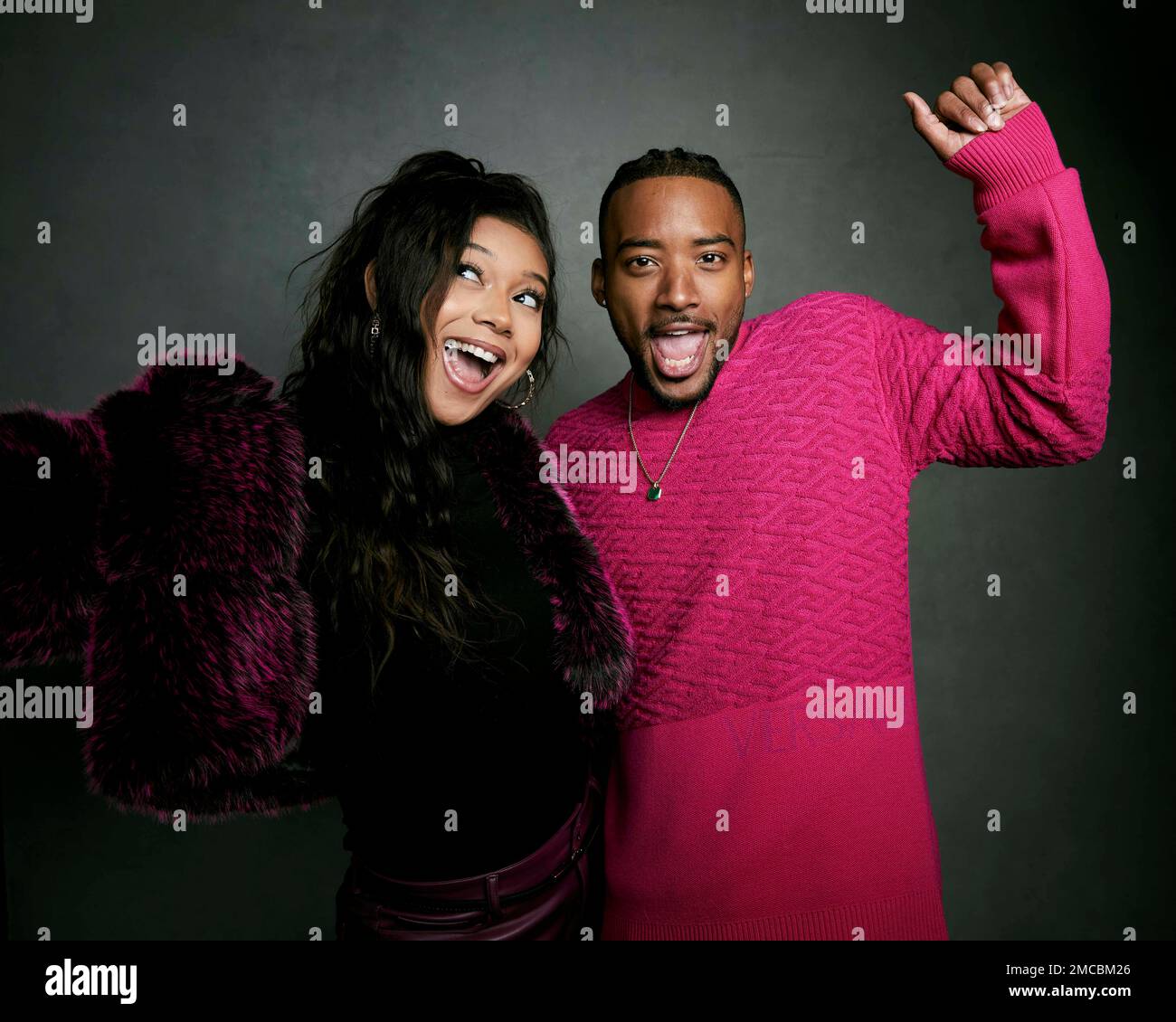
Algee Smith’s father, Algee Smith Sr., is a professional music producer and songwriter whose studio work profoundly shaped his son’s artistic trajectory. By immersing him in music production at age eight, teaching him songwriting fundamentals, and guiding his performance discipline, the elder Smith laid the technical foundation that secured Algee’s breakthrough Hollywood roles.
The transition from a promising recording artist to a critically acclaimed Hollywood actor is rarely accidental. For Algee Smith—widely recognized for his riveting portrayals in Kathryn Bigelow’s Detroit, BET’s The New Edition Story, and HBO’s Euphoria—the discipline of dramatic performance began in a recording studio in Saginaw, Michigan, under the direct tutelage of his father, Algee Smith Sr.
While many young actors enter the entertainment industry through traditional casting calls, theater conservatories, or commercial modeling, Smith’s creative origin was built on audio mixers, vocal arrangements, and microphone technique. Examining the background of Algee Smith Sr. and the creative environment he built reveals how parental mentorship transformed early musical training into a high-caliber acting career.
Who Is Algee Smith Sr.? Background and Musical Heritage
To understand the artistic instincts of the younger Smith, one must examine the professional background of his father. Algee Smith Sr. established himself as an independent music producer, composer, and multi-instrumentalist during the 1990s and early 2000s. Operating out of Saginaw, Michigan, before relocating his family south to Atlanta, Georgia, the elder Smith cultivated an environment steeped in traditional Black American music traditions—most notably gospel, contemporary R&B, and Midwestern hip-hop.
Unlike industry executives who maintain strict boundaries between their domestic and professional spaces, Smith Sr. made the recording booth an extension of the home. Home recording setups, commercial studio consoles, MPC drum machines, and keyboard workstations were integral parts of his son's daily environment.
The Saginaw to Atlanta Migration
In the early 2000s, when the younger Smith was around seven or eight years old, Algee Smith Sr. and his family made the deliberate strategic decision to relocate to Atlanta. At the time, Atlanta was cementing its status as the cultural and musical capital of the American South. This geographic shift had several crucial implications:
- Access to Elite Creative Networks: Atlanta offered an expansive ecosystem of independent record labels, high-profile studios, and gospel choirs where young artists could hone their craft.
- Early Industry Exposure: The relocation placed the younger Smith in direct contact with working producers, songwriters, and vocal coaches who treated entertainment as an exacting trade rather than a casual hobby.
- Dual Industry Opportunities: As Georgia expanded its film and television tax credits throughout the late 2000s, Atlanta rapidly evolved into "The Hollywood of the South," providing a natural bridge between music production and on-camera auditions.
Throughout this period, Smith Sr. balanced his own production work with mentoring his son, instilling a professional work ethic long before commercial representation or casting directors entered the picture.
Studio Apprenticeship: Early Musical Mentorship
Before Algee Smith ever stepped in front of a film camera, he was an apprentice in the recording studio. His father recognized his rhythmic sense and tonal ear early, encouraging him to write, record, and critique his own material.
Early Studio Mentorship Timeline:
- [Age 8–9] First rap verses penned & recorded with Algee Sr.
- [Age 10–12] Ear training, vocal arrangement, Pro Tools workflows
- [Early Teens] Atlanta demo recordings & stage presence development
- [Age 18–20] Audition tapes combining vocal performance & dialogue
The First Recording Sessions
At age nine, with his father behind the mixing console, Algee wrote and recorded his first rap verse. Rather than treating this as a fleeting childhood milestone, Smith Sr. used the experience to teach artistic fundamentals: breath control, cadence, vocal projection, and lyrical intentionality.
In multiple career retrospectives, the actor has highlighted how his father refused to accept mediocre delivery simply because he was a child. If a line lacked emotional conviction or slipped off-beat, the take was repeated. This process demystified the recording process and stripped away performance anxiety, teaching young Algee that compelling creative output requires technical rigor and sustained focus.
Production Literacy as an Acting Asset
Working under a seasoned producer gave the younger Smith an intuitive grasp of sound engineering and acoustic delivery. Learning how a microphone captures subtle shifts in dynamic range, timbre, and emotional inflection directly translates to on-camera film acting, where high-end boom and lavalier microphones capture micro-expressions in an actor’s voice.
By mastering audio techniques early, Smith learned:
- Microphone Discipline: Knowing how to alter vocal volume without losing emotional intensity or clarity.
- Repetition and Variation: Performing repeated vocal takes without losing freshness—an essential skill on long film sets requiring dozens of camera setups.
- Pacing and Cadence: Treating scripted dialogue like musical measures, finding natural rhythm, pauses, and syncopation within written text.
Translating Musical Discipline to the Screen
The transition from recording artist to screen actor can present steep learning curves, yet Smith’s transition was notably smooth. His father’s training provided foundational skills that aligned naturally with the technical demands of screen performance.
Audition Presence and Demeanor
In competitive audition rooms, casting directors regularly encounter nervous young performers struggling with self-possession. Because Smith had spent his formative years performing under the analytical eye of his father, he possessed an uncommon comfort level in audition environments. He understood that feedback, criticism, and rejection were simply part of iterative artistic development, not personal attacks.
This mindset allowed him to book early television roles, including guest appearances on Nickelodeon's How to Rock and the Disney Channel television movie Let It Shine (2012). These early projects served as real-world testing grounds where his musical fluency and emerging acting instincts operated in unison.
Key Breakthroughs: Where His Father's Legacy Surfaced
The true return on his father’s musical investment appeared when Smith landed roles that demanded dual mastery of dramatic acting and high-level musical execution.
- Algee Smith Sr.'s Musical Foundation (Audio Engineering, Rhythm, Vocal Range)
- The New Edition Story (Ralph Tresvant Role)
- Detroit (Larry Reed / Motown)
The New Edition Story (2017)
When BET commissioned the three-part biographical miniseries The New Edition Story, the production faced a daunting casting challenge: locating young actors who could convincingly deliver complex dramatic scenes while replicating the intricate harmonies and coordinated choreography of one of R&B’s most celebrated vocal groups.
Smith was cast as Ralph Tresvant, the lead singer whose smooth vocal tone defined hits like "Cool It Now" and "Candy Girl." The role required intense boot-camp rehearsals overseen by original group members and choreographers.
Because Smith Sr. had spent years refining his son’s vocal ear and performance mechanics, Smith did not need to learn the basics of R&B cadence from scratch. He understood vocal blending, group harmonizing, and stage posture intuitively. His performance drew widespread praise from critics and original New Edition fans alike, establishing him as a rising force in Hollywood.
Detroit (2017) and the Motown Sound
Director Kathryn Bigelow’s historical drama Detroit placed Smith in an even more demanding emotional and technical space. He portrayed Larry Reed, a real-life member of the Motown vocal group The Dramatics who was trapped inside the Algiers Motel during the violent civil unrest of 1967.
The role required Smith to perform live on set—singing an a cappella rendition of "Sh-Boom (Life Could Be a Dream)" inside an empty theater—rather than relying entirely on pre-recorded studio tracks. The unadorned emotional purity of that performance became one of the film's most striking moments.
Furthermore, Smith co-wrote and performed the song "Grow," featured on the film's official soundtrack, collaborating directly with the real Larry Reed. The project represented a complete synthesis of the gifts his father cultivated: empathetic songwriting, vocal execution, and historic musical literacy.
Comparative Career Dynamics: Algee Smith Sr. vs. Algee Smith
To better understand how the elder Smith’s background influenced his son’s professional balance, the table below highlights their respective disciplines, core skill sets, and creative outputs.
| Characteristic | Algee Smith Sr. | Algee Smith (Jr.) |
|---|---|---|
| Primary Medium | Music production, composition, and sound design | Film acting, television performance, and vocal recording |
| Early Creative Roots | Saginaw, Michigan R&B and gospel production | Studio recording at age nine under parental guidance |
| Key Artistic Focus | Track arrangement, beat architecture, audio engineering | Emotional characterization, screen dialogue, vocal performance |
| Direct Industry Projects | Independent production, regional gospel and hip-hop records | The New Edition Story, Detroit, Euphoria, The Hate U Give |
| Collaborative Influence | Technical producer, creative critic, early career advisor | Performer, recording artist (EPs Listen, ATL), dramatic actor |
| Core Methodological Asset | Precision mixing, ear training, rhythm structure | Translating musical cadence and emotional timing to cinema |
Maintaining a Dual Identity: Music and Acting in Parallel
Many performers who transition from music to acting leave their instruments and microphones behind once film work proves lucrative. Encouraged by his father's lifelong commitment to craft, Smith has steadfastly resisted choosing one discipline over the other.
Throughout the late 2010s and into the 2020s, Smith regularly returned to the recording studio between major film and television shoots. He released independent musical projects, including his debut EP Listen (2017) and subsequent releases such as ATL (2020), which blended modern trap production with the classic vocal arrangements his father favored.
The Home Studio Tradition Continues
Even as his acting resume expanded to include critically acclaimed projects such as Judas and the Black Messiah and his recurring role as Chris McKay in Sam Levinson’s Euphoria, Smith maintained a dedicated home studio setup. In interviews, he frequently notes that making music remains his primary therapeutic outlet—a space where he exercises complete editorial control, free from the decisions of directors, showrunners, and film editors.
This balance reflects his father's philosophy: an artist should never rely solely on someone else’s greenlight to create. By owning the tools of production, an artist retains creative agency regardless of industry tides.
The Broader Impact: Character, Family, and Hollywood Pitfalls
The entertainment industry is notoriously precarious for young performers who experience rapid visibility. The presence of a grounded, industry-literate father provided Algee Smith with vital emotional and strategic protection during key transitions in his early twenties.
Navigating the Business of Art
Because Algee Smith Sr. had experienced the complexities of intellectual property, royalties, contracts, and production schedules, his son did not enter the entertainment business blind. The elder Smith instilled an early awareness of:
- Contractual Ownership: Understanding the distinction between publishing rights, performance royalties, and work-for-hire agreements.
- Separation of Self and Celebrity: Viewing dramatic roles and public acclaim as the result of specific professional labor rather than innate entitlement.
- Artistic Perseverance: Enduring long stretches between successful auditions without losing creative momentum or identity.
Emotional Anchoring
In personal reflections, Smith has repeatedly pointed to his parents—both his father’s musical guidance and his mother Tanisha Hendrix’s fashion design and styling mentorship—as the stabilizing forces that kept him focused during difficult career periods. When early pilot projects failed to pick up or anticipated roles fell through, the structure of music-making within the family unit offered a reliable sanctuary.
Professional Assessment: What Aspiring Performers Can Learn
The collaborative relationship between Algee Smith and his father illustrates several practical principles for emerging artists, parents of creative children, and cross-disciplinary performers:
- Cross-Training Yields Unique Advantages: Mastery of an adjacent art form (such as audio production) can create distinct, competitive edges in a primary field (such as film acting).
- Prioritize Process Over Immediate Exposure: Smith Sr. insisted on technical competence, vocal control, and discipline long before seeking major commercial platforms for his son.
- Build Self-Directed Creative Outlets: Retaining the ability to produce original music provided the younger Smith with creative confidence, preventing the desperation that often undermines auditioning actors.
- Treat Performance as Craftwork: By approaching dialogue, pacing, and emotional expression with the rigorous discipline of an audio engineer, actors can deliver consistently repeatable performances.
Frequently Asked Questions
Was Algee Smith’s father famous in the music industry?
Algee Smith Sr. was not a mainstream pop celebrity, but rather a respected, working professional producer, multi-instrumentalist, and songwriter. His career was built primarily within regional gospel, independent hip-hop, and R&B communities in Michigan and Georgia, giving him deep technical credibility without the volatility of mass celebrity.
Did Algee Smith want to be an actor or a singer first?
Music was his primary focus from childhood. Encouraged by his father, he began writing songs and rapping at age nine, aspiring to be a professional recording artist. His entry into screen acting began in his late teens when casting opportunities in Atlanta revealed that his musical presence translated naturally to on-camera dramatic performance.
Did Algee Smith’s dad help him land his role in The New Edition Story?
While casting was handled through standard competitive auditions overseen by the production's casting directors and New Edition themselves, his father’s extensive vocal and performance training gave Algee a decisive advantage. The role of Ralph Tresvant required authentic R&B vocal ability and harmonizing skills, which Smith had practiced under his father's guidance since childhood.
Does Algee Smith still make music?
Yes. Smith continues to release independent music alongside his acting career. His discography includes projects such as the EPs Listen and ATL, as well as contributions to major motion picture soundtracks, including Kathryn Bigelow’s Detroit. He maintains an active home recording studio modeled on the creative spaces his father built during his upbringing.
Final Takeaway and Next Actions
The artistic journey of Algee Smith underscores that transformative acting performances are frequently built upon unexpected creative foundations. Algee Smith Sr.’s choice to treat his son as a serious musical apprentice cultivated the vocal control, emotional sensitivity, and professional discipline that define the actor’s best work today.
For those interested in exploring the artistic output shaped by this father-son creative foundation:
- Watch the Performances: Study the intersection of music and drama in Algee Smith’s performances in The New Edition Story (available on major streaming platforms) and Detroit. Pay particular attention to his vocal delivery, emotional cadence, and acoustic control during live-sung scenes.
- Listen to the Discography: Explore Smith’s independent musical catalog—including his EP Listen and standalone singles—to appreciate the modern R&B production principles instilled by his father.
- Apply the Technique: For actors and performers looking to elevate their on-camera dialogue, incorporate vocal ear training, cadence analysis, and rhythmic script-scoring into regular rehearsal routines.