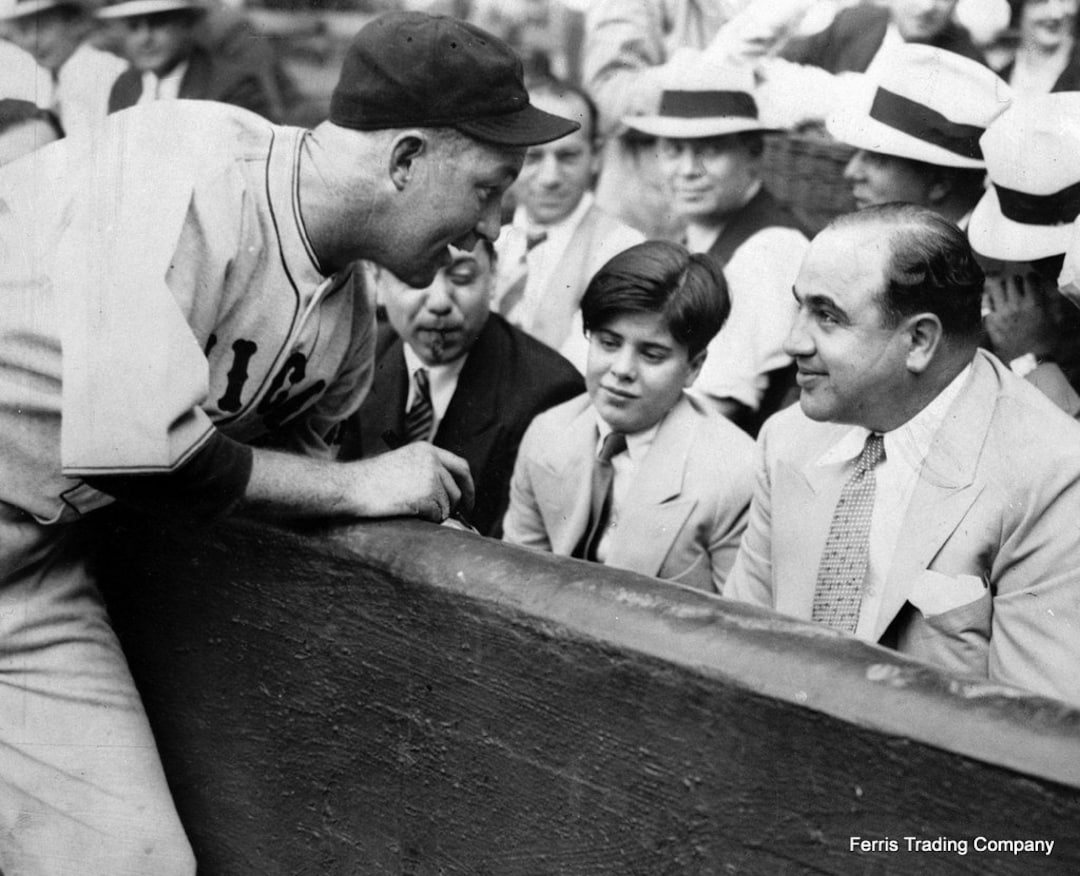
Albert Francis "Sonny" Capone Jr. maintained an estimated net worth between $100,000 and $300,000 at the time of his passing in 2004. Contrary to popular cultural myths, he did not inherit vast mob fortunes. Sonny led a quiet, largely law-abiding middle-class existence, working conventional jobs and legally changing his name to Albert Francis Brown in 1966.
Separating Mob Myth from Financial Reality
The popular imagination frequently links the descendants of famous organized crime figures to hidden fortunes, off-shore bank accounts, and secret inheritances. When examining the financial profile of Albert Francis "Sonny" Capone Jr.—the only biological child of infamous Chicago Outfit boss Alphonse "Al" Capone and Mae Josephine Coughlin—the historical record reveals a starkly different story.
Sonny Capone did not live as an heir to an illicit empire. Instead, his financial profile reflects that of an average American worker of the mid-to-late 20th century. While Al Capone reportedly controlled an empire generating tens of millions of dollars annually during the Prohibition era of the 1920s, federal tax enforcement, massive legal defense bills, asset liquidations, and healthcare costs completely eroded that wealth prior to Al Capone's death in 1947.
As a result, Sonny Capone’s lifetime earnings and net worth were derived almost entirely from standard employment across various conventional industries, including automotive sales, retail distribution, and technical trades.
Early Life and Health Challenges of Albert Francis Capone Jr.
Albert Francis Capone Jr. was born on December 4, 1918, in Brooklyn, New York, shortly before his father moved the family to Chicago to join Johnny Torrio’s organized crime syndicate. From birth, Sonny faced severe health complications that shaped both his childhood and his family’s long-term expenditures.
Sonny was born with congenital syphilis, a condition passed down from his father, who had contracted the disease years earlier but left it untreated. The congenital infection resulted in severe ear infections and required risky surgical intervention during his early childhood.
Medical Expenses and Special Care
During the early 1920s, Al Capone arranged for top-tier medical specialists to treat his son. Sonny underwent a mastoid operation at New York City’s Manhattan Eye, Ear, and Throat Hospital. While the surgery saved his life, it left him permanently hard of hearing in his left ear.
- Specialized Tutors and Private Schooling: Due to his hearing loss, Sonny required specialized educational accommodations, including private tutoring and specialized schooling in Miami Beach, Florida, where his parents purchased a waterfront estate at 93 Palm Avenue in 1928.
- Financial Impact on Family Reserves: Although Al Capone possessed ample cash during the 1920s to fund these medical procedures, the long-term healthcare demands of both Al Capone (whose mental and physical health precipitously declined due to neurosyphilis) and family upkeep drained household resources over subsequent decades.
Education and Personal Life: Seeking Distance from the Syndicate
Despite his father’s notoriety, Sonny Capone’s mother, Mae Capone, went to great lengths to insulate her son from the violence and criminal operations of the Chicago Outfit. Sonny attended St. Patrick High School in Miami Beach and later enrolled at the University of Miami in Coral Gables, Florida.
Sonny was widely described by classmates and acquaintances as soft-spoken, polite, and studious. He expressed little interest in his father’s criminal enterprise. While attending college, he engaged in standard student activities and sought to build an identity distinct from the infamous Capone legacy.
Family and Marriages
Sonny Capone married Diana Ruth Casey in 1941, with whom he had four daughters:
- Veronica Capone
- Diane Capone
- Barbara Capone
- Teresa Capone
The couple later divorced, and Sonny remarried twice in subsequent decades, eventually residing in Florida and later Northern California. Providing for his family through standard labor meant that Sonny lived modest suburban lifestyle, purchasing modest homes rather than grand estates.
Career Path and Earning Capacity
Unlike children of prominent public figures who enter lucrative family enterprises or inherit corporate assets, Sonny Capone worked a series of ordinary, low-to-mid-level jobs throughout his adult life. His earnings were consistent with standard working-class and lower-middle-class wage structures of the 1940s through the 1980s.
Sonny Capone Career Timeline:
- 1940s: Used Car Salesman & Small Business Labor
- 1950s: Restaurant Worker & Local Delivery Driver
- 1960s: Printing Apprentice & Tire Distributor
- 1970s+: Retirement on Fixed Income & Personal Savings
Verified Occupations
Throughout his working years, historical records and public directories indicate that Sonny worked in several diverse, legitimate capacities:
- Automotive Sales: Worked as a used car salesman in Miami, earning modest commissions.
- Apprentice Printer: Spent time learning and working in commercial printing shops.
- Restaurant and Retail Service: Managed small service-industry duties and worked at local eating establishments.
- Tire Distribution: Worked for a tire company in Florida, handling sales and logistical distribution.
At no point did federal law enforcement, the Federal Bureau of Investigation (FBI), or local crime commissions identify Sonny Capone as an active participant in organized crime operations or as a recipient of laundered syndicate funds.
What Happened to Al Capone’s Multimillion-Dollar Fortune?
To understand why Sonny Capone did not possess a multi-million-dollar net worth, it is necessary to examine the systematic liquidation of Al Capone’s financial assets between 1931 and 1947.
| DESTRUCTION OF THE CAPONE ESTATE |
|---|
| 1. Federal Tax Liens & Fines (1931 IRS Income Tax Conviction) |
| 2. Exorbitant Legal Defense Costs (Attorneys & Appeals) |
| 3. Syndicate Asset Reassignment (Outfit Leadership Shift) |
| 4. Long-Term Medical Costs (Al Capone's Neurosyphilis Care) |
1. Federal Income Tax Conviction and Liens
When Al Capone was convicted of federal income tax evasion in October 1931, the United States District Court imposed severe financial penalties alongside his 11-year prison sentence.
Capone was ordered to pay:
- $50,000 in court fines (equivalent to over $1 million in contemporary value).
- $7,692 in court costs.
- Back taxes totaling $215,000 plus compounding interest and penalties levied by the Internal Revenue Service (IRS).
To satisfy these legal debts, federal agencies seized properties, cash reserves, and liquid investments.
2. Legal Expenses and Appeals
Al Capone’s family spent vast sums attempting to appeal his conviction, reduce his sentence, and secure transfers between federal facilities (such as U.S. Penitentiary Atlanta and Alcatraz Federal Penitentiary). Prominent defense attorneys charged premium fees, which drained the family's liquid savings throughout the 1930s.
3. Syndicate Asset Reassignment
Organized crime operations do not function like conventional hereditary corporations. When Al Capone entered federal custody, control of the Chicago Outfit passed to his lieutenants, including Frank Nitti, Paul Ricca, and Tony Accardo.
The revenue streams from gambling, bootlegging, and extortion remained with the Outfit, rather than being redirected to Capone’s wife or son. While the Outfit provided a modest stipend to Mae Capone to cover basic living expenses and medical care during Al's declining years, these payments ceased altogether following Al Capone’s death on January 25, 1947.
The 1965 Shoplifting Incident and Name Change
One of the few public incidents involving Sonny Capone occurred in August 1965. At the age of 46, Sonny was arrested in North Miami, Florida, for shoplifting two small items—a flashlight and some batteries—valued at approximately $3.50 from a local supermarket.
When questioned by law enforcement officers, Sonny reportedly expressed deep embarrassment, citing a momentary lapse in judgment. He was sentenced to two years of probation.
Official Name Change to Albert Francis Brown
Following the public humiliation of the 1965 shoplifting charge and the relentless media attention tied to his family name, Sonny decided to break his public connection to his father's historical legacy.
In 1966, he filed legal paperwork to officially drop the surname Capone and assumed the legal name Albert Francis Brown. He chose the surname "Brown" because his father had frequently used "Al Brown" as an alias during the 1920s to disguise hotel reservations and property deeds.
For the remainder of his life, he lived quietly under the name Albert Brown, effectively removing himself from public scrutiny.
Fact Profile: Myth vs. Reality Breakdown
The following profile table contrasts common public misconceptions regarding Sonny Capone's assets and life with documented historical facts.
| Profile Category | Public Myth / Misconception | Documented Historical Fact |
|---|---|---|
| Estimated Net Worth at Death | Millions in hidden mob wealth | Estimated between $100,000 and $300,000 |
| Primary Source of Income | Syndicate stipends & illegal operations | Standard wages from car sales, printing, & retail |
| Legal Status | Active Chicago Outfit member | Law-abiding citizen; one minor misdemeanor in 1965 |
| Inheritance from Father | Large real estate portfolio & offshore cash | Minimal cash; primary family residence sold to pay debts |
| Legal Name | Retained "Al Capone Jr." throughout life | Legally changed to Albert Francis Brown in 1966 |
| Date of Death | Unknown or hidden by family | Died July 8, 2004 (aged 85) in Northern California |
Estate Liquidation and Family Heirlooms
When Sonny Capone passed away on July 8, 2004, at the age of 85, he left behind no significant corporate holdings, commercial property empires, or liquid trusts. His modest estate comprised primary residence equity, personal effects, and standard family heirlooms.
The 2021 Estate Auction
In October 2021, decades after Sonny’s death, his surviving daughters organized an auction titled "A Century of Infamy: The Estate of Al Capone" through Witherell's Auction House in Sacramento, California.
The items sold were not land titles or financial securities, but personal possessions that had been passed down from Mae and Al Capone to Sonny, and subsequently to his daughters.
- Personal Firearms: Al Capone’s favorite Colt .45 automatic pistol sold for over $860,000.
- Pocket Watches and Jewelry: Diamond-encrusted pocket watches and personal tie clips fetched hundreds of thousands of dollars.
- Family Photographs and Letters: Personal correspondence between Al Capone and Sonny while Al was imprisoned at Alcatraz sold for significant sums.
While the auction generated millions of dollars total for Sonny's surviving heirs, this value represented the historic collectors' market value of 20th-century memorabilia rather than cash assets left in a banking estate by Sonny Capone himself.
Frequently Asked Questions
Did Al Capone’s son inherit any mob money?
No. Sonny Capone did not inherit mob fortunes. Following Al Capone's 1931 tax evasion conviction and subsequent imprisonment, federal fines, back taxes, legal fees, and ongoing medical expenses effectively wiped out the family’s wealth. Control of Chicago Outfit revenues passed to rival leadership, not to Al Capone's immediate family.
What was Sonny Capone’s real name?
He was born Albert Francis Capone Jr. on December 4, 1918. In 1966, following a minor legal infraction and decades of media pressure, he legally changed his name to Albert Francis Brown, adopting an alias his father had used in the 1920s.
How did Sonny Capone earn a living?
Sonny Capone earned a living through ordinary jobs. Over his career, he worked as a used car salesman, a printing shop apprentice, a restaurant employee, and a distributor for a tire company. He lived a standard middle-class lifestyle.
Was Sonny Capone involved in organized crime?
No. Federal law enforcement agencies and law enforcement historians confirm that Sonny Capone had no involvement in organized crime. His mother, Mae Capone, consciously raised him away from his father's business associates, and Sonny pursued a lawful lifestyle.
When did Sonny Capone die, and how old was he?
Sonny Capone (living as Albert Francis Brown) died on July 8, 2004, at the age of 85. He spent his final years living quietly in Northern California.
Research Guidance for Historical Biographies
When researching the financial profiles of historical figures linked to organized crime, avoid relying on unsourced internet lists or speculative net worth databases.
- Review Primary Source Documents: Cross-reference financial claims with federal court records, IRS lien filings, bankruptcy documents, and probate court filings.
- Examine Estate Auctions: Distinguish between an individual's personal lifetime liquid net worth and the posthumous market value of historical memorabilia sold at specialized auctions.
- Verify Legal Identity Changes: Track formal legal name changes (such as Albert Francis Capone Jr.'s transition to Albert Francis Brown) in municipal court records to ensure accurate biographical data.