Advertising in Dubai for businesses requires navigating a unique regulatory landscape, understanding multicultural audience segments, and balancing high-impact outdoor campaigns with sophisticated digital strategies. Success depends on obtaining proper permits from local authorities, selecting the right mix of traditional and digital channels, and tailoring messaging to a population where expatriates make up the vast majority of residents.
Introduction to the Dubai Advertising Ecosystem
Dubai has established itself as a premier global commercial hub, drawing enterprises ranging from lean startups to multinational conglomerates. For any organization looking to scale its presence in the region, establishing a strategic approach to advertising in Dubai is paramount. The city's market is characterized by rapid technological adoption, hyper-diverse demographics, and highly visible physical infrastructure. Reaching consumers effectively here requires more than translating a generic global marketing campaign into Arabic or English. It demands a localized approach that respects cultural sensitivities, leverages the emirate's unique media consumption habits, and complies strictly with the legal frameworks established by government bodies such as the Department of Economy and Tourism (DET) and the Media Regulatory Office (MRO), formerly known as the National Media Council.
Businesses entering this market must navigate a dual landscape of traditional opulence and cutting-edge digital innovation. While towering LED billboards along Sheikh Zayed Road and luxury lifestyle magazine features still command high prestige, smartphone penetration sits among the highest globally, making mobile-first digital performance marketing essential. Understanding how these channels intersect, what legal prerequisites apply, and how to allocate budgets efficiently will determine whether an advertising campaign drives genuine commercial growth or merely burns capital.
Legal Framework and Licensing Requirements for Advertisers
Before launching any commercial promotional campaign, businesses must understand that advertising in Dubai is heavily regulated. You cannot simply post promotional material or distribute flyers without proper authorization. Ensuring compliance protects your brand from severe financial penalties, campaign confiscation, or even legal action.
Business Licensing Prerequisites
To advertise legally in Dubai, an enterprise must hold a valid trade license issued either by the Department of Economy and Tourism (DET) or by one of the specialized free zone authorities, such as the Dubai Multi Commodities Centre (DMCC) or Dubai Free Zone (DAFZA). The business activity listed on your trade license must generally align with the nature of the advertising or marketing services you provide, or you must be the direct advertiser promoting your own registered products and services.
Advertising Permits and Content Clearance
Beyond holding a general trade license, specific advertising campaigns often require individual permits:
- Outdoor and Signage Permits: Placing physical banners, building wraps, or digital billboard ads requires approval from the Dubai Municipality and specific property management entities or road authorities like the Roads and Transport Authority (RTA) if the ads affect public transit spaces or roadways.
- Promotions, Competitions, and Sales: If your advertising involves running a raffle, a prize competition, a promotional discount, or a special sale, you must obtain a permit from the Dubai Economy (DET) prior to public announcement. This ensures consumer protection laws are upheld.
- Content Censorship and Compliance: All media content—including television commercials, radio spots, print ads, and major digital campaigns—must adhere to UAE media content guidelines. Content must respect local religious values, cultural norms, and public decency. Misleading advertising or unverified claims regarding product efficacy are strictly prohibited under consumer protection legislation.
Core Channels for Advertising in Dubai
Choosing the right media mix is critical for maximizing return on investment. The Dubai market offers distinct advantages across both physical and digital advertising channels.
Outdoor and Out-of-Home (OOH) Advertising
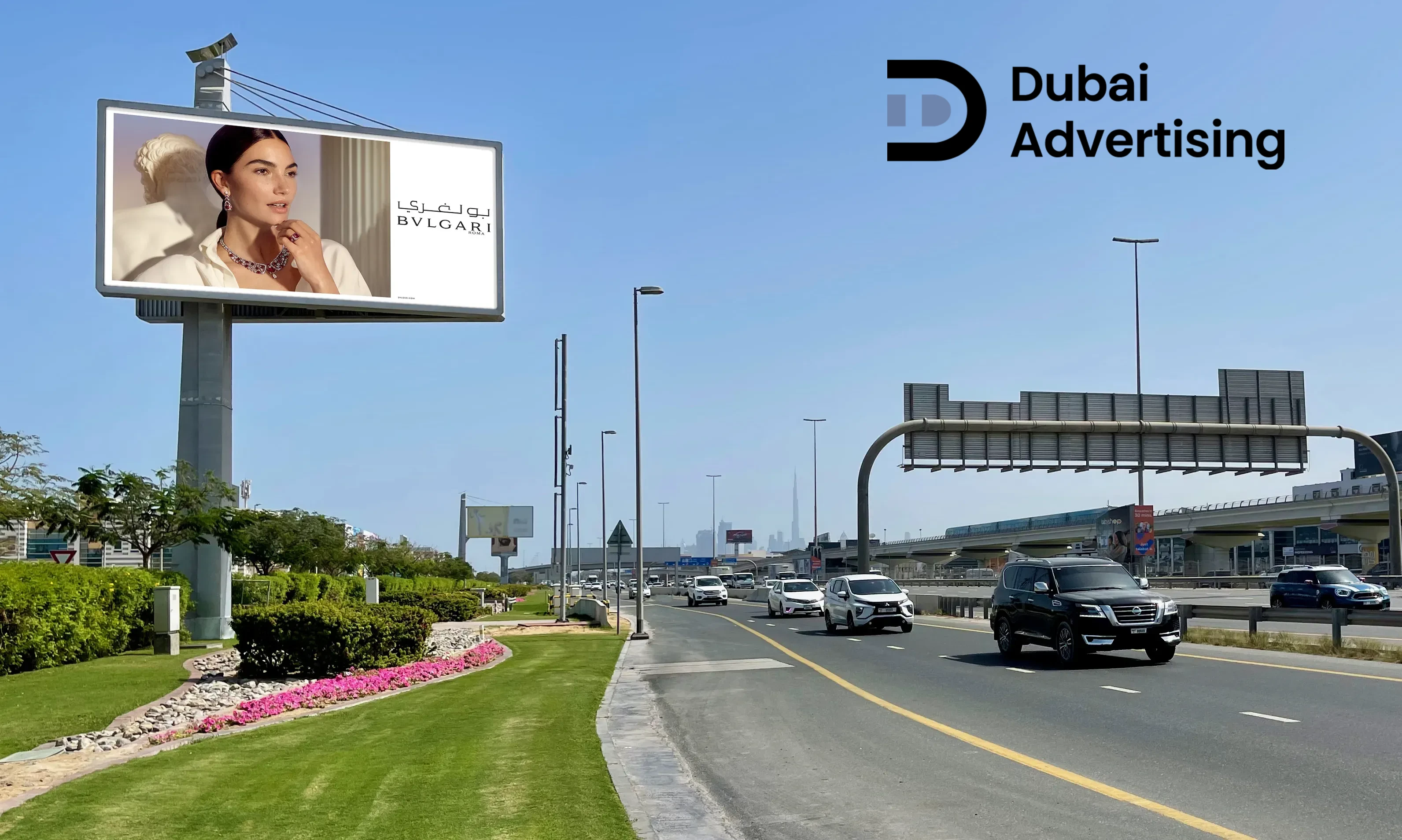
Out-of-home advertising remains a cornerstone of brand building in Dubai. Because residents spend significant time commuting via major arteries like Sheikh Zayed Road (E11) and Al Khail Road (E44), large-format billboards, bridge banners, and uni-poles deliver massive brand visibility.
- Landmark Locations: Premium locations near iconic structures like the Burj Khalifa, Dubai Mall, and major metro stations command high rates but offer unparalleled exposure to both affluent locals and international tourists.
- Digital OOH (DOOH): Programmatic digital billboards are increasingly popular, allowing brands to change creative assets dynamically based on time of day, weather, or live audience metrics.
Digital Performance Marketing and Social Media
With near-ubiquitous internet penetration and high smartphone usage, digital advertising drives direct-response campaigns for most businesses in Dubai.
- Search Engine Marketing (SEM): Google Ads dominates search intent. Businesses must optimize for both English and Arabic search queries to capture high-intent commercial traffic.
- Social Media Platforms: Meta (Instagram and Facebook), TikTok, and LinkedIn are heavily utilized across the UAE. Instagram and TikTok excel for B2C lifestyle, fashion, and hospitality brands, while LinkedIn is indispensable for B2B lead generation and corporate networking.
- Influencer Marketing: Influencer culture is exceptionally vibrant in Dubai. Collaborating with local content creators requires compliance with UAE influencer licensing regulations, administered by the Media Regulatory Office, which mandates that paid partnerships be explicitly disclosed using designated hashtags or platform labels.
Print, Radio, and Traditional Media
While digital channels command an increasing share of marketing budgets, traditional media retains niche effectiveness. English-language dailies like Gulf News and The National, alongside Arabic publications such as Al Bayan and Emarat Al Youm, reach established readership segments. Radio advertising remains popular among daily commuters tuning into stations broadcasting in English, Arabic, Malayalam, Hindi, and Tagalog, reflecting the city's diverse expatriate demographic.
Comparative Overview of Dubai Advertising Channels
| Channel Category | Primary Strengths | Ideal Use Case | Key Consideration |
|---|---|---|---|
| Outdoor (OOH / DOOH) | Massive visibility, high prestige, continuous exposure along major highways. | Brand awareness, luxury goods, real estate launches, major corporate campaigns. | High upfront production costs; strict permit requirements from Dubai Municipality or RTA. |
| Search Engine Marketing (SEM) | High commercial intent, immediate traffic acquisition, measurable conversions. | Capturing active buyers searching for specific services or e-commerce products. | High competition and cost-per-click (CPC) rates for competitive commercial keywords. |
| Social Media & Influencers | High engagement, precise demographic targeting, strong visual storytelling. | B2C retail, hospitality, fashion, lifestyle brands, and community building. | Requires mandatory Media Regulatory Office influencer licenses for paid partnerships. |
| Radio & Print | Reaches captive commuting audiences and established readership demographics. | Mass market announcements, localized retail promotions, multicultural targeting. | Lower direct trackability compared to digital performance marketing channels. |
Audience Targeting and Cultural Nuances
Dubai is a unique cosmopolitan microcosm where expatriates from over 200 nations live alongside UAE nationals. Crafting an effective advertising message requires careful audience segmentation.
Language Considerations
While English serves as the primary commercial language for business, administration, and a vast portion of the expatriate community, Arabic is the official language of the country. High-performing campaigns often deploy bilingual creative strategies. For government-facing campaigns, broad community outreach, or targeting Arab nationals and long-term residents, localized Arabic copy is essential. Furthermore, because of the massive South Asian and Southeast Asian expatriate populations, brands frequently run campaigns in Hindi, Malayalam, or Tagalog for specific retail and service sectors.
Cultural Sensitivity and Localization
Advertising content must strictly avoid imagery or messaging that violates public morals, religious beliefs, or cultural customs. This includes careful consideration of modest dress codes in visual media, respectful portrayal of local traditions, and absolute accuracy in religious or national holiday messaging, such as Ramadan and Eid. Campaigns launched during Ramadan often feature specialized community-focused messaging, adjusted operational hours, and evening-centric promotions.
Budgeting and Cost Considerations
Advertising costs in Dubai vary wildly depending on the channel, scale, and seasonality. Understanding financial expectations helps businesses avoid underfunding campaigns or misallocating resources.
- Outdoor Billboard Costs: Prime locations along Sheikh Zayed Road can cost anywhere from tens of thousands to hundreds of thousands of dirhams per month, excluding printing and installation fees.
- Digital Advertising (PPC/Paid Social): Costs per click and acquisition vary significantly by industry. Real estate, financial services, and luxury retail experience high competition, driving up digital ad bids, whereas niche B2B sectors may see lower volumes but higher conversion values.
- Agency Partners: Engaging a local full-service advertising agency or specialized digital marketing firm ensures adherence to regional compliance and provides access to established media buying networks, though agency retainers and commission structures must be factored into overall marketing budgets.
Step-by-Step Approach to Launching an Ad Campaign in Dubai
- Define Campaign Objectives and KPIs: Clearly establish whether your goal is brand awareness, lead generation, or direct e-commerce sales.
- Verify Licensing and Permits: Ensure your trade license covers your commercial activity and apply for any necessary municipal, RTA, or DET promotional permits.
- Conduct Audience Research: Segment your target market by language, nationality, income level, and media consumption habits.
- Develop Localized Creative Assets: Design bilingual or culturally tailored assets that comply with UAE content standards and avoid restricted claims.
- Execute and Monitor: Deploy campaigns across selected channels while closely tracking performance metrics, regulatory compliance, and budget utilization.
Frequently Asked Questions
Do I need a local trade license to advertise in Dubai?
Yes. To run formal commercial advertising campaigns, register business entities, or secure municipal permits in Dubai, you generally need a valid trade license issued by the Department of Economy and Tourism (DET) or an appropriate free zone authority. Operating without proper licensing can lead to severe fines and the shutdown of promotional activities.
Are social media influencers required to have a license in Dubai?
Yes. Content creators and influencers who receive financial compensation or material gifts in exchange for promoting brands on social media must obtain an individual influencer license from the Media Regulatory Office (MRO) or operate under a licensed agency to ensure legal compliance.
Can I advertise in languages other than Arabic and English?
Yes. Given Dubai's diverse demographic makeup, businesses frequently advertise in languages such as Hindi, Malayalam, Tagalog, and Mandarin, particularly for targeted retail, real estate, and community-focused campaigns, provided the content complies with UAE media regulations.
What are the rules for advertising discounts or sales?
You cannot run public sales, promotional discounts, or prize competitions without securing an official permit from the Dubai Economy (DET) beforehand. This ensures consumer protection standards are maintained and prevents misleading commercial practices.
How are outdoor billboards regulated in Dubai?
Outdoor advertising spaces are strictly controlled. Placement requires approval from the Dubai Municipality, property developers, or the Roads and Transport Authority (RTA) depending on whether the advertisement is on private property, a building facade, or near public transit infrastructure.
Conclusion and Next Actions
Advertising in Dubai for businesses offers extraordinary growth potential when approached with strategic discipline and regulatory awareness. To succeed, verify your licensing prerequisites, secure the necessary municipal and media permits, and tailor your creative messaging to resonate with the emirate's unique multicultural audience. Begin by auditing your current marketing materials against local compliance standards and consulting with qualified regional media specialists to build a balanced, high-impact campaign schedule.