Adult bearded dragons (Pogona vitticeps) typically live 10 to 15 years in captivity when provided with consistent, high-standard care. Maintaining their long-term health requires a minimum 120-gallon enclosure, a precise thermal gradient featuring a 95°F–105°F basking zone, linear T5 high-output UVB lighting, low humidity, and a diet composed of 80% leafy greens and 20% feeder insects.
Life Expectancy and Longevity Determinants
Understanding the lifespan potential of an adult bearded dragon requires examining both environmental control and biological management. In the wild across central Australia, Pogona vitticeps faces environmental extremes, seasonal food scarcity, high parasite loads, and predation, resulting in a average lifespan of 5 to 8 years. In captivity, where environmental pressures are eliminated, well-cared-for adults routinely reach 10 to 15 years, with exceptional individuals exceeding 18 years under optimal husbandry.
| Environment / Care Level | Lifespan |
|---|---|
| Wild | 5 - 8 Years |
| Captive (Average Care) | 8 - 10 Years |
| Captive (Optimal Care) | 12 - 15+ Years |
Achieving maximum longevity in a captive adult bearded dragon depends on four primary factors:
- UVB and Vitamin D3 Synthesis: Proper ultraviolet B (UVB) exposure enables photobiochemical conversion of 7-dehydrocholesterol in the skin into provitamin D3. Thermal energy then converts provitamin D3 into active Vitamin D3 (cholecalciferol), allowing the intestine to absorb dietary calcium. Without sufficient UVB light within the 290–315 nanometer wavelength, calcium absorption fails, triggering metabolic bone disease (MBD) and early mortality.
- Organ Health and Diet Control: Juveniles require high protein for rapid cellular growth, but adult bearded dragons suffer severe organ stress if fed excess protein or fat. Overfeeding insects leads to hepatic lipidosis (fatty liver disease), chronic renal disease, and obesity, significantly shortening their life expectancy.
- Parasite Management: Captive environments can exacerbate parasite loads if sanitation lags. Regular fecal screenings prevent organisms like Coccidia (Isospora amphiboluri) or pinworms (Oxyurids) from compromising gut barrier integrity and nutrient uptake.
- Genetic Background: Lineage plays a vital role. Inbreeding or breeding for specific color morphs (such as silkbacks or leatherbacks) can introduce genetic vulnerabilities, structural skin sensitivities, or shortened lifespans.
Enclosure Architecture and Environmental Parameters
A fully grown adult bearded dragon (typically reaching 18 to 24 inches from snout to tail tip by 18–24 months of age) requires a habitat designed to support natural behaviors such as thermoregulation, climbing, burrowing, and basking.
Terrarium Dimensions and Housing Construction
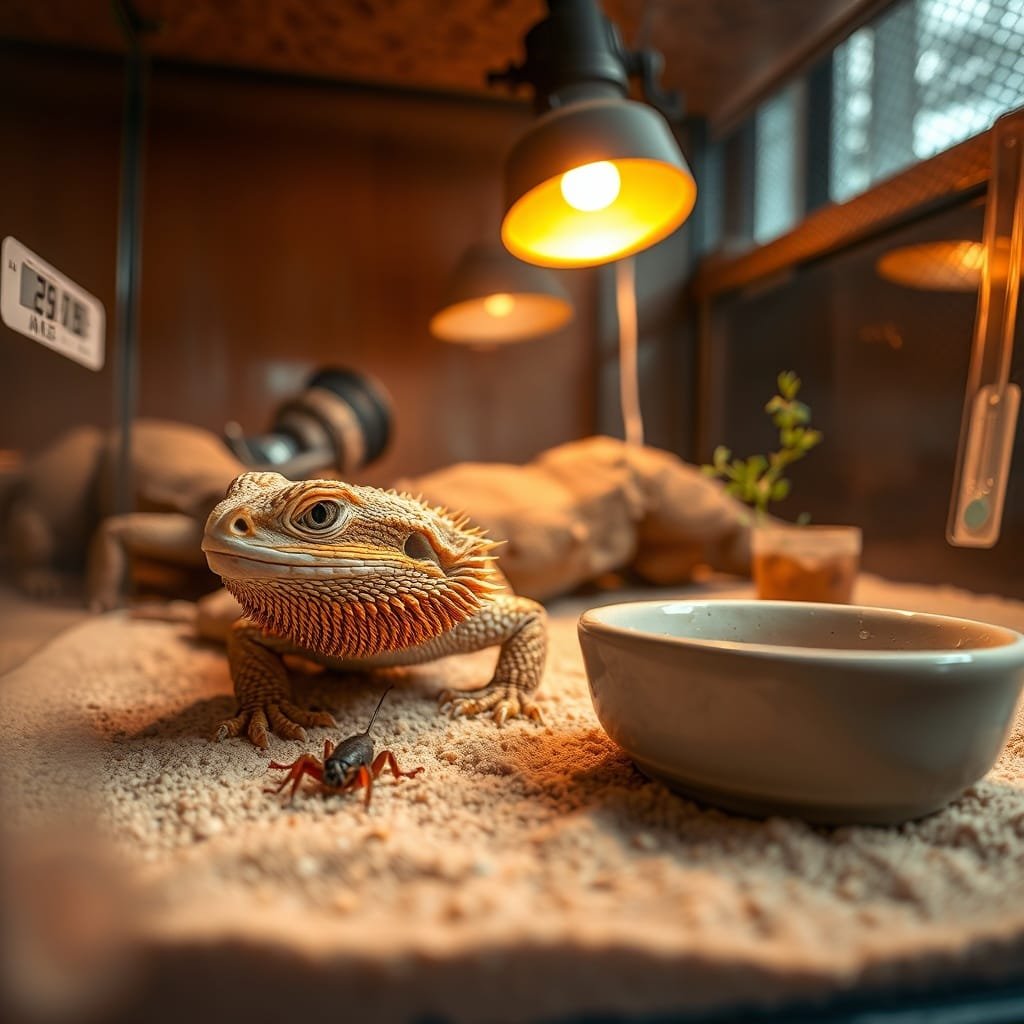
The absolute minimum recommended enclosure for a single adult bearded dragon is 48 inches long by 24 inches wide by 24 inches high (a 120-gallon footprint). Enclosures smaller than 120 gallons do not allow a sufficient distance between hot and cold ends to form a proper thermal gradient.
- PVC Enclosures: Highly recommended. PVC walls hold heat efficiently, resist moisture degradation, and feature opaque sides that reduce stress caused by external reflections.
- Wooden/Melamine Enclosures: Excellent thermal insulators, but all interior surfaces and seams must be sealed with non-toxic, low-VOC aquatic sealant to prevent moisture absorption and bacterial growth.
- Glass Terrariums: Common, but less efficient at retaining heat. Glass sides should be covered on three sides with opaque backgrounds to prevent territorial stress caused by the dragon seeing its own reflection.
Temperature Gradients and Heating Setup
Bearded dragons are ectothermic, relying on external heat sources to regulate internal metabolic functions, digest food, and maintain immune response. Enclosures must offer a continuous horizontal thermal gradient.
Enclosure Thermal Gradient (48" x 24" x 24")
- Hot Side:
- Basking Spot: 95°F - 105°F
- Ambient Hot: 85°F - 90°F
- Cool Side:
- Ambient Cool: 75°F - 80°F
- Linear T5 UVB Strip: Covers 50-70% of enclosure width
- Hot Side:
Surface Basking Temperature: 95°F to 105°F (35°C to 40°C). Measured directly using an infrared thermometer (temp gun) on the surface of the basking platform (slate rock, stone, or thick branch).
Warm Side Ambient Temperature: 85°F to 90°F (29°C to 32°C).
Cool Side Ambient Temperature: 75°F to 80°F (24°C to 27°C).
Nighttime Drop: Temperatures can safely fall to 65°F–75°F (18°C–24°C). If ambient temperatures drop below 65°F, use a non-light-emitting Ceramic Heat Emitter (CHE) or Deep Heat Projector (DHP) connected to a proportional thermostat to boost ambient warmth without interrupting circadian rhythms.
UVB Lighting and Photoperiod Standards
Substandard lighting is a primary cause of captive reptile decline. Adult bearded dragons require Ferguson Zone 3 to 4 ultraviolet light exposure across their basking area, yielding an Ultraviolet Index (UVI) of 3.0 to 5.0 at the basking surface.
- Linear T5 High Output (HO) Fixtures: The industry standard. Compact coil UVB bulbs or standard T8 bulbs do not provide sufficient light intensity across a 24-inch vertical distance or across a wide enough area for an adult frame.
- Bulb Rating: A 10.0 or 12% T5 HO linear tube (such as Zoo Med ReptiSun 10.0 T5 HO or Arcadia 12% D3+ T5 HO) placed inside a reflector fixture.
- Mounting Distance:
- Unobstructed (inside mesh): 12 to 18 inches above the basking surface.
- Through Screen Mesh: Mesh can block 30% to 50% of UV light. Adjust distances downward or use stronger fixtures (such as Arcadia 14%) to achieve the necessary UVI of 3.0–5.0 on the basking platform.
- Replacement Schedule: T5 HO bulbs must be replaced every 10 to 12 months, even if visible light is still produced, as the internal phosphor coating degrades and UVB output declines over time.
- Photoperiod: Maintain a light cycle of 12 hours light and 12 hours dark during spring and autumn, expanding to 14 hours light in peak summer, and reducing to 10 hours during winter.
Relative Humidity and Ventilation
The natural habitat of Pogona vitticeps consists of arid scrublands and woodlands. Enclosure relative humidity should be kept between 30% and 40%, with occasional brief drops or spikes between 20% and 50%.
- Risks of High Humidity (>55% sustained): Promotes proliferation of fungal spores and Pseudomonas bacterial strains within the respiratory tract, leading to upper respiratory infections (URI) or yellow fungus disease (Nannizziopsis guarroi).
- Risks of Low Humidity (<20% sustained): Causes eye irritation, kidney strain, and dysecdysis (retained shedding on toes and tail tip).
- Control Methods: Use top-mesh panels and lower front vents to encourage cross-ventilation. Keep water bowls shallow and place them on the cool side of the terrarium to limit evaporation.
Adult Nutrition and Supplementation Protocols
The dietary needs of a bearded dragon change dramatically as it matures. While juveniles need a diet heavy in animal protein to fuel growth, adults shift to a primarily herbivorous diet to protect liver and kidney function.
| Stage | Diet Composition |
|---|---|
| Juvenile (0-12 months) | 80% Live Insects / 20% Leafy Greens |
| Adult (18+ months) | 20% Live Insects / 80% Leafy Greens |
The 80/20 Herbivorous Baseline
Adult bearded dragons require a daily diet composed of 80% dark leafy greens and suitable vegetables, and only 20% live feeder insects.
Primary Staple Greens (Offer Daily)
- Collard greens
- Mustard greens
- Turnip greens
- Dandelion greens
- Endive (Chicory)
- Escarole
- Watercress
Secondary Vegetables (Offer 2–3 Times Per Week)
- Butternut squash, acorn squash, or yellow squash (grated or finely chopped)
- Bell peppers (red, yellow, or orange)
- Green beans
- Snap peas (chopped)
- Cactus pads (Nopales - spines completely removed)
Foods to Limit or Avoid
- High Oxalate Foods (Avoid or severely limit): Spinach, beet greens, and Swiss chard. Oxalic acid binds calcium molecules in the digestive tract, forming insoluble calcium oxalates and rendering dietary calcium unabsorbable.
- High Goitrogen Foods (Limit): Kale, cabbage, and broccoli. Excessive amounts can interfere with thyroid function and iodine absorption.
- High Water/Low Nutrient Foods (Avoid): Iceberg lettuce, celery, and cucumbers. These provide negligible nutritional value and can cause loose stools and dehydration.
- Fruits (Strictly limited treat - max once per month): Strawberries, blueberries, raspberries, and papaya. High sugar content disrupts hindgut fermentation microflora, accelerates dental caries (periodontal decay), and promotes obesity.
Feeder Insect Selection and Feeding Frequency
Adults do not require daily insect feeding. Offer live insects 2 to 3 days per week, limiting the portion size to what the dragon can consume within 5 to 10 minutes (typically 5 to 10 adult-sized insects per session, depending on the feeder species).
- Staple Insect Options:
- Dubia Roaches (Blaptica dubia): High protein-to-chitin ratio, good calcium-to-phosphorus balance.
- Black Soldier Fly Larvae (Hermetia illucens / Phoenix Worms): Naturally rich in calcium; high digestibility.
- Crickets (Acheta domesticus): Traditional staple; must be gut-loaded prior to feeding.
- Silkworms (Bombyx mori): Low fat, easy to digest, contain the enzyme serrapeptase.
- Treat/Occasional Insects (High Fat/Chitin - Limited Use):
- Superworms (Zophobas morio)
- Mealworms (Tenebrio molitor)
- Hornworms (Manduca sexta) – excellent for hydration relief.
- Waxworms (Galleria mellonella) – extremely high fat; reserve for underweight recovery.
Gut-Loading: All feeder insects must be gut-loaded 24 to 48 hours before being offered to the dragon. Feed insects high-nutrient greens, squash, carrots, and commercial calcium-rich gut-loading formulas to maximize nutrient delivery.
Dusting and Supplementation Schedule
To balance the dietary calcium-to-phosphorus ratio (which should ideally be 2:1), apply specialized dietary supplements to food:
- Calcium Carbonate (Without D3): Dust over greens or insects 3 times per week for healthy adults with optimal linear T5 UVB lighting.
- Calcium Carbonate (With D3): Dust insects 1 time per week if UVB lighting is optimal, or 2 times per week if using marginal lighting or dealing with high egg-laying demands in females.
- Multivitamin Powder (Containing Vitamin A or Beta-Carotene): Dust food once every 1 to 2 weeks. Preformed Vitamin A (retinol) can build up to toxic levels if over-supplemented, so choose products that utilize beta-carotene as a safer precursor where appropriate.
Substrates, Enclosure Hygiene, and Sanitation
Substrate selection for an adult bearded dragon involves balancing natural behavior with safety, sanitation, and ease of maintenance.
Non-Particle vs. Loose Substrates
While juvenile dragons face a high risk of intestinal impaction from accidental ingestion of loose substrate, healthy adult bearded dragons kept under proper lighting and thermal conditions can process small amounts of appropriate loose substrate. However, risks remain based on the substrate material chosen.
| Substrate Type | Pros | Cons | Impaction Risk | Recommended Use |
|---|---|---|---|---|
| Slate Tile / Ceramic Tile | Excellent heat retention, files down nails naturally, easy to sanitize, zero impaction risk. | Hard surface, does not allow natural digging behavior. | None | Highly Recommended |
| Non-Adhesive Shelf Liner / Zen Mat | Easy to wipe down, inexpensive, safe, sanitary. | Offers no digging enrichment, can degrade over time under high heat. | None | Highly Recommended |
| Paper Towels / Butcher Paper | Inexpensive, highly sanitary, easy to replace instantly. | Unappealing visually, requires frequent replacement, no digging. | None | Quarantine / Temporary |
| 50/50 Topsoil & Play Sand Mix | Allows natural digging and burrowing behavior, soft on joints. | Requires rigorous spot cleaning, potential bacterial buildup if wet. | Low (In healthy adults with proper heat/UVB) | Optional (Advanced) |
| Calcium Sand / Vita-Sand | Marketed as digestible calcium. | Clumps into a cement-like mass when wet in stomach acid; high impaction risk. | Extremely High | NEVER USE |
| Wood Chips / Walnut Shells | Looks natural. | Sharp edges cut intestinal walls, non-digestible, harbors bacteria and mold. | Extremely High | NEVER USE |
Routine Cleaning Protocols
Proper maintenance prevents toxic buildup of ammonia, bacterial spikes (Salmonella enterica), and parasitic re-infection:
- Daily Spot Cleaning: Remove uneaten insects, leftover greens, and feces immediately. Spot clean tiles or substrate using a reptile-safe disinfectant such as F10 Veterinary Disinfectant or diluted chlorhexidine gluconate (0.05%).
- Weekly Sanitation: Clean and disinfect food and water dishes using hot, soapy water followed by a veterinary disinfectant rinse. Thoroughly dry dishes before reintroducing them to the enclosure.
- Monthly Deep Clean: Strip the entire enclosure. Remove non-particle substrate for scrubbing and thermal/chemical disinfection. Sanitize all rocks, branches, and hideouts. Steam cleaners or diluted bleach solutions (1 part bleach to 32 parts water, rinsed thoroughly and dried until zero chlorine odor remains) work effectively.
Health Monitoring, Brumation, and Disease Prevention
Proactive care requires recognizing subtle physiological and behavioral shifts before they turn into critical medical issues.
| Clinical Parameter | Healthy Adult Indicator |
|---|---|
| Eyes | Clear, bright, alert, no swelling/discharge |
| Nostril Vents | Open, dry, clear of mucus or plugs |
| Tail Base & Fat Pads | Plump, firm temporal pads on top of head |
| Jaw Integrity | Firm, symmetrical, no rubbery softening |
| Vent Region | Clean, dry, free of caked fecal matter |
Navigating Adult Brumation
Brumation is a natural dormancy period triggered by seasonal shifts in photoperiod, ambient temperatures, and atmospheric pressure, typically occurring in autumn or winter.
- Behavioral Signs: Reduced activity, loss of appetite, spending days or weeks inside hides, infrequent defecation, and sleeping through ambient lighting.
- Distinguishing Brumation from Illness: During healthy brumation, an adult dragon should maintain its body weight. Weigh the dragon weekly using a gram scale. A loss of more than 4% to 5% of overall body weight indicates underlying illness, heavy parasite loads, or severe dehydration—not standard brumation.
- Brumation Protocol:
- Have a certified exotics veterinarian complete a routine fecal check before letting the dragon enter full brumation. High parasite loads can overwhelm a dormant immune system.
- Ensure the gut is clear of food before lowering temperatures; undigested food in a dormant dragon’s digestive tract will decay and cause fatal sepsis.
- Keep clean water available at all times. Hydrate the dragon gently by offering drops of water on its snout every 10–14 days.
Common Health Issues in Adult Bearded Dragons
1. Metabolic Bone Disease (MBD)
- Causes: Inadequate UVB light exposure, low temperatures preventing metabolic processing, or insufficient dietary calcium supplementation.
- Symptoms: Tremors, twitching digits, softening of the lower jaw (rubber jaw), lethargy, dragging hind legs, or fractures from minimal stress.
- Prevention/Treatment: Ensure T5 HO linear UVB lights are changed on schedule, keep basking temperatures at 95°F–105°F, and maintain a consistent calcium dusting routine.
2. Periodontal Disease (Mouth Rot)
- Causes: Feeding high-sugar fruits, soft diets lacking structural crunch, or mechanical injuries to mouth tissue.
- Symptoms: Excessive yellow/brown calculus buildup along tooth lines, inflamed pink or red gums, pus accumulation, swelling of the lower jaw, or reluctance to chew tough greens.
- Prevention: Eliminate high-sugar fruits from the diet and provide fibrous, tough-textured greens.
3. Hepatic Lipidosis (Fatty Liver Disease)
- Causes: Feeding high-fat diets (excessive mealworms, waxworms, superworms) or maintaining juvenile protein levels (high insect ratio) into adulthood.
- Symptoms: Lethargy, anorexia, yellow-tinted urates (jaundice), swelling of the abdomen, and liver failure.
- Prevention: Strictly follow the 80% vegetation to 20% insect ratio for adults and avoid feeding high-fat insects as primary meals.
4. Dystocia (Egg Binding in Females)
- Causes: Female bearded dragons can produce infertile eggs without mating. Inadequate calcium, poor basking conditions, lack of a suitable lay-box, or physical exhaustion can prevent successful egg laying.
- Symptoms: Abdominal distension, lethargy, persistent digging followed by extreme exhaustion, and lack of droppings.
- Prevention/Action: Provide female adults with a lay-box filled with moist topsoil/play sand mix if digging behavior increases. If the female fails to lay within 48 hours of heavy straining, immediate veterinary care (calcium/oxytocin therapy or surgery) is required.
Comparative Overview: Developmental Care Parameters
This table outlines key differences between juvenile and adult care parameters to prevent common care errors during the transition to adulthood.
| Parameter | Juvenile Stage (0–12 Months) | Sub-Adult Stage (12–18 Months) | Adult Stage (18+ Months) |
|---|---|---|---|
| Minimum Enclosure Size | 40-Gallon Breeder (36" x 18" x 18") | 75-Gallon (48" x 18" x 18") | 120-Gallon (48" x 24" x 24") |
| Target Basking Surface Temp | 105°F – 110°F (40°C – 43°C) | 100°F – 105°F (38°C – 40°C) | 95°F – 105°F (35°C – 40°C) |
| Dietary Proportion | 80% Live Insects / 20% Greens | 50% Live Insects / 50% Greens | 20% Live Insects / 80% Greens |
| Insect Feeding Frequency | 2 to 3 times per day | 1 time per day | 2 to 3 times per week |
| Vegetable Feeding Frequency | Offered daily (often ignored) | Offered daily | Offered daily (fresh portion) |
| Calcium Supplementation | 5 days per week | 4 days per week | 3 days per week (Pure Calcium) |
| Multivitamin Frequency | 2 days per week | 1 day per week | Once every 1 to 2 weeks |
| Target UVI Index (Basking) | 3.0 – 4.0 | 3.0 – 5.0 | 3.0 – 5.0 (Ferguson Zone 3–4) |
| Primary Health Risk | Severe Impaction / Rapid MBD | Growth Stunting / MBD | Obesity / Hepatic Lipidosis / Dystocia |
Frequently Asked Questions
How long do adult bearded dragons live in captivity compared to the wild?
Captive adult bearded dragons live an average of 10 to 15 years, with optimal care extending lifespan to 18 years. In contrast, wild bearded dragons rarely live past 5 to 8 years due to harsh seasonal shifts, predator pressure, unresolved parasite burdens, and lack of veterinary care.
How can I distinguish between normal brumation and illness in an adult bearded dragon?
A brumating adult bearded dragon will seek out darker, cooler hides, lower its activity level, and reduce its food intake, but it will maintain a stable body weight. Weigh your dragon weekly using a digital gram scale. If weight drops by more than 4% to 5%, or if you notice runny stools, swollen joints, black-bearding while resting, or eye discharge, consult a veterinarian to test for parasites or systemic infections.
Why does my adult bearded dragon refuse to eat green vegetables?
Adult dragons often become addicted to high-protein insects if fed a juvenile diet for too long. To transition an adult to greens, temporarily stop offering insects for several days. Offer fresh, bright greens daily, chopped alongside vibrant vegetables like yellow squash or red bell peppers to capture visual interest. You can also sprinkle dried edible flower toppers or black soldier fly larvae over the greens to encourage foraging. Never starve a sick or underweight dragon to force green intake.
What is the safest substrate for an adult bearded dragon enclosure?
Non-particle substrates such as slate tile, ceramic tile, or non-adhesive shelf liners are the safest options. They remove the risk of intestinal impaction, are easy to sanitize, and naturally trim the dragon's claws as it walks. For healthy adults with verified, optimal heat and lighting, a 50/50 mix of organic topsoil and play sand can be used for digging enrichment, but avoid all calcium sand and wood chip products.
How often should an adult bearded dragon be bathed?
Bathing is not strictly required unless recommended by a exotics veterinarian for clinical reasons. Healthy adult dragons absorb water through drinking, not their skin or vent. If your dragon enjoys baths or needs help shedding stuck skin on its tail or toes, offer a shallow bath in tepid water (85°F–90°F) for 10 to 15 minutes once a week or as needed. Never leave a dragon unattended in water, and keep the water depth at shoulder level or below.
Do female adult bearded dragons lay eggs if kept without a male?
Yes. Female adult bearded dragons can develop infertile eggs without mating. Watch for symptoms such as sudden abdominal swelling, frantic digging behavior, and increased restlessness. Provide a lay-box filled with moist play sand or topsoil so she can dig a nest and deposit her clutch safely, preventing fatal egg binding (dystocia).
Practical Action Plan for Long-Term Care
To give an adult bearded dragon the best potential for a 15+ year lifespan, follow these core steps:
- Audit Housing Geometry and Parameters: Upgrade to a minimum 120-gallon (48" x 24" x 24") enclosure. Measure basking surface temperatures using a digital infrared temp gun to ensure a reading between 95°F and 105°F, with a cool-side drop to 75°F–80°F.
- Standardize Lighting Infrastructure: Install a linear T5 HO 10.0 or 12% UVB bulb covering 50% to 70% of the enclosure width. Set a calendar reminder to replace the bulb every 10 to 12 months.
- Enforce the 80/20 Dietary Transition: Shift daily meals to collard greens, dandelion greens, mustard greens, and turnip greens. Limit live feeder insects (such as Dubia roaches or black soldier fly larvae) to 2–3 short feeding sessions per week.
- Establish Veterinary Diagnostics: Schedule an annual physical exam with a certified exotics veterinarian (Association of Reptilian and Amphibian Veterinarians). Bring a fresh fecal sample to screen for Coccidia and intestinal worms once a year, or prior to winter brumation.