Taking prescription ADHD medication does not automatically prevent you from securing affordable, high-quality life insurance. Insurance underwriters evaluate your specific medication, dosage stability, prescribing history, mental health comorbidities, and overall lifestyle risk. Applicants with well-managed Attention-Deficit/Hyperactivity Disorder (ADHD) who maintain consistent treatment often qualify for Standard or even Preferred rate classes, provided secondary risk factors are absent.
Disclaimer: This guide provides general educational information regarding life insurance underwriting principles. It does not constitute medical, legal, or personal financial advice. Insurance guidelines vary by carrier, jurisdiction, and individual underwriting assessment. Consult a licensed insurance professional and your healthcare provider for guidance specific to your situation.
How Life Insurance Underwriters Assess ADHD Medication
When you apply for a medically underwritten life insurance policy, the insurance carrier performs a comprehensive risk assessment. The objective is not to penalize applicants for seeking medical care, but to evaluate overall mortality risk and condition management.
ADHD is one of the most common neurodevelopmental conditions, affecting millions of adults and children. Modern underwriting protocols view ADHD primarily as a manageable condition rather than a high-risk medical impairment. However, underwriters pay close attention to how the condition is managed—specifically looking at prescription history, dosage stability, and secondary mental health conditions.
- Application Submitted
- Rx Database Check & MIB Report
- Medical Records (APS)
- Risk Classification & Rate Determination
During the underwriting process, insurance carriers rely on several verification tools to confirm your medical history:
- Prescription History Databases: Carriers use automated prescription database checks, such as Milliman IntelliScript or LexisNexis ScriptCheck, to review your prescription history over the past 3 to 7 years. These tools reveal the exact medications prescribed, fill frequencies, dosage changes, and prescribing physicians.
- MIB Group Reports: The MIB Group operates a secure information exchange for life and health insurers. If you previously applied for coverage and disclosed a condition or had an adverse underwriting decision, it may appear in an MIB report code.
- Attending Physician Statements (APS): If your medication profile involves high dosages, recent changes, or multiple psychiatric drugs, the underwriter will request an APS from your primary care physician or psychiatrist.
- Medical Exam Results: A standard paramedical exam involves blood and urine samples. The urine screen confirms the presence of prescribed stimulants or other medications, verifying that your lab results align with your self-reported medical history.
Stimulant vs. Non-Stimulant Medications: Underwriting Perspectives
Insurers categorize ADHD medications based on their pharmacologic classification, controlled substance schedule, and risk profile. Understanding how carriers view different drug classes helps set clear expectations for the application process.
Central Nervous System (CNS) Stimulants
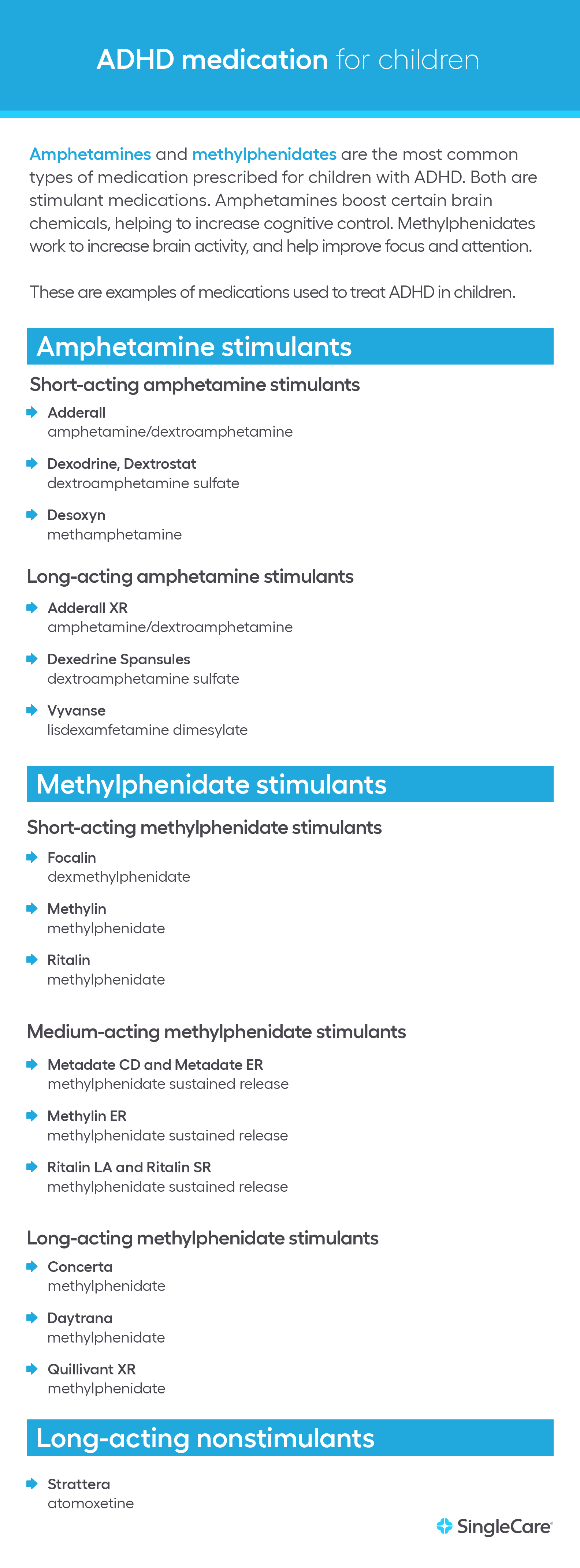
CNS stimulants are the most frequently prescribed medications for ADHD. They include amphetamine-based drugs (such as Adderall, Vyvanse, and Dexedrine) and methylphenidate-based drugs (such as Ritalin, Concerta, and Focalin). Because these drugs are Schedule II controlled substances, underwriters review them with specific criteria in mind:
- Dosage Stability: Staying on a consistent dose for 6 to 12 months demonstrates therapeutic stability. Frequent dosage increases or frequent changes between different stimulant brands can signal unmanaged symptoms or treatment resistance.
- Off-Label Prescription Use: If a stimulant is prescribed for off-label indications—such as chronic fatigue, severe depression, or weight management—the underwriter will evaluate the underlying condition rather than the ADHD diagnosis itself.
- Abuse Potential and Compliance: Underwriters check prescription fill records to ensure medications are filled regularly (indicating compliance) without premature refills (which could suggest overuse or diversion).
Non-Stimulant Medications
Non-stimulant ADHD medications include selective norepinephrine reuptake inhibitors (SNRIs) like atomoxetine (Strattera) and viloxazine (Qelbree), as well as alpha-2 adrenergic agonists like guanfacine (Intuniv) and clonidine (Kapvay).
Insurers generally view non-stimulant medications favorably because they carry no abuse potential and are not controlled substances. However, alpha-2 agonists and SNRIs are also prescribed for hypertension, anxiety, or depression. Underwriters will review medical records to confirm the exact diagnosis for which the drug was prescribed.
Polypharmacy and Multiple Prescriptions
Polypharmacy—the simultaneous use of multiple psychotropic medications—is a significant underwriting focus. If an applicant takes an ADHD stimulant alongside an antidepressant (such as an SSRI like sertraline), an anti-anxiety medication (such as a benzodiazepine), or a sleep aid, underwriters evaluate the cumulative psychiatric load.
Taking one stable ADHD medication alongside a low-dose antidepressant is common and often acceptable for Standard rates. However, taking three or more psychiatric medications typically prompts a deeper APS review and may result in a higher premium rating.
Core Risk Factors Beyond Medication
Life insurance underwriters do not evaluate ADHD medication in isolation. Instead, they look at how ADHD affects your broader health, safety, and daily functioning.
- ADHD Underwriting Evaluation
- Comorbidities
- Anxiety
- Depression
- Substance Use
- Lifestyle & MVR
- Driving History
- Employment
- High-Risk Hobbies
- Treatment Track
- Doctor Visits
- Rx Fill Rate
- Dosage Changes
- Comorbidities
1. Mental Health Comorbidities
According to clinical guidelines referenced by the National Institute of Mental Health (NIMH), ADHD frequently co-occurs with other mental health conditions. Underwriters carefully screen for:
- Depression and Anxiety: Mild, well-controlled anxiety or situational depression usually has minimal impact on premiums. Severe, recurrent depression or a history of hospitalization can result in table ratings or postponed applications.
- Substance Use History: Because individuals with untreated ADHD face higher statistical risks for substance use disorders, underwriters examine alcohol and drug history closely. A history of alcohol abuse or illicit drug use alongside ADHD usually leads to rated policies or initial coverage declines until long-term recovery is established.
- Bipolar Disorder or Mood Instability: Co-occurring mood disorders require comprehensive psychiatric medical records and often result in rated policies.
2. Driving Record (Motor Vehicle Report)
Because impulse control and executive function challenges can affect driving performance, life insurance companies pull your Motor Vehicle Report (MVR). A clean driving record demonstrates effective symptom control. Conversely, multiple speeding tickets, reckless driving charges, or DUIs/DWIs—especially when combined with an ADHD diagnosis—can lead to steep premium surcharges or outright denial.
3. Employment and Financial Stability
Underwriters assess occupational and financial stability as indirect indicators of life management. Long-term employment in stable roles and a clean financial background (no recent bankruptcies) support a favorable risk assessment. High-risk occupations or dangerous hobbies (such as skydiving or amateur racing) will be underwritten separately based on their specific risk profiles.
Life Insurance Rate Classes and Premium Impacts
Life insurance policies are priced according to risk classes. The table below illustrates how different ADHD medical profiles typically correspond to underwriting classifications and expected premium costs.
| Rate Class | Typical ADHD Profile | Medical & Lifestyle Requirements | Premium Cost Impact |
|---|---|---|---|
| Preferred Plus | Adult diagnosed with ADHD; stable low-to-moderate dosage for 2+ years; no secondary mental health conditions. | Perfect driving record; low BMI; excellent lab results; regular doctor checkups; no tobacco use. | Lowest available rate baseline (0% increase). |
| Preferred | Mild ADHD managed with consistent stimulant or non-stimulant therapy; minor, fully resolved secondary conditions. | Clean MVR; minor health flags (e.g., slightly elevated cholesterol); compliant prescription refills. | Approx. 10% to 25% above Preferred Plus. |
| Standard | Moderate ADHD; stable medication history; stable co-occurring mild anxiety or depression treated with a single medication. | Acceptable driving record (1 minor moving violation); overall good health; consistent doctor visits. | Standard base rate (approx. 30% to 50% above Preferred Plus). |
| Table Rated (Substandard) | Higher-dose stimulant therapy; recent dosage changes; co-occurring moderate depression; past driving infractions. | History of minor MVR issues; multiple psychiatric medications; incomplete medical follow-up. | Base rate + 25% to 150%+ depending on Table letter/number. |
| Postponed / Declined | Unmanaged ADHD; current alcohol or substance abuse; recent suicide ideation or hospitalization; severe MVR violations (DUI). | Unstable treatment plan; lack of medical oversight; active substance rehabilitation. | Application delayed until stability (1–5 years) is proven. |
Note: Table ratings typically add 25% per table (Table A/1 is +25%, Table B/2 is +50%, etc.) above the Standard rate.
Policy Types for Applicants Taking ADHD Medication
Depending on your medical history, severity of symptoms, and coverage goals, several policy types are available:
- Choosing the Right Policy
- Fully Underwritten
- Best Rates
- Medical Exam
- Full APS Review
- Simplified Issue
- No Medical Exam
- Rx Database Check
- Moderate Cost
- Guaranteed Issue
- No Health Check
- Higher Cost
- Graded Benefit
- Fully Underwritten
Fully Underwritten Term or Permanent Life Insurance
- Best For: Individuals with stable ADHD, consistent medication usage, good overall health, and clean driving records.
- Process: Requires a full application, prescription history check, blood/urine paramedical exam, and potentially an APS from your physician.
- Outcome: Offers the lowest premium rates and highest coverage amounts (e.g., $250,000 to $5,000,000+).
Simplified Issue Life Insurance
- Best For: Applicants who prefer to skip the physical medical exam or who have minor health complexities that might lead to minor table ratings on fully underwritten plans.
- Process: No medical exam required. You answer detailed health questions, and the insurer checks prescription databases and MIB records.
- Outcome: Fast approval times, but higher premiums per dollar of coverage compared to fully underwritten plans. Coverage limits are typically capped (e.g., up to $500,000).
Guaranteed Issue Life Insurance
- Best For: Applicants with severe comorbidities, active substance abuse recovery, or multiple coverage rejections who cannot qualify for traditional plans.
- Process: No health questions and no medical exams. Acceptance is guaranteed if you meet age requirements (typically ages 50 to 85).
- Outcome: Highest cost per dollar of coverage. Death benefits are generally limited (e.g., $25,000 maximum) and usually feature a graded death benefit period (2 to 3 years) before full benefits kick in for natural causes of death.
Employer-Sponsored Group Life Insurance
- Best For: Anyone taking ADHD medication who wants baseline coverage without medical underwriting.
- Process: Offered as an employee benefit during open enrollment or hiring onboardings.
- Outcome: Guaranteed coverage up to specified policy limits (e.g., 1x to 2x annual salary) regardless of ADHD diagnosis, prescription history, or secondary conditions.
Step-by-Step Guide to Applying for Life Insurance with ADHD
To secure the most competitive life insurance rates while taking ADHD medication, follow this step-by-step approach:
Step 1: Gather Your Medical and Prescription Information
Before starting an application, compile a complete list of your medical history:
- Name, dosage, and frequency of all current ADHD medications.
- Name and contact information for your prescribing physician or psychiatrist.
- Approximate date of initial ADHD diagnosis.
- History of any former ADHD medications and reasons for switching (e.g., side-effect management vs. lack of efficacy).
Step 2: Check Your Driving Record
Because insurers review your Motor Vehicle Report, request a copy from your state's Department of Motor Vehicles (DMV). Ensure any old violations have expired from your record before submitting a life insurance application.
Step 3: Maintain Treatment Adherence
Insurers look for consistency. Ensure you see your prescribing doctor at least once a year for routine follow-ups and fill your prescriptions on schedule. Avoid applying immediately after a major prescription modification; wait 6 to 12 months after a dosage adjustment to establish stability.
Step 4: Work with an Independent Insurance Broker
An independent insurance broker represents multiple carriers rather than a single insurance company. Underwriting guidelines for ADHD and psychiatric medications vary widely between insurance companies:
- Carrier A might assign a Standard rate for an applicant taking a high-dose stimulant.
- Carrier B might offer a Preferred rate for the exact same medical profile. An independent broker can pre-screen your profile anonymously across dozens of carriers to identify the company with the most favorable guidelines.
Step 5: Complete the Application Disclosing All Information
Never omit or conceal an ADHD diagnosis or prescription. Insurance companies cross-reference automated databases. Failing to disclose a prescription constitutes misrepresentation, which can lead to application denial or policy cancellation during the contestability period.
Common Mistakes to Avoid
- Stopping Medication Before the Medical Exam: Some applicants foolishly stop taking prescribed stimulants days before their paramedical exam to clear the drug from their urine screen. Do not do this. It is dangerous to stop prescribed medication without physician oversight. Furthermore, the prescription database will still show your refill history, and an unannounced absence of the drug in your urine screen raises severe red flags regarding treatment non-compliance.
- Applying During a Medication Transition: If your doctor is currently adjusting your drug, dosage, or therapeutic routine, delay your application until your new regimen has been stable for at least 6 months.
- Assuming ADHD Causes Automatic Denial: Many people with ADHD delay buying life insurance because they assume they won't qualify for reasonable rates. In reality, hundreds of thousands of adults taking ADHD medications hold Preferred and Standard life insurance policies.
- Failing to Explain Context for Off-Label Use: If you take a drug like Modafinil or Adderall for shift-work sleep disorder, daytime drowsiness, or another non-ADHD condition, ensure your doctor clearly notes the specific diagnosis in your medical records so underwriters do not infer unmanaged psychiatric conditions.
Frequently Asked Questions
Does taking Adderall or Vyvanse make life insurance more expensive?
Not necessarily. If you take a stable dosage of Adderall or Vyvanse, visit your prescribing physician regularly, have no severe secondary psychiatric conditions, and maintain a clean driving record, you can qualify for standard or preferred premium rates. Premiums increase primarily if there are high dosages, frequent medication adjustments, or co-occurring risk factors like depression or driving violations.
Can life insurance companies check my prescription history?
Yes. Life insurance companies use automated prescription databases provided by consumer reporting agencies such as Milliman IntelliScript and LexisNexis ScriptCheck. These databases provide underwriters with a multi-year history of your filled prescriptions, dosages, fill frequencies, and prescribing doctors.
Will I be denied life insurance if I have both ADHD and depression?
Having co-occurring ADHD and depression does not mean an automatic denial. If both conditions are mild to moderate, well-managed, and stable with prescribed therapy, most insurance companies will offer coverage at Standard or mild Table rates. However, recent psychiatric hospitalizations, suicide ideation, or severe unmanaged depression will lead to postponed or declined applications.
How long should my ADHD medication dosage be stable before I apply?
Most life insurance underwriters prefer to see at least 6 to 12 months of consistent medication dosage and treatment stability. Applying immediately after switching medications or significantly increasing your dosage may result in the underwriter postponing your application or placing it in a higher risk tier until stability is proven.
Should I stop taking my ADHD medication before the life insurance medical exam?
No, never stop taking prescribed medication for a life insurance exam. Sudden discontinuation can cause severe withdrawal symptoms and health risks. Furthermore, underwriters check prescription database records; if your urine sample tests negative for a prescribed drug, the carrier will flag your file for treatment non-compliance or non-disclosure.
Summary and Next Steps
Securing life insurance while taking ADHD medication is straightforward when approached correctly. The key to obtaining affordable rates lies in demonstrating treatment compliance, medical stability, and an overall low-risk lifestyle profile.
- Maintain Regular Medical Care: Keep up with annual doctor visits and fill prescriptions consistently.
- Review Your Health Profile: Ensure co-occurring conditions like anxiety or blood pressure are well managed.
- Consult an Independent Broker: Compare underwriting guidelines across multiple carriers to find the best match for your specific medication and dosage profile.
By preparing your medical documentation and selecting an insurer whose guidelines favor your health profile, you can secure robust financial protection for your family at competitive rates.