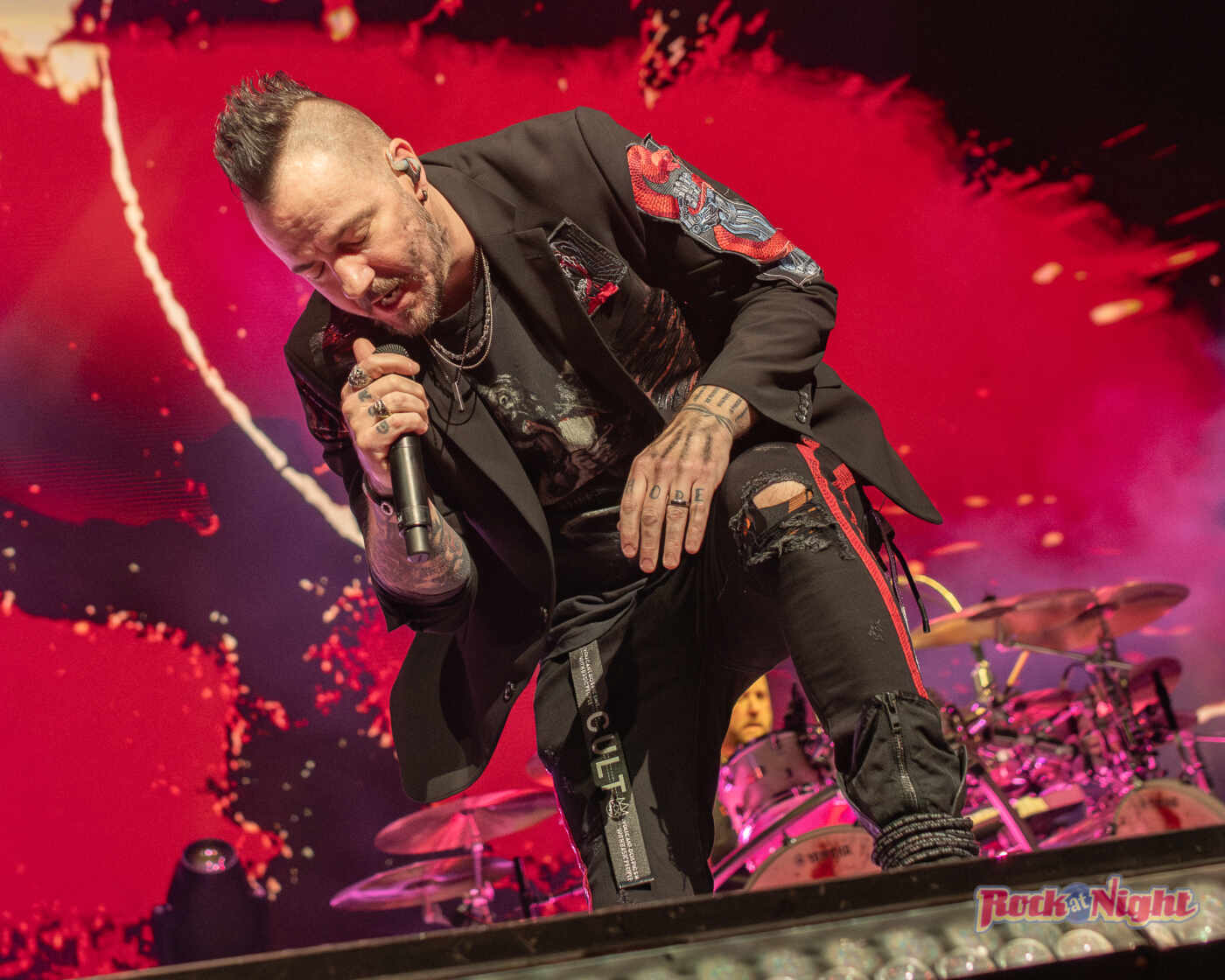
In January 2013, lead vocalist and founding member Adam Gontier abruptly departed Three Days Grace, citing a non-life-threatening health issue and a desire to pursue new creative directions. The sudden resignation occurred right before a major co-headlining tour, prompting the Canadian rock band to recruit Matt Walst, who eventually became their permanent frontman.
The Timeline of Adam Gontier’s Departure
The split between Adam Gontier and Three Days Grace unfolded rapidly during the winter of 2012–2013, taking fans and the rock community by surprise. Just a few months prior, in October 2012, Three Days Grace had released their fourth studio album, Transit of Venus. The record marked an experimental phase for the group, incorporating electronic elements and synths alongside their established post-grunge sound.
Behind the scenes, strain was building within the band. In December 2012, as Three Days Grace was preparing for an extensive co-headlining tour with Shinedown, Gontier notified his bandmates—bassist Brad Walst, guitarist Barry Stock, and drummer Neil Sanderson—that he was resigning from the group. The communication was delivered via a legal letter written by Gontier's attorney rather than an in-person meeting, which exacerbated tension among the members.
On January 9, 2013, Three Days Grace officially announced Gontier's departure to the public. In their statement, the remaining members expressed shock and disappointment regarding the timing, as rehearsals for their upcoming tour were already underway. To fulfill their touring obligations, the band immediately brought in Matt Walst—the lead singer of My Darkest Days and brother of bassist Brad Walst—as a temporary replacement.
Official Statements vs. Real Reasons: Health, Addiction Myths, and Creative Differences
When the news of Gontier's exit broke, widespread speculation emerged regarding the underlying causes. Because Gontier had famously struggled with oxycodone addiction in 2005—an experience that heavily inspired the band's landmark 2006 album One-X—many fans speculated that he had suffered a relapse. However, both Gontier and the band confirmed that substance abuse was not the primary driver of his 2013 departure.
1. The Official Health Explanation
The initial statement released by Gontier's legal representative cited a "non-life-threatening health issue" as the formal reason for his immediate resignation. Gontier later clarified that physical exhaustion, stress, and mental fatigue had taken a severe toll on his overall well-being. Years of continuous touring, high-pressure studio sessions, and performance expectations had created an unsustainable living situation, prompting him to prioritize his physical and psychological health.
2. Creative Fatigue and Musical Direction
Beyond health considerations, deep creative differences had developed between Gontier and his bandmates during the writing and recording of Transit of Venus. Gontier voiced frustration with the increasingly commercial direction of the band's songwriting and the influence of record label executives on their artistic choices. He expressed a desire to create music that felt more authentic, personal, and stripped down, whereas the band was moving toward slicker, synth-infused rock production.
In subsequent interviews, Gontier stated that he felt musically suffocated within the existing framework of Three Days Grace. He felt that the band had become predictable and that he was writing songs according to a formula rather than genuine artistic inspiration.
3. Interpersonal Tension and Communication Breakdown
The demanding schedule of a internationally successful rock band frequently strains personal relationships. By late 2012, communication between Gontier and the other members had largely broken down. Rather than resolving artistic conflicts directly, internal friction escalated, culminating in Gontier choosing to send a formal resignation letter through his attorney to establish a firm break from the organization.
Immediate Impact on Three Days Grace: The Matt Walst Era Begins
Gontier's resignation left Three Days Grace in a challenging position. With a major North American tour alongside Shinedown scheduled to begin in February 2013, the band had weeks to find a capable lead singer who could deliver Gontier's signature vocal lines and maintain the energy of their live performances.
| Timeframe | Three Days Grace Lineup Transition |
|---|---|
| 1997–2012 | Adam Gontier (Lead Vocals/Guitar), Brad Walst, Neil Sanderson, Barry Stock |
| 2013 | Adam Gontier departs; Matt Walst steps in as guest touring vocalist |
| 2014–2024 | Matt Walst officially named permanent lead frontman |
| 2024+ | Adam Gontier returns; band operates with Dual Lead Vocalists |
Matt Walst learned the setlist quickly and stepped in for the 2013 tour. His familiarity with the band members—having grown up around them and co-written several songs on their 1997 self-titled debut—helped smooth the live transition. Although early audiences were divided over seeing a new frontman perform classic tracks like "I Hate Everything About You," "Never Too Late," and "Animal I Have Become," Walst's high-energy stage presence secured his standing.
In March 2014, Three Days Grace officially declared Matt Walst a full-time member of the band. Together, they released several studio albums:
- Human (2015): The first full-length album featuring Matt Walst on lead vocals, featuring hit singles like "Painkiller" and "I Am Machine."
- Outsider (2018): Continued the band's hard-rock direction, yielding chart-topping mainstays such as "The Mountain" and "Infra-Red."
- Explosions (2022): Solidified Matt's tenure with tracks like "So Called Life" and "Lifetime," maintaining the band's record for the most number-one songs on the Billboard Mainstream Rock chart.
Adam Gontier’s Post-2013 Musical Journey
After stepping away from Three Days Grace in 2013, Adam Gontier took time to focus on personal wellness, family, and independent creative endeavors. He initially embarked on acoustic solo tours across North America, performing stripped-down versions of songs he had written throughout his career, along with new solo material.
Formation of Saint Asonia
In 2015, Gontier returned to heavy rock by forming the supergroup Saint Asonia alongside Staind guitarist Mike Mushok, former Finger Eleven bassist Rich Beddoe (later replaced), and bassist Corey Lowery. The group offered Gontier the creative freedom and heavier guitar-driven sound he had missed.
Saint Asonia released several projects that were well received by hard-rock listeners:
- Saint Asonia (2015)
- Flawed Design (2019)
- Introvert EP / Extrovert EP (2022)
Through Saint Asonia, Gontier re-established his presence on mainstream rock radio with tracks like "Better Place," "Devastated," and "Above It All." He also participated in guest features, acoustic collaborations, and international solo tours during the late 2010s and early 2020s.
Comparing the Eras of Three Days Grace
The transition from Adam Gontier to Matt Walst divided Three Days Grace's career into distinct musical chapters. The chart below summarizes key differences between the original Gontier era, the Matt Walst era, and the subsequent dual-vocalist era.
| Feature / Metric | Adam Gontier Era (2003–2013) | Matt Walst Era (2014–2024) | Dual-Vocalist Era (2024–Present) |
|---|---|---|---|
| Primary Vocal Style | Gritty, raspy, emotionally raw, post-grunge baritone/tenor | Aggressive, high-energy, modern hard-rock/alternative | Combination of raspy classic grit and high-octane modern vocals |
| Key Studio Albums | Three Days Grace, One-X, Life Starts Now, Transit of Venus | Human, Outsider, Explosions | Upcoming collaborative studio work |
| Lyrical Themes | Addiction, internal struggle, isolation, emotional recovery | Resilience, external conflict, empowerment, modern anxiety | Retrospective self-reflection, shared personal growth, unity |
| Dominant Musical Tone | Heavy guitar riffs blended with acoustic arrangements & electronic textures | Driving modern hard rock with industrial/synth embellishments | Dual-guitar heavy rock combining classic and modern arrangements |
The Road to Reconciliation and the 2024 Reunion
For several years after the 2013 breakup, communication between Adam Gontier and his former bandmates was minimal. However, as time passed, personal grievances receded, and the members began reconnecting on a personal level outside the music industry.
Rebuilding Friendships
Around 2020, Gontier and Brad Walst re-established regular contact, resolving old personal misunderstandings. Gontier also reconnected with Neil Sanderson and Barry Stock. In July 2022, Gontier joined Three Days Grace on stage during a concert in Huntsville, Alabama, performing songs like "Never Too Late" and "Riot" alongside Matt Walst. The positive fan reaction and chemistry on stage sparked discussions about a long-term collaboration.
The Official 2024 Announcement
In October 2024, Three Days Grace officially announced that Adam Gontier had rejoined the band as a full-time member. Rather than replacing Matt Walst, the group confirmed that both Gontier and Walst would remain in the lineup together as co-lead vocalists.
This move initiated a new era for Three Days Grace, combining Gontier's classic sound with the modern direction established during Walst's decade as frontman.
Key Takeaways for Rock Fans & Musicians
- Prioritize Health and Communication: Gontier’s exit demonstrates the physical and emotional toll of endless touring. Unaddressed burnout can break up established bands if communication channels breakdown.
- Creative Differences Are Common: Band separations do not always stem from personal hatred or substance relapses; evolving artistic visions are frequently the primary cause.
- Rebuilding Is Possible: Lineup changes do not have to permanently destroy relationships. Given time, open communication, and mutual respect, original band members can reconcile and rebuild their creative partnerships.
Frequently Asked Questions
Did Adam Gontier leave Three Days Grace because of a drug relapse?
No. While Gontier had previously completed rehabilitation for an oxycodone addiction in 2005, he confirmed that his 2013 departure was not caused by a relapse. The primary drivers were a non-life-threatening health issue (burnout and physical/mental fatigue) along with creative differences regarding the band's musical direction.
Who replaced Adam Gontier in Three Days Grace in 2013?
Matt Walst, the frontman of My Darkest Days and brother of Three Days Grace bassist Brad Walst, stepped in as guest lead vocalist for their 2013 tour. He was officially named the permanent lead singer in March 2014 and recorded three studio albums with the band over the next decade.
What band did Adam Gontier form after leaving Three Days Grace?
In 2015, Adam Gontier co-founded the rock supergroup Saint Asonia alongside Staind guitarist Mike Mushok. The band released several studio projects and scored multiple mainstream rock radio hits.
When did Adam Gontier rejoin Three Days Grace?
Adam Gontier officially rejoined Three Days Grace in October 2024. The band announced that Gontier and Matt Walst would perform together as co-lead vocalists moving forward.
What was the last Three Days Grace album Adam Gontier recorded before his 2013 exit?
The final album Gontier recorded with Three Days Grace prior to his departure was Transit of Venus, released in October 2012.