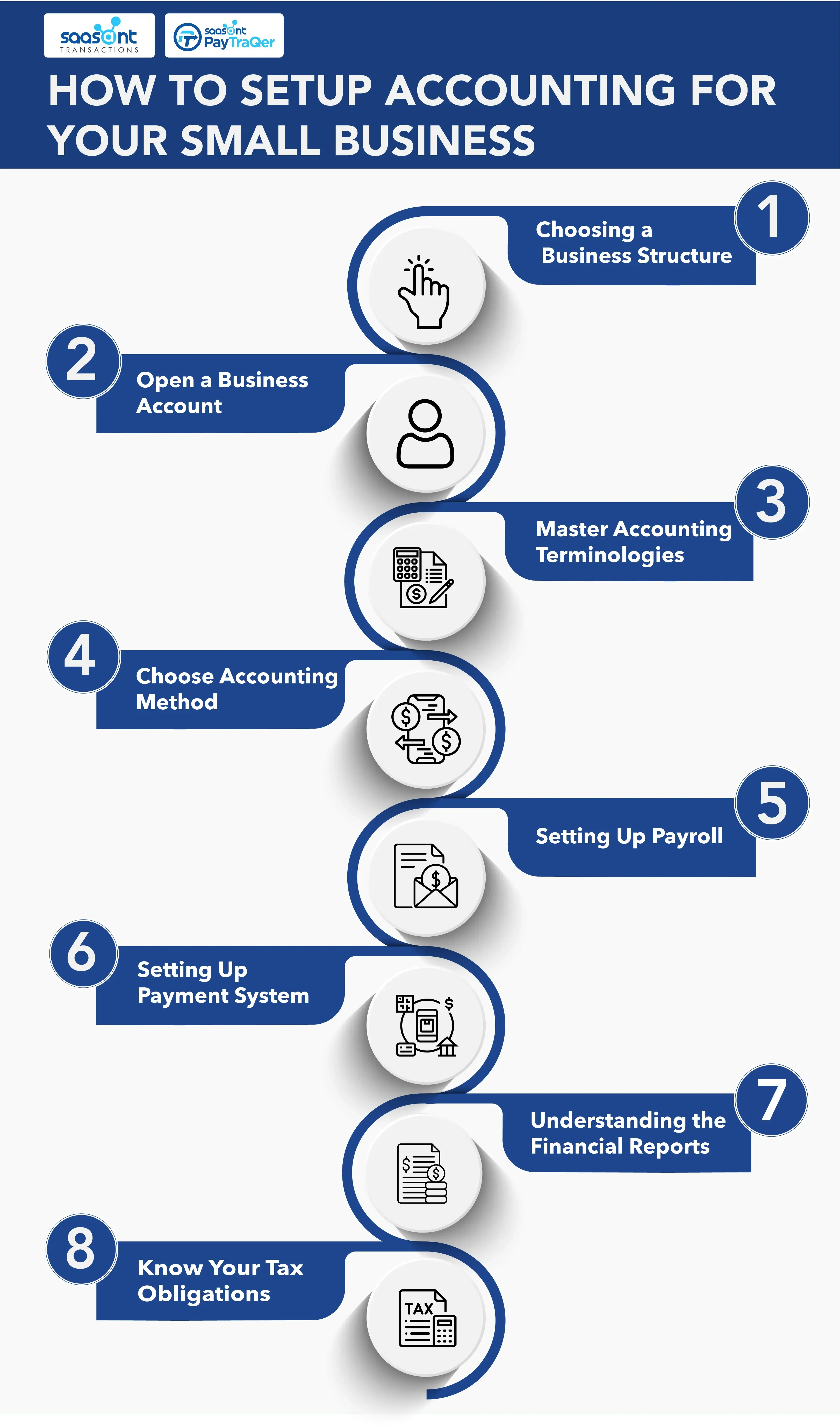
An accounting business plan is a strategic roadmap that outlines the operational blueprint, financial targets, service architecture, and marketing strategy for launching or scaling an accounting practice. It serves as both an internal guide for practice management and an essential document for securing bank financing, attracting equity partners, or obtaining credit facilities.
Why Every Accounting Firm Needs a Business Plan
Launching an accounting firm or bookkeeping practice without a business plan creates severe operational blind spots. While accountants easily analyze financial statements for clients, they often overlook applying the same analytical rigor to their own firms. A business plan translates high-level revenue goals into clear tactical requirements: required billable hours, staffing ratios, software investments, and marketing expenditures.
Beyond operational clarity, a formal business plan is indispensable when applying for Small Business Administration (SBA) loans, commercial bank lines of credit, or partnership investments. Financial institutions evaluating an accounting firm look for key risk mitigators: recurring revenue models, predictable client acquisition costs, diversified client portfolios, and compliance with state regulatory boards.
Executive Summary and Firm Identity
The executive summary establishes your firm's identity, mission, target market, and financial trajectory. Although it appears at the beginning of the plan, it should be written last to capture the synthesis of your operational and financial strategies.
Defining Your Mission and Core Value Proposition
Modern accounting practices must move beyond generic messaging such as "providing quality financial services." A compelling business plan defines a clear niche and value proposition. For instance, your firm might specialize in fractional CFO services for venture-backed software companies, tax optimization for real estate investors, or outsourced bookkeeping for multi-location healthcare clinics.
Key elements to state in your executive summary include:
- Legal Structure: Single-member LLC, Professional Corporation (PC), Limited Liability Partnership (LLP), or S-Corporation.
- Ownership Structure: Equity distribution among founding partners and key stakeholders.
- Core Value Proposition: The specific, high-impact business outcomes your firm delivers (e.g., tax reduction, real-time reporting, automated payroll execution).
- Financial Highlights: Projected Year 1 gross revenue, target gross margins (typically 50–60% for advisory-heavy firms), and break-even timelines.
Target Market and Competitive Analysis
A generic target market—such as "small businesses in the local area"—increases client acquisition costs and leads to lower retention rates. Successful accounting business plans segment target audiences by industry, revenue tier, and service complexity.
- Emerging SMBs ($250k - $2M Revenue): Bookkeeping & Payroll
- Mid-Market Companies ($2M - $10M): Advisory & Fractional CFO
- High-Net-Worth Individuals (HNWIs): Wealth & Tax Strategy
Ideal Client Profile (ICP)
To build predictable recurring revenue, define your Ideal Client Profile across specific criteria:
- Annual Revenue Range: Companies generating between $1 million and $10 million generally have complex tax and financial reporting needs but lack the resources for a full-time, in-house CFO.
- Technology Adoption: Clients utilizing modern cloud applications (e.g., QuickBooks Online, Xero, Gusto, Stripe) drastically reduce data entry overhead compared to legacy, on-premise platforms.
- Pain Points: High tax exposure, poor cash flow visibility, delayed month-end closures, or compliance backlogs.
Competitive Analysis Framework
Analyze local competitors and national virtual accounting platforms across four key metrics:
- Pricing Structure: Are competitors billing by the hour, charging flat monthly retainers, or using value-based pricing?
- Service Depth: Do they rely purely on historical compliance (tax preparation, basic bookkeeping) or offer proactive advisory services?
- Tech Stack Integration: How effectively do they leverage automated data extraction, practice management tools, and AI-assisted reconciliation?
- Client Experience: Evaluate client reviews, response times, client portal accessibility, and communication cadence.
Service Architecture and Pricing Strategy
Pricing structure directly dictates a firm’s profit margins and operational capacity. The accounting industry has shifted away from traditional hourly billing toward predictable, value-driven pricing models.
Service Tiers Framework
Organizing services into structured tiers clarifies scope for clients and eliminates "scope creep"—the unprofitable expansion of unbilled work.
- Compliance Tier (Base): Monthly transaction categorization, bank reconciliations, sales tax filing, and quarterly financial statements.
- Controller Tier (Growth): Everything in the Compliance Tier plus month-end accrual adjustments, cash flow forecasting, inventory tracking, and custom KPI dashboards.
- Advisory / Fractional CFO Tier (Premium): Strategic tax planning, capital structure advisory, budgeting vs. actuals variance analysis, board reporting, and operational restructuring.
Comparison of Accounting Pricing Models
| Pricing Model | Operational Pros | Operational Cons | Best Suited For | Target Gross Margin |
|---|---|---|---|---|
| Hourly Billing | Simple to calculate; captures unexpected out-of-scope work | Penalizes efficiency; limits revenue scale; creates invoice friction | One-off tax resolution, audit defense, legacy cleanup | 35% – 45% |
| Fixed Monthly Retainer | Predictable monthly recurring revenue (MRR); easier cash forecasting | Risk of scope creep if boundaries are poorly defined | Core bookkeeping, payroll execution, monthly controller work | 50% – 60% |
| Value-Based Pricing | Maximum profit margin potential; aligns firm incentives with client results | Requires expert sales ability and precise financial quantification | Tax strategy, restructuring, fractional CFO services | 65% – 85% |
| Hybrid Model | Balances recurring stability with protection against unusual scope expansion | Requires disciplined time-tracking and project management systems | Full-service accounting practices with varied client bases | 55% – 70% |
Technology Infrastructure and Operations
Modern accounting practices operate on integrated cloud tech stacks. Detailing your software infrastructure in your business plan proves operational readiness and lowers projected labor costs.
- Client Data (Bank Feeds)
- Automated Intake (Dext / Hubdoc)
- Ledger Core (QBO / Xero)
- Dashboard (Fathom)
Core Practice Tech Stack
- General Ledger Platform: QuickBooks Online, Xero, or Sage Intacct for centralized recordkeeping.
- Practice Management & Workflow: Canopy, Karbon, Jetpack Workflow, or Financial Cents for tracking deadlines, assigning tasks, and storing client documentation.
- Document Management & Client Portals: ShareFile, SmartVault, or Box for HIPAA- and SOC 2-compliant document sharing.
- Data Extraction & Automation: Dext, Hubdoc, or AutoEntry to automate accounts payable processing.
- Reporting & Analytics: Fathom, LivePlan, or Spotlight Reporting for advisory dashboards and graphical cash flow statements.
Quality Control and Risk Management
Operational consistency requires standardized Operating Procedures (SOPs). Outline protocols for:
- Two-Tier Review System: Ensuring all work prepared by junior accountants or bookkeepers is reviewed by a Senior Accountant or CPA before final delivery.
- Data Security & Privacy: Establishing mandatory Multi-Factor Authentication (MFA), end-to-end encryption, and annual SOC 2 compliance reviews to safeguard client financial records.
- Professional Liability (E&O Insurance): Securing Errors & Omissions coverage tailored to your firm's revenue and scope of advice.
Marketing and Client Acquisition Strategy
A technical skill set alone will not scale an accounting firm. Your marketing strategy must outline low-cost, high-conversion client acquisition channels.
Strategic Referral Networks
The highest-converting channel for accounting services remains strategic professional partnerships:
- Commercial Attorneys: Business setup attorneys frequently need CPAs to set up client accounting systems, handle equity structuring, and clean up financial records prior to investment rounds.
- Financial Planners & Wealth Managers: Wealth managers frequently require tax accountants to execute tax-loss harvesting and estate planning strategies for high-net-worth clients.
- Banking Officers: Commercial lending officers require verified financial statements and tax returns before approving business loans.
Digital Content and Local Search Optimization
Establish digital authority by deploying targeted local and industry content:
- Google Business Profile Optimization: Essential for winning local search traffic for search queries such as "CPA near me" or "business tax accountant [City Name]."
- Niche Educational Content: Publish detailed guides on tax strategies, industry-specific deductions, and cash flow formulas.
- Email Nurture Sequences: Maintain monthly newsletters delivering updates on changing tax legislation, key filing deadlines, and business strategy insights.
Organizational Structure and Staffing Strategy
Human capital is an accounting firm's largest operational expense. Your plan must detail clear hiring thresholds tied directly to client count and recurring revenue growth.
| Capacity Metric | Target Standard |
|---|---|
| Max MRR per Bookkeeper | $15,000 - $25,000 / month |
| Max MRR per Senior CPA | $40,000 - $60,000 / month |
| Target Utilization Rate | Senior: 70-80% | Junior: 85-90% |
Capacity Planning and Hiring Milestones
- Phase 1 (Founder-Led): Founder manages client acquisition, advisory services, and core compliance. Outsources basic data entry or hires a part-time virtual assistant.
- Phase 2 (Scalable Core): At $250,000 Annual Recurring Revenue (ARR), hire a full-time Senior Accountant to manage monthly reconciliation workflows and client review calls.
- Phase 3 (Management Expansion): At $600,000 ARR, hire a Client Manager / Tax Specialist and offshore basic bookkeeping functions to maintain profit margins.
Financial Plan and Revenue Projections
The financial plan validates the commercial viability of your practice. It must contain realistic financial statements: a Startup Costs Budget, a 3-Year Income Statement (P&L) Projection, a Cash Flow Forecast, and a Break-Even Analysis.
Startup Capital Requirements
A lean, virtual accounting practice requires far less capital than a traditional physical office. Typical startup costs include:
- Entity Formation & Legal Fees: $500 – $2,500 (Articles of Organization, Operating Agreement, State CPA Board registration).
- Software & Technology (Year 1 upfront/subscriptions): $3,000 – $8,000 (GL software partner licenses, practice management, security tools).
- Errors & Omissions (E&O) Insurance: $1,200 – $3,500 annually (varies by coverage limit and firm risk profile).
- Branding & Website Infrastructure: $1,500 – $5,000 (Professional branding, website development, domain hosting).
- Working Capital Reserve: $10,000 – $30,000 (To cover 3–6 months of operating cash burn before break-even).
Three-Year Financial Model Template
Year 1: Establishment
- Target Clients: 25 recurring monthly retainer clients ($1,200/mo average) + 40 seasonal tax preparation clients.
- Gross Revenue: $360,000
- Direct Labor Costs (COGS): $108,000 (30%)
- Operating Expenses (Software, Insurance, Marketing, Office): $72,000 (20%)
- Net Profit (Owner Compensation & Reinvestment): $180,000 (50%)
Year 2: Expansion
- Target Clients: 55 recurring monthly retainer clients + high-value advisory packages.
- Gross Revenue: $780,000
- Direct Labor Costs: $312,000 (40% - adding full-time team members)
- Operating Expenses: $117,000 (15%)
- Net Profit: $351,000 (45%)
Year 3: Scale
- Target Clients: 90 recurring monthly clients + corporate advisory contracts.
- Gross Revenue: $1,400,000
- Direct Labor Costs: $630,000 (45%)
- Operating Expenses: $168,000 (12%)
- Net Profit: $602,000 (43%)
Common Pitfalls in Accounting Business Planning
Avoiding predictable structural errors will save significant time and capital during execution:
- Underestimating Software Escalation Fees: Cloud software platforms frequently scale pricing based on seat count or client volume. Ensure software expenditure is modeled as a variable cost tied directly to revenue growth, rather than a fixed overhead expense.
- Pricing Based on Competitor Averages: Pricing based on what low-cost local competitors charge often leads to slim margins. Price based on your firm’s delivery cost structure and target profit margins.
- Failing to Model Seasonality: Tax-heavy firms experience major cash influxes between January and April, followed by leaner summer months. Cash flow models must account for working capital needs during seasonal troughs.
- Neglecting Scope Boundaries: Failing to document detailed service engagement letters leads to unpaid client requests, overworking team members, and reduced firm profitability.
Frequently Asked Questions
What is the most profitable business model for an accounting firm?
A recurring monthly retainer combined with value-based advisory services offers the highest profitability. By bundling compliance (bookkeeping/tax) with proactive financial guidance (cash flow forecasting, tax minimization strategies), firms can command $1,500 to $5,000+ per client monthly while maintaining gross margins above 60%.
How much capital is needed to start an accounting practice?
A virtual accounting firm can be launched for between $5,000 and $15,000 in upfront setup costs, provided the founder possesses necessary equipment and licensing. A physical office setup typically requires $30,000 to $75,000+ to cover lease security deposits, office furniture, IT infrastructure, and local branding.
How do I market an accounting firm without existing clients?
Focus on professional referral networks (commercial banks, business attorneys, financial advisors), optimize your Google Business Profile for local intent, and publish high-utility educational content solving specific tax or cash-flow pain points for target industry niches.
Do I need a CPA license to open an accounting firm?
You do not need a CPA license to offer bookkeeping, payroll, fractional CFO, or basic business management services. However, a CPA license, Enrolled Agent (EA) status, or attorney license is legally required to represent clients before the IRS, perform certified audit engagements, or issue audited or reviewed financial statements.
How long does it take for a new accounting firm to break even?
With low overhead and a focus on monthly recurring retainer contracts, a solo virtual accounting practice can reach cash-flow break-even within 3 to 6 months. Physical office models or practices reliant entirely on seasonal tax preparation may take 12 to 18 months to achieve net profitability.
Next Steps: Implementing Your Accounting Business Plan
- Finalize Your Value Proposition and ICP: Clearly state your target industry niche and service packages before committing capital to marketing or design.
- Secure Professional Licenses and Insurance: Ensure state regulatory compliance, obtain an Employer Identification Number (EIN), register your business entity, and acquire comprehensive Errors & Omissions liability insurance.
- Configure Core Technology Infrastructure: Purchase, integrate, and test your general ledger software, security frameworks, document sharing portals, and practice management workflows.
- Establish Engagement Letter Templates: Draft strict legal engagement contracts defining service scope, payment terms, and out-of-scope hourly fees to protect against scope creep.
- Launch Referral Network Outreach: Schedule formal introduction meetings with local business attorneys, commercial loan officers, and financial planners to initiate your client pipeline.