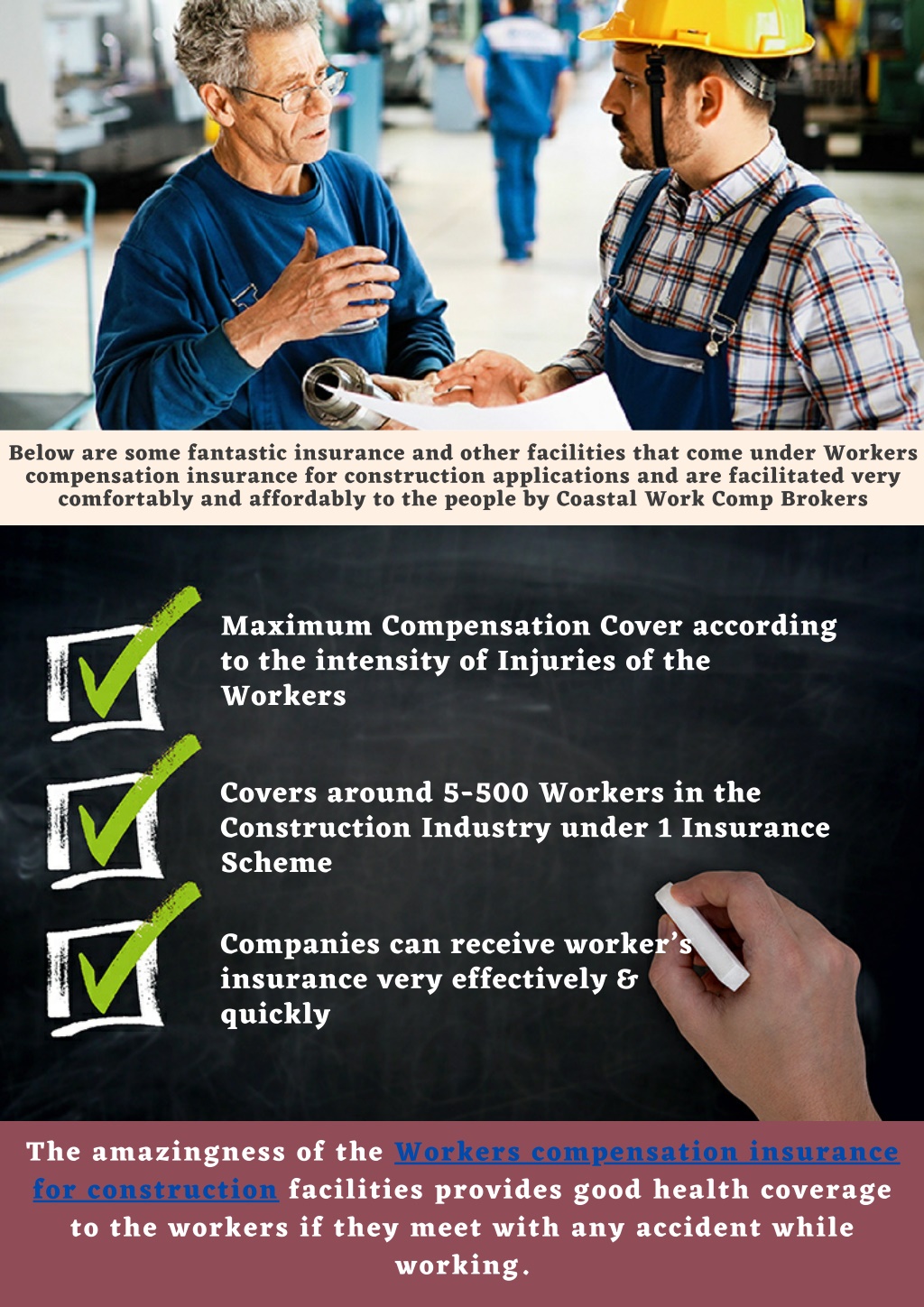
Workers' compensation is a mandatory insurance program that provides medical benefits and wage replacement to employees injured in the course of employment. In exchange for these guaranteed benefits, employees generally waive their right to sue their employer for negligence, establishing what is legally known as the "exclusive remedy" doctrine.
The landscape of workplace safety and insurance litigation continues to evolve in 2026. Understanding the intersection between accident insurance companies and workers' compensation is critical for business owners, human resource professionals, and employees. While the core definition of workers' compensation remains rooted in statutory law, the "key considerations" have shifted significantly due to technological advancements in claims processing and changes in the nature of "the workplace."
Defining Workers' Compensation in the Modern Insurance Landscape
At its most fundamental level, workers' compensation is a social contract facilitated by insurance carriers. When a worker suffers an occupational injury or develops a work-related illness, the accident insurance company providing the workers' comp policy steps in to cover the financial fallout. Unlike standard liability insurance, workers' compensation is a "no-fault" system. This means the injured party does not need to prove the employer was careless to receive benefits; they only need to prove the injury occurred "arising out of and in the course of employment."
An accident insurance company specializing in workers' compensation manages three primary types of benefits. First, it covers all "reasonable and necessary" medical treatments related to the injury. Second, it provides disability benefits—temporary or permanent—to compensate for lost wages. Third, it offers vocational rehabilitation for workers who cannot return to their previous roles. In 2026, many carriers have also integrated robust mental health support into these definitions, recognizing that physical workplace trauma often carries psychological consequences that can impede a return to work.
The definition also extends to death benefits. If a workplace accident results in a fatality, the insurance company pays out benefits to the worker’s dependents, typically covering funeral expenses and a portion of the deceased worker’s earnings. It is important to distinguish this from "Accident Insurance," which is often a voluntary supplemental policy. Workers' compensation is a statutory requirement for most employers, whereas supplemental accident insurance is an elective benefit used to fill gaps in personal out-of-pocket expenses.
The Role of the Accident Insurance Company
The role of the insurance carrier goes beyond merely cutting checks for medical bills. In the current 2026 regulatory environment, accident insurance companies act as intermediaries between the state’s workers' compensation board, the employer, and the medical community. Their primary goal is "loss control," which involves both preventing accidents before they happen and managing the costs of accidents after they occur.
Carriers employ loss control specialists who visit worksites to identify hazards. These professionals use predictive analytics and real-time data from wearable safety technology to help employers reduce their risk profile. When an injury does occur, the insurance company’s claims adjusters take over. These adjusters are responsible for investigating the validity of the claim, determining the appropriate level of benefits, and ensuring the worker receives medical care from a network of approved providers.
The insurance company also manages the "Experience Modification Rate" (E-Mod or X-Mod). This is a numerical representation of an employer's claims history compared to other businesses in the same industry. A high E-Mod indicates a poor safety record and results in higher premiums, while a low E-Mod can lead to significant discounts. This financial incentive is the primary mechanism through which insurance companies drive workplace safety improvements across the economy.
Key Considerations for Employers in 2026
For employers, managing a workers' compensation policy is one of the most significant operational expenses and legal responsibilities. In 2026, several key considerations dominate the corporate strategy regarding these policies:
Statutory Compliance and Jurisdictional Nuances
Workers' compensation is not a federal program in the United States; it is governed by individual state laws (or provincial laws in Canada). This means an employer with remote workers in ten different states must comply with ten different sets of regulations, benefit levels, and reporting deadlines. Failure to maintain adequate coverage can lead to massive fines, stop-work orders, and in some jurisdictions, criminal charges. Employers must ensure their accident insurance company is licensed and capable of handling claims in every jurisdiction where they have an "exposure"—essentially, anywhere an employee performs work.
The Evolution of the "Workplace"
The definition of the workplace has blurred significantly. With hybrid and remote work being standard in 2026, an injury sustained in a home office can technically be a workers' compensation claim. Employers must consider how their policies address "telecommuting injuries." Key legal precedents now often hinge on whether the employee was performing a task for the benefit of the employer at the time of the injury. Establishing clear remote-work safety guidelines is no longer optional; it is a prerequisite for favorable insurance underwriting.
Cost Control through Return-to-Work Programs
One of the most effective ways for an employer to lower insurance costs is to implement a robust "Return-to-Work" (RTW) program. Insurance companies favor employers who can provide "light duty" or modified tasks to injured workers. Keeping a worker on the payroll—even in a limited capacity—reduces the "indemnity" (wage replacement) portion of the claim. This not only lowers the cost of the individual claim but also helps maintain the worker's morale and professional connection, which statistically leads to faster full recoveries.
Key Considerations for Employees and Claimants
For the employee, the workers' compensation system is designed to be a safety net, but it can often feel like a bureaucratic maze. Understanding how to navigate the relationship with the employer’s accident insurance company is vital for securing appropriate care.
Immediate Reporting Requirements
The most critical consideration for any injured worker is the timeline for reporting. Almost every jurisdiction has a "notice period," often ranging from 24 hours to 30 days. If a worker fails to report an injury to their supervisor within this window, the insurance company has a strong legal basis to deny the claim entirely. Documentation is the employee’s best defense; even "minor" incidents should be reported in writing to establish a paper trail in case complications arise later.
Medical Evaluation and Maximum Medical Improvement (MMI)
The insurance company often has the right to direct the employee to a specific doctor or a "Preferred Provider Organization" (PPO). A pivotal moment in any claim is the determination of Maximum Medical Improvement (MMI). This is the point where a doctor decides that a worker's condition has stabilized and no further functional improvement is expected from treatment. Once MMI is reached, the insurance company will evaluate the worker for any "Permanent Partial Disability" (PPD) rating, which determines the final settlement amount for lasting impairments.
Distinguishing Workers' Comp from Voluntary Accident Insurance
It is common to confuse "Workers' Compensation" with "Accident Insurance" (often marketed as supplemental or "gap" insurance). While both are handled by accident insurance companies, their purposes and legal standings differ.
| Feature | Workers' Compensation | Voluntary Accident Insurance |
|---|---|---|
| Mandatory? | Yes, for most employers by law. | No, it is an optional benefit. |
| Who Pays Premium? | 100% Employer-funded. | Usually Employee-funded (payroll deduction). |
| Coverage Scope | Only work-related injuries/illnesses. | 24/7 coverage (on or off the job). |
| Benefit Payout | Directly to providers and lost wage replacement. | Lump-sum cash paid directly to the insured. |
| Legal Status | Statutory "Exclusive Remedy." | Private contract; no impact on right to sue. |
| Pre-existing Conditions | Often covered if aggravated by work. | Usually excluded or subject to waiting periods. |
As shown in the table, workers' compensation is a legal requirement designed to protect the business and the worker from the catastrophic costs of workplace injuries. Voluntary accident insurance is a personal financial tool that provides a cash cushion to help individuals cover deductibles or household bills while they are recovering from any accident, regardless of where it happened.
The Claims Process: From Injury to Resolution
Navigating a claim involves a series of highly regulated steps. In 2026, many accident insurance companies have shifted to AI-driven intake systems to speed up the initial filing.
Step 1: The Initial Filing and First Report of Injury (FROI)
The process begins when the employer files the First Report of Injury with the insurance carrier and the state board. In 2026, this is typically done through a digital portal. The carrier then assigns a claim number and an adjuster. The adjuster's first task is to determine "compensability"—is the injury actually covered under the policy?
Step 2: Investigation and Medical Management
The insurance company may interview witnesses and review medical records. They also monitor the treatment plan. If a treatment seems excessive or unrelated to the injury, the carrier may request an Independent Medical Examination (IME). Despite the name, these exams are performed by doctors hired by the insurance company to provide a second opinion on the worker’s status and ability to work.
Step 3: Disability Payments (Indemnity)
If the worker is unable to work for more than a few days (the "waiting period"), the insurance company begins paying disability benefits. These are typically calculated as two-thirds (66.6%) of the worker's Average Weekly Wage (AWW), subject to state-mandated maximums and minimums. These payments continue until the worker returns to work or reaches MMI.
Risk Management and Premium Optimization
In 2026, premium optimization has become a high-tech endeavor. Accident insurance companies now offer "Pay-as-you-go" workers' compensation models. Instead of an annual estimate followed by a painful year-end audit, premiums are calculated in real-time based on actual payroll data submitted every pay cycle. This improves cash flow for small businesses and ensures that premiums always reflect the current workforce size and risk level.
Furthermore, "Safety Incentives" have become more sophisticated. Carriers may offer premium credits for businesses that implement IoT (Internet of Things) devices, such as back-strain sensors for warehouse workers or telematics for commercial drivers. By proving a commitment to proactive safety through data, employers can negotiate lower rates with their accident insurance company.
Frequently Asked Questions
Can an insurance company deny a workers' compensation claim?
Yes, claims are frequently denied for several reasons: the injury was not reported on time, the injury occurred outside of work duties, the injury was self-inflicted, or the employee was under the influence of drugs or alcohol at the time of the accident. If a claim is denied, the employee has the right to appeal through the state's workers' compensation commission or court system.
Does workers' compensation cover mental health or stress?
In 2026, the answer is increasingly "yes," though it remains more difficult to prove than a physical injury. Most jurisdictions require proof that the mental health issue (like PTSD) resulted from a specific traumatic event or that the workplace stress was "extraordinary and unusual" compared to the average job. Many accident insurance companies now offer specific resources for mental health as part of their standard claims management.
What happens if my employer doesn't have workers' compensation insurance?
If an employer is legally required to carry insurance but fails to do so, they face severe penalties. In the event of an injury, the employer may be held personally liable for all medical costs and lost wages. Furthermore, in many jurisdictions, the "exclusive remedy" protection is waived if insurance is not maintained, meaning the employee can sue the employer in civil court for unlimited damages.
How is the "Average Weekly Wage" calculated for gig workers?
For workers in the gig economy or those with fluctuating schedules, the calculation usually involves averaging the earnings from the 13 to 52 weeks prior to the injury. As of 2026, many states have passed specific legislation to ensure that "platform workers" are accurately accounted for in workers' compensation systems, often using data directly from the app or platform to verify earnings.
Can I see my own doctor for a work injury?
This depends entirely on the state. Some states allow employees to choose their own physician from day one. Others allow the employer or the accident insurance company to select the initial treating physician. However, even in "employer-choice" states, workers can usually request a change of physician after a certain period or for a second opinion.
Practical Recommendation
To effectively manage workers' compensation in 2026, both employers and employees should prioritize transparency and documentation. For employers, the most impactful action is to partner with an accident insurance company that provides not just a policy, but a dedicated safety partnership including real-time data analytics and a clear return-to-work framework. Reducing your E-Mod is the only sustainable way to lower long-term insurance costs.
For employees, the best course of action is to report every incident immediately and follow all prescribed medical treatments meticulously. If a claim becomes complex or the insurance company denies necessary care, consulting with a specialized workers' compensation attorney is recommended to ensure your rights under the statutory "social contract" are fully protected.
For more information on federal standards and workplace safety, you can visit the Occupational Safety and Health Administration (OSHA) or the U.S. Department of Labor (DOL).