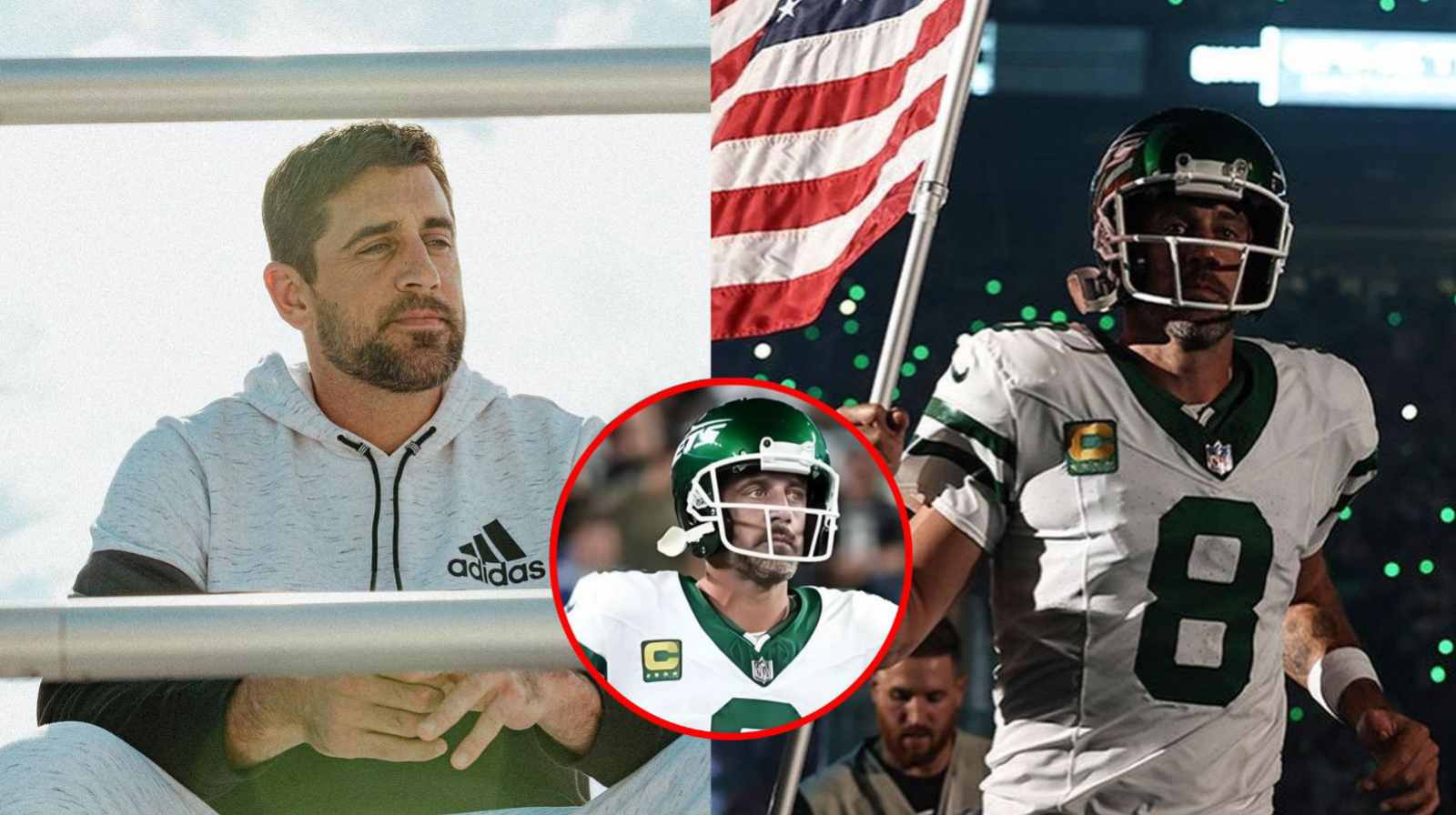
Aaron Rodgers began his National Football League (NFL) career in 2005 when he was selected in the first round of the NFL Draft by the Green Bay Packers. Chosen 24th overall out of the University of California, Berkeley, Rodgers entered the league as the eventual successor to Hall of Fame quarterback Brett Favre. His rookie season marked the beginning of a transformative era for the Packers organization, setting the stage for a storied career defined by elite passing efficiency, multiple Most Valuable Player (MVP) awards, and a Super Bowl championship.
The 2005 NFL Draft: A Slide and a Selection
The story of Aaron Rodgers entering the NFL in 2005 is inextricably linked to one of the most memorable draft-day slides in football history. Coming out of Cal under head coach Jeff Tedford, Rodgers was widely projected as a top-tier prospect, with many analysts and insiders suggesting he could go to the San Francisco 49ers with the number one overall pick. Instead, the 49ers selected local hero Alex Smith from the University of Utah, initiating a long, agonizing wait in the green room for Rodgers.
As team after team passed on the California quarterback, Rodgers fell deeper into the first round. The wait finally ended at pick number 24, when the Green Bay Packers—led by general manager Ted Thompson and head coach Mike McCarthy—selected him. At the time, Brett Favre was still entrenched as the starter in Green Bay, making the pick a forward-thinking investment rather than an immediate roster fix. This dynamic created immense media scrutiny and set up a unique apprenticeship model that is rare in the modern NFL.
The California Background and College Production
Before reaching the professional ranks, Rodgers honed his skills at Butte College before transferring to UC Berkeley. Under the tutelage of Tedford, a noted quarterback guru, Rodgers orchestrated a prolific offensive system. In his two seasons as the Golden Bears' starter, he threw for 5,469 yards, 43 touchdowns, and only 13 interceptions, completing nearly 64 percent of his passes.
His performance against the powerhouse USC Trojans in 2004—where he completed 23 consecutive passes, tying an NCAA record—solidified his status as a premier NFL prospect. This collegiate foundation provided him with the mechanical discipline, pre-snap processing speed, and arm talent necessary to survive and eventually thrive at the highest level of professional football.
The Apprenticeship Years: 2005 to 2007
Entering the NFL in 2005 meant that Aaron Rodgers spent his formative years entirely out of the spotlight on game days. Behind the scenes, however, he underwent an intensive developmental process. Working alongside quarterbacks coach Tom Clements and head coach Mike McCarthy, Rodgers completely overhauled his throwing mechanics. McCarthy noticed that Rodgers held the ball too low during his dropback, prompting a mechanical reset that lowered his release point and quickened his delivery.
During this three-year period, Rodgers made minimal game appearances. His rookie season in 2005 saw him attempt just 16 passes, completing nine for 65 yards and absorbing three sacks. His most notable early action came during a blowout loss to the Dallas Cowboys in Week 7 of the 2007 season, when Favre left the game with an injury. Rodgers entered and played effectively, completing 18 of 26 passes for 201 yards and his first career touchdown, proving to the coaching staff and the league that his skill set had matured significantly.
| Season | Games Played | Passing Attempts | Completions | Passing Yards | Touchdowns | Interceptions | Passer Rating |
|---|---|---|---|---|---|---|---|
| 2005 | 3 | 16 | 9 | 65 | 0 | 1 | 39.8 |
| 2006 | 2 | 2 | 2 | 20 | 0 | 0 | 118.8 |
| 2007 | 7 | 28 | 20 | 218 | 1 | 0 | 106.0 |
Transition to the Starting Role in 2008
The pivotal turning point of Rodgers' early career occurred in the summer of 2008. Following a brief retirement flirtation and subsequent offseason drama, Brett Favre and the Green Bay Packers mutually agreed to part ways, leading to Favre's trade to the New York Jets. This decision cleared the path for Rodgers to finally step into the starting quarterback role for the 2008 NFL season.
Taking over a storied franchise from a beloved legend brought unprecedented pressure. Fans and media outlets closely scrutinized every throw during training camp and the early weeks of the regular season. Rodgers answered by putting together a remarkably strong debut campaign as a full-time starter, throwing for over 4,038 yards, 28 touchdowns, and 13 interceptions. Although the Packers finished with a disappointing 6-10 record in close games, Rodgers proved beyond a doubt that he was a franchise-caliber quarterback capable of leading the offense into the future.
Evolution Into an Elite NFL Quarterback
Once established as the starter, Rodgers quickly escalated his performance to historic heights. His exceptional accuracy, elite arm strength, and extraordinary ability to avoid turnovers transformed the Packers into perennial contenders. By his third year as a starter in 2010, Rodgers guided Green Bay through a difficult playoff run as a sixth seed, culminating in a victory over the Pittsburgh Steelers in Super Bowl XLV. Rodgers earned Super Bowl MVP honors after completing 24 of 39 passes for 304 yards and three touchdowns.
Over the ensuing decade and a half, Rodgers accumulated individual accolades at an unprecedented rate. He secured his first NFL Most Valuable Player award in 2011 after orchestrating a 15-1 regular season featuring 45 touchdown passes and just six interceptions. Subsequent MVP honors followed in 2014, 2020, and 2021, placing him in an elite class of multi-time award winners alongside legends like Peyton Manning, Tom Brady, and Jim Brown.
Frequently Asked Questions
What team drafted Aaron Rodgers in 2005?
Aaron Rodgers was drafted by the Green Bay Packers in the first round of the 2005 NFL Draft with the 24th overall selection. He was selected after 23 other players, most notably including quarterback Alex Smith, who went first overall to the San Francisco 49ers.
Why did Aaron Rodgers fall so far in the 2005 NFL Draft?
Rodgers fell in the draft primarily because many teams picking in the top half of the first round had different roster needs, or they favored other prospects. Additionally, there were persistent questions among scouts regarding whether quarterbacks coming out of Jeff Tedford's system at Cal could seamlessly transition to pro-style offenses, as previous Tedford-coached quarterbacks had struggled in the NFL.
How long did Aaron Rodgers sit behind Brett Favre?
Aaron Rodgers sat behind Brett Favre for three full seasons, spanning from 2005 through 2007. During this time, Favre remained the durable starter, while Rodgers used the period to learn the playbook, study game film, and correct his throwing mechanics with the Green Bay coaching staff.
When did Aaron Rodgers win his first Super Bowl?
Rodgers won his first and only Super Bowl title at the end of the 2010 NFL season, defeating the Pittsburgh Steelers 31-25 in Super Bowl XLV on February 6, 2011. He played an instrumental role in the victory, earning the game's Most Valuable Player award.
How many MVP awards has Aaron Rodgers won?
Aaron Rodgers has won four NFL Most Valuable Player awards throughout his career. He received the prestigious honor for his stellar performances during the 2011, 2014, 2020, and 2021 regular seasons.
Practical Takeaways for Football History Enthusiasts
Analyzing the 2005 draft class and the early career trajectory of Aaron Rodgers offers valuable perspective on modern roster construction and player development:
- The Value of Patience: The Packers' decision to draft a quarterback when they already had an established starter illustrates the benefits of long-term planning over immediate desperation.
- Mechanical Development: Rodgers' success highlights how crucial personalized coaching and mechanical adjustments during a redshirt-style rookie period can elevate a prospect's ceiling.
- Navigating Transition: Managing the departure of an iconic franchise player requires identifying an heir apparent capable of handling intense media scrutiny and high fan expectations.