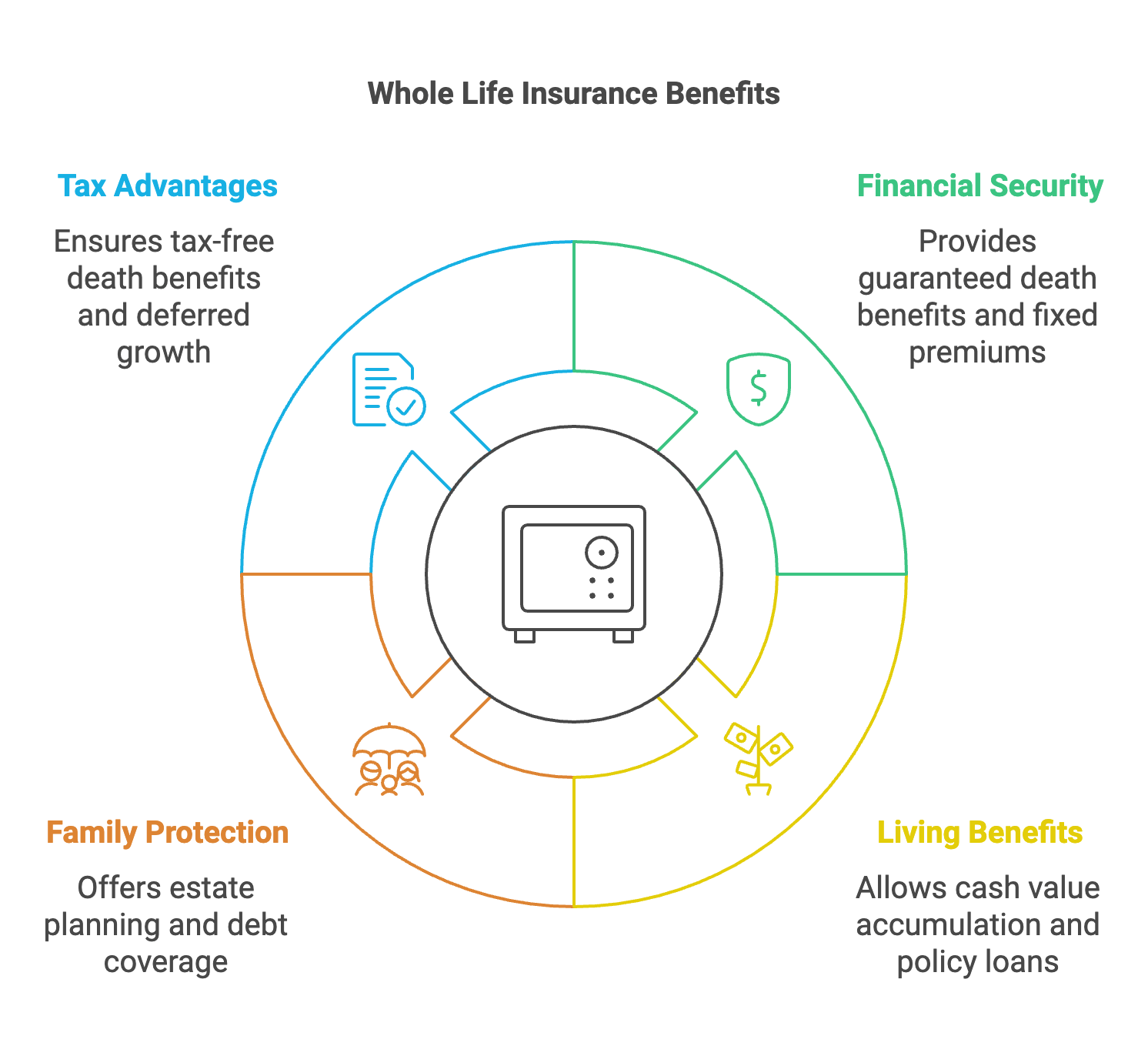
AAFMAA whole life insurance provides permanent, cash-value-building coverage specifically designed for the military community. Unlike term policies, it offers a guaranteed death benefit and level premiums that never increase. As a member-owned non-profit, AAFMAA returns excess earnings to policyholders through dividends, making it a cornerstone for long-term military financial planning.
The Foundation of AAFMAA: A Legacy of Military Service
The American Armed Forces Mutual Aid Association (AAFMAA) was established in 1879, following the Battle of the Little Bighorn, to ensure that the families of fallen soldiers were not left destitute. This historical context is vital to understanding the organization's current structure in 2026. Because AAFMAA is a non-profit association rather than a commercial insurance corporation, its primary fiduciary duty is to its members, not external shareholders.
This mission-driven approach influences how their whole life products are priced and managed. In an industry often characterized by aggressive sales tactics, AAFMAA maintains a reputation for conservative financial management and transparency. For service members and veterans, this provides a level of trust that the organization understands the unique risks of military life—such as deployments and combat exposure—which are often excluded or upcharged by civilian insurers.
Eligibility Requirements for AAFMAA Membership in 2026
Before exploring the specifics of whole life coverage, it is essential to define who can actually apply. As of 2026, AAFMAA remains an exclusive organization. Eligibility is generally extended to the following groups:
- Active Duty: Members of the Army, Navy, Air Force, Marine Corps, Space Force, and Coast Guard.
- National Guard and Reserve: Those currently serving in a drilling status or the IRR.
- Veterans: Individuals who have been honorably discharged from the U.S. Armed Forces.
- Retirees: Those who have completed a full military career and are receiving retirement pay.
- Families: Spouses, children, and grandchildren of eligible members can often obtain coverage through the primary member's affiliation.
- Cadets and Midshipmen: Students at U.S. Service Academies or those in ROTC programs with a contract.
Geographic restrictions may apply depending on state-specific insurance regulations, though AAFMAA operates in the majority of U.S. jurisdictions. It is important to note that while membership is exclusive to the military community, once a policy is issued, it remains in force regardless of whether the member separates from the military, provided premiums are paid.
The Mechanics of Value-Added Whole Life Insurance
AAFMAA’s flagship permanent product is known as Value-Added Whole Life. To understand why this product is a staple of military wealth management, one must look at its three primary pillars: the death benefit, the premium structure, and the cash value accumulation.
Guaranteed Death Benefit and Level Premiums
The "Whole Life" designation means the policy covers the insured for their entire lifespan. In 2026, many veterans opt for this to cover final expenses, estate taxes, or to leave a legacy for heirs. Unlike Service-Disabled Veterans Insurance (S-DVI) or some civilian term products that expire at age 70 or 80, AAFMAA’s whole life is guaranteed to pay out as long as the policy is active.
The premiums are "level," meaning the monthly or annual cost you agree to at age 30 is the same cost you will pay at age 80. This protects the policyholder against the "pricing cliff" seen in term insurance, where renewals in later decades become prohibitively expensive.
Cash Value Accumulation and Dividends
A portion of every premium payment is funneled into a cash value account. This account grows tax-deferred over time. In 2026, AAFMAA continues its practice of crediting "Value-Added" dividends to these accounts. While dividends are never legally guaranteed, AAFMAA has a long-standing history of paying them based on the association's mortality experience and investment performance.
These dividends can be used in several ways:
- Paid-Up Additions: Using dividends to buy more death benefit, which in turn grows more cash value.
- Premium Reduction: Applying dividends to lower the out-of-pocket cost of the policy.
- Cash Payout: Receiving the dividends as a direct payment.
AAFMAA Wealth Builder: A Strategic Variation
For those looking to maximize the investment aspect of whole life insurance, the Wealth Builder Life Insurance product serves a specific niche. This is essentially a modified whole life policy designed for individuals with a lump sum of capital who want to create a permanent legacy without ongoing monthly premiums.
The Wealth Builder allows members to make a significant initial payment (or a series of payments over a short period) to "fund" the policy. This is particularly popular among retirees in 2026 who are rolling over funds from other investments to ensure a tax-free transfer of wealth to their children. Because the policy is heavily funded early on, the cash value grows much faster than a traditional whole life policy, providing a liquid asset that can be borrowed against if financial emergencies arise.
Survivor Assistance Services (SAS): The Non-Financial Benefit
One of the most significant differentiators of AAFMAA whole life insurance is the inclusion of Survivor Assistance Services. Most commercial insurers consider their job done once the death benefit check is mailed. AAFMAA takes a more holistic approach, recognizing that military families face unique bureaucratic hurdles upon the death of a service member or veteran.
When an AAFMAA member passes away, the organization provides direct support to the beneficiaries, including:
- Claims Processing: Assistance with filing for VA burial benefits, Survivor Benefit Plan (SBP) payments, and Social Security.
- Document Storage: AAFMAA’s "Digital Vault" allows members to store DD-214s, marriage certificates, and wills, ensuring that survivors have immediate access to necessary paperwork.
- Notification Services: AAFMAA can notify the Defense Finance and Accounting Service (DFAS) and other relevant military agencies of the death to ensure a smooth transition of benefits.
In 2026, this service is often cited by members as the primary reason for choosing AAFMAA over a slightly cheaper civilian alternative. The "concierge" level of service during a time of grief provides value that is difficult to quantify in a premium table.
Comparing AAFMAA Whole Life with SGLI and VGLI
Many active-duty personnel rely on Servicemembers' Group Life Insurance (SGLI), while veterans often transition to Veterans' Group Life Insurance (VGLI). While these programs are excellent for basic coverage, AAFMAA Whole Life serves a different purpose.
| Feature | SGLI / VGLI | AAFMAA Whole Life |
|---|---|---|
| Policy Type | Term Insurance | Permanent Whole Life |
| Duration | Expires or requires renewal | Lasts a lifetime |
| Premiums | Increase every 5 years (VGLI) | Locked in for life |
| Cash Value | None | Accumulates over time |
| Dividends | No | Yes (Value-Added) |
| Exclusions | No War Clause | No War, Aviation, or Terrorism Clauses |
| Survivor Support | Limited to payout | Comprehensive SAS |
For a 25-year-old on active duty, SGLI is incredibly cheap. However, as that individual turns 50 or 60, the cost of VGLI skyrockets. By incorporating an AAFMAA whole life policy early in a career, the service member locks in a low rate that provides a "base" level of permanent protection that supplements the temporary protection of SGLI/VGLI.
The Impact of No War, Aviation, or Terrorism Clauses
In the broader insurance market, many life insurance policies contain "exclusions." If a policyholder dies due to an act of war or while participating in "hazardous" activities like military aviation, the insurer may refuse to pay the claim.
AAFMAA's whole life policies are specifically drafted for the military. In 2026, they continue to offer full coverage regardless of the cause of death—including combat-related deaths, training accidents, or terrorist attacks. This is a critical consideration for those in high-risk MOS/AFSC codes. Having a policy that is guaranteed to pay out regardless of where the member is deployed provides peace of mind that civilian policies often cannot match.
Practical Considerations: Costs and Underwriting
The cost of AAFMAA whole life insurance is determined by the "attained age" of the member at the time of application, their gender, and their health status.
Medical Underwriting
Most AAFMAA whole life products require medical underwriting. This may include a review of military medical records, a physical exam, and blood work. However, AAFMAA is known for being "military-friendly" in its underwriting. They understand common service-connected issues—such as controlled hypertension or mild PTSD—and are often able to offer competitive rates where a civilian insurer might "rate" (increase the price) or decline the applicant.
Policy Loans and Liquidity
A major benefit of the cash value in a whole life policy is the ability to take out a policy loan. In 2026, if a member needs funds for a down payment on a home or an emergency repair, they can borrow against their AAFMAA policy. The interest rates on these loans are typically lower than those of personal bank loans, and the member is essentially borrowing their own money. It is important to remember that any outstanding loan balance will be deducted from the death benefit if the insured passes away before the loan is repaid.
Common Mistakes to Avoid
When selecting an AAFMAA whole life policy, there are several pitfalls to watch for:
- Waiting Too Long: Because premiums are based on age, every year you wait to lock in a policy increases the lifetime cost.
- Under-funding the Policy: If you choose a policy with a death benefit that is too low, it may not keep pace with inflation by the time it is needed in several decades.
- Ignoring the Dividend Options: Many members fail to revisit their dividend selections. In a high-inflation environment, switching dividends to "Paid-Up Additions" can be a powerful way to grow the death benefit.
- Replacing SGLI Entirely: Whole life is more expensive than term insurance. It is usually best used as a supplement to term insurance rather than a total replacement for the high-limit coverage provided by SGLI.
FAQ: Frequently Asked Questions
Does AAFMAA whole life insurance have a "war clause"?
No. AAFMAA was founded specifically to provide coverage for those in harm's way. Their policies do not contain exclusions for war, terrorism, or military aviation accidents. This makes them significantly safer for active-duty personnel than many civilian-market policies.
Can I keep my AAFMAA policy after I leave the military?
Yes. Once the policy is issued, it is yours to keep for as long as you pay the premiums. Your separation from service, retirement, or even a change in health status after the policy is active will not affect your coverage or your premium rates.
How do AAFMAA dividends work in 2026?
Dividends are a return of a portion of the premiums paid. They are generated when AAFMAA’s actual costs for mortality and administration are lower than expected, or when investment returns are higher than projected. While not guaranteed, they are typically credited to the policy's cash value annually.
Is the cash value in an AAFMAA policy taxable?
Generally, the cash value grows on a tax-deferred basis. If you withdraw funds, you are only taxed on the amount that exceeds the total premiums you have paid into the policy (the cost basis). Death benefits paid to beneficiaries are typically free of federal income tax.
Can I convert an AAFMAA term policy to whole life?
Yes, AAFMAA offers conversion options for many of its term products. This allows a member to switch to a permanent whole life policy without undergoing a new medical exam, which is a vital feature if the member’s health has declined since they first joined.
Final Recommendation: Integrating Whole Life into Your Portfolio
For military members in 2026, AAFMAA whole life insurance should be viewed as a long-term financial tool rather than just a simple insurance policy. It serves three distinct functions: it provides a permanent safety net that never expires, it acts as a conservative savings vehicle through cash value growth, and it secures expert assistance for your family through the Survivor Assistance Services.
The most effective strategy is often to maintain the maximum allowable SGLI or a high-limit AAFMAA term policy during your peak earning years to cover major debts (like a mortgage) and then use an AAFMAA whole life policy to provide a permanent "floor" of protection that will remain in place for your spouse and heirs regardless of when you pass away. For those eligible, the combination of non-profit structure, military-specific underwriting, and the lack of combat exclusions makes AAFMAA a primary choice for permanent coverage.