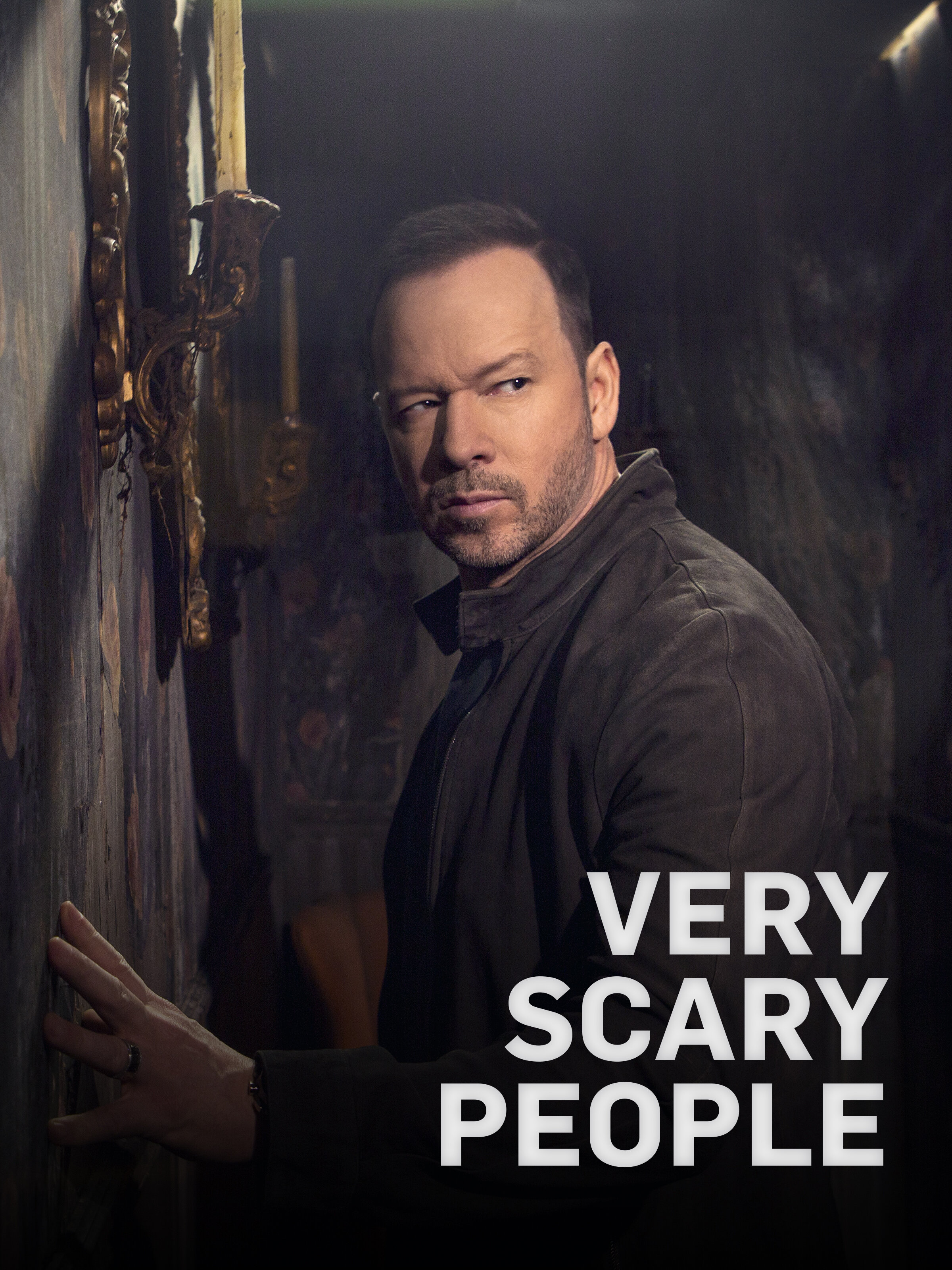
The fourth season of the true-crime powerhouse Very Scary People represents a significant milestone in the series' history, marking its high-profile transition to Investigation Discovery (ID). Hosted by Donnie Wahlberg, the season provides an immersive, deeply researched look into the lives and crimes of some of the most diabolical figures in criminal history. By utilizing rare archival footage, personal interviews with survivors, and insights from the original lead investigators, Season 4 offers a definitive exploration of the psychological and forensic complexities that define the "true crime" genre.
As of 2026, the legacy of Season 4 remains a benchmark for true crime enthusiasts who seek more than just a surface-level summary of crimes. This season focuses on the modus operandi, the failures and triumphs of law enforcement, and the long-term impact on the communities targeted by these predators. The following highlights analyze the most critical arcs and technical evolutions of the season, providing a comprehensive guide for viewers and researchers alike.
1. The Multi-Part Deep Dive into Richard Cottingham: The Times Square Killer
The premiere arc of Season 4 focuses on Richard Cottingham, one of the most prolific and sadistic serial killers in American history. Known as the "Times Square Killer" and the "Torso Killer," Cottingham’s crimes terrorized New York and New Jersey between 1967 and 1980. This highlight is notable for its exploration of the urban decay of 1970s Manhattan, which provided the cover Cottingham needed to operate in plain sight.
The show meticulously details how Cottingham targeted women in the vicinity of Times Square, then a hotbed of crime and vice. What makes this highlight exceptional is the inclusion of recent developments. While Cottingham was originally convicted of several murders in the early 1980s, the episode covers his more recent confessions, which have continued to surface well into the 2020s. This provides a narrative that bridges the gap between historical cold cases and modern forensic closure.
From a technical perspective, the episodes analyze the forensic limitations of the era. Before the advent of DNA profiling, detectives relied on physical evidence and witness testimony, which were often scarce. The documentary highlights the breakthrough moment when Cottingham was caught in a motel after a victim’s screams alerted the staff—a chilling reminder of how close many of these killers came to remaining at large.
2. The Taunting Psychology of Keith Hunter Jesperson: The Happy Face Killer
Season 4 dedicates significant screen time to Keith Hunter Jesperson, a long-haul truck driver who murdered at least eight women across several states in the early 1990s. The highlight of this arc is the focus on Jesperson’s need for recognition, which ultimately led to his capture. After another man was wrongly convicted for one of his murders, Jesperson began writing letters to the media and authorities, signing them with a "happy face" symbol.
The episode examines the geographic challenges of tracking a killer who moves across state lines. Jesperson utilized his occupation as a trucker to dispose of bodies in remote locations, making it nearly impossible for local jurisdictions to connect the crimes. This segment serves as a case study in the development of the FBI’s ViCAP (Violent Criminal Apprehension Program), which was designed to link serial crimes across different regions.
Interviews with forensic psychologists in this season provide a deeper understanding of Jesperson’s narcissism. Unlike many serial killers who attempt to evade the spotlight, Jesperson’s ego demanded that the world know of his "accomplishments." This highlight is a harrowing look at the intersection of psychopathy and the desperate desire for infamy.
3. The Shocking Depravity of the "Ken and Barbie" Killers: Paul Bernardo and Karla Homolka
Perhaps the most disturbing highlight of the season is the coverage of the Canadian case involving Paul Bernardo and Karla Homolka. Often referred to by the media as the "Ken and Barbie" killers due to their conventional good looks, the duo committed a series of brutal sexual assaults and murders in the late 1980s and early 1990s.
Season 4 handles this sensitive material by focusing on the catastrophic failures of the legal system and the controversial "deal with the devil" involving Karla Homolka. The highlight explores how Homolka convinced prosecutors she was a victim of Bernardo’s abuse, leading to a plea bargain for a reduced sentence. It was only later, with the discovery of hidden videotapes, that her full participation in the crimes was revealed.
The technical depth of this segment involves an analysis of victimology and the "folie à deux" (shared psychosis) that can occur in murderous couples. The show provides a critical look at how societal biases—specifically the refusal to believe a young, attractive woman could be a primary aggressor—allowed Homolka to receive a sentence that many believe was far too lenient.
4. The Urban Terror of David Berkowitz: The Son of Sam
The "Son of Sam" case is a staple of true crime history, but Very Scary People Season 4 offers a refreshed perspective by focusing on the media circus and public hysteria that gripped New York City in 1976 and 1977. David Berkowitz’s random shootings paralyzed the city, and the highlights of these episodes focus on the chaotic investigation that eventually led to his arrest.
A key element of this highlight is the examination of the ballistics and composite sketching that initially misled the police. Because Berkowitz did not fit the "profile" many detectives had in mind, he was able to continue his spree for over a year. The show details the crucial role of a simple parking ticket in Brooklyn that finally broke the case.
Furthermore, the season touches upon the "No Son of Sam" laws that were subsequently enacted to prevent criminals from profiting from the publicity of their crimes. This adds a layer of legal and social history to the narrative, explaining how this specific case changed the way the United States handles the commercialization of infamy.
5. The Calculated Intelligence of Edmund Kemper: The Co-ed Killer
Edmund Kemper remains one of the most analyzed figures in the history of the FBI’s Behavioral Science Unit. Season 4’s focus on the "Co-ed Killer" highlights Kemper’s disturbing self-awareness and intelligence. Standing at 6'9" with a high IQ, Kemper was a formidable and terrifying presence who targeted young female hitchhikers near Santa Cruz, California.
The highlight of this segment is the archival audio and footage of Kemper’s interviews. Unlike many other subjects who lie or deflect, Kemper’s cold, clinical descriptions of his own crimes provided the FBI with invaluable data on the mind of a serial killer. The episode illustrates how Kemper actually befriended local police officers, often drinking with them in bars while they discussed the very murders he had committed.
The technical focus here is on the development of criminal profiling. Viewers learn how Kemper’s relationship with his domineering mother became a blueprint for understanding the "stressors" and "triggers" that drive certain types of serial offenders. It is a masterclass in the psychological profiling techniques that are still used by agencies like the FBI today.
6. The Duo of Destruction: The Hillside Stranglers
Season 4 provides a comprehensive look at Kenneth Bianchi and Angelo Buono, cousins who terrorized Los Angeles in the late 1970s. This highlight focuses on the dynamics of a killing partnership. The show examines how the two men collaborated to kidnap, torture, and murder ten women, and how their contrasting personalities contributed to the crime spree.
A significant portion of the episode is dedicated to Kenneth Bianchi’s attempt to use a Multiple Personality Disorder defense (now known as Dissociative Identity Disorder). The show brings in experts to explain how forensic psychologists used hypnosis and rigorous questioning to debunk Bianchi’s claims, revealing him to be a manipulative malingerer rather than a victim of mental illness.
This case highlight is essential for understanding the complexities of "joint enterprise" in serial murder. It also sheds light on the intense pressure local law enforcement faces when a major city is under siege, and the jurisdictional hurdles that can arise when crimes occur across different police precincts within a sprawling metropolis like L.A.
7. The Evolution of Narrative Style and Technical Production
The final highlight isn't a single case, but rather the narrative and technical evolution of the series itself during Season 4. The transition to Investigation Discovery allowed for a more cinematic approach to the "Very Scary People" brand. This season is characterized by a "noir" aesthetic, using moody lighting and high-contrast visuals that mirror the dark subject matter.
Host Donnie Wahlberg’s role also evolved. In earlier seasons, the narration was more detached; in Season 4, Wahlberg acts as a more engaged guide, often emphasizing the humanity of the victims and the resilience of the survivors. This shift in tone helps to balance the inherent morbidity of the subject matter with a sense of justice and remembrance.
Additionally, the use of 3D crime scene reconstructions and enhanced archival photography in Season 4 provides a clearer spatial understanding of how these crimes were committed. These technical tools allow the audience to follow the investigative logic in a way that traditional storytelling cannot, making the show an educational resource for those interested in the mechanics of criminal investigation.
Comparison of Major Cases Featured in Season 4
The following table provides a summary of the primary figures analyzed in Season 4, highlighting their active periods and the geographical scope of their crimes.
| Figure(s) | Moniker | Active Period | Primary Location(s) | Primary Focus of Season 4 |
|---|---|---|---|---|
| Richard Cottingham | The Times Square Killer | 1967–1980 | NY / NJ | Forensic cold case breakthroughs and urban decay. |
| Keith Jesperson | The Happy Face Killer | 1990–1995 | Multiple (U.S.) | Taunting letters and interstate jurisdictional challenges. |
| Paul Bernardo & Karla Homolka | Ken and Barbie Killers | 1987–1992 | Ontario, Canada | Legal failures and the "deal with the devil." |
| David Berkowitz | Son of Sam | 1976–1977 | New York City | Media-driven hysteria and ballistics evidence. |
| Edmund Kemper | The Co-ed Killer | 1964; 1972–1973 | California | Psychological profiling and FBI interviews. |
| Bianchi & Buono | Hillside Stranglers | 1977–1978 | Los Angeles | The psychology of murderous partnerships and feigned illness. |
Frequently Asked Questions
Who is the host of Very Scary People, and what is his background? Donnie Wahlberg has been the host since the show’s inception. While widely known for his career in music (New Kids on the Block) and acting (Blue Bloods, The Sixth Sense), his role in Very Scary People leverages his authoritative yet empathetic screen presence. His long-standing role as a detective on television gives him a unique "borrowed authority" that resonates with true crime audiences.
How did Season 4 differ from the previous seasons on HLN? The move to Investigation Discovery (ID) brought a higher production budget and a more focused "true crime" branding. While the core format remained similar, Season 4 placed a greater emphasis on the forensic details and the broader societal context of the crimes. The episodes also became more standardized as two-part specials, allowing for a deeper dive into the "why" behind each killer's actions.
Is Very Scary People appropriate for all audiences? No. Due to the graphic nature of the crimes discussed, including descriptions of violence and sexual assault, the show is intended for mature audiences. It is recommended for those who have a serious interest in criminology and historical true crime, rather than casual viewers.
Where can viewers watch Season 4 of Very Scary People in 2026? As of 2026, Season 4 is available through various streaming platforms that host Investigation Discovery content, such as Discovery+ and Max (formerly HBO Max). It is also frequently featured in marathons on the linear ID cable channel.
What makes the "Co-ed Killer" episode stand out in Season 4? The Edmund Kemper episode is particularly noted for its use of real interview footage. Seeing Kemper calmly explain his motivations—contrasted with his massive physical stature—creates a level of "chilling" realism that few other true crime documentaries achieve. It highlights the terrifying reality that some of the world's most dangerous people are also among the most articulate.
Why does the show focus so heavily on the 1970s and 80s? This era is often considered the "Golden Age of Serial Killing" in the United States. A combination of factors—increased mobility, lack of centralized police databases, and the absence of DNA technology—created a perfect storm that allowed these predators to remain active for years. Season 4 uses these cases to show how far modern policing has come.
Practical Recommendation for Viewers
For those looking to get the most out of Very Scary People Season 4, it is recommended to watch the episodes in the order of their original broadcast. Start with the Richard Cottingham arc, as it sets the tone for the season’s focus on urban environments and forensic evolution. To gain a deeper understanding of the technical aspects mentioned in the show, viewers may want to cross-reference the cases with the FBI's Famous Cases & Criminals vault, which provides original documentation and historical context for many of the figures featured in the series.