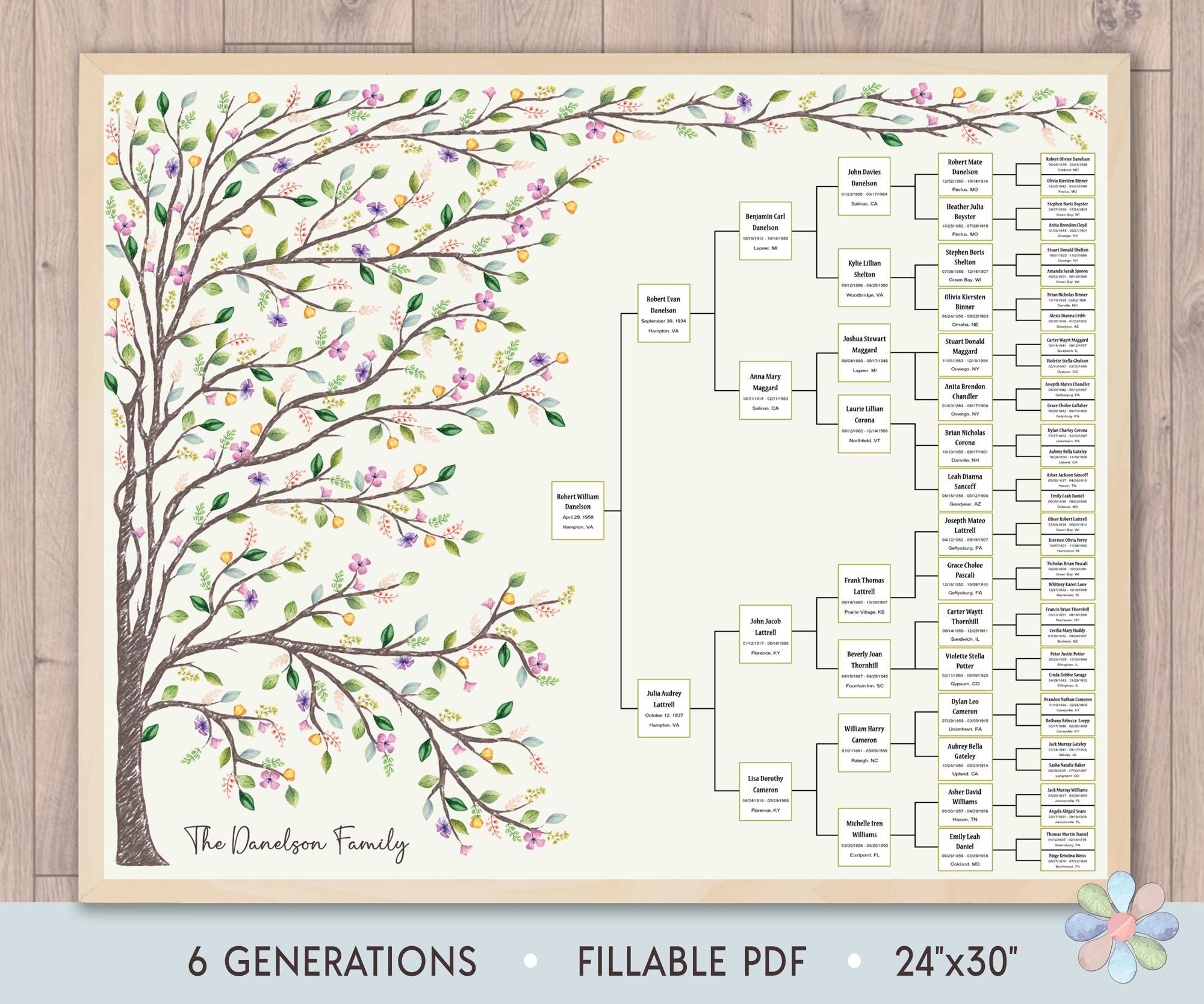
A six-generation family represents a rare biological and chronological milestone where a living lineage spans six distinct levels, from a newborn to a great-great-great-grandparent. This phenomenon requires a combination of early childbearing across multiple generations and exceptional longevity in the eldest members, creating a unique living history within a single household or family unit.
Defining the Six-Generation Lineage
In the study of genealogy and social history, a generation is typically defined as the average period between the birth of parents and the birth of their offspring, usually spanning 20 to 30 years. To achieve six living generations simultaneously, the family must defy modern trends of delayed parenthood. In a 2026 context, where the average age of first-time parents in many developed nations has risen to 30, a six-generation family is a statistical anomaly that fascinates sociologists and genealogists alike.
The hierarchy of a six-generation family is structured as follows:
- The Progenitor (Great-Great-Great-Grandparent): Often 95 to 110 years old.
- The Great-Great-Grandparent: Typically 75 to 90 years old.
- The Great-Grandparent: Usually 55 to 70 years old.
- The Grandparent: Frequently 35 to 50 years old.
- The Parent: Often 18 to 30 years old.
- The Infant/Child: 0 to 5 years old.
This structure allows the youngest member to interact with a direct ancestor who may have been born at the beginning of the 20th century. This provides a tangible link to the past that textbooks cannot replicate.
The Mathematical Reality and Biological Constraints
The primary obstacle to achieving six living generations is the "fertility-longevity squeeze." For a family to reach this milestone, the average age of parenthood across the five preceding generations must be remarkably low. If each generation gave birth at age 20, the eldest member would be 100 years old when the sixth generation is born.
The Impact of Modern Longevity
As of 2026, global healthcare has significantly increased the number of centenarians. Advances in geriatric medicine, personalized nutrition, and biotechnology have made it more common for individuals to live past 100. However, this is countered by the "Second Demographic Transition," where people are choosing to have fewer children and at later stages in life.
In many Western societies, the average age of first-time motherhood is now 31. If every generation waited until 31, the great-great-great-grandparent would need to be 155 years old—a biological impossibility. Thus, six-generation families are almost exclusively found in communities or cultures where early childbearing remains the norm, or in specific families where a "young" lineage has been maintained for over a century.
Genetic Factors
Research into "supercentenarians" (those living past 110) suggests that longevity is approximately 20% to 30% heritable. Families that achieve six generations often possess genetic markers associated with slower cellular aging and lower risks of age-related diseases like Alzheimer’s or cardiovascular failure. When these genetic traits align with a cultural pattern of early family building, the six-generation threshold becomes achievable.
Social and Emotional Dynamics of the Six-Generation Household
The psychological impact of living in a six-generation family is profound. It shifts the traditional "sandwich generation" dynamic—where adults care for both children and aging parents—into a much more complex "multi-layered" caregiving environment.
The Role of the Matriarch or Patriarch
The eldest member often serves as the "spiritual and historical anchor" of the family. In 2026, a 105-year-old great-great-great-grandmother is a living repository of the 20th and 21st centuries. Their presence offers younger generations a sense of continuity and resilience. However, the role is often passive due to the physical limitations of extreme old age. The "functional" heads of the family are typically the great-grandparents or grandparents, who manage the logistics of the sprawling clan.
Intergenerational Knowledge Transfer
One of the most significant benefits is the direct transfer of oral history. A child born in 2026 can hear firsthand accounts of the mid-20th century from their great-great-great-grandparent. This creates a "long-view" perspective on life, helping younger members understand social evolution, technological shifts, and family resilience through wars, economic depressions, and pandemics.
Documenting and Verifying a Six-Generation Family
For a family to be officially recognized—for instance, by the Guinness World Records or local historical societies—the burden of proof is high. Documentation must be meticulous to avoid "age exaggeration," a common issue in genealogical records.
Essential Documentation Checklist
Verification requires primary sources for every link in the chain. In 2026, digital records have made this easier, but the earliest generations may still rely on physical paper trails.
- Birth Certificates: Must be provided for all six individuals to establish the direct biological (or legal) link.
- Marriage Licenses: Useful for tracking name changes, particularly for female ancestors in historical records.
- Census Data: Helpful for corroborating ages in the older generations (e.g., the 1930, 1940, and 1950 US Censuses).
- DNA Testing: In cases where birth certificates are missing or disputed, autosomal DNA testing can confirm the degree of relatedness (e.g., the expected centimorgan ranges between a great-great-great-grandparent and a descendant).
The Role of the Guinness World Records
The Guinness World Records tracks the "most generations living in a single family." The standing record has historically been seven generations, but such cases are extraordinarily rare and often rely on generations being born as early as age 13 or 14, which raises complicated social and legal questions in modern contexts. For a six-generation family in 2026, the focus is often on the rare health and vitality required to keep the lineage intact.
Practical Challenges of Multi-Generational Maintenance
While the symbolic value of a six-generation family is high, the practical realities can be taxing. The logistical coordination required to bring six generations together for a photograph or a holiday is immense.
Financial and Estate Planning
Managing assets across six generations requires sophisticated financial planning. The "Great Wealth Transfer" usually refers to money moving from Baby Boomers to Millennials. In a six-generation family, wealth may need to be stretched or preserved across many more tiers. Estate taxes, trusts, and healthcare proxies must be managed with extreme care to ensure the eldest members receive adequate care without depleting the resources intended for the youngest.
The Caregiving Burden
The "sandwich" effect is amplified. A 50-year-old grandmother may find herself caring for her 75-year-old mother, her 98-year-old grandmother, and her 110-year-old great-grandmother, all while assisting her own daughter with a newborn. This "compounded caregiving" can lead to significant burnout and requires a robust support network, often involving professional home health aides and integrated family health plans.
Comparison of Multi-Generational Spans
The following table illustrates the typical age demographics and the rarity of various multi-generational structures as of 2026.
| Number of Generations | Eldest Age (Approx.) | Youngest Age | Frequency in 2026 | Key Difficulty |
|---|---|---|---|---|
| 3 Generations | 50–70 | 0–10 | Universal | None; standard family unit. |
| 4 Generations | 70–85 | 0–5 | Very Common | Improving senior health. |
| 5 Generations | 85–100 | 0–2 | Uncommon | Requires longevity + 20yr gaps. |
| 6 Generations | 95–110 | 0–1 | Extremely Rare | Requires early births + 100yr life. |
| 7 Generations | 105–120 | 0 | Statistically Near-Zero | Exceeds most biological limits. |
Digital Preservation in 2026
In 2026, technology plays a vital role in preserving the legacy of six-generation families. With the rise of AI-driven genealogy and high-fidelity digital archiving, families are now able to "immortalize" their eldest members.
- Interactive Memoirs: Using AI to index hours of video interviews with the 6th-generation elder, allowing future descendants to "ask" the ancestor questions and receive answers in their actual voice and likeness.
- Cloud-Based Lineage Vaults: Secure servers that hold high-definition scans of every birth certificate and family photo, ensuring the "proof" of the six-generation span is never lost to fire or decay.
- Virtual Reality (VR) Reunions: For six-generation families spread across the globe, VR platforms allow them to meet in a shared digital space, which is often easier for the extremely elderly than physical travel.
Common Obstacles to Recognition
Many families believe they have six generations but fail to meet the strict criteria for official verification.
- Step-Generations: Many records require a "direct bloodline." While step-parents and adopted children are vital family members, they are sometimes categorized differently in biological record-breaking contexts.
- Age Rounding: In older records, it was common for individuals to "round up" their age for social status or "round down" for employment. Accurate verification requires original ledger entries rather than just family lore.
- Missing Links: The most common failure point is a missing birth certificate for the second or third generation, often due to records being destroyed in historical conflicts or natural disasters.
Frequently Asked Questions
What is the most generations ever recorded in one family?
The Guinness World Record for the most living generations in a single family is seven. This was achieved by the family of Augusta Bunge in 1989. For a seven-generation family to exist, each parent must have their child at a very young age (averaging 15–16 years old), and the eldest must live well into their 100s.
Is a six-generation family more common now than in the 1800s?
Actually, it is more common now. While people had children earlier in the 1800s, the infant mortality rate was high and the average life expectancy was much lower. Modern medicine allows the "top" of the family tree to survive much longer, which is the critical factor in "stacking" living generations.
How do you celebrate a six-generation milestone?
Most families celebrate with a "Generations Photo," often featuring all six members holding the next in line. In 2026, many families also create a "Legacy Document," where each generation writes a letter to the newborn, providing a snapshot of the world from their specific age-based perspective.
What are the legal implications of a six-generation family?
The primary legal implications involve inheritance and power of attorney. With so many living generations, the traditional "line of succession" for family assets can become muddled. It is recommended that such families use professional estate planners to clarify "per stirpes" (by branch) vs. "per capita" (by head) distributions.
Can DNA testing prove six generations?
Yes. DNA testing through companies like AncestryDNA or 23andMe can confirm the biological relationships. A great-great-great-grandchild would share approximately 3.125% of their DNA with their great-great-great-grandparent. While this is a small percentage, it is distinct enough to be identified by modern genomic algorithms.
Final Recommendations for Families
If your family is approaching the six-generation mark, the most important action is to secure primary documentation immediately. Ensure that the birth certificates for the two oldest generations are located and digitized, as these are the most likely to be lost.
Beyond the paperwork, focus on the intentional capture of stories. The opportunity to record a conversation between a 100-year-old and their grandchild about the newest addition to the family is a fleeting one. Use high-quality audio or video equipment to document these interactions. In 2026, these records are not just family keepsakes; they are historical artifacts that provide a rare window into the continuity of human life.