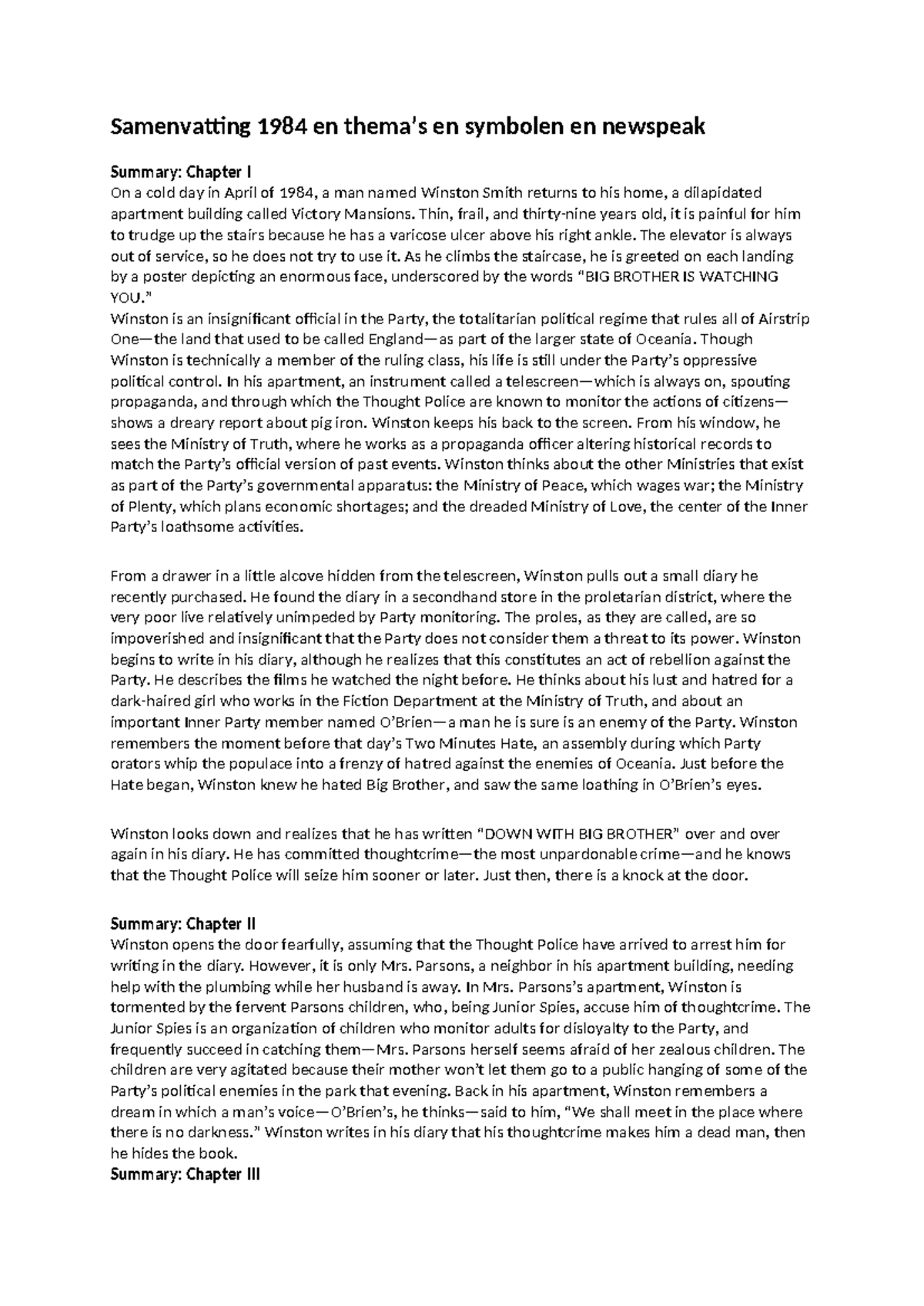
Newspeak is the fictional language in George Orwell’s 1984, designed by the totalitarian state Oceania to limit the range of human thought. The primary examples include Crimethink (illegal thoughts), Unperson (a person erased from history), Doublethink (holding two contradictory beliefs simultaneously), Duckspeak (speaking without thinking), and Bellyfeel (blind, enthusiastic acceptance of dogma). By narrowing vocabulary, the State aims to make "heretical" thoughts literally impossible to conceptualize.
The Architecture of Newspeak: Why Language Controls Thought
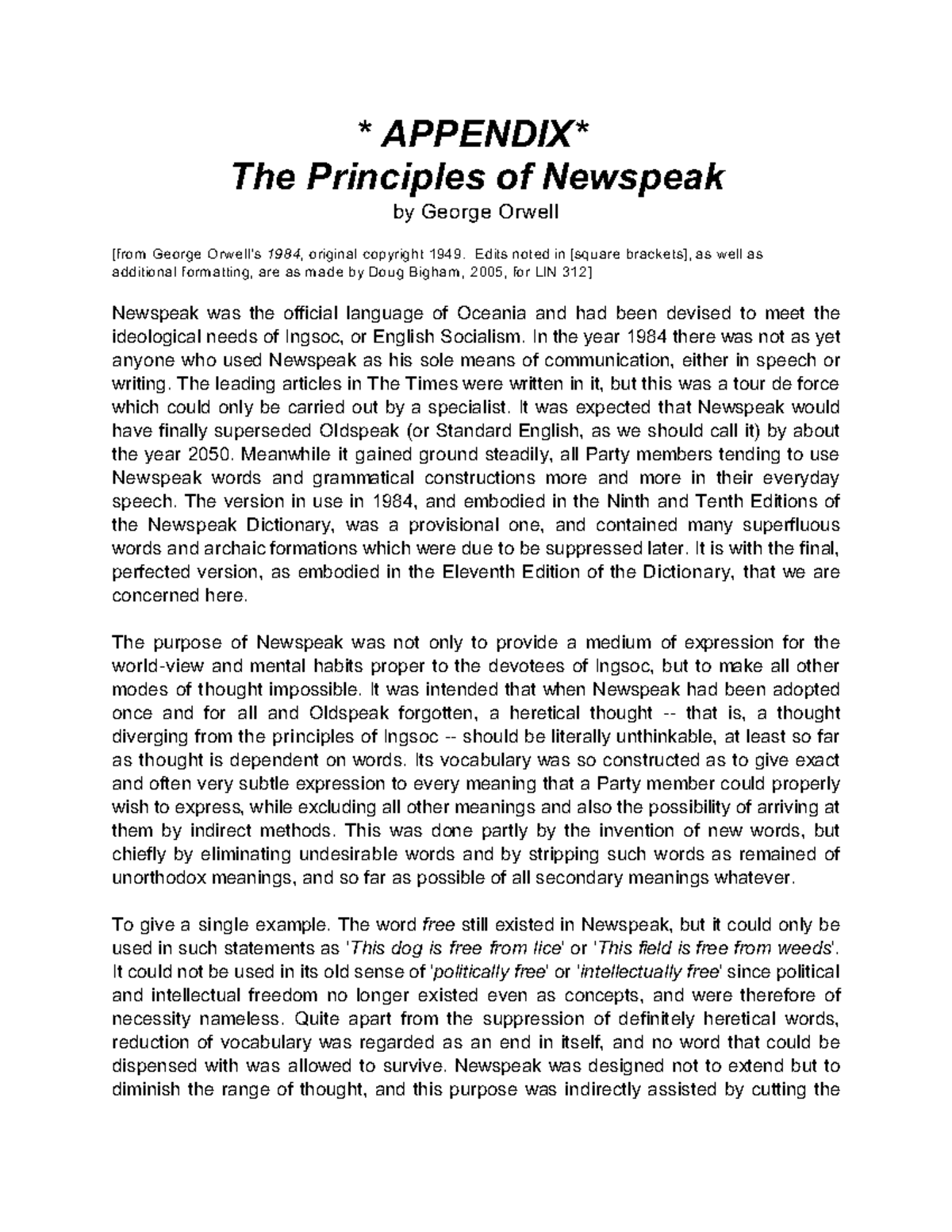
To understand the specific examples of Newspeak, one must first grasp the philological objective behind the language. In the year 2026, literary critics and sociologists continue to cite Orwell’s creation as the definitive study of linguistic engineering. Newspeak was not merely a shorthand or a dialect; it was a systematic attempt to diminish the human mind.
The Party (Ingsoc) realized that if a thought cannot be expressed in words, it cannot be fully formed in the mind. Therefore, by destroying words like "liberty," "justice," or "rebellion," the State could effectively eliminate the concepts themselves. This is a fictional application of the Sapir-Whorf hypothesis—the idea that the structure of a language determines or greatly influences the modes of thought and behavior characteristic of the culture in which it is spoken.
In 1984, the character Syme, a philologist working on the Eleventh Edition of the Newspeak Dictionary, explains that the beauty of the language lies in its "destruction of words." He notes that while "Oldspeak" (Standard English) is full of useless nuances and synonyms, Newspeak is lean. If you have the word "good," there is no need for "excellent" or "splendid"; "plusgood" or "doubleplusgood" suffices. Similarly, there is no need for the word "bad" when "ungood" covers the requirement with more logical precision.
1. Crimethink (Thoughtcrime)
In the world of Oceania, the most dangerous offense is not murder or theft, but crimethink. While the English translation is "thoughtcrime," the Newspeak term encapsulates a broader, more terrifying reality. It represents any thought that deviates from the principles of Ingsoc (English Socialism).
The Linguistic Erasure of Dissent
The power of the word crimethink lies in its all-encompassing nature. In Oldspeak, a person might be a "dissenter," a "revolutionary," a "heretic," or a "skeptic." Each of these words carries a different connotation and suggests a different type of intellectual resistance. In Newspeak, these nuances are collapsed into a single, blunt noun-verb.
By 2026 standards of political discourse, we see the danger of "labeling" as a precursor to silencing; however, crimethink goes further. It is not just a label for the person, but a label for the mental act itself. Because the word for specific types of rebellion no longer exists, the rebel cannot even define what they are feeling. They simply know they are committing crimethink, a concept synonymous with death.
The Thought Police and Language
The Thought Police (Thinkpol) monitor citizens for physical manifestations of crimethink. A nervous tic, a look of incredulity during a propaganda broadcast, or talking in one's sleep can all be classified as ownself—the tendency to live a private life—which is the ultimate gateway to crimethink.
2. Unperson
The term unperson is perhaps the most chilling example of Newspeak because it describes the total negation of a human being's existence. In Oceania, if the Party decides to execute a citizen, they do not just kill them; they "vaporize" them. Once a person is vaporized, they become an unperson.
The Mechanics of Erasure
When someone becomes an unperson, every record of their existence is destroyed. Their name is removed from registers, their photographs are burned (often via "memory holes"), and mention of them is forbidden. This is a crucial distinction from "death" or "execution." A dead person can be a martyr; an unperson never existed in the first place.
This concept serves a dual purpose:
- Terror: It reminds citizens that the Party has total control over reality.
- Logic: It maintains the Party’s infallibility. If a Party member turns out to be a traitor, the Party’s initial trust in them must have been a mistake. By making them an unperson, the Party ensures it was never "wrong" about them, because they were never there.
Historical Context in 2026
Looking back at the historical influences of 1984, Orwell drew heavily from the Stalinist era of the Soviet Union, where figures like Leon Trotsky were airbrushed out of official photographs. The Newspeak term unperson formalizes this practice into a linguistic requirement, making the absence of the individual a fundamental part of the language’s structure.
3. Duckspeak
Duckspeak is a term that perfectly illustrates the satirical yet dark nature of Newspeak. It literally means "to quack like a duck." Depending on the context, it can be a term of high praise or a deadly insult.
The Goal of Mindless Speech
If you are a member of the Party and you are "duckspeaking" in favor of Big Brother, you are being complimented. It means you are voicing the Party line so rapidly and instinctively that your brain is not involved in the process at all. The goal of Newspeak is to make speech as automatic as a biological reflex.
- Positive Duckspeak: Articulating orthodox opinions without the interference of the conscious mind.
- Negative Duckspeak: If used against an enemy, it implies they are merely making noise without truth.
In the 2026 digital landscape, the concept of duckspeak is often compared to "bot" behavior or algorithmic content generation—speech that follows a rigid pattern without any underlying "soul" or critical thought. For the Party, a citizen who can duckspeak is a safe citizen, because a person who does not think while they speak cannot accidentally commit crimethink.
4. Doublethink
While doublethink is a concept, it is also a foundational Newspeak word that describes the mental gymnastics required to survive in Oceania. It is defined as the power of holding two contradictory beliefs in one's mind simultaneously and accepting both of them.
Examples of Doublethink in Action
The most famous examples are the slogans of the Party:
- War is Peace
- Freedom is Slavery
- Ignorance is Strength
To practice doublethink, one must be able to tell deliberate lies while genuinely believing them. For example, the Ministry of Peace (Minipax) deals with war, and the Ministry of Truth (Minitrue) deals with lies and propaganda. A Party member must know that the Ministry of Truth alters history, but they must also believe that the revised history is the only history that has ever existed.
The Linguistic Necessity
The word doublethink is necessary because it allows the speaker to acknowledge the process of reality-shifting while immediately forgetting that they acknowledged it. It is a self-canceling thought process. Without the word to describe this mental "switch," the cognitive dissonance would likely lead to a psychological breakdown.
5. Bellyfeel
Bellyfeel is a Newspeak noun that represents a blind, enthusiastic, and instinctual acceptance of an idea. It is the opposite of intellectual assent; it is a "gut feeling" that has been weaponized by the State.
The Death of Logic
In Newspeak, the Party does not want you to "agree" with their policies based on evidence or logic. Evidence is fickle, and logic can be turned against the State. Instead, they want you to have a bellyfeel for Ingsoc.
If you have bellyfeel, you don't need to be told that the chocolate ration has been "increased" (even if it was actually decreased); you feel the truth of the Party's benevolence in your very core. It is the ultimate form of orthodoxy. It removes the "head" from the equation entirely, leaving only the "belly"—the seat of primal, unthinking emotion.
Newspeak Vocabulary Classifications
Orwell divided Newspeak into three distinct vocabularies. This categorization ensures that the language covers all necessary human interactions while stripping away the potential for intellectual curiosity.
| Vocabulary Type | Description | Examples | Intent |
|---|---|---|---|
| A Vocabulary | Words for everyday life (eating, working, dressing). | Cook, Run, Tree, House | To provide a functional but rigid set of terms for physical existence. |
| B Vocabulary | Words created for political purposes; always compound words. | Goodthink, Sexcrime, Minitrue | To impose a political "set of mind" on the speaker. |
| C Vocabulary | Scientific and technical terms. | (Specific to professional fields) | To ensure experts can work without understanding the broader implications of their fields. |
The Role of Grammar in Newspeak
The grammar of Newspeak is designed for "regularity." In the Eleventh Edition, all irregularities are removed.
- Interchangeability: Any word can be used as a verb, noun, adjective, or adverb. The word "cut" serves as the noun and the verb. "Think" is both noun and verb.
- Affixes: The prefix un- signifies the negative (e.g., ungood). The prefix plus- is an intensifier (plusgood), and doubleplus- is a superlative (doubleplusgood).
- Suffixes: The suffix -wise turns a word into an adverb (e.g., speedwise).
By 2026, we see the remnants of this logic in some forms of modern "netspeak," where brevity often overrides grammatical complexity. However, in 1984, this was a forced evolution intended to "make a heretical thought unthinkable because there will be no words in which to express it."
Why These Examples Still Resonate in 2026
The enduring power of Orwell's Newspeak examples lies in their ability to describe how power operates through communication. When words are simplified, the capacity for complex emotion and critical analysis is diminished.
- Nuance is the enemy of the State: By reducing "splendid," "gorgeous," and "vibrant" to "doubleplusgood," the aesthetic experience of the world is flattened.
- Historical Revisionism: The word unperson reminds us that those who control the present also control the past.
- The Weaponization of Emotion: Bellyfeel warns against political movements that prioritize "vibes" and emotional loyalty over factual accuracy and reason.
In the context of the year 2026, Orwell’s Newspeak remains a cautionary framework for analyzing how "echo chambers" and "filter bubbles" can create a modern version of the Newspeak environment—where only certain words are acceptable and dissenting thoughts are socially vaporized.
FAQ: Understanding Newspeak Mechanics
What is the main purpose of Newspeak?
The primary goal of Newspeak is to limit the range of human thought. By narrowing the vocabulary and removing words that express rebellion, freedom, or individuality, the Party makes it impossible for citizens to conceive of anything other than the Party's doctrine. It is a tool for total cognitive control.
Is Newspeak based on a real language?
Newspeak is based on Standard English (referred to in the book as "Oldspeak"). However, George Orwell was influenced by the political jargon and propaganda of the 1930s and 40s, specifically the use of acronyms and "loaded" language in Nazi Germany and the Soviet Union. He was also inspired by Basic English, a simplified version of the language designed for international use.
What is the difference between Newspeak and Oldspeak?
Oldspeak is the English language we use today—it is rich, full of synonyms, and allows for ambiguity and poetic expression. Newspeak is the "purified" version that removes synonyms, eliminates irregular verbs, and forces every word to have a single, rigid, political meaning.
How does Newspeak eliminate "bad" words?
Newspeak eliminates negative concepts by using the prefix "un-". Instead of having a word for "bad," "evil," or "wicked," the language simply uses "ungood." This reduces the emotional impact and the philosophical depth of the negative concept, making it a mere absence of the positive "good."
What are the three vocabularies of Newspeak?
Newspeak is divided into the A Vocabulary (everyday words for business and physical life), the B Vocabulary (words specifically constructed for political and ideological purposes), and the C Vocabulary (technical and scientific terms meant to keep specialists isolated in their own narrow fields of knowledge).
Practical Recommendation for Further Study
To truly understand the depth of Orwell's linguistic theory, it is highly recommended to read the Appendix of 1984, titled "The Principles of Newspeak." While many readers skip this section, it is arguably the most important part of the book. It is written from the perspective of a historian in the future (after the fall of Oceania), looking back at Newspeak as a failed but fascinating experiment. This section provides the technical rules for grammar and the detailed philosophy behind the destruction of language, offering a much deeper insight than the narrative alone.