The EB-5 Immigrant Investor Program requires an investment of capital, placement of that capital into a new commercial enterprise, creation of at least 10 full-time jobs for qualifying U.S. workers, involvement in the management of the enterprise, and the sourcing of funds from lawful means.
Navigating the United States immigration system requires meticulous planning, an understanding of statutory requirements, and strict compliance with federal regulations. Among the various pathways to permanent residency, the Employment-Based Fifth Preference (EB-5) Immigrant Investor Program stands out as a unique option for foreign nationals seeking a green card through economic contribution. Established by Congress in 1990, the EB-5 program aims to stimulate the U.S. economy through job creation and capital investment by foreign entrepreneurs. However, securing a permanent resident visa through this route involves satisfying a strict statutory framework enforced by United States Citizenship and Immigration Services (USCIS).
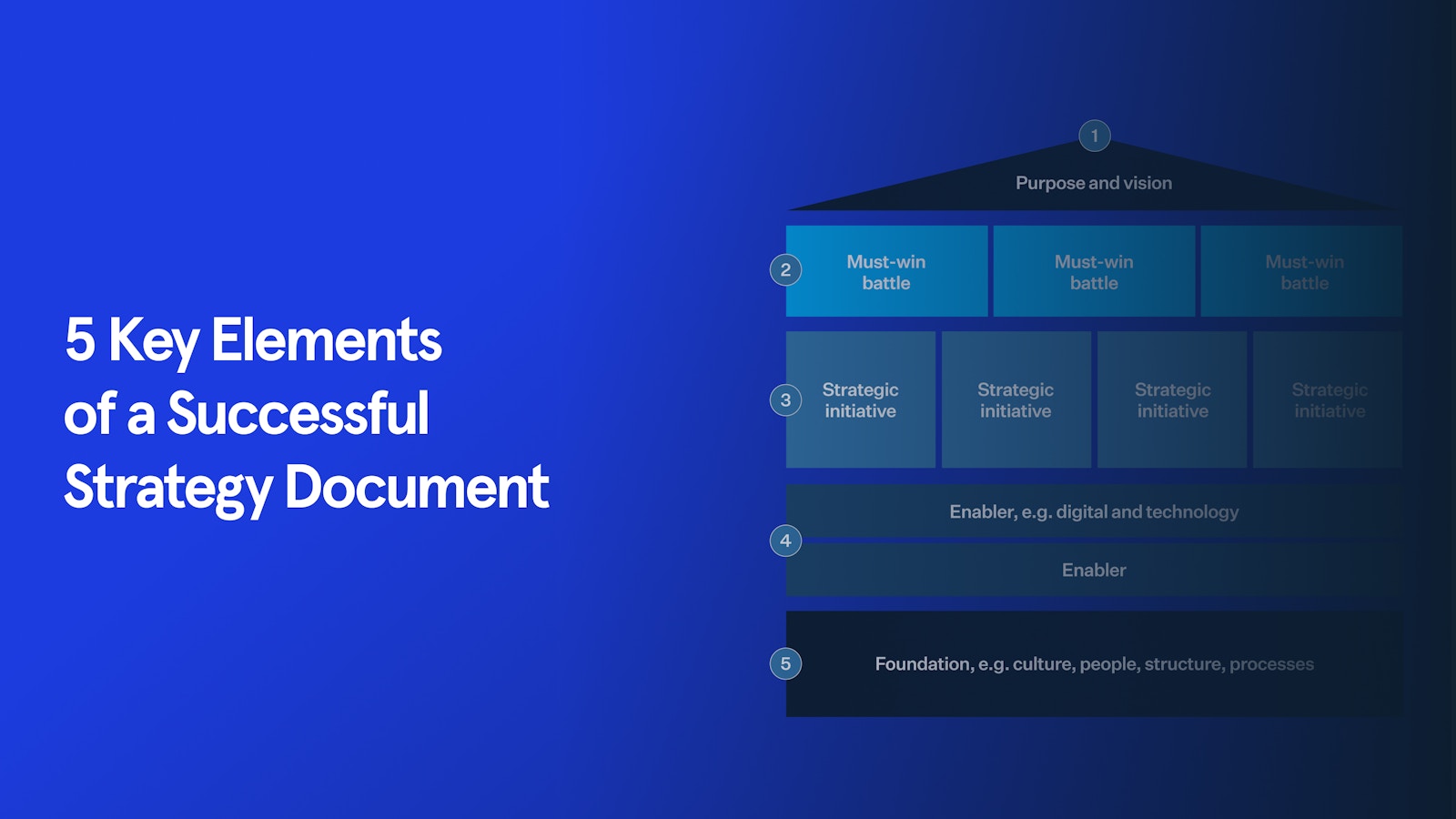
To successfully transition from a conditional resident to a lawful permanent resident, applicants must satisfy five foundational criteria. Each element serves as a critical checkpoint during the adjudication of Form I-526 (or Form I-526E for regional center investors) and the subsequent Form I-829 petition to remove conditions. Understanding these core components helps investors, legal counsel, and project developers structure transactions that withstand rigorous government scrutiny. This guide breaks down the legal and operational realities of each criterion, examining how the rules function in practice and what investors must prove to achieve a successful outcome.
1. The Investment of Capital
The foundation of any EB-5 petition is the deployment of capital into the United States economy. Under USCIS regulations, "capital" encompasses cash, equipment, inventory, other tangible property, cash equivalents, and indebtedness secured by assets owned by the investor, provided the investor is personally and primarily liable and the assets of the new commercial enterprise are not used to secure any of the indebtedness.
A central aspect of this criterion involves the required monetary threshold, which varies depending on the geographic location of the investment enterprise. Under the EB-5 Reform and Integrity Act of 2022 (RIA), the baseline minimum investment amount was adjusted to account for inflation. The standard minimum investment stands at $1,050,000. However, if the enterprise is located within a Targeted Employment Area (TEA)—which includes rural areas or regions experiencing high unemployment of at least 150 percent of the national average—or in designated infrastructure projects, the reduced minimum investment threshold is $800,000.
Investors must demonstrate that they have placed their capital at risk in the commercial sense. Promissory notes, unsecured loans, or arrangements where the investor retains a guaranteed right to a return of capital or a redemption option are generally impermissible. The capital must be fully committed to the enterprise, meaning there is a genuine risk of loss and a potential for gain. Furthermore, the investment must be made by the petitioner directly or through an appropriate corporate vehicle, and the funds must be transferred to the job-creating entity or the new commercial enterprise in a transparent, traceable manner.
2. Establishment of a New Commercial Enterprise
An EB-5 investor cannot simply purchase existing passive assets, such as residential real estate or publicly traded stocks, without restructuring or expanding the entity. The capital must be invested in a "New Commercial Enterprise" (NCE). A commercial enterprise is defined as any for-profit activity formed for the ongoing conduct of lawful business, including sole proprietorships, partnerships, holding companies, joint ventures, corporations, business trusts, or other publicly or privately owned entities.
To qualify as "new," the enterprise must generally have been established after November 29, 1990. However, an investor can also invest in a pre-existing business—known as a troubled business or a restructuring enterprise—provided certain conditions are met:
- Restructuring and Expansion: The investor must inject capital that results in a substantial change in the net worth or the number of employees of the business, typically amounting to at least a 40 percent increase in either metric.
- Troubled Business: If the business has been in existence for at least two years and has incurred a net loss during the 12- or 24-month period prior to the priority date, the investor may invest in the troubled business while maintaining or expanding the existing number of jobs, effectively bypassing the standard 10-job creation requirement for new hires if jobs are preserved.
Investors typically choose between two pathways for their NCE: direct investment, where the investor manages an independent business and directly counts employees, or regional center investment, where capital is pooled through a USCIS-approved regional center into job-creating projects, allowing for the calculation of both direct, indirect, and induced employment.
3. Creation of 10 Full-Time Jobs
Job creation is the primary policy objective of the EB-5 program, and it is frequently the most scrutinized element during the petition process. The investor must demonstrate that the investment will create—or in the case of troubled businesses, preserve—at least 10 full-time jobs for qualifying U.S. workers.
A "qualifying employee" for EB-5 purposes is a U.S. citizen, permanent resident, or other immigrant lawfully authorized to work in the United States, including conditional residents, temporary residents, asylees, and refugees. The definition explicitly excludes the investor, the investor's spouse, children, and any non-immigrant aliens (such as H-1B, L-1, or F-1 visa holders without permanent work authorization).
The methodology for counting these jobs differs significantly depending on the investment model:
- Direct Investment: Jobs must be direct employees on the payroll of the new commercial enterprise. A full-time job requires a minimum of 35 working hours per week. Part-time positions generally cannot be aggregated to equal a full-time position, except in specific shared-position scenarios or when utilizing econometric models in regional centers.
- Regional Center Investment: Investors utilizing designated regional centers are permitted to use reasonable economic methodologies—such as the RIMS II or IMPLAN input-output models—to calculate direct, indirect, and induced jobs. Indirect jobs are those created collaterally, such as supply chain vendors, while induced jobs are created in the local economy as project employees spend their wages. This model allows large-scale real estate and infrastructure developments to satisfy job creation requirements through economic projections rather than direct payroll records.
| Element | Direct Investment Model | Regional Center Model |
|---|---|---|
| Minimum Investment (TEA) | $800,000 | $800,000 |
| Minimum Investment (Non-TEA) | $1,050,000 | $1,050,000 |
| Job Creation Requirement | 10 direct, W-2 payroll positions | 10 direct, indirect, or induced positions via economic models |
| Management Involvement | Active day-to-day or policy formulation | Limited partnership / governance role |
| Source of Funds Documentation | Direct business and personal records | Project and regional center administration support |
4. Active Involvement in Management
The EB-5 visa is designed for immigrant entrepreneurs and investors, not passive portfolio investors. Consequently, the regulation requires that the investor be engaged in the management of the new commercial enterprise, either through day-to-day operational control or through policy formulation.
Fulfilling this requirement is straightforward for direct investors who establish their own businesses and hold titles such as President, Managing Director, or Chief Executive Officer. These individuals naturally participate in strategic planning, financial oversight, and corporate governance.
For investors participating in regional center projects, the management requirement is typically satisfied by acting as a limited partner within a limited partnership or as a member of a limited liability company (LLC). Under the Uniform Limited Partnership Act and standard corporate frameworks, limited partners are protected from day-to-day operational liabilities while retaining specific governance rights. These rights usually include voting on major enterprise decisions, reviewing financial statements, removing general partners for cause, and participating in annual meetings. USCIS accepts this governance structure as sufficient to satisfy the statutory requirement for management engagement, provided the investor's operating agreement explicitly grants these rights.
5. Lawful Source of Funds
One of the most rigorous administrative hurdles in the EB-5 process is proving that the invested capital was obtained entirely through lawful means. To combat money laundering and ensure compliance with federal financial regulations, USCIS requires petitioners to provide an exhaustive paper trail documenting the origin of every dollar used in the investment and associated administrative fees.
The burden of proof rests entirely on the investor. Acceptable sources of funds include, but are not limited to:
- Salary and Business Income: Corporate distributions, dividends, W-2 earnings, and business ownership profits, supported by tax returns, employer letters, and corporate financial statements.
- Real Estate Sales: Proceeds from the sale of residential or commercial property, verified through purchase agreements, closing statements, title deeds, and bank transfer records showing the flow of funds.
- Gifts and Inheritances: Funds received from family members or third parties, accompanied by gift deeds, probate documents, death certificates, and proof of the donor's lawful accumulation of wealth.
- Loans and Securities: Loans secured by the investor's personal assets (such as home equity loans), stock sales, or distributions from retirement accounts, provided the underlying debt or asset liquidation is fully documented.
Translating foreign documents, establishing foreign currency exchange compliance, and demonstrating cross-border tax compliance are vital steps in this phase. Any unexplained gaps in the financial history can result in a Request for Evidence (RFE) or a formal petition denial.
Frequently Asked Questions
What happens if the job creation requirement is not met before filing Form I-829?
If the project fails to create the required 10 full-time jobs by the time the conditional permanent residence period expires, USCIS will generally deny the Form I-829 petition to remove conditions. This can result in the termination of conditional resident status and the initiation of removal proceedings. However, if jobs are projected to be created within a "reasonable timeframe" post-filing in specific regional center contexts, policies may allow for extensions, provided the business plan remains viable.
Can borrowed funds be used for the EB-5 investment?
Yes, borrowed funds can qualify as EB-5 capital, but only under strict regulatory conditions. The loan must be secured by assets owned by the investor, and the investor must be personally and primarily liable for the debt. Furthermore, if the loan is secured by the assets of the new commercial enterprise itself, the investment will be disqualified. Unsecured loans, signature loans, or loans provided by the commercial enterprise or regional center principals are strictly prohibited.
What is the difference between a targeted employment area and a non-TEA location?
A Targeted Employment Area (TEA) is a designation established to encourage capital flow into economically distressed regions. It includes rural areas (outside metropolitan statistical areas with populations under 20,000) and areas experiencing high unemployment (at least 150 percent of the national average). Investing in a TEA reduces the required capital threshold from $1,050,000 to $800,000, making it the preferred route for most EB-5 applicants.
How long does the EB-5 petition process take?
Processing times fluctuate based on USCIS workload, project type, and country of chargeability. Initial petitions (Form I-526 and I-526E) can take anywhere from several months to several years. Under the RIA, rural and infrastructure projects may benefit from priority processing queues. Investors should consult with qualified immigration counsel to review current USCIS processing times and visa bulletin retrogression updates before committing capital.
Conclusion and Next Actions
Successfully navigating the EB-5 process requires a balanced approach combining financial transparency, legal precision, and strategic project selection. Because immigration laws and administrative guidelines are subject to evolving interpretations and regulatory updates, prospective investors should begin by consulting a licensed U.S. immigration attorney and a qualified financial advisor. Prior to transferring any funds or signing subscription agreements, conduct thorough due diligence on regional center operators, review econometric reports, and secure comprehensive documentation verifying the lawful source of your capital. Taking these deliberate, structured steps minimizes regulatory risk and establishes a solid foundation for achieving U.S. permanent residency.