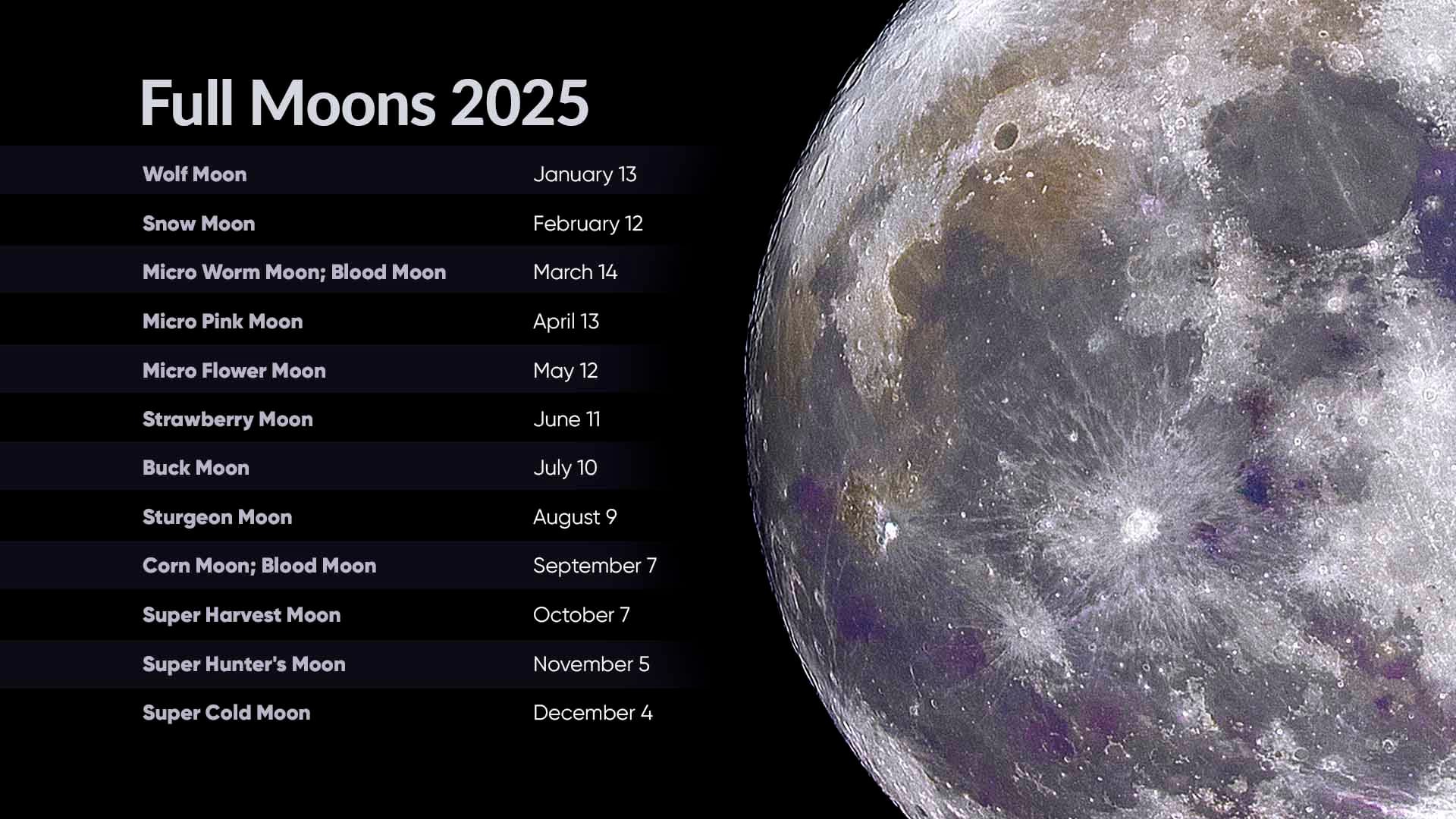
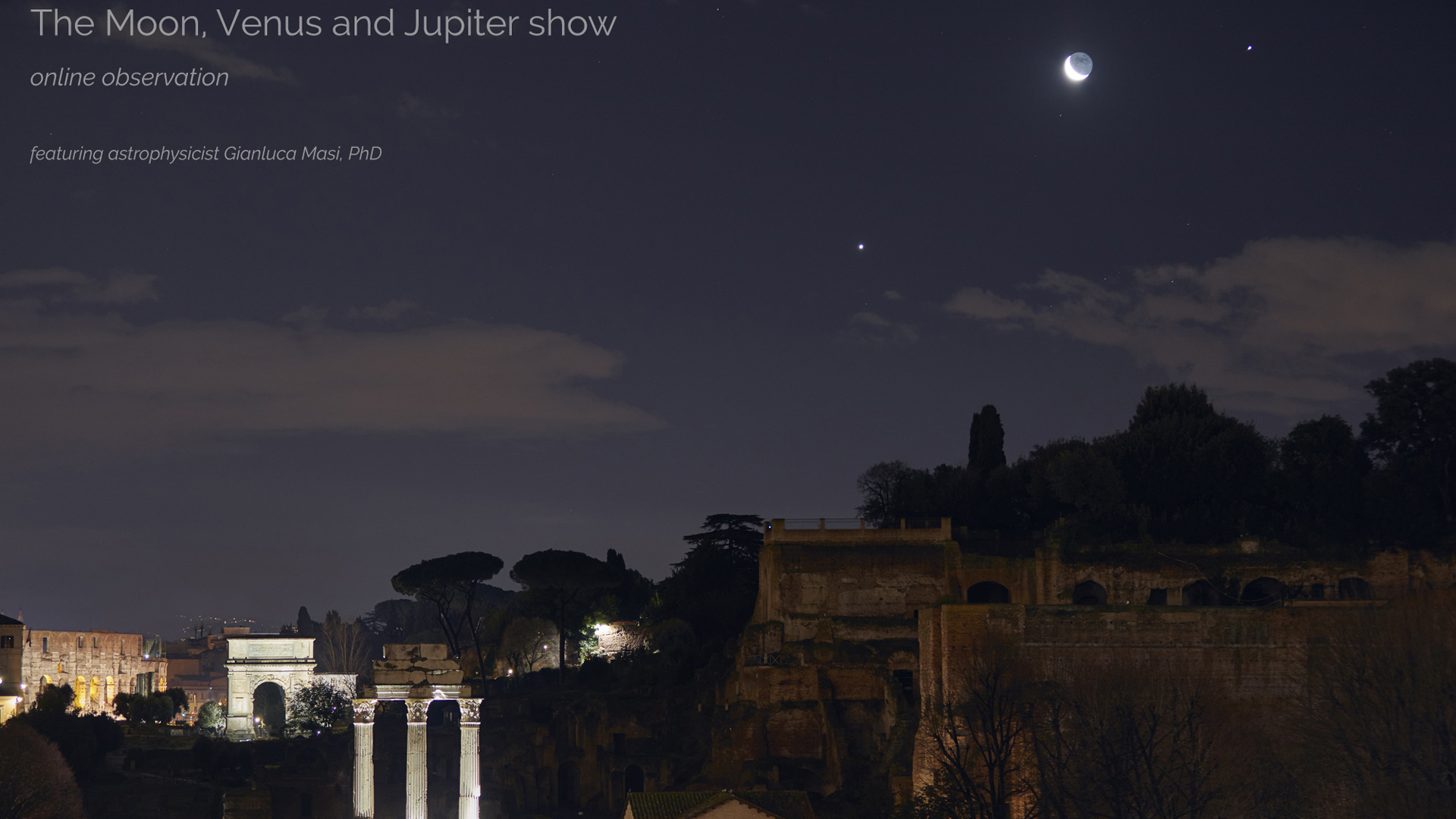
The 2025 Moon-Jupiter conjunctions were a series of monthly celestial alignments where the Earth’s Moon and the gas giant Jupiter appeared close together in the night sky. These events, which peaked in visual intensity during February, August, and December 2025, provided amateur astronomers and casual stargazers with exceptional opportunities to observe planetary motion and the Galilean moons without the need for high-end equipment.
The year 2025 stood out as a premier timeframe for planetary observation, particularly due to Jupiter's favorable position in the constellation Taurus. Because the Moon orbits the Earth approximately every 27.3 days, it passes near the planets located along the ecliptic—the imaginary path the sun follows across the sky—roughly once a month. When the Moon and a planet share the same right ascension or ecliptic longitude, they are in conjunction. While these alignments are common, the specific proximity and atmospheric conditions of 2025 made several of these encounters particularly memorable for the global astronomical community.
Understanding the Mechanics of a Moon-Jupiter Conjunction
To appreciate the events of 2025, one must understand the orbital mechanics at play. A conjunction is not a physical meeting of two celestial bodies but rather an optical alignment from our perspective on Earth. During the 2025 events, Jupiter remained hundreds of millions of miles away, while the Moon stayed at its average distance of about 238,855 miles.
The Role of the Ecliptic
The ecliptic is the plane of Earth's orbit around the Sun. Most planets in our solar system, including Jupiter, orbit near this same plane. As the Moon circles the Earth, its path is tilted by about 5 degrees relative to the ecliptic. A conjunction occurs when the Moon’s path intersects or closely approaches the position of a planet along this line. In 2025, the "apparent distance" between the two bodies was often less than 5 degrees, which is roughly the width of three fingers held at arm's length.
Jupiter’s Opposition and Brightness
Jupiter reached opposition—the point where Earth sits directly between the Sun and Jupiter—in late 2024 and remained exceptionally bright through the first half of 2025. This meant that during the early 2025 conjunctions, Jupiter was at its maximum brilliance (apparent magnitude of approximately -2.5), making the pairing with the Moon even more striking.
Monthly Highlights of the 2025 Celestial Calendar
While the Moon passed Jupiter every month in 2025, certain dates offered superior viewing conditions due to the Moon's phase and the altitude of the pair in the night sky.
The Winter Spectacles: February 9–10, 2025
One of the most photographed events occurred in early February. The Moon appeared as a waxing gibbous, positioned just a few degrees from Jupiter in the constellation Taurus, near the bright star Aldebaran and the Pleiades star cluster (M45). This "celestial trio" provided a deep-sky backdrop that allowed photographers to capture multiple targets in a single wide-angle frame.
The Summer Occultations: August 2025
In mid-2025, the alignment became even more precise. In certain regions of the world, the conjunction turned into a lunar occultation. An occultation occurs when the Moon passes directly in front of a planet, completely obscuring it from view for a period of time.
During the August 12-13, 2025, event, observers in parts of South America and the Pacific witnessed Jupiter "disappear" behind the bright limb of the Moon and reappear from behind the dark limb. For those outside the occultation path, it remained a very close conjunction, with the two bodies separated by less than one degree (roughly the width of two full moons).
The Year-End Finale: December 4–5, 2025
As 2025 drew to a close, Jupiter transitioned into the evening sky as a prominent winter object. The December conjunction was particularly sharp because Jupiter was once again approaching its 2026 opposition, meaning it was rising earlier and staying visible for most of the night. The pairing with a crescent moon created a "daisy-chain" effect with the nearby constellation Gemini.
Viewing Requirements and Equipment
One of the reasons the 2025 Moon-Jupiter conjunctions were so popular was their accessibility. Unlike faint comets or distant nebulae, these events required zero specialized gear, though optical aids significantly enhanced the experience.
Naked Eye Observation
To the naked eye, Jupiter appeared as a steady, creamy-white "star" that did not twinkle like the background stars. During the conjunctions, the contrast between the cratered surface of the Moon and the brilliant point of Jupiter was stark. The primary challenge for naked-eye observers was the "glare" from the Moon, especially during the Full Moon phases of the March and October conjunctions.
Binoculars: Unlocking the Galilean Moons
Using standard 10x50 binoculars changed the perspective entirely. Not only did the Moon show significant crater detail along the terminator (the line between light and dark), but Jupiter appeared as a tiny disk. Most importantly, binoculars revealed the four largest moons of Jupiter: Io, Europa, Ganymede, and Callisto. Depending on the specific night in 2025, these moons appeared as tiny pinpricks of light arranged in a straight line flanking the planet.
Telescopic Views
For those with even a small 70mm or 80mm refractor telescope, the 2025 conjunctions offered a wealth of detail:
- Cloud Belts: The North and South Equatorial Belts of Jupiter were visible as dark reddish bands across the planet's disk.
- The Great Red Spot: Depending on the timing of the conjunction and Jupiter’s 10-hour rotation, observers could sometimes spot this massive storm system.
- Shadow Transits: During some conjunctions, the shadows of the Galilean moons could be seen as tiny black dots moving across Jupiter’s surface.
Technical Data: 2025 Moon-Jupiter Key Dates
The following table outlines the most significant conjunctions of 2025, including the approximate separation and the lunar phase at the time of the event.
| Date (2025) | Lunar Phase | Approx. Separation | Visibility Notes |
|---|---|---|---|
| January 14 | Waxing Gibbous | 4.2° | High in the sky for Northern Hemisphere observers. |
| February 9 | Waxing Gibbous | 3.5° | Close to the Pleiades; excellent photographic opportunity. |
| May 4 | Waxing Crescent | 2.1° | Best seen in the early morning sky shortly before sunrise. |
| August 12 | Waning Gibbous | 0.8° | Occultation visible in Pacific regions; extremely close elsewhere. |
| October 11 | Waning Gibbous | 2.5° | Visible late at night; Jupiter very bright in Gemini. |
| November 17 | Waning Crescent | 1.8° | Spectacular morning alignment with Mars and Venus nearby. |
| December 4 | Full Moon | 3.2° | Jupiter at peak brilliance; Moon very bright. |
Photography Tips for Planetary Conjunctions
Capturing the 2025 Moon-Jupiter conjunctions required addressing the extreme difference in brightness between the two objects. The Moon is significantly brighter than Jupiter, which often leads to the planet being underexposed or the Moon being a "blown-out" white circle.
- Exposure Bracketing: Successful photographers in 2025 used a technique called bracketing—taking multiple shots at different exposure lengths. One exposure captured the detail of the lunar craters, while a longer exposure captured Jupiter and its moons. These were then blended in post-processing.
- The "Earthshine" Window: During the thin crescent phases (like the May 2025 event), the dark portion of the Moon is often illuminated by sunlight reflecting off the Earth. This "Earthshine" allows photographers to capture the entire lunar disk and Jupiter with a single exposure, creating a more naturalistic image.
- Lens Selection: A 200mm to 500mm telephoto lens was the "sweet spot" for most observers. It provided enough magnification to see the disk of Jupiter while keeping the Moon within the frame.
Common Obstacles and Troubleshooting
While the 2025 conjunctions were predictable, several factors could hinder the viewing experience.
- Light Pollution: While Jupiter and the Moon are bright enough to be seen from the center of a major city, light pollution hides the background stars and the Galilean moons. To see the "full picture," moving away from city lights was recommended.
- Atmospheric Turbulence: On nights with high winds or temperature shifts, the view through a telescope might appear "wavy," as if looking through a pool of water. This is known as poor "seeing." Astronomers often waited for the objects to rise higher in the sky, where there is less atmosphere to look through.
- Lunar Glare: During the December 2025 conjunction, the Moon was nearly full. This creates a halo of light that can wash out nearby objects. Using a moon filter on a telescope or simply positioning the Moon just outside the field of view helped in seeing Jupiter’s finer details.
Frequently Asked Questions
Is a Moon-Jupiter conjunction rare?
No, these conjunctions happen approximately once every 27 to 28 days. However, the quality of the conjunction varies. Factors like the distance of the approach, the phase of the Moon, and the position of the planets in their respective orbits make some years, like 2025, much better for viewing than others.
Can I see Jupiter's moons during a conjunction with my phone?
It is possible but difficult. Using a smartphone adapter on a pair of binoculars or a telescope is the best method. Simply pointing a phone camera at the sky will usually result in a bright blur for the Moon and a tiny white dot for Jupiter, with no moons visible due to the limitations of mobile sensors.
What is the difference between a conjunction and an occultation?
A conjunction is a close visual approach where the two bodies appear side-by-side. An occultation is a specific type of conjunction where the closer body (the Moon) passes directly in front of the more distant body (Jupiter), completely blocking it.
Why did Jupiter appear to change position relative to the Moon throughout the night?
This is due to the Moon's own orbital motion. The Moon moves eastward across the sky relative to the stars at a rate of about 0.5 degrees (its own diameter) per hour. If you observed a 2025 conjunction at 8:00 PM and again at midnight, the Moon would have visibly shifted its position relative to Jupiter.
When is the next "Great Conjunction"?
A "Great Conjunction" specifically refers to the meeting of Jupiter and Saturn. The last one occurred in 2020, and the next will not happen until 2040. The 2025 Moon-Jupiter events were "planetary-lunar conjunctions," which are much more frequent.
Next Steps for Stargazers
Now that the major 2025 Moon-Jupiter alignments have passed, observers should look forward to the 2026 planetary season. Jupiter remains a dominant object in the night sky, and while the 2025 occultations were a highlight, the 2026 calendar features several close passes with Mars and Saturn. To prepare for future events, download a reputable sky-mapping app or consult an annual astronomical almanac to track the Moon's monthly path across the ecliptic.