The 2020 Toyota Camry XSE stands out in the midsize sedan market by blending athletic styling, a revised suspension tuning, and modern technology features, while retaining the foundational reliability and everyday efficiency expected from the Camry nameplate.
When evaluating midsize sedans from the 2020 model year, buyers often look for a vehicle that successfully bridges the gap between daily commuter practicality and engaging driving dynamics. The 2020 Toyota Camry XSE occupies a distinct place in this segment. Positioned as the sport-oriented luxury tier of Toyota's high-volume sedan line, the XSE trim offers distinct visual styling, a driver-centric interior, and a choice between a responsive naturally aspirated four-cylinder engine or a potent V6. Understanding its specifications, performance characteristics, and long-term ownership considerations helps prospective buyers determine if this particular model fits their driving needs.
Introduction to the Camry XSE Trim and the 2020 Model Year
The 2020 model year brought notable updates to the eighth-generation Toyota Camry platform, which originally debuted for the 2018 model year. Built upon the Toyota New Global Architecture (TNGA-K) platform, the Camry transformed from a traditionally conservative family car into a vehicle with a lower center of gravity, increased structural rigidity, and multi-link rear suspension geometry.
Within this lineup, the XSE designation signifies the sportiest execution of the luxury-leaning trims. While the lower LE and XLE focus primarily on comfort and soft ride quality, and the SE and TRD lean toward aggressive styling or track-tuned handling, the XSE strikes a middle ground. It combines the premium leather appointments and advanced tech packages of the XLE with the bolder exterior fascia, larger wheels, and sport-tuned suspension of the SE.
For the 2020 model year, Toyota also expanded the availability of its All-Wheel Drive (AWD) system to select four-cylinder Camry models (though strictly on LE, XLE, and SE trims initially, leaving the XSE front-wheel drive unless specified in later production runs) and introduced Android Auto compatibility across the entire lineup, resolving a notable omission from the 2018 and 2019 infotainment software suites.
Exterior Styling and Aerodynamic Design
The exterior presentation of the 2020 Toyota Camry XSE diverges significantly from the traditional perception of midsize sedans. Toyota utilized the TNGA platform's lower hood line and cowl height to create a more dynamic, hunkered-down stance.
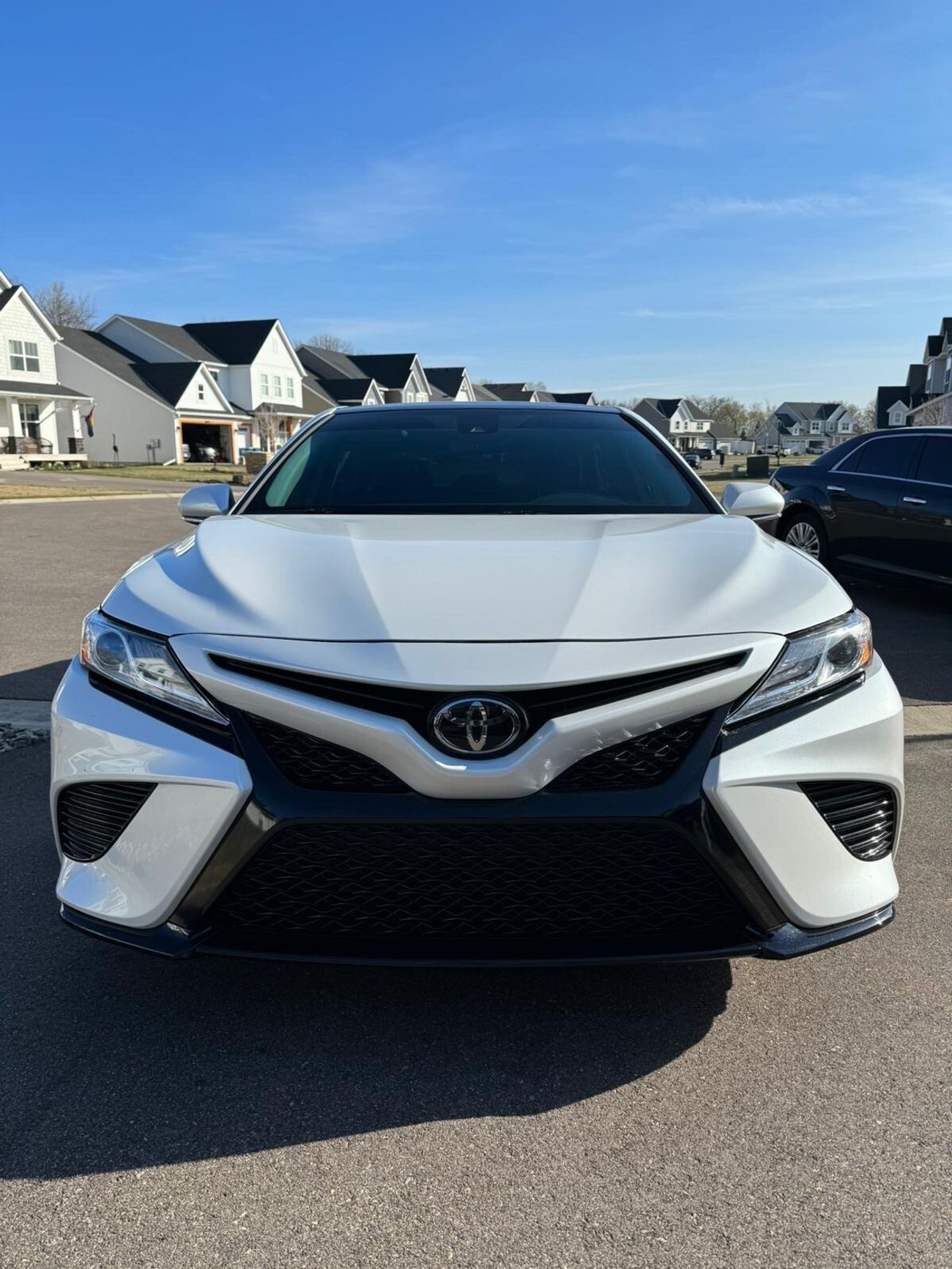
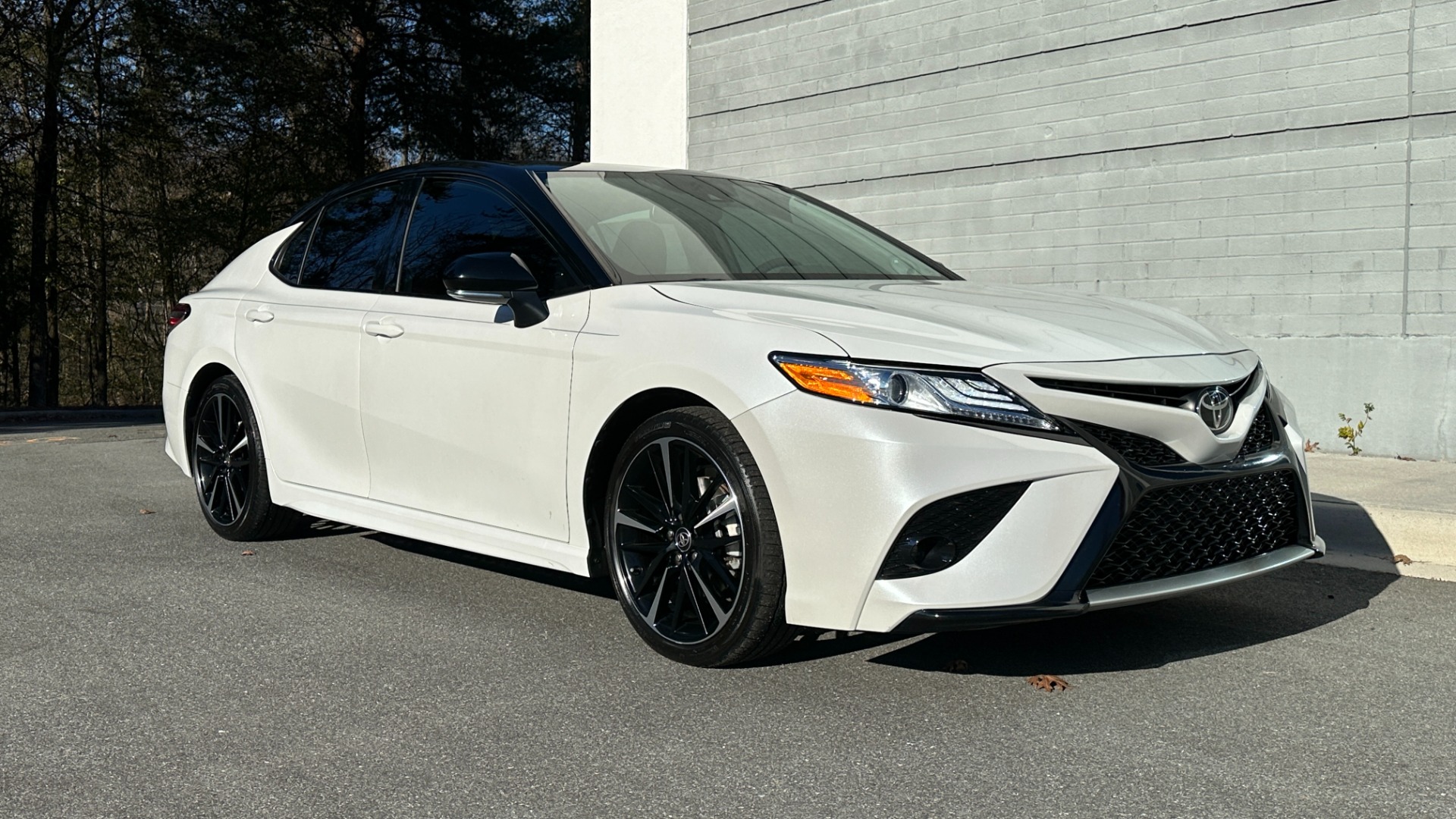
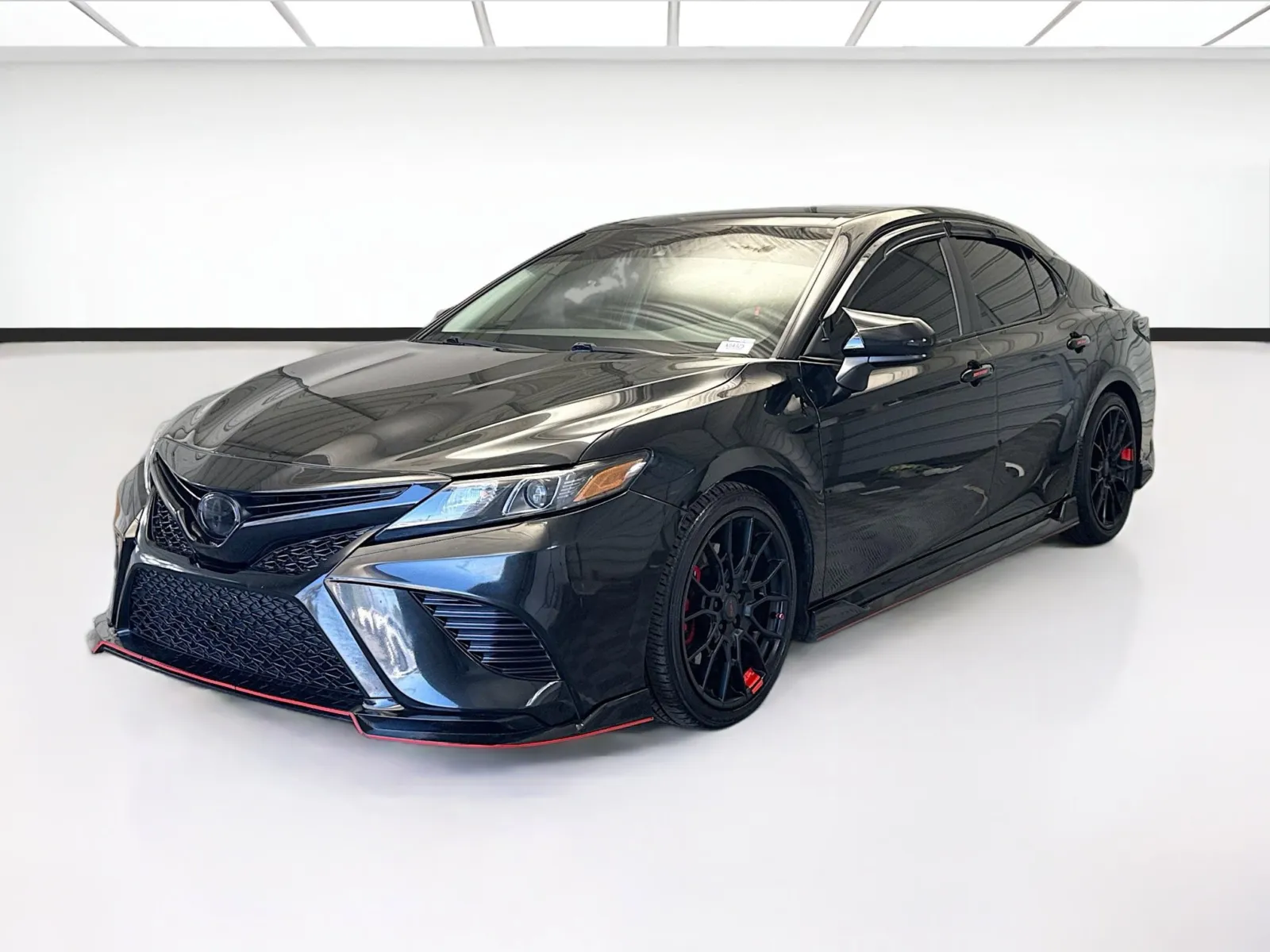
Up front, the XSE features a unique gloss-black mesh grille that spans the width of the lower fascia, flanked by aggressive side intakes. The LED headlights feature integrated daytime running lights with smoked trim accents, setting the XSE apart from the standard chrome-accented L and LE models.
Along the profile, the XSE rides on 19-inch machined-finish alloy wheels wrapped in low-profile 235/40R19 tires. The body lines incorporate sharp character creases that run from the front fenders through the rear doors, terminating at a subtle decklid spoiler. Buyers could also opt for a midnight black metallic roof paired with contrasting body colors, creating a striking two-tone aesthetic.
At the rear, the XSE features dual chrome-tipped exhaust pipes, smoked LED taillight housings, and a lower rear diffuser element that enhances the vehicle's sporty visual identity without resorting to overly exaggerated faux vents.
Interior Cabin Layout, Comfort, and Materials
Stepping inside the 2020 Toyota Camry XSE reveals a cockpit designed around the driver, characterized by a distinctive asymmetrical center console swoop that separates the driver and front passenger zones.
Seating and Ergonomics
The XSE is equipped with multi-adjustable power-adjustable front sport seats upholstered in perforated leather. These seats offer enhanced bolsters compared to lower trims, providing lateral support during spirited cornering without sacrificing long-distance comfort. Seat heating is standard for the front occupants, and the driver's seat includes lumbar support adjustments.
Materials and Finish
Cabin materials represent a step up from standard commuter sedans. Soft-touch surfaces line the dashboard and door panels, complemented by textured metal or patterned metal interior trim accents. However, buyers should note that hard plastics remain in lower cabin areas, consistent with class standards. The steering wheel is wrapped in perforated leather with integrated paddle shifters for manual gear selection.
Cabin Space and Practicality
Passenger space remains generous across both rows. The TNGA platform optimizes interior packaging, providing ample legroom and headroom for adult occupants in the rear, despite the sloping roofline. Cargo capacity in the trunk measures 15.1 cubic feet, which expands via 60/40 split-folding rear seats to accommodate longer items.
Powertrain Options and Mechanical Specifications
The 2020 Toyota Camry XSE was offered with two distinct powertrain configurations, catering to buyers with different priorities regarding fuel economy and straight-line performance.
2.5-Liter Four-Cylinder Engine
The standard powerplant for the front-wheel-drive XSE is a 2.5-liter Dynamic Force inline-four engine utilizing D4-S direct injection.
- Horsepower: 206 hp at 6,600 RPM
- Torque: 186 lb-ft at 5,000 RPM
- Transmission: 8-speed Direct Shift automatic transmission with sequential shift mode
- Estimated Fuel Economy: Approximately 27-28 mpg city / 38-39 mpg highway
3.5-Liter V6 Engine
For drivers seeking enhanced performance, the XSE V6 offers a larger displacement engine option.
- Horsepower: 301 hp at 6,600 RPM
- Torque: 267 lb-ft at 4,700 RPM
- Transmission: 8-speed Direct Shift automatic transmission with steering-wheel-mounted paddle shifters
- Estimated Fuel Economy: Approximately 22 mpg city / 32 mpg highway
Both engines feature dual overhead cams with VVT-iW (Variable Valve Timing-intelligent Wide) on the intake valves and VVT-i on the exhaust valves, optimizing combustion efficiency across a wide RPM band.
| Feature / Specification | 2.5L 4-Cylinder XSE | 3.5L V6 XSE |
|---|---|---|
| Displacement | 2,487 cc | 3,456 cc |
| Horsepower | 206 hp @ 6,600 rpm | 301 hp @ 6,600 rpm |
| Torque | 186 lb-ft @ 5,000 rpm | 267 lb-ft @ 4,700 rpm |
| Transmission | 8-Speed Automatic | 8-Speed Automatic |
| Drivetrain | Front-Wheel Drive (FWD) | Front-Wheel Drive (FWD) |
| Wheel / Tire Size | 19-inch Alloy / 235/40R19 | 19-inch Alloy / 235/40R19 |
| EPA Fuel Economy (Cty/Hwy) | 27 / 38 mpg (approx.) | 22 / 32 mpg (approx.) |
Ride Dynamics and Handling Performance
The driving experience of the 2020 Toyota Camry XSE is defined by its sport-tuned suspension setup, which differentiates it from the softer LE and XLE variants.
Toyota equipped the XSE with stiffer coil springs, thicker stabilizer bars, and specially calibrated shock absorbers. When combined with the low-profile 19-inch tires, the chassis delivers responsive turn-in and minimal body roll during cornering. Steering weight is moderate, providing adequate tactile feedback through the steering wheel, though it remains electrically assisted and optimized for effortless low-speed parking maneuvers.
While the ride is firm—transmitting more road imperfections into the cabin than a standard sedan—it avoids feeling excessively harsh. Highway cruising stability is exemplary, tracking straight and true with minimal crosswind susceptibility. The V6 variant adds weight over the front wheels, which slightly alters weight transfer during aggressive cornering compared to the lighter four-cylinder model, but the substantial power increase easily compensates for the dynamic tradeoff.
Infotainment, Connectivity, and Technology
The 2020 model year brought important software updates to Toyota's Entune 3.0 infotainment system. A central 7-inch touchscreen is standard, though many XSE models were optioned with the larger 8-inch display paired with dynamic navigation and premium audio.
A critical addition for the 2020 model year was the inclusion of Android Auto, joining Apple CarPlay and Amazon Alexa integration as standard equipment. This resolved connectivity complaints from owners of earlier eighth-generation models. The system also features Bluetooth hands-free phone capability, advanced voice recognition, and SiriusXM capability.
Driver instrumentation includes a 7-inch multi-information display nestled between analog gauges (or available as a full digital interface in certain packages), providing real-time data on fuel economy, safety system statuses, and turn-by-turn navigation prompts. Available tech upgrades included a 10-inch color Head-Up Display (HUD) and a 9-speaker JBL premium audio system with a subwoofer and amplifier.
Safety Ratings and Driver-Assistance Systems
Safety represents a core pillar of the modern Toyota lineup, and the 2020 Camry XSE comes standard with the Toyota Safety Sense 2.0 (TSS 2.0) suite of active safety and driver-assistance technologies.
- Pre-Collision System with Pedestrian Detection (PCS w/PD): Utilizes forward-facing cameras and radar to detect vehicles, cyclists, and pedestrians, issuing audio-visual warnings and initiating automatic emergency braking if the driver fails to react.
- Lane Departure Alert with Steering Assist (LDA w/SA): Monitors lane markings and provides gentle steering inputs to prevent unintentional drift.
- Lane Tracing Assist (LTA): Works in conjunction with Full-Speed Range Dynamic Radar Cruise Control to center the vehicle within its lane on marked highways.
- Automatic High Beams (AHB): Automatically toggles between high and low beams based on oncoming traffic and surrounding lighting conditions.
- Full-Speed Range Dynamic Radar Cruise Control (DRCC): Maintains a preset distance from the vehicle ahead, capable of bringing the Camry to a complete stop and resuming travel in stop-and-go traffic.
In crash testing, the 2020 Toyota Camry received a 5-star overall safety rating from the National Highway Traffic Safety Administration (NHTSA) and earned the coveted Top Safety Pick+ designation from the Insurance Institute for Highway Safety (IIHS), scoring the highest possible marks in all crashworthiness evaluations.
Ownership Costs, Reliability, and Common Issues
Purchasing or maintaining a used 2020 Toyota Camry XSE involves evaluating long-term reliability, routine maintenance requirements, and anticipated depreciation curves.
Reliability and Mechanical Durability
The combination of the TNGA platform and the Dynamic Force engine family has proven robust. The 2.5-liter four-cylinder and 3.5-liter V6 engines have established strong track records for mechanical longevity when subjected to routine fluid changes. The 8-speed automatic transmission, manufactured by Aisin, shifts smoothly, though initial production units occasionally required software updates to address harsh low-speed engagement complaints.
Routine Maintenance Costs
Maintenance for the Camry XSE is straightforward and economical compared to European luxury sport sedans. Routine services include:
- Synthetic 0W-16 engine oil changes every 10,000 miles.
- Tire rotations every 5,000 miles (noting that the 19-inch low-profile tires wear faster and carry a higher replacement cost than standard 16- or 17-inch tires).
- Brake pad and rotor inspections aligned with driving habits; aggressive drivers utilizing the XSE's dynamic capabilities may experience quicker front brake pad wear.
Common Ownership Considerations
- Tire and Wheel Vulnerability: The 19-inch wheels paired with low-profile 40-series tires make the XSE more susceptible to rim damage from deep potholes and curb strikes.
- Windshield Replacement Costs: Models equipped with the multi-sensor safety suite require OEM glass calibration following windshield replacements, increasing repair bills after rock impacts.
Comparison: XSE vs. SE and XLE Trims
Navigating the Camry lineup requires understanding how the XSE contrasts with its closest siblings: the sporty SE and the luxury-focused XLE.
- XSE vs. SE: The SE serves as the entry point to sporty styling, featuring similar bodywork and suspension tuning to the XSE. However, the SE utilizes smaller 18-inch wheels, fabric-trimmed seats with synthetic leather bolsters, and fewer standard luxury conveniences (such as dual-zone climate control or ambient lighting), making it a budget-friendly alternative for buyers wanting the look without the higher price tag.
- XSE vs. XLE: The XLE shares the premium interior pricing tier of the XSE, offering leather upholstery, wood-grain interior accents, and a softer, ride-quality-optimized suspension setup. Buyers choosing the XLE prioritize comfort and smooth highway cruising over responsive handling and aggressive exterior aesthetics.
Frequently Asked Questions
Does the 2020 Toyota Camry XSE have All-Wheel Drive (AWD)?
No. For the 2020 model year, Toyota offered the newly introduced All-Wheel Drive system exclusively on the LE, XLE, and SE trims equipped with the 2.5-liter four-cylinder engine. The XSE trim remained strictly front-wheel drive (FWD) for 2020 to preserve its distinct sporty positioning and chassis calibration.
What is the difference between the Camry XSE 4-cylinder and V6 models?
Aside from the engine displacement, horsepower, and torque figures, the V6 model adds specific enhancements such as a dual exhaust system with quad chrome tips, a panoramic glass roof with a front power tilt/slide moonroof as standard equipment, and larger front braking components to manage the increased power output.
Does the 2020 Camry XSE support Apple CarPlay and Android Auto?
Yes. The 2020 model year added standard Android Auto compatibility to complement the Apple CarPlay and Amazon Alexa support that was introduced on earlier eighth-generation models. This ensures seamless smartphone integration across all infotainment display options.
What kind of fuel does the 2020 Toyota Camry XSE require?
Both the 2.5-liter four-cylinder and the 3.5-liter V6 engines in the 2020 Camry XSE are designed to operate efficiently on standard regular unleaded gasoline (87 octane), minimizing ongoing fuel expenditures compared to competitors requiring premium fuel.
How does the suspension on the XSE compare to standard Camry trims?
The XSE features a sport-tuned suspension with firmer spring rates, specialized shock absorbers, and thicker stabilizer bars. While this setup reduces body roll and improves steering response during cornering, it results in a noticeably firmer ride quality over rough pavement compared to the LE or XLE trims.
Conclusion and Buying Recommendation
The 2020 Toyota Camry XSE successfully demonstrates that a practical midsize sedan can offer engaging visual appeal and responsive handling without sacrificing day-to-day comfort or efficiency. Whether configured with the efficient four-cylinder engine or the robust V6, it delivers a well-rounded package backed by top-tier safety scores and proven reliability. Prospective buyers prioritizing cornering agility, modern connectivity, and sharp exterior styling will find the XSE a compelling choice, provided they account for the firmer ride quality and higher replacement costs associated with its 19-inch wheels.