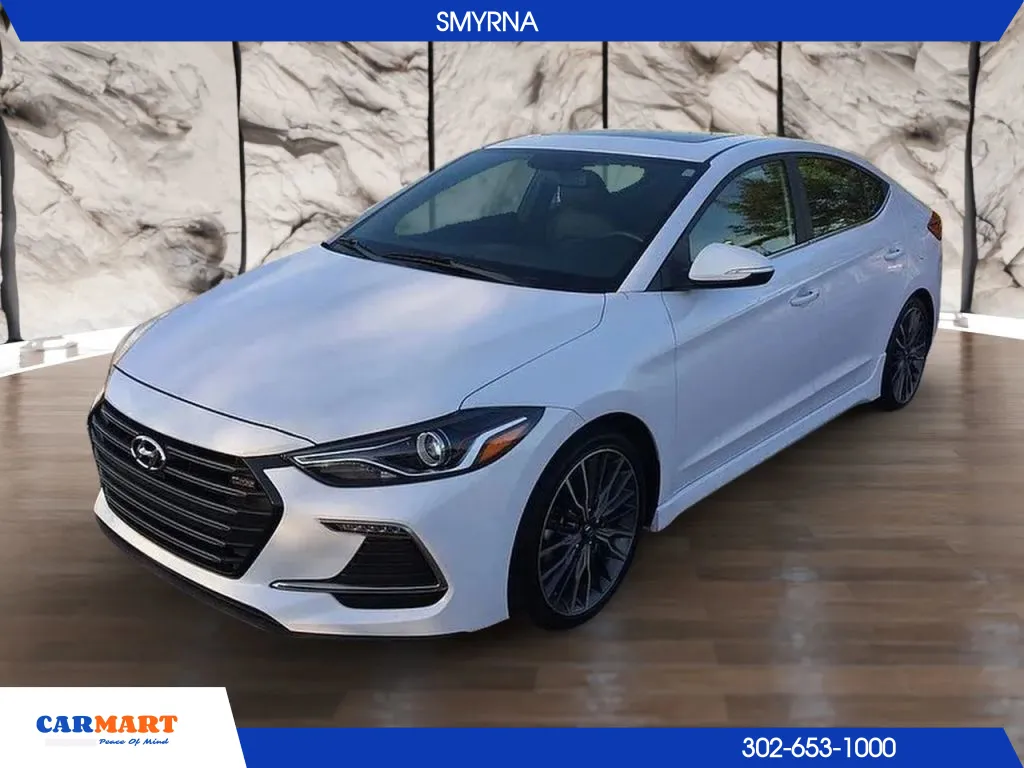
The 2017 Hyundai Elantra Sport Turbo brought a genuinely sporty dynamic to Hyundai’s compact sedan lineup in the United States. Powered by a 1.6-liter turbocharged inline-four engine producing 201 horsepower, it combined aggressive exterior styling, an independent multi-link rear suspension, and a driver-focused cabin to compete directly against compact sport sedans like the Honda Civic Si and Volkswagen Jetta GLI.
Background and Overview: Defining the Elantra Sport in the US Market
When Hyundai introduced the redesigned sixth-generation "AD" Elantra for the 2017 model year in the North American market, the base models targeted maximum fuel efficiency, quiet operation, and standard commuter comfort. However, the release of the Elantra Sport mid-model year gave Hyundai an enthusiast-oriented sedan designed to bridge the gap between ordinary compact cars and expensive hot hatches.
Unlike appearance-only trim packages on competing vehicles, the US-spec 2017 Elantra Sport received dedicated engineering upgrades under the sheet metal. Hyundai swapped out the commuter sedan's torsion-beam rear axle in favor of an independent multi-link system, enlarged the brake rotors, stiffened the chassis spring rates, and installed a tuned exhaust system.
| Feature | 2017 Hyundai Elantra Sport (US Model) |
|---|---|
| Engine | 1.6L Gamma T-GDI Inline 4-Cylinder |
| Output | 201 hp @ 6,000 RPM | 195 lb-ft Torque @ 1,500-4,500 RPM |
| Transmissions | 6-Speed Manual or 7-Speed Dual-Clutch (DCT) |
| Rear Suspension | Independent Multi-Link (Sport Exclusive) |
Positioned above the Eco, SE, SEL, and Limited trims, the Sport gave buyers access to forced-induction power without requiring a jump to luxury brand price points. It established a design philosophy that eventually paved the way for Hyundai's dedicated performance "N" sub-brand in North America.
Engine and Transmission Dynamics: The 1.6T Powertrain
At the heart of the 2017 Elantra Sport is Hyundai’s 1.6-liter Gamma Turbocharged Gasoline Direct Injection (T-GDI) four-cylinder engine (code G4FJ).
Power Delivery and Forced Induction
The 1.6T engine features a twin-scroll turbocharger integrated directly into the exhaust manifold. This design minimizes exhaust gas interference, reduces turbo lag, and accelerates boost response at lower engine speeds.
- Horsepower: 201 hp @ 6,000 RPM
- Torque: 195 lb-ft @ 1,500–4,500 RPM
- Bore x Stroke: 77.0 mm x 85.4 mm
- Compression Ratio: 10.0:1
Because peak torque arrives at just 1,500 RPM, the Elantra Sport delivers linear pull across mid-range acceleration. The stock exhaust routing features dual trapezoidal chrome tips engineered to produce a deeper exhaust note under heavy throttle without excessive highway drone.
Gearbox Options: 6-Speed Manual vs. 7-Speed DCT
US buyers were offered two transmission choices:
- 6-Speed Manual Transmission (6MT): Features short gear throws, a light clutch pedal engagement, and mechanical feedback intended for enthusiast engagement. It offers direct control over boost pressure and rev matching.
- 7-Speed EcoShift Dual-Clutch Transmission (DCT): Uses a dry-clutch configuration driven by electric actuators. It offers steering-wheel-mounted paddle shifters, faster automatic shift times, and higher EPA fuel economy ratings than the manual version.
- 1.6L T-GDI Turbo Engine (201 HP / 195 LB-FT)
- 6-Speed Manual
- Direct clutch feel
- Enthusiast control
- EPA: 22/30/25 MPG
- 7-Speed Dry DCT
- Steering wheel paddles
- Rapid automated shifts
- EPA: 26/33/28 MPG
- 6-Speed Manual
While the 7-speed DCT provides snappy upshifts at full throttle, dry-clutch dual-clutch units exhibit unique operational characteristics at low speeds, such as slight hesitation during stop-and-go driving, which buyers should keep in mind during test drives.
Chassis, Suspension, and Handling Upgrades
The operational difference between a standard 2017 Elantra and the Elantra Sport lies within the chassis architecture. Hyundai engineers re-engineered structural components to handle increased lateral forces and output.
- Standard Elantra (SE / Limited) vs. Elantra Sport (2017 US)
- Rear Suspension: Coupled Torsion Beam to Independent Multi-Link
- Front Brakes: 11.0-inch Rotor to 12.0-inch Rotor
- Wheels: 15 to 17-inch Alloys to 18-inch Sport Alloys
- Steering: Standard C-MDPS to Retuned Quick Ratio
Independent Multi-Link Rear Suspension
Standard 2017 Elantras utilize a coupled torsion-beam rear axle designed for low cost and compact packaging. The Elantra Sport substitutes a fully independent multi-link rear suspension.
This multi-link layout allows each rear wheel to react independently to road imperfections, dramatically reducing mid-corner bump steer, keeping the tire contact patch flat under cornering load, and increasing overall high-speed stability.
Steering and Braking Systems
- Motor-Driven Power Steering (MDPS): The Sport trim uses a recalibrated electric power steering rack with a faster gear ratio, reducing turns lock-to-lock for more immediate turn-in response.
- Upgraded Braking Hardware: Front brake rotor diameter was increased to 12.0 inches (ventilated), representing a 1.0-inch increase over non-Sport trims. Rear rotors measure 10.4 inches (solid).
- Spring and Damper Tuning: Spring rates were increased by 14% in the front and 22% in the rear compared to standard models, paired with stiffer front and rear stabilizer bars to reduce body roll.
- Wheels and Tires: Factory fitment features 18-inch split 20-spoke alloy wheels fitted with 225/40R18 performance all-season tires (with summer tires offered as an optional factory package when sold new).
Interior Ergonomics and Technology Packages
The cabin of the 2017 Elantra Sport balances utility with sport-focused upgrades. Black leather seating surfaces with high-bolstered sport seats come standard, finished with contrasting red stitching.
| Package Level | Features |
|---|---|
| Standard Equipment | • Black leather seating with red contrast stitching• D-cut flat-bottom leather steering wheel• Black headliner and sport instrument cluster• 7-inch Display Audio with Apple CarPlay & Android Auto• Proximity keyless entry with push-button start• Blind Spot Detection (BSD) with Rear Cross-Traffic Alert |
| Optional Premium Package Adds | • 8-inch high-resolution touchscreen navigation• Infinity 8-speaker audio system (with Clari-Fi music restoration)• Power tilt-and-slide sunroof• Auto-dimming rearview mirror with HomeLink & compass• Blue Link Telematics Services |
Driver Interface Highlights
- Flat-Bottom Steering Wheel: A leather-wrapped, "D-cut" steering wheel features contoured grips and integrated audio/cruise controls.
- Sport Instrument Cluster: Red-accented needle gauges and a central digital Multi-Information Display (MID) deliver vital driver metrics.
- Pedal Assembly: Brushed aluminum pedals with rubber anti-slip nubs enhance foot control during heel-toe downshifts or spirited driving.
Technical Specifications Table
The following table details the technical attributes of the 2017 Hyundai Elantra Sport Turbo as configured for the US market:
| Feature / Metric | 6-Speed Manual Transmission (6MT) | 7-Speed Dual-Clutch Transmission (7DCT) |
|---|---|---|
| Engine Code | Hyundai 1.6L Gamma T-GDI (G4FJ) | Hyundai 1.6L Gamma T-GDI (G4FJ) |
| Displacement | 1,591 cc (1.6 Liters) | 1,591 cc (1.6 Liters) |
| Aspiration | Twin-Scroll Turbocharger | Twin-Scroll Turbocharger |
| Valvetrain | DOHC 16-valve with D-CVVT | DOHC 16-valve with D-CVVT |
| Horsepower | 201 hp @ 6,000 RPM | 201 hp @ 6,000 RPM |
| Torque | 195 lb-ft @ 1,500–4,500 RPM | 195 lb-ft @ 1,500–4,500 RPM |
| Drive Layout | Front-Wheel Drive (FWD) | Front-Wheel Drive (FWD) |
| Front Suspension | MacPherson strut with coil springs | MacPherson strut with coil springs |
| Rear Suspension | Independent Multi-Link | Independent Multi-Link |
| Front Brakes | 12.0-inch Ventilated Discs | 12.0-inch Ventilated Discs |
| Rear Brakes | 10.4-inch Solid Discs | 10.4-inch Solid Discs |
| Curb Weight | ~2,976 lbs | ~3,042 lbs |
| EPA Fuel Economy (City/Hwy/Comb) | 22 / 30 / 25 MPG | 26 / 33 / 28 MPG |
| Fuel Tank Capacity | 14.0 US Gallons | 14.0 US Gallons |
| Required Fuel Grade | Regular Unleaded (87 Octane minimum) | Regular Unleaded (87 Octane minimum) |
Common Maintenance Watch Points and Reliability Analysis
When examining a 2017 Hyundai Elantra Sport Turbo on the used vehicle market, several technical components demand specific attention during inspection.
1. Direct Injection Carbon Buildup
Because the 1.6L T-GDI engine uses direct gasoline injection rather than port injection, atomized fuel does not wash over the backside of the intake valves. Over tens of thousands of miles, oil vapors from the Positive Crankcase Ventilation (PCV) system can bake onto the intake valve stems.
Direct Fuel Injection Path:
- Intake Manifold
- Dry Intake Valves (Carbon Accumulation Risk)
- Combustion Chamber (supplied by Fuel Injector)
Symptoms: Rough idling, engine misfires under load, reduced top-end acceleration, or Check Engine Light code P0300 (Random/Multiple Cylinder Misfire).
Prevention & Remedy: Using high-quality synthetic oil, installing an aftermarket oil catch can, or conducting intake valve cleaning (such as walnut shell blasting) every 50,000 to 70,000 miles.
2. Dual-Clutch Transmission (DCT) Wear and Actuator Adjustment
The optional 7-speed 7DCT relies on two dry clutch plates operated by electric motor actuators. Unlike traditional torque-converter automatics or wet-clutch DCTs, dry clutches generate heat rapidly during creeping or low-speed stop-and-go maneuvers.
- Symptoms: Shuddering during low-speed launch, delayed engagement from a stop, or gear slip under peak boost in higher gears.
- Inspection Protocol: Verify if the clutch engagement point feels smooth. Ask for service history records indicating whether transmission control module (TCM) software updates or clutch actuator recalibrations were performed.
3. Ignition Coils and Spark Plugs
Turbocharged GDI engines subject spark plugs and ignition coils to intense thermal and cylinder pressure stresses.
- The factory service interval for spark plugs on the 1.6T engine is generally 45,000 miles.
- Using worn spark plugs can cause ignition coil failures, leading to hesitation under boost. Replacing plugs with correct-heat-range iridium spark plugs is critical for engine stability.
4. Engine Immobilizer and Theft Security Status
A major concern for buyers of 2010s Hyundai vehicles in North America is theft security.
- 2017 Hyundai Elantra Sport Trim
- Standard Proximity Key
- Factory Engine Immobilizer
- Standard Protection Active: Not Subject to Mechanical Turn-Key Software Vulnerability
Importantly, all 2017 Hyundai Elantra Sport sedans in the US market came standard with Proximity Keyless Entry and Push-Button Start. This means the Elantra Sport included an electronic engine immobilizer from the factory. Unlike lower-trim Elantra models equipped with traditional mechanical key ignitions, the Sport trim is not vulnerable to simple ignition tumbler bypass thefts.
Used Market Evaluation and Competitor Comparison
Evaluating the 2017 Elantra Sport Turbo requires weighing its features against contemporary front-wheel-drive performance sedans: the Honda Civic Si (FC1) and the Volkswagen Jetta GLI.
| Model | Engine | Power | Stock Rear Suspension |
|---|---|---|---|
| 2017 Elantra Sport | 1.6L Turbo I4 | 201 hp / 195 lb-ft | Multi-Link |
| 2017 Honda Civic Si | 1.5L Turbo I4 | 205 hp / 192 lb-ft | Multi-Link (Adaptive) |
| 2017 VW Jetta GLI | 2.0L Turbo I4 | 210 hp / 207 lb-ft | Multi-Link |
Strengths of the Elantra Sport
- Value-to-Performance Ratio: Offers standard leather seating, multi-link rear suspension, and 201 hp at lower secondary market prices than equivalent Civic Si or Jetta GLI models.
- Fuel Requirements: Tuning allows standard 87 octane unleaded gasoline, whereas rivals often recommend or require premium 91+ octane for full rated power output.
- Standard Safety Features: Includes Blind Spot Detection (BSD) and Rear Cross-Traffic Alert as standard equipment on the Sport trim level.
Limitations
- Lacks Limited-Slip Differential (LSD): Unlike the Civic Si, which features a mechanical helical limited-slip differential, the Elantra Sport relies on an open front differential using brake-based vectoring to control wheelspin.
- Dry DCT Heat Sensitivity: The 7-speed DCT can feel unrefined in aggressive stop-and-go commuting compared to conventional automatic transmissions or VW's wet-clutch DSG units.
Frequently Asked Questions
Does the 2017 Hyundai Elantra Sport Turbo require premium gasoline?
No. Hyundai tuned the 1.6L T-GDI engine in the 2017 Elantra Sport to operate on standard 87 octane regular unleaded gasoline. Using 91 or 93 premium unleaded fuel may provide modest knock resistance in hot ambient temperatures, but regular fuel fulfills factory warranty and output specifications.
Is the 2017 Elantra Sport affected by Hyundai mechanical key theft issues?
No. The 2017 Elantra Sport trim shipped standard with Proximity Keyless Entry and Push-Button Start in the US market. The system incorporates an electronic immobilizer unit inside the key fob system, rendering it immune to key-cylinder bypass techniques found on base mechanical-turn-key models.
What is the difference between the Elantra Sport and the standard Elantra SE or Limited?
The Elantra Sport substitutes the standard 2.0L naturally aspirated engine (147 hp) with a 1.6L turbocharged engine (201 hp). It replaces the rear torsion-beam suspension with an independent multi-link suspension, fits larger 12.0-inch front brake rotors, uses a faster steering rack ratio, and adds unique exterior styling along with leather sport seats.
Which transmission is more reliable on the 2017 Elantra Sport: the 6-Speed Manual or 7-Speed DCT?
The 6-speed manual transmission is mechanically simpler and generally requires less maintenance long term, making it the preferred choice for high-mileage durability. The 7-speed dry-clutch DCT is durable under normal driving, but the clutch plates and electric actuators require periodic inspection and proper driving technique to avoid excess heat buildup in heavy traffic.
Can you upgrade the exhaust or intake on a stock 2017 Elantra Sport Turbo?
Yes. The 1.6T G4FJ engine has strong aftermarket community support. Popular modifications include high-flow cold air intakes, upgraded intercoolers, bolt-on cat-back exhaust systems, and ECU recalibrations. However, modifying boost pressure places higher thermal loads on ignition coils and increases the need for strict maintenance intervals.
Buyer's Recommendation and Next Steps
The 2017 Hyundai Elantra Sport Turbo remains an accessible entry point for drivers seeking a nimble, turbocharged compact sedan in the US market. Its independent multi-link rear suspension and punchy 201-horsepower engine provide high driver engagement without requiring luxury-car maintenance costs.
When shopping for a pre-owned 2017 model:
- Prioritize Service Records: Confirm consistent 3,000 to 5,000-mile synthetic oil change intervals to protect the turbocharger bearings and minimize GDI valve contamination.
- Evaluate Transmission Type: Choose the 6-speed manual if long-term component simplicity and classic shifter engagement are priorities. If selecting the 7-speed DCT, perform a thorough test drive featuring low-speed stop-and-go maneuvers to verify smooth clutch modulation.
- Inspect the Ignition & Intake System: Check for recent spark plug replacement history (recommended every 45,000 miles) and ask if an intake valve carbon cleaning service has been completed if the vehicle exceeds 60,000 miles.
- Verify Mechanical Integrity: Run a diagnostic scan tool (OBD-II scanner) to review pending fault codes related to boost leaks, GDI misfires, or transmission actuator duty cycles prior to finalizing purchase terms.