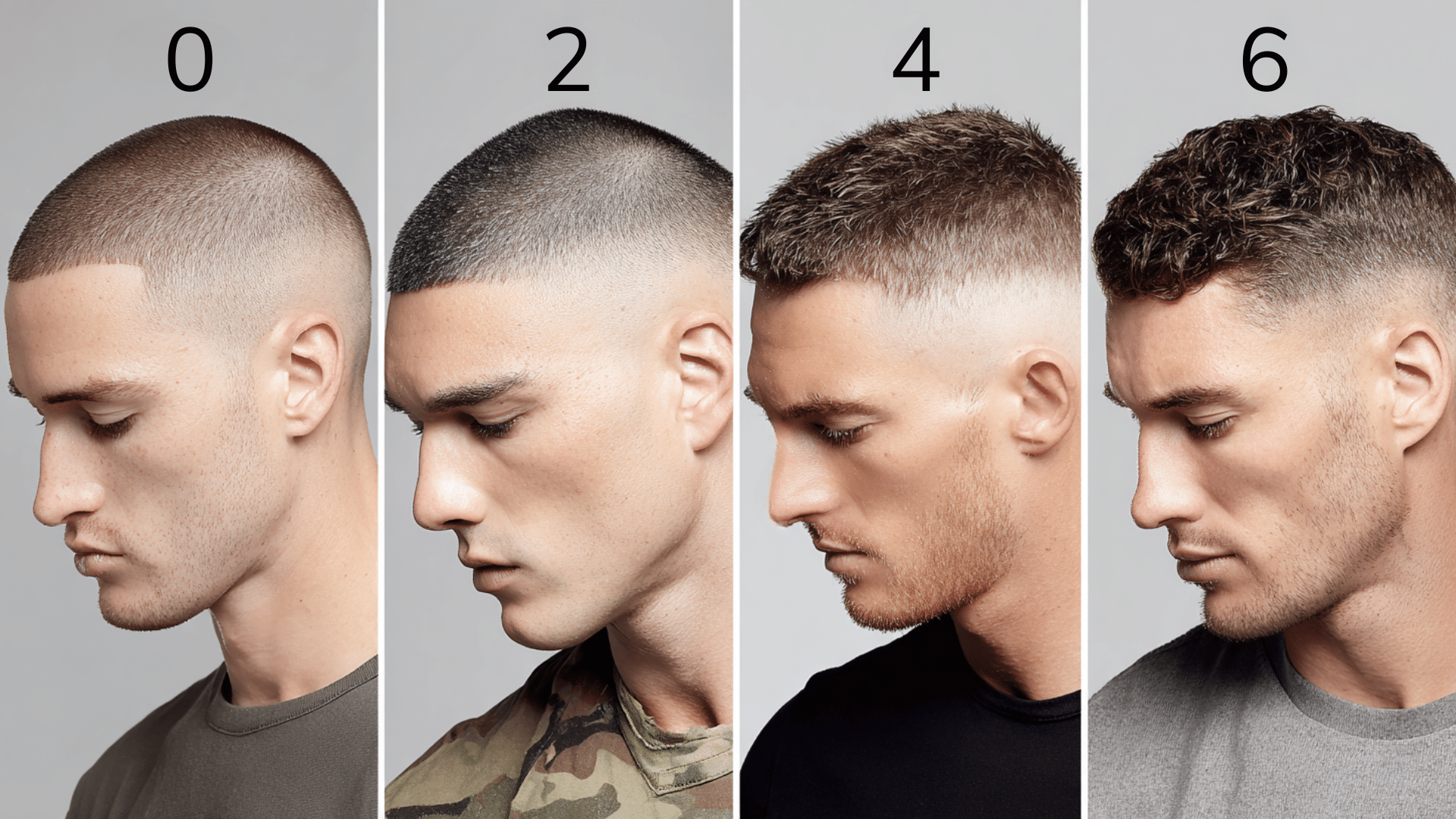
A 2 inch guard buzz cut is a low-maintenance, scissor-like longer clipper cut that leaves hair roughly two inches in length, offering a clean, uniform shape with significantly more volume and coverage than traditional short buzz cuts.
Achieving a polished look with longer hair lengths requires an understanding of how clipper guards translate to actual hair lengths, the right equipment, and proper maintenance routines. While standard buzz cuts often bring to mind military-style crops or very short fades, the two-inch length bridges the gap between a traditional crew cut and a full-scissor haircut. This guide explores the mechanics of this cut, how to achieve it at home or request it at a barbershop, and what to expect regarding daily maintenance.
Understanding Clipper Guard Sizes and Lengths
Navigating clipper guard sizes can be confusing because numbering conventions vary slightly across major manufacturing brands like Wahl, Andis, and Oster. Generally, clipper guards are numbered based on how many eighths of an inch of hair they leave behind. However, when dealing with longer lengths like a two-inch cut, standard guard sizes often change.
Most standard clipper sets sold for consumer use stop at a #8 guard, which leaves hair at one inch (or 25 millimeters). To achieve a true two-inch length using standard consumer tools, specialty guards—often referred to as a #16 guard—are required. Alternatively, professional barbers often achieve a two-inch length on top using a combination of scissors and clipping techniques, or by employing extended guards specifically designed for heavy-duty professional clippers.
| Guard Number | Length in Inches | Length in Millimeters | Typical Style Application |
|---|---|---|---|
| #4 | 1/2 inch | 13 mm | Medium-short buzz, textured crop |
| #8 | 1 inch | 25 mm | Long buzz cut, thick top coverage |
| #12 | 1 1/2 inches | 38 mm | Transition length, loose crew cut |
| #16 (Extended) | 2 inches | 50 mm | 2 inch guard buzz cut, textured top |
When communicating with a stylist or barber, it is always safer to specify the exact measurement in inches or millimeters rather than relying solely on guard numbers, as numbering systems can vary between international and domestic equipment.
Assessing Suitability: Face Shapes and Hair Types
Before committing to a two-inch length, it is important to evaluate whether this specific cut complements your natural hair texture and facial structure. Unlike shorter buzz cuts that rely heavily on jawline definition and head shape, a two-inch cut provides enough length to alter your apparent facial proportions and showcase natural hair texture.
Hair Texture Considerations
- Straight Hair: Lies flat and shows uniform length clearly, but cowlicks or thinning areas can become more noticeable as the hair dries.
- Wavy Hair: Adds natural volume and texture to a two-inch cut, creating a relaxed, unstructured aesthetic that requires minimal styling products.
- Curly or Coily Hair: Tends to spring up, meaning a two-inch guard will look significantly shorter and denser than it would on straight hair. Coily hair at this length often requires moisture management and curl-defining creams to maintain a neat appearance.
Face Shape Matching
A two-inch top paired with shorter sides (such as a mid or low fade) can visually elongate round or square face shapes. Because the hair has substantial weight compared to a #2 or #4 buzz cut, it offers versatility for men with receding hairlines or thinning crowns, as the extra length can be styled forward or textured to create the illusion of density.
Equipment and Preparation for Home Cutting
Cutting your hair to two inches at home requires specialized tools, as standard budget grooming kits rarely include guards larger than one inch. Preparing your workspace correctly ensures an even cut and minimizes mistakes.
Essential Tools
- Professional or Heavy-Duty Clippers: Consumer clippers with a powerful pivot or rotary motor are necessary to glide smoothly through two inches of hair without pulling.
- Extended Guard (#16 or 2-inch): Verify that the guard fits securely onto your specific clipper blade model to prevent accidental slipping during use.
- T-Blade Trimmer: Useful for cleaning up the neckline, sideburns, and around the ears with precision.
- Hairdressing Scissors: Essential for blending the transition between the longer top and shorter sides, or for trimming any stray hairs that the clipper guard misses.
- Sectioning Clips and Wide-Tooth Comb: To detangle and separate hair before cutting.
Step-by-Step Preparation
- Wash and Dry: Start with clean, completely dry hair. Wet hair stretches and can result in an uneven cut once it dries and shrinks back to its natural state.
- Comb Thoroughly: Remove all tangles and knots. A snagged hair can cause the clipper to catch, altering the cutting depth.
- Lighting and Mirrors: Set up a well-lit area with a primary mirror and a handheld mirror to check the back of your head.
Step-by-Step Execution: How to Get a 2 Inch Buzz Cut
Executing a clean, professional-looking two-inch cut requires patience and methodical movement. Rushing through longer hair lengths often results in patchy spots because longer hairs can bend away from the clipper teeth rather than feeding evenly into the blade.
Step 1: Establish the Baseline Length on Top
Attach your two-inch guard securely. Start at the front hairline and move slowly toward the crown against the grain of hair growth. Make overlapping passes to ensure every hair is caught by the guard. Because two inches of hair has significant volume, you may need to lift the clipper slightly or make multiple passes to ensure a uniform trim.
Step 2: Decide on the Sides and Back
A traditional all-over two-inch buzz cut is rare; most people pair a two-inch top with shorter, faded sides to create contrast and keep the style looking intentional rather than overgrown.
- If you want a uniform length all over, keep the two-inch guard on and clip the sides and back identically.
- If you prefer a fade, step down to a #8 (1 inch) or #4 (1/2 inch) guard for the middle and lower sections of the head, blending carefully between the lengths.
Step 3: Blending and Detailing
Using a comb and scissors, lift sections of hair where the top meets the sides to soften any harsh lines. Use a trimmer without a guard to clean up the perimeter around the ears and establish a crisp, straight neckline.
Maintenance, Styling, and Upkeep
While a two-inch cut requires less frequent trimming than a traditional skin fade or ultra-short buzz cut, it still demands regular maintenance to look sharp.
- Trimming Schedule: Expect to trim every three to four weeks to maintain the exact two-inch length, especially if you prefer tight, faded sides.
- Washing and Conditioning: At two inches, hair can easily dry out or appear frizzy. Use a quality moisturizing shampoo and conditioner to maintain scalp health and hair softness.
- Product Selection: Heavy gels can make a two-inch cut look greasy or stiff. Instead, opt for lightweight styling creams, matte clays, or sea salt sprays to add natural texture and light hold without weighing the hair down.
Common Mistakes to Avoid
- Cutting Wet Hair: As noted earlier, cutting wet hair leads to uneven results once dry because hair contracts as moisture evaporates.
- Moving Too Fast: Pushing clippers rapidly through long hair causes the guard to deflect, leaving patches of uncut hair. Move slowly and deliberately.
- Ignoring Cowlicks: Crowns and stubborn growth patterns may require cutting from multiple directions to ensure the hair stands up uniformly under a two-inch guard.
- Using Worn-Out Equipment: Dull clipper blades pull hair rather than cutting cleanly, causing discomfort and uneven results. Always oil your blades before and after use.
Frequently Asked Questions
Does a 2 inch buzz cut look good on thinning hair?
Yes, a two-inch length often looks better on thinning hair than a ultra-short #1 or #2 buzz cut, because the extra length provides more coverage and can be textured to minimize the appearance of a visible scalp, provided the sides are kept shorter to create clean contrast.
What clipper guard size is 2 inches?
A two-inch length typically corresponds to a #16 clipper guard. However, because standard consumer clipper kits usually stop at a #8 guard (one inch), you will need specialized professional equipment, an extended guard set, or a barber equipped with professional tools.
How often do I need to cut a 2 inch buzz cut?
To maintain a neat, intentional appearance, plan on trimming the cut every three to four weeks. If you pair the top with a skin fade on the sides, the sides may require touch-ups every two weeks.
Can I do a 2 inch buzz cut with standard clippers?
Most standard home-use clippers do not come with guards larger than one inch. Attempting this cut at home requires verifying that your clipper model supports larger aftermarket guards or using scissors to trim the bulk before using the largest available guard.
Is a 2 inch cut considered a buzz cut?
It sits on the absolute boundary of what is traditionally considered a buzz cut. While shorter buzz cuts are clipped entirely to the scalp with guards #0 through #8, a two-inch cut is often classified as a very short crew cut or a long textured buzz cut.
Conclusion
The two-inch guard buzz cut offers an ideal middle ground for individuals who want the ultra-low-maintenance benefits of short hair while retaining enough length for natural volume, texture, and styling versatility. By investing in the correct extended clipper guards, taking your time during the cutting process, and committing to a sensible monthly maintenance routine, you can achieve a clean, professional finish at home or provide clear specifications for your barber.