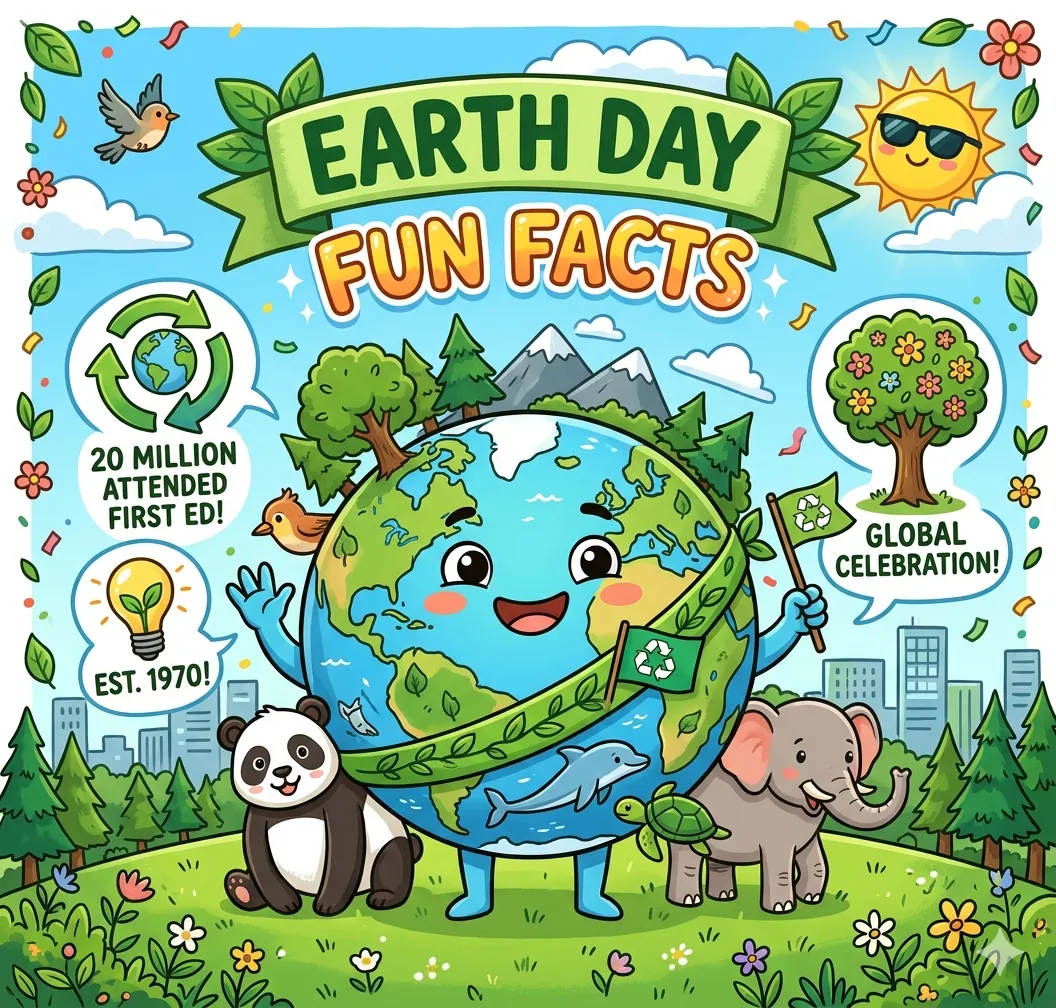
Earth Day is an annual global event observed on April 22 to demonstrate support for environmental protection and sustainable development. Founded in 1970, it has evolved from a grassroots protest in the United States into the world’s largest secular civic movement, coordinating over one billion participants annually to advocate for policy changes, climate action, and ecological stewardship.
1. The Origins of Earth Day in 1970
Earth Day was not an overnight success but the result of years of mounting public concern over industrial pollution. Senator Gaylord Nelson of Wisconsin, frustrated by the lack of environmental consciousness in national politics, sought to infuse the energy of the anti-war movement with an emerging public consciousness about air and water pollution. On April 22, 1970, approximately 20 million Americans—nearly 10% of the U.S. population at the time—took to the streets, college campuses, and city squares to demand stronger protections for the natural world. This massive mobilization remains one of the largest single-day protests in human history.
2. Denis Hayes and the Globalization of the Movement
While Senator Nelson provided the political spark, Denis Hayes served as the primary architect of the first Earth Day. As a young activist, Hayes organized the logistical framework for the event, recruiting thousands of students and volunteers across the United States. In 1990, Hayes was called upon again to take Earth Day global. By coordinating with 141 nations, Hayes and his team helped push environmental issues onto the world stage, focusing heavily on recycling efforts and international cooperation. This marked the shift from a localized American awareness campaign to a permanent global fixture.
3. The Legislative Legacy: The EPA and Beyond
The political impact of the first Earth Day was both immediate and profound. The intense public pressure exerted by the 1970 demonstrations directly influenced the United States government to address the regulatory void regarding the environment. By December 1970, the Environmental Protection Agency (EPA) was established to consolidate federal research, monitoring, and enforcement activities. Shortly thereafter, landmark legislation followed, including the Clean Air Act, the Clean Water Act, and the Endangered Species Act. These laws created the regulatory infrastructure that governs industrial output and environmental preservation in the U.S. today.
4. The Official Recognition of International Mother Earth Day
The influence of the movement eventually transcended national borders and entered the chambers of the United Nations. In 2009, the UN General Assembly adopted a resolution designating April 22 as "International Mother Earth Day." This designation recognized that the Earth and its ecosystems are our home and that it is necessary to promote harmony with nature to achieve a just balance among the economic, social, and environmental needs of present and future generations. The UN uses this platform annually to highlight the necessity of sustainable development and the protection of biodiversity.
5. EARTHDAY.ORG: The Modern Coordinating Body
The non-profit organization behind the event, formerly known as the Earth Day Network, is now known as EARTHDAY.ORG. It serves as the central hub for global Earth Day activities, providing resources for educators, policymakers, and activists. In 2026, the organization’s efforts are heavily focused on its "Planet vs. Plastics" initiative, which calls for a significant reduction in the production of single-use plastics and advocates for a stronger international treaty on plastic pollution. They provide toolkits for organizing local clean-ups, educational workshops, and policy lobbying.
6. The Role of Earth Day in Scientific Awareness
Earth Day has become a critical date for the release of significant scientific findings. Many climate organizations and research institutions time their major reports to coincide with April 22 to maximize visibility. This has established a tradition where the day is used not just for symbolic actions like planting trees, but for disseminating data regarding carbon emissions, deforestation rates, and ocean health. It serves as a benchmark for researchers to communicate with the general public, bridging the gap between complex climate modeling and actionable civic duty.
7. Global Participation Statistics
Today, Earth Day is recognized as the largest secular movement on the planet. According to estimates by the organization, more than one billion people in nearly 200 countries participate in activities each year. These activities range from large-scale legislative lobbying to local community initiatives such as park clean-ups, tree planting, and sustainability workshops in schools. The sheer scale of participation underscores the evolution of Earth Day from a protest movement into an integrated component of global civic life.
8. Climate Literacy and Education
A primary pillar of current Earth Day strategy is the advancement of climate literacy. EARTHDAY.ORG emphasizes that the transition to a green economy depends on a workforce that understands environmental constraints and opportunities. Through the "Climate Literacy" campaign, the organization advocates for mandatory, assessed climate and environmental education across the global school curriculum. By 2026, the goal is to ensure that students everywhere are equipped with the knowledge to participate in the burgeoning green job sector and to advocate for evidence-based climate solutions.
9. The Concept of the "Green Economy"
Earth Day has shifted its focus from purely conservationist goals to economic advocacy. The movement promotes the "Green Economy," which argues that environmental sustainability and economic growth are not mutually exclusive. This involves supporting policies that incentivize renewable energy adoption, sustainable agriculture, and the transition toward a circular economy. The argument is that investing in environmental technologies creates long-term jobs and economic resilience compared to the traditional dependence on extractive industries.
10. How to Verify Local Earth Day Events
Because Earth Day is decentralized, there is no single "official" event in every city. Instead, thousands of individual organizations, local governments, and NGOs host their own programs. To find verified, legitimate events, individuals should consult the global event map hosted on the official EARTHDAY.ORG website. This platform filters events by location and interest, allowing users to verify that a local clean-up or seminar aligns with broader international standards of sustainability and environmental advocacy.
Comparison of Environmental Mobilization Strategies
| Strategy | Focus | Impact |
|---|---|---|
| Legislative Advocacy | Policy and Regulation | Long-term institutional change |
| Climate Literacy | Education and Training | Workforce and civic preparedness |
| Community Action | Localized Restoration | Tangible environmental improvement |
| Corporate Engagement | Supply Chain Transparency | Large-scale carbon reduction |
Frequently Asked Questions (FAQ)
Is Earth Day a federal holiday in the United States? No, Earth Day is not a federal holiday. While it is widely recognized and observed by institutions, schools, and organizations, government offices and private businesses generally remain open. Its status is that of an annual observance rather than a public holiday.
Can anyone participate in organizing an Earth Day event? Yes, the movement is inherently bottom-up. Any individual or organization can register an event on the official global registry. It is recommended that organizers align their projects with the current year's theme and guidelines provided by global coordinating bodies to ensure consistency and impact.
How does Earth Day differ from World Environment Day? Earth Day (April 22) is a non-governmental, movement-led event focused primarily on grassroots advocacy and policy pressure. World Environment Day (June 5) is a United Nations-led event established to encourage global awareness and action for the protection of the environment, often focusing on a specific theme set by a host country.
Why is it important for Earth Day to include a focus on plastics in 2026? The current focus on plastics is driven by the fact that plastic production has accelerated globally, with significant implications for human health and biodiversity. By addressing this, the movement aims to influence the ongoing negotiations for a Global Plastics Treaty, seeking legally binding commitments to curb production.
How can I verify the impact of an environmental project? To verify a project, look for longitudinal data rather than short-term output. A legitimate project will provide reports on metrics such as total tonnage of waste removed, hectares of land reforested, or the specific regulatory change achieved through lobbying efforts, rather than focusing solely on participant attendance numbers.
Next Steps for Engagement
To get involved in 2026, begin by visiting the official event map at EARTHDAY.ORG to identify projects within your local community. If no suitable projects exist, the site provides a "Campaign Toolkit" that offers templates for organizing your own seminar, clean-up, or advocacy campaign. Ensure that any activity you lead is grounded in the current themes promoted by the global organization to ensure your efforts are part of a unified, verifiable international campaign. Focus your advocacy on systemic issues, such as local policy reform or waste reduction in your workplace, as these actions provide the most significant long-term environmental return on investment.