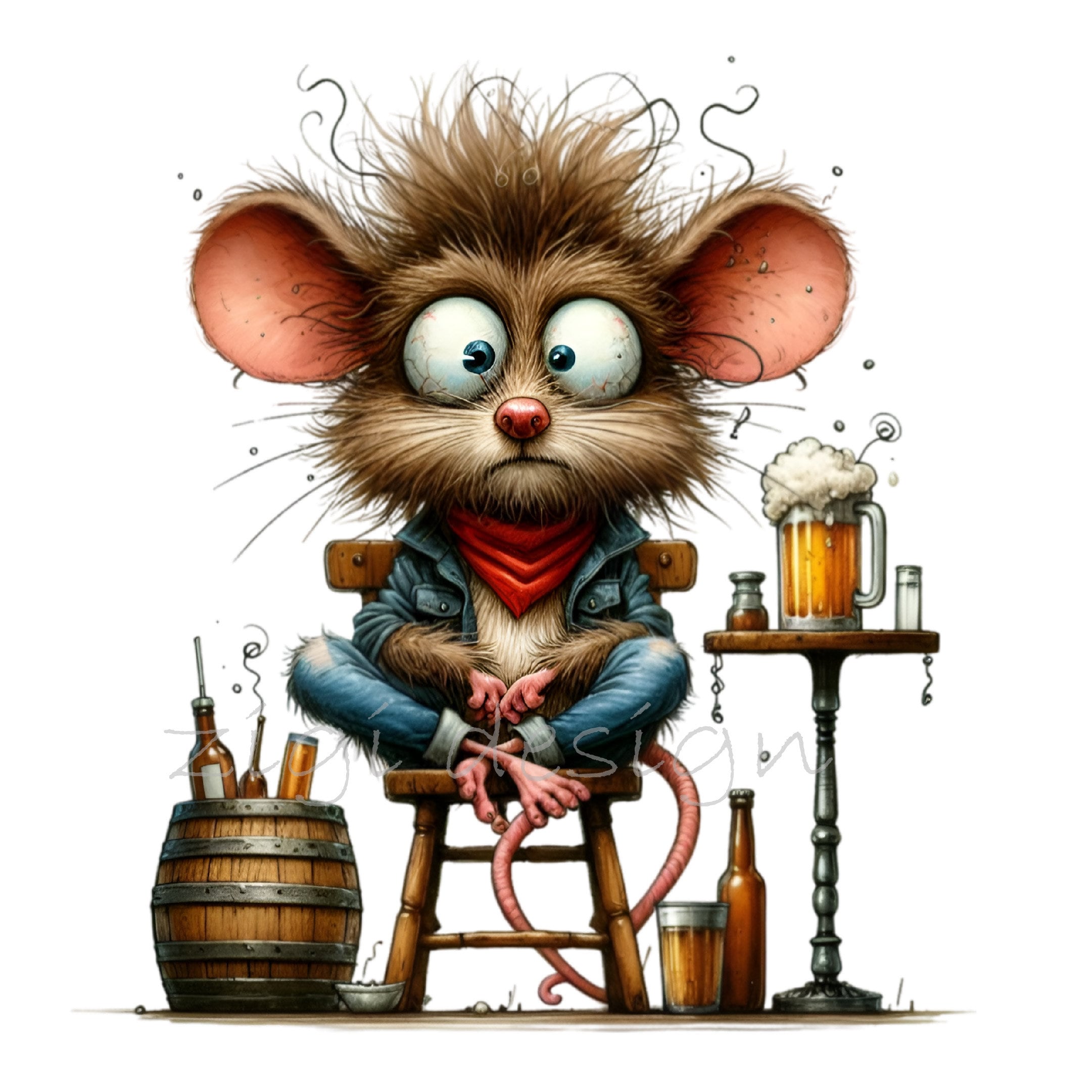
Urban rats frequently consume ethanol through fermented food waste or discarded alcoholic beverages left in public spaces. This intoxication leads to significant motor impairment, altered social interactions, and a breakdown of natural neophobia—the innate fear of new objects or environments. While seemingly comical, an intoxicated rat faces a drastically reduced survival rate in the high-stakes environment of urban wildlife.
The presence of "drunk" rats in metropolitan areas like New York, London, and Tokyo is more than an internet anecdote; it is a documented occurrence within the field of urban ecology. As human cities expand and waste management systems struggle to keep pace with consumption, the intersection of wildlife and human-grade intoxicants creates a unique set of biological and environmental challenges. By 2026, urban wildlife researchers have increasingly utilized non-invasive monitoring to understand how these substances alter the lifecycle and behavior of the common brown rat (Rattus norvegicus).
The Bio-availability of Ethanol in Urban Ecosystems
In the urban landscape, ethanol is not just found in discarded beer cans or half-empty wine bottles. The primary source of alcohol for urban wildlife is often the natural fermentation of high-sugar food waste. In the heat of summer, or within the humid confines of a subway tunnel or a poorly ventilated dumpster, discarded fruits, breads, and syrups undergo rapid fermentation by wild yeasts.
This "trash juice" or fermented slurry can reach alcohol concentrations high enough to affect a small mammal. For a rat weighing between 200 and 500 grams, a relatively small amount of ethanol can trigger significant neurological changes. Because rats are opportunistic scavengers with a high caloric requirement, they are often drawn to the smell of fermenting sugars, which signals a dense energy source.
The Role of Anthropogenic Waste
The transition from natural foraging to urban scavenging has forced rats to adapt to a diet high in processed sugars. In 2026, despite advancements in "smart" waste bins, the sheer volume of organic matter in urban centers remains a buffet for rodents. When rats ingest ethanol—whether through spilled cocktails in nightlife districts or fermented fruit in produce markets—the substance enters their bloodstream rapidly through the stomach lining and small intestine.
The Neurobiology of the Intoxicated Rodent
Rats have long been the primary model for human alcoholism studies in laboratory settings because their brain chemistry and ethanol metabolism pathways are remarkably similar to our own. When a rat becomes intoxicated in the wild, the ethanol acts as a central nervous system depressant.
Alcohol Dehydrogenase and Metabolism
The process begins with Alcohol Dehydrogenase (ADH), the enzyme responsible for breaking down ethanol into acetaldehyde. While rats possess an efficient metabolic rate, the dosage they encounter in a concentrated spill can easily overwhelm their system. In the brain, ethanol enhances the effects of GABA (gamma-aminobutyric acid), an inhibitory neurotransmitter, while inhibiting glutamate, an excitatory neurotransmitter.
This chemical shift results in the classic signs of intoxication:
- Reduced Motor Coordination: The rat may stagger, tilt to one side, or lose the "righting reflex" (the ability to land on its feet or correct its posture).
- Decreased Cognitive Function: The ability to navigate complex sewer systems or recognize familiar scents is compromised.
- Sedation: High doses lead to lethargy, making the rat an easy target for environmental hazards.
Behavioral Manifestations and the Loss of Neophobia
One of the most dangerous effects of alcohol on urban rats is the suppression of neophobia. Wild rats are naturally "new-shy," meaning they are extremely cautious around new objects, food sources, or changes in their environment. This trait is exactly what makes them so difficult to trap or poison.
An intoxicated rat loses this evolutionary edge. Under the influence of ethanol, the "anxiolytic" (anxiety-reducing) effect causes the rat to become bold—or more accurately, reckless. They may wander into open spaces during daylight hours, approach humans or larger animals, and ignore the scent of predators. This behavioral shift is often what leads to "drunk rat" sightings in parks or on sidewalks; a sober rat would rarely allow itself to be seen so clearly in a vulnerable state.
Social Dynamics and Aggression
Alcohol also disrupts the complex social hierarchy of rat colonies. Rats communicate through high-frequency vocalizations and scent marking. Intoxication can lead to "inappropriate" social behaviors, such as failure to recognize a dominant alpha or a breakdown in grooming rituals. In some cases, this leads to increased intra-colony aggression, though more often, the intoxicated individual is simply ostracized or ignored until it regains sobriety.
The Predator-Prey Dynamic in the Urban Jungle
In the ecosystem of a city, the rat is a keystone prey species for various "urban warriors," including red-tailed hawks, owls, feral cats, and even foxes. The survival of a rat depends almost entirely on its ability to remain hidden and its lightning-fast reflexes.
Increased Vulnerability to Predation
A drunk rat is essentially a "sitting duck." When its motor skills are impaired, it cannot effectively use the "burst speed" required to reach a burrow when a hawk dives. Furthermore, because alcohol dilates peripheral blood vessels, an intoxicated rat may suffer more quickly from hypothermia in cold climates, or its scent may become more pronounced to predators as its body temperature fluctuates and it neglects its grooming.
| Behavioral Trait | Sober Rat Behavior | Intoxicated Rat Behavior | Ecological Consequence |
|---|---|---|---|
| Movement | Agile, rapid, purposeful | Staggering, slow, erratic | Higher risk of being crushed or caught |
| Fear Response | High (Neophobic) | Low (Disinhibited) | Exposure to traps and predators |
| Social Interaction | Highly structured, cautious | Disrupted, occasionally aggressive | Potential expulsion from the colony |
| Navigation | Excellent spatial memory | Disoriented | Lost from burrow, exposure to elements |
| Foraging | Selective and cautious | Indiscriminate | Risk of ingesting toxins or poisons |
Public Health and Safety Implications
While the sight of a staggering rat might seem trivial, it poses specific risks to public health. Intoxicated animals are unpredictable. While a sober rat will generally run away from a human, a drunk rat may feel cornered and bite out of confusion or a lack of motor control.
Disease Transmission
Rats are vectors for several zoonotic diseases, including Leptospirosis, Hantavirus, and Salmonellosis. When a rat is intoxicated and losing control of its bodily functions, it is more likely to urinate or defecate in open, atypical areas rather than within its hidden runs. This increases the risk of human or pet contact with pathogens. Furthermore, if a drunk rat dies in an inaccessible area (like inside a wall or under a floorboard) because it was too disoriented to reach its nest, the resulting carcass becomes a breeding ground for flies and odors.
Impact on Pest Management Strategies
For municipal pest control departments, the "drunk rat" variable complicates standard procedures. Most rodenticides are designed to be palatable and are placed in "bait stations" that rely on the rat’s natural foraging patterns.
- Bait Interference: If a rat is consuming high-calorie fermented waste, it may ignore the bait stations entirely.
- Altered Metabolism: There is some evidence that ethanol consumption can alter how a rat's liver processes certain anticoagulants used in rodenticides, potentially leading to sub-lethal dosing and the development of bait resistance.
- Trap Inefficiency: Traditional snap traps rely on the rat’s quick trigger response. A sluggish, intoxicated rat might trigger a trap without being caught cleanly, leading to inhumane results or "trap shyness" in the rest of the colony who witness the event.
Observations in the 2026 Urban Environment
As of 2026, urban wildlife biologists have noted that the "nightlife economy" of cities significantly correlates with rat activity levels. In areas with high densities of outdoor dining and late-night waste disposal, the instances of ethanol-related behavioral changes in rodents are notably higher. Researchers are now using AI-driven camera traps to categorize these behaviors, helping cities better time their sanitation schedules to remove "intoxicating" waste before it can impact the local wildlife population.
Myth vs. Reality: Do Rats Seek Out Alcohol?
There is a long-standing debate as to whether rats "enjoy" the effects of alcohol or if it is purely accidental. Laboratory studies show that while most rats initially find the taste of pure ethanol aversive, they can quickly develop a preference for it if it is sweetened or if they are exposed to it chronically.
In the wild, it is likely a combination of both. The high caloric content of alcoholic beverages is an attractive "easy win" for a scavenger. Once the rat experiences the caloric density, it may return to the same source, inadvertently becoming intoxicated in the process. However, unlike humans, there is little evidence to suggest that wild rats seek out the "buzz" for recreational purposes; their lives are far too dictated by the immediate needs of survival.
Managing the Issue: Next Actions for Urban Residents
The presence of intoxicated rats is a symptom of a larger issue: accessible organic waste. To mitigate this phenomenon and the associated risks, several steps are recommended for residents and business owners in urban areas.
- Secure Organic Waste: Use heavy-duty, latching bins that prevent rodents from accessing fermenting food scraps.
- Dispose of Liquids Properly: Never pour dregs of alcoholic beverages into street gutters or open trash bags.
- Report Sightings: If you see a rat acting "drunk" or unusually bold during the day, notify local animal control. Do not attempt to handle the animal, as its lack of coordination makes it prone to biting if startled.
- Support Integrated Pest Management (IPM): Encourage local governments to focus on "trash-first" policies rather than relying solely on chemical interventions.
Frequently Asked Questions
Can a rat die from alcohol poisoning? Yes. Just like humans, rats have a limit. High concentrations of ethanol can lead to respiratory depression and death. In the wild, however, they are more likely to die from secondary causes—such as predation or accidents—before the alcohol itself proves fatal.
Why do I only see "drunk" rats at night or early morning? Rats are nocturnal. The "early morning" sightings usually involve individuals that consumed fermented waste late in the night and are now too disoriented to return to their burrows before sunrise. The rising sun and increasing human activity further stress the intoxicated animal, making its erratic behavior more visible.
Do other urban animals get drunk? Yes. Birds (specifically cedar waxwings and pigeons) are known to get "drunk" on fermented berries. Squirrels are also frequently observed acting erratically after eating fermented pumpkins or fruit. Rats are simply more prominent because of their close proximity to human trash.
Does a drunk rat behave aggressively toward pets? While a rat's first instinct is usually flight, an intoxicated rat has lowered inhibitions and poor judgment. If a dog or cat approaches a drunk rat, the rat may lash out because it cannot accurately gauge the distance or the threat level. It is best to keep pets away from any wildlife acting strangely.
Is "drunk rat" behavior a sign of rabies? No. Rats and other small rodents are extremely unlikely to carry rabies and have not been known to transmit it to humans in the United States. The staggering behavior is much more likely to be caused by ethanol, head trauma, or certain parasites like Toxoplasma gondii, which also reduces fear in rodents.
Final Recommendation
The best way to address the issue of intoxicated urban wildlife is through rigorous sanitation. By eliminating the source—fermenting food waste and discarded beverages—cities can reduce the number of "bold" rats on the streets, thereby improving public safety and restoring a more natural behavioral balance to the urban ecosystem.