A digital marketing plan is a comprehensive document that outlines your business's online marketing goals and the specific, data-driven actions required to achieve them. It serves as a strategic roadmap for selecting platforms, allocating budgets, and defining key performance indicators (KPIs) to drive growth across search, social, and digital media ecosystems.
In 2026, the landscape of digital marketing has shifted from broad-spectrum advertising to a highly personalized, privacy-centric model. As third-party cookies have become a relic of the past and AI-driven generative search has fundamentally changed how consumers discover information, a well-structured digital marketing plan is no longer optional—it is the primary driver of business resilience. A successful plan synchronizes brand messaging with technical execution, ensuring that every dollar spent contributes to a measurable return on investment (ROI).
The Core Framework of a 2026 Digital Marketing Plan
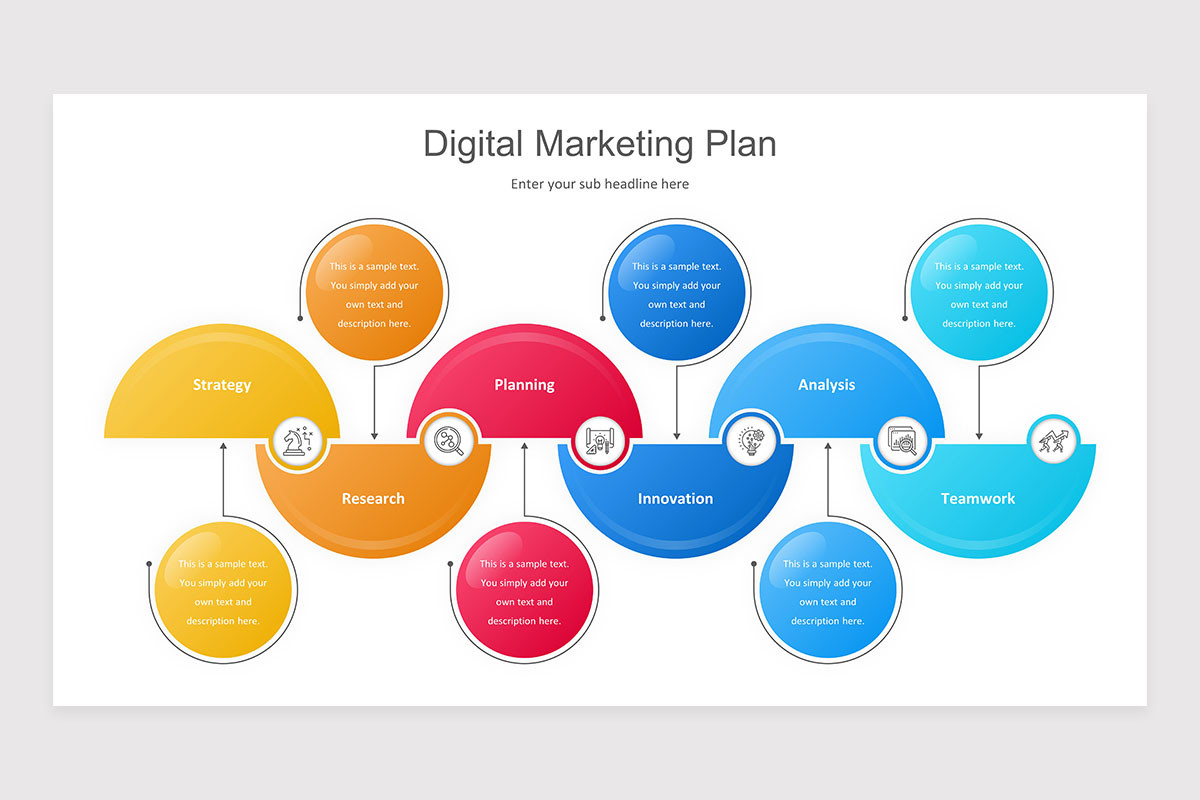
Before deploying a single advertisement or publishing a content piece, a business must establish a framework. This framework prevents "random acts of marketing"—activities that consume resources without moving the needle on revenue. A robust plan is built on five foundational pillars: Situational Awareness, Audience Intelligence, Strategic Objectives, Tactical Execution, and Performance Analysis.
Phase 1: Situational Awareness and Market Analysis
Every effective digital marketing plan begins with a cold, hard look at the current business environment. This involves more than just a standard SWOT analysis; it requires a digital audit.
- Internal Audit: Evaluate your existing digital assets. Is your website optimized for Core Web Vitals? Do you have a functional first-party data collection system? Analyze your historical performance data from 2024 and 2025 to identify what channels delivered the highest customer lifetime value (CLV).
- Competitor Benchmarking: Identify 3–5 direct competitors and 2 indirect competitors. Use tools to analyze their search share of voice, social media engagement rates, and backlink profiles. In 2026, pay close attention to how competitors are utilizing AI agents to interact with customers.
- SWOT Analysis: Document your Strengths (e.g., high brand authority), Weaknesses (e.g., slow mobile load speeds), Opportunities (e.g., a new niche in social commerce), and Threats (e.g., rising CPC costs in saturated markets).
Phase 2: Audience Intelligence and Persona Development
In the current marketing era, "target audience" is an oversimplification. Modern plans use "Audience Intelligence." This involves moving beyond basic demographics like age and location to understand psychographics, digital behavior, and intent.
Developing a buyer persona in 2026 requires looking at the "Customer Journey Map." This map tracks the path from initial awareness (perhaps through a generative search query) to the final purchase. Your plan should address different personas at different stages. For example, a B2B software company might target a "Technical Decision Maker" who prioritizes API documentation and a "Financial Stakeholder" who prioritizes ROI and implementation timelines.
Phase 3: Defining Strategic Objectives (SMART Goals)
A plan without specific goals is merely a wish list. Objectives must be SMART: Specific, Measurable, Achievable, Relevant, and Time-bound.
Instead of saying "we want to grow our social media," a 2026 digital marketing plan specifies: "Increase lead generation from LinkedIn by 25% by the end of Q3 through a combination of thought-leadership content and targeted Sponsored InMail." By setting these parameters, you create a baseline for accountability.
Strategic Channel Selection: Where to Compete
Not every business needs to be on every platform. A crucial part of your digital marketing plan is deciding where your resources will have the most impact.
Search Engine Optimization (SEO) and Generative Search
SEO in 2026 is no longer just about keywords; it is about Entity-Based Optimization. Search engines now prioritize "Information Gain"—content that provides new, unique value rather than rehashing existing articles. Your plan must include a strategy for "Generative Engine Optimization" (GEO), ensuring your brand is cited as a trusted source by AI-driven search bots. This involves maintaining a high-authority Knowledge Graph presence and utilizing Schema.org markup extensively.
Content Marketing: Quality Over Frequency
The "post every day" mantra has been replaced by "publish the best resource." Your content strategy should focus on building a "Content Hub" or "Topic Cluster" model. By creating a pillar page about a core service and surrounding it with supporting blog posts, videos, and whitepapers, you signal expertise to both users and algorithms. In 2026, content is also a vehicle for gathering zero-party data—information that customers intentionally share with you via quizzes, polls, or interactive tools.
Paid Media and Performance Marketing
Paid search and social advertising have become highly automated. The role of the digital marketer has shifted from manual bidding to "Creative Excellence." Since algorithms now handle much of the targeting, your plan should focus on developing high-quality visual and copy assets that resonate emotionally.
| Channel | Primary Goal | Metric of Success | Typical Time to ROI |
|---|---|---|---|
| Organic SEO | Long-term authority & traffic | Organic Sessions / Keyword Rankings | 6–12 Months |
| Paid Search (PPC) | Immediate lead generation | Cost Per Acquisition (CPA) | Days/Weeks |
| Social Media | Community & Brand Awareness | Engagement Rate / Share of Voice | 3–6 Months |
| Email Marketing | Retention & Upselling | Conversion Rate / CLV | Immediate (with list) |
| Influencer/Creator | Trust & Social Proof | Referral Traffic / Brand Sentiment | 1–3 Months |
The Tech Stack: Infrastructure for 2026
Your digital marketing plan must include a section on the "Marketing Technology Stack" (MarTech). Without the right tools, you cannot execute or measure your strategy.
- Customer Data Platform (CDP): In a post-cookie world, a CDP is essential for aggregating first-party data from your website, email, and CRM to create a unified customer view.
- Marketing Automation: Tools like HubSpot or Salesforce Marketing Cloud allow you to nurture leads at scale through personalized email sequences and behavioral triggers.
- Analytics and Attribution: You must move beyond "Last-Click Attribution." Use data-driven attribution models that recognize the value of every touchpoint in the customer journey.
- AI Implementation: Identify which AI tools will be used for content ideation, image generation, and data analysis. Ensure these tools comply with brand guidelines and copyright laws.
Budgeting and Resource Allocation
Budgeting is often the most challenging part of a digital marketing plan. A common 2026 standard is the 70/20/10 Rule:
- 70% of Budget: Invested in proven "bread and butter" channels that consistently deliver a predictable ROI (e.g., Google Search or Email).
- 20% of Budget: Allocated to "Growth" channels—platforms that are showing promise but aren't yet fully optimized (e.g., a new social commerce feature).
- 10% of Budget: Reserved for "Experimental" tactics. This could include testing augmented reality (AR) ads or early-stage influencer partnerships.
When calculating the budget, factor in not just the "Ad Spend" but also the "Production Costs" (creative, videography) and "Technology Costs" (SaaS subscriptions).
Measurement, Iteration, and the Feedback Loop
A digital marketing plan is a living document. It requires a "Monthly Performance Review" to compare actual results against the SMART goals established in Phase 3.
If a tactic is underperforming, the plan should outline a troubleshooting process. Is the issue the Traffic (wrong audience), the Offer (not compelling enough), or the Conversion Path (technical friction on the website)? By isolating these variables, you can pivot without scrapping the entire strategy.
For 2026, pay close attention to "Privacy-Safe Metrics." With the International Chamber of Commerce (ICC) and various regional regulators emphasizing data sovereignty, ensure your tracking methods do not violate user consent.
Common Mistakes to Avoid in Your Digital Marketing Plan
- Ignoring the "Mobile-First" Reality: Even in 2026, some businesses treat mobile as an afterthought. If your landing pages take more than 2 seconds to load on a 5G connection, your plan will fail.
- Siloed Marketing: Your social media team must talk to your SEO team. If your paid ads are promoting a product that your organic content doesn't support, you create a disjointed brand experience.
- Over-Automation: While AI is a powerful tool, over-relying on automated content can lead to "Brand Dilution." Human oversight is required to maintain a unique brand voice and ensure factual accuracy.
- Chasing "Vanity Metrics": Getting millions of views on a viral video is useless if none of those viewers fit your buyer persona or convert into customers. Focus on "Revenue-North" metrics.
Step-by-Step Implementation Guide
To move from planning to execution, follow these steps:
- Secure Executive Buy-In: Ensure stakeholders understand the budget and the expected timeline for results.
- Finalize the Tech Stack: Install tracking codes, set up your CRM, and verify data privacy compliance.
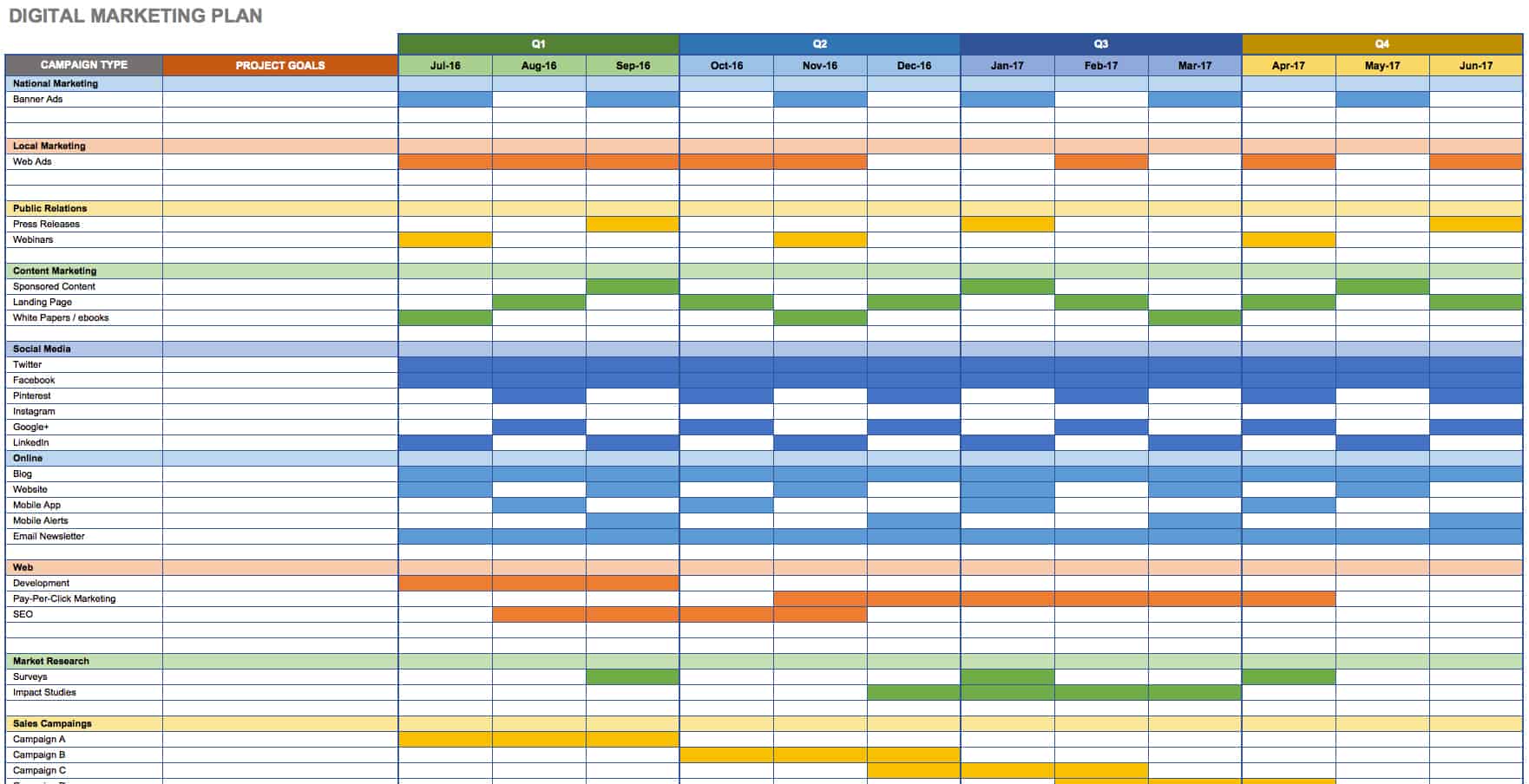
- Content Calendar Creation: Map out your first 90 days of content across all selected channels.
- Launch Pilot Campaigns: Start with smaller budgets to test creative messaging and audience targeting.
- Weekly Optimization: Review campaign data weekly to make minor adjustments to bids, headlines, and placements.
- Quarterly Strategic Review: Every three months, perform a deep dive into the strategy to see if the market has shifted or if goals need to be adjusted.
Frequently Asked Questions
How much should a small business spend on a digital marketing plan?
For 2026, most small to medium-sized enterprises (SMEs) allocate between 7% and 12% of their total revenue to digital marketing. If you are in a high-growth phase or a highly competitive industry like FinTech or SaaS, this may increase to 20% or more. The key is to start with a budget that allows for consistent testing without jeopardizing the company's cash flow.
How often should a digital marketing plan be updated?
While the core business objectives may remain stable for a year, the tactical execution of a digital marketing plan should be reviewed monthly and updated quarterly. The rapid pace of platform updates (such as new algorithm shifts in search or social media) requires a flexible approach. A "set it and forget it" mentality is the most common cause of strategy failure.
What is the most important part of a digital marketing plan?
The most important part is the Audience Intelligence. If you do not deeply understand who your customer is, where they spend their time online, and what problems they are trying to solve, even the most expensive advertisements and highest-quality content will fail to convert. Every other part of the plan—from channel selection to budgeting—depends on the accuracy of your audience data.
Can I create a digital marketing plan without professional help?
Yes, many business owners use templates or AI assistants to draft their first plan. However, for the technical aspects—such as setting up server-side tracking, advanced SEO, or complex automation workflows—consulting with a specialist is recommended. A professional audit can often identify "leaks" in your marketing funnel that are costing you more than the consultant's fee.
What is the difference between a marketing strategy and a marketing plan?
A digital marketing strategy is the high-level "Why" and "What"—it defines your brand positioning and your long-term goals. A digital marketing plan is the "How" and "When"—it is the detailed roadmap that specifies the campaigns, timelines, and budgets needed to bring that strategy to life. You need the strategy to provide direction and the plan to provide execution.
Is email marketing still relevant in 2026?
Absolutely. Email marketing remains one of the highest ROI channels because it is an "owned" medium. Unlike social media or search engines, where an algorithm change can suddenly cut off your access to your audience, your email list is a direct line to your customers. In 2026, the focus has shifted toward hyper-segmentation and "behavioral triggers," ensuring users only receive highly relevant content.
Final Recommendation
To succeed in 2026, start by auditing your first-party data capabilities. Before spending money on ads, ensure you have a robust system to capture and analyze the data from users who visit your site. This data is the engine that will power your AI tools and personalization efforts, making your digital marketing plan significantly more effective than a generic, one-size-fits-all approach.