A country without freedom of speech is a state where the government actively restricts, penalizes, or prohibits the expression of ideas, opinions, and information. These environments are characterized by state-controlled media, digital surveillance, and legal frameworks that criminalize dissent. In 2026, such restrictions often utilize advanced artificial intelligence to monitor and suppress real-time communication both online and offline.
The Legal and Philosophical Framework of Restricted Speech
To understand a country without freedom of speech, one must first look at the international standards it ignores. The Universal Declaration of Human Rights (UDHR), specifically Article 19, establishes that everyone has the right to freedom of opinion and expression. This includes the freedom to hold opinions without interference and to seek, receive, and impart information and ideas through any media regardless of frontiers.
In countries where this right is absent, the legal system is usually inverted. Instead of laws protecting the speaker, laws are designed to protect the "state," the "ruling party," or "national stability." In 2026, many authoritarian regimes justify these restrictions through a lens of "digital sovereignty" or "social harmony." They argue that unrestricted speech leads to chaos, misinformation, or foreign interference, using these justifications to codify censorship into national law.
Common legal instruments used to stifle speech include:
- Lèse-majesté and Defamation Laws: Criminalizing insults against the head of state or government officials.
- National Security Acts: Broadly defined laws that equate political criticism with terrorism or treason.
- Anti-Misinformation Statutes: Laws that allow the government to be the sole arbiter of "truth," punishing any narrative that contradicts official state reports.
- Cybercrime Regulations: Regulations that require internet service providers to install "black boxes" for government monitoring and content filtering.
Mechanisms of Control: How Speech is Silenced
A country without freedom of speech does not rely solely on the threat of imprisonment; it employs a multi-layered system of control designed to make the cost of speaking out prohibitively high.
State-Owned and Controlled Media
In these jurisdictions, the "fourth estate" is essentially an arm of the government. Independent journalism is either banned or forced into exile. The information landscape is saturated with state propaganda, designed not just to promote the government, but to delegitimize any alternative viewpoints. This creates a "filtered reality" where citizens are only exposed to information that serves the interests of the ruling elite.
Digital Authoritarianism and Surveillance
By 2026, the technology used to suppress speech has reached unprecedented levels of sophistication. Digital authoritarianism involves the use of AI-driven sentiment analysis to scan social media posts for "subversive" keywords. In a country without freedom of speech, your digital footprint is your most significant liability.
Governments employ:
- Deep Packet Inspection (DPI): To monitor and filter internet traffic at a granular level.
- Biometric Integration: Linking social media accounts to national ID systems and facial recognition data.
- Great Firewalls: National-level internet filters that block access to foreign news sites, human rights portals, and encrypted messaging apps.
The Culture of Self-Censorship
Perhaps the most effective tool in a country without freedom of speech is the psychological pressure it exerts on its citizens. When the consequences of a "wrong" opinion include job loss, social ostracization, or the endangerment of family members, individuals begin to monitor their own speech. This self-censorship effectively turns every citizen into their own internal censor, stifling intellectual growth and honest social discourse without the government having to intervene directly in every instance.
Case Studies: High-Restriction Environments in 2026
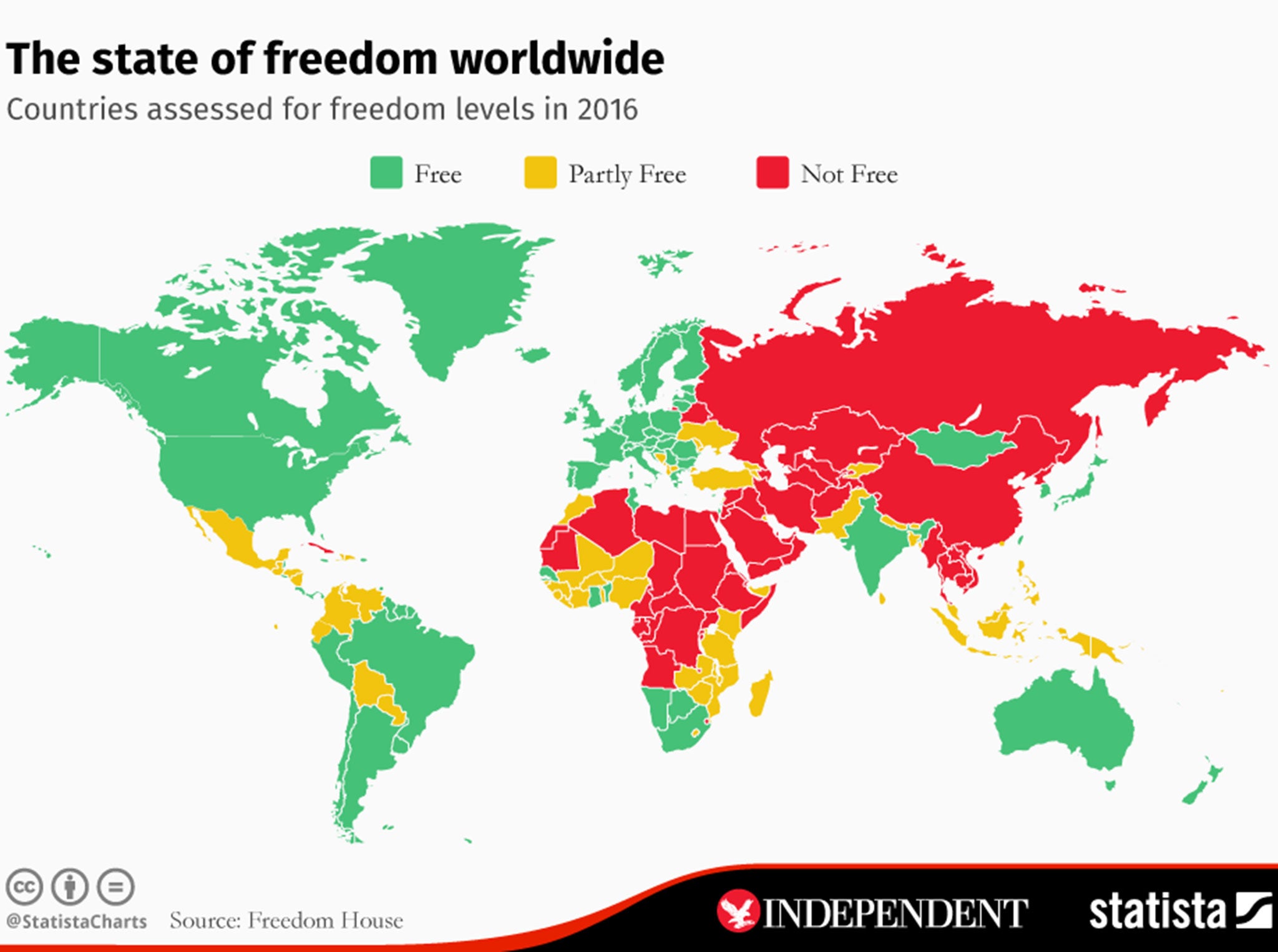
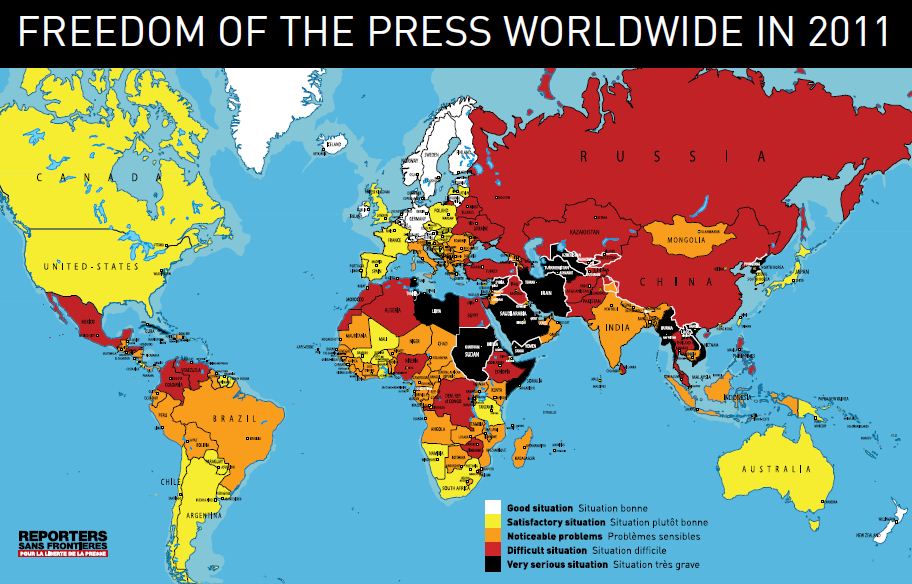
While the global landscape is constantly shifting, several nations consistently rank at the bottom of indices provided by organizations like Reporters Without Borders (RSF) and Freedom House.
North Korea: Total Information Isolation
North Korea remains the most extreme example of a country without freedom of speech. The state maintains an absolute monopoly on information. All domestic media is strictly controlled by the government, and the "Kwangmyong" (the national intranet) is a closed loop with no access to the global internet. Listening to foreign broadcasts or possessing foreign media can lead to execution or internment in political prison camps.
China: The Sophisticated Censor
In 2026, China represents the pinnacle of high-tech censorship. Through the "Great Firewall" and the integration of social credit systems, the state manages to permit economic activity while strictly policing political discourse. The use of "automated censorship" means that posts containing sensitive dates or names are often deleted by algorithms before they can even be seen by others.
Eritrea: The "North Korea of Africa"
Eritrea has no independent media. Since the government closed all private press outlets in 2001, the only source of news is the state-run Ministry of Information. Journalists are frequently detained without trial and held in incommunicado detention for decades. In this environment, freedom of speech is effectively non-existent.
Iran: Control Through Intermittent Shutdowns
Iran utilizes a strategy of "internet shutdowns" during times of civil unrest. By severing the country's connection to the global web, the government prevents the coordination of protests and the flow of information to the outside world. This is coupled with severe judicial penalties for journalists and activists who "spread propaganda against the system."
The Societal Impact of Restricted Speech
The absence of free speech has profound consequences that extend far beyond the legal realm. It affects the economy, the education system, and the overall mental health of the population.
| Impact Area | Consequences in a Restricted Environment | Long-term Effect |
|---|---|---|
| Economic | Lack of transparency leads to unchecked corruption and cronyism. | Reduced foreign investment and economic stagnation. |
| Academic | Research is restricted to "approved" topics; critical thinking is discouraged. | "Brain drain" as intellectuals and innovators flee the country. |
| Social | Minority voices are suppressed; grievances are forced underground. | Increased risk of sudden, violent social upheaval. |
| International | The country becomes isolated from global cultural and scientific exchanges. | Loss of soft power and diplomatic leverage. |
The Stifling of Innovation
Innovation requires the freedom to challenge the status quo and the "received wisdom" of the day. In a country without freedom of speech, where questioning an authority figure can be seen as an act of rebellion, the scientific and entrepreneurial communities suffer. People are less likely to propose radical new ideas if they fear those ideas might be misinterpreted as political critiques.
The Erosion of Truth
When only one narrative is allowed, the concept of "truth" becomes a matter of political expediency. This leads to a breakdown in public trust. Even when the government tells the truth—during a public health crisis or a natural disaster—a cynical and suppressed population may not believe them, leading to catastrophic results.
Navigating and Surviving in Restricted Environments
For those living in or visiting a country without freedom of speech in 2026, safety depends on understanding the specific "red lines" of that regime. However, it is important to note that these lines are often intentionally blurry to keep the population in a state of perpetual uncertainty.
Digital Hygiene and Security
Many residents in restrictive countries use Virtual Private Networks (VPNs) to bypass censorship. However, by 2026, many of these countries have made the use of unauthorized VPNs a criminal offense.
- Encryption: Using end-to-end encrypted apps like Signal or ProtonMail is standard practice for those seeking privacy, though these services are often blocked or require "obfuscation" techniques to function.
- Hardware Safety: In some countries, border agents have the authority to search digital devices for "prohibited content." Travelers often use "burner" devices or cloud-based storage to ensure sensitive data is not physically present on the device during transit.
The Role of the International Community
International organizations like the Committee to Protect Journalists (CPJ) and Amnesty International play a crucial role in documenting abuses in these countries. Sanctions, diplomatic pressure, and the provision of satellite-based internet (like Starlink) are some of the tools used by the global community to support those living under censorship.
Frequently Asked Questions
Which country has the least freedom of speech in 2026?
According to the 2026 World Press Freedom Index, North Korea, Eritrea, and Turkmenistan consistently rank as the most restrictive. These nations allow no independent media and punish any form of dissent with severe imprisonment or death.
Is it legal to use a VPN in a country without freedom of speech?
In many cases, no. Countries like China, Russia, and Iran have strict regulations regarding VPNs. While they may be tolerated for business use, using them to access "banned" information can result in fines, service termination, or legal prosecution.
Can the United Nations help people in these countries?
The UN Human Rights Council can investigate and report on abuses, but it has limited power to enforce changes within a sovereign nation's borders. It relies on diplomatic pressure and international treaties like the International Covenant on Civil and Political Rights (ICCPR).
How does censorship affect tourists?
Tourists are often held to different standards than citizens, but they are not immune. Posting photos of protests, military installations, or "disrespectful" images of national leaders on social media can lead to deportation or arrest. It is essential to research the specific "decency" and "security" laws of the destination.
Why do some people support speech restrictions?
Governments often frame restrictions as a trade-off for security and stability. Some citizens may support these measures if they believe the restrictions prevent social unrest, combat religious extremism, or protect the country from perceived "western cultural imperialism."
Summary of Next Actions
If you are researching or planning to engage with a country that lacks freedom of speech, your priority should be safety and verification.
- Consult Updated Indices: Check the latest reports from Freedom House and Reporters Without Borders for the most recent data on specific countries.
- Practice Digital Discretion: If you are within a restricted border, assume all digital communication is monitored. Use encrypted tools only if you are aware of the legal risks in that specific jurisdiction.
- Support Independent Journalism: Organizations that provide news to people inside restricted countries (such as Radio Free Europe/Radio Liberty or the BBC World Service) rely on international support to bypass state censors.
- Legal Awareness: Understand that in an authoritarian state, the law is often whatever the ruling party says it is at that moment. "Rule of law" is frequently replaced by "rule by law."