The history of squash is a transformation from a 19th-century pastime for London prisoners into a high-octane global sport. Originating as an offshoot of "Rackets" at Harrow School around 1830, squash gained its name from the "squashy" soft ball used to navigate confined spaces. Today, in 2026, it is a premier international discipline preparing for its historic Olympic debut at the Los Angeles 2028 Games.
The Primitive Roots: Rackets and the Fleet Prison
To understand squash, one must first look at its direct ancestor: Rackets. In the 18th century, London was home to several "debtors' prisons," most notably the Fleet Prison. Inmates, seeking exercise and distraction, began hitting balls against the high stone walls of the prison yards with makeshift bats. This game, known as Rackets, utilized a hard, leather-covered ball that required significant space and power to play.
Unlike modern squash, Rackets was played on much larger courts, often 60 feet by 30 feet. By the early 19th century, the game had moved beyond the prison walls and was adopted by elite British boarding schools. It was at Harrow School where the fundamental shift occurred. Around 1830, students discovered that a punctured Rackets ball, which was "squashy" upon impact, offered a different and more complex game. This ball stayed on the wall longer, moved slower, and required a greater variety of shots, allowing the game to be played in smaller, more confined areas like school alleyways and courtyards.
The Birth of "Squash" at Harrow School (1830–1864)
The transition from Rackets to Squash was not immediate but driven by the physical constraints of the Harrow campus. Students began playing with these softer balls in the gaps between school buildings. Because the soft ball did not bounce as high or as far as the hard Rackets ball, players had to use more finesse, including the use of "boasts" (hitting the ball against a side wall before it reaches the front wall) and "drops" (short, soft shots).
By 1864, squash was officially recognized as a distinct sport at Harrow, and the first four purpose-built squash courts were constructed. During this period, the game was still largely unstandardized. There were no official rules regarding court dimensions, ball size, or scoring. However, the foundational elements—the soft ball, the four walls, and the use of the "tin" (the strip at the bottom of the front wall that acts as a net)—were firmly established.
Global Expansion and the British Colonial Influence
The spread of squash followed the map of the British Empire. Military officers and colonial administrators brought the game to India, Pakistan, Egypt, Australia, and South Africa. This colonial heritage explains why many of the sport's greatest legends have historically come from these regions.
In Egypt, the game took a particularly deep root. British military clubs in Cairo and Alexandria built courts, and local Egyptian ball boys and caddies began playing after hours. By the 1930s, an Egyptian diplomat named F.D. Amr Bey emerged as the world's first true squash superstar, winning the British Open six consecutive times between 1933 and 1938. His success sparked a national obsession in Egypt that persists in 2026, where Egyptian players consistently occupy the top ranks of the world standings.
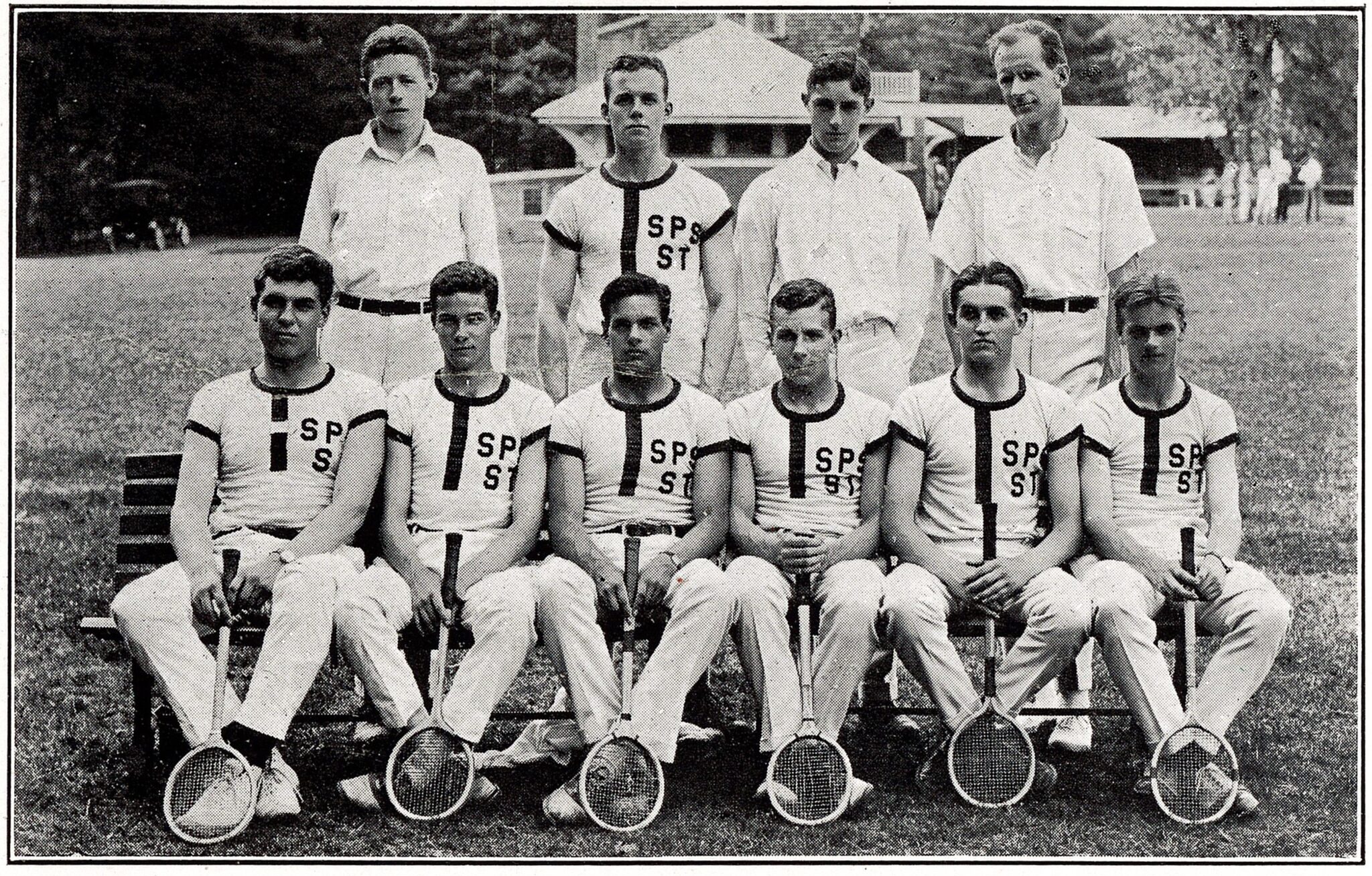
In North America, the game took a slightly different path. In 1884, James P. Conover at St. Paul’s School in New Hampshire introduced the game to the United States. However, Americans preferred a harder ball and slightly different court dimensions, leading to the development of "Hardball Squash." This version dominated the American scene for nearly a century before the international "soft ball" version became the global standard in the late 1990s.
The Era of Standardization and Governing Bodies
As the sport grew, the need for uniform rules became critical. In 1907, the Tennis, Rackets and Fives Association formed a subcommittee to set standards for squash. It wasn't until 1928 that the Squash Rackets Association (SRA) was founded in the United Kingdom to act as the official governing body.
The SRA standardized the "International" or "British" version of the game:
- Court Dimensions: 32 feet long by 21 feet wide.
- Ball Type: A soft, hollow rubber ball.
- Scoring: Initially "Point-a-Rally" (PAR) up to 15, then "Hand-In, Hand-Out" up to 9, before returning to PAR to 11 in the modern era.
Across the Atlantic, the United States Squash Rackets Association (USSRA)—now known as US Squash—was formed in 1904. For decades, the US and the UK operated under different technical specifications, creating a schism in the sport. It wasn't until the professionalization of the game and the rise of the Professional Squash Association (PSA) that the world converged on the international soft ball standard, allowing for a unified professional circuit.
Technological Evolution: Rackets, Balls, and Courts
The equipment used in squash has undergone radical changes, mirroring the technological advancements in materials science.
The Racket Revolution
Originally, squash rackets were made of laminated wood (usually ash) with small, round heads, very similar to Rackets bats. These were heavy and prone to warping. In the 1980s, manufacturers shifted to aluminum, which provided more durability but was still relatively heavy. The true breakthrough came with the introduction of graphite and carbon fiber composites. These materials allowed for larger, teardrop-shaped heads and lighter frames (often weighing between 110g and 140g), enabling the high-speed, "flick" shots seen in the modern professional game.
The Physics of the Ball
Squash balls are unique because of their thermal properties. Made of raw rubber and various chemical compounds, the ball must be "warmed up" through repeated striking to become lively. As the air inside the ball heats up, the internal pressure increases, providing a consistent bounce. The "Yellow Dot" system was introduced to categorize balls by their speed and bounce height, with the Double Yellow Dot being the standard for professional play due to its low bounce and high technical requirement.
The Glass Court and Television
One of the historical hurdles for squash was visibility. Traditional courts were white-walled "boxes," making it difficult for spectators and cameras to follow the small, dark ball. In the late 20th century, the invention of the all-glass court revolutionized the sport. Using one-way film technology, players see a solid wall, while spectators and TV cameras can see into the court from all sides. This allowed squash to be played in iconic locations, such as Grand Central Terminal in New York, the Pyramids of Giza, and the Eiffel Tower.
Technical Specifications: International Squash Standards
In 2026, the World Squash Federation (WSF) maintains strict technical requirements for the professional game. The following table outlines the standard dimensions and specifications for the international game.
| Feature | Specification (International Standard) |
|---|---|
| Court Length | 9.75 meters (32 feet) |
| Court Width | 6.40 meters (21 feet) |
| Front Wall Line Height | 4.57 meters (15 feet) |
| The "Tin" Height | 43 cm (17 inches) for pros; 48 cm (19 inches) for club play |
| Service Line Height | 1.78 meters (5 feet 10 inches) |
| Racket Maximum Length | 68.6 cm (27 inches) |
| Ball Weight | 23 to 25 grams |
| Ball Diameter | 40 mm (+/- 0.5 mm) |
The Modern Era: Professionalism and the Olympic Dream
The late 20th and early 21st centuries saw squash evolve into a highly professionalized sport. The PSA World Tour now hosts hundreds of events annually, with equal prize money for men and women—a milestone reached in the mid-2010s. Legendary rivalries, such as the Pakistani dominance of Jahangir Khan and Jansher Khan in the 80s and 90s, gave way to the modern era of Egyptian excellence led by players like Ali Farag and Nour El Sherbini.
Jahangir Khan, in particular, holds one of the most incredible records in all of sports: an unbeaten streak of 555 consecutive matches between 1981 and 1986.
The Path to the Olympics
For decades, the squash community campaigned for inclusion in the Olympic Games. Despite meeting all technical criteria and having a truly global reach, the sport was repeatedly overlooked in favor of others. However, in October 2023, the International Olympic Committee (IOC) officially confirmed that squash would be included in the Los Angeles 2028 Olympic Games. As of 2026, the sport is currently undergoing a massive surge in investment and grassroots development as nations prepare their athletes for the first-ever Olympic squash medals.
Common Misconceptions in Squash History
- "Squash is just indoor tennis": While both are racket sports, the mechanics are entirely different. In tennis, players face each other across a net; in squash, they share the same space and utilize walls to change the angle of play.
- "It’s an elite-only sport": While it started in private schools, the development of public leisure centers in the 1970s and 80s made squash one of the most accessible and popular participation sports in the world.
- "The ball is supposed to be dead": New players often think their ball is broken because it doesn't bounce. As discussed, the ball requires several minutes of hard hitting to reach its operational temperature.
Frequently Asked Questions
Why is the sport called "Squash"?
The name is literal. It refers to the "squashable" nature of the soft rubber ball used in the game, which differs from the hard, leather-covered balls used in its predecessor, Rackets. When the soft ball hits the wall, it compresses or "squashes" before rebounding.
What is the difference between Squash and Racketball (Squash 57)?
Squash uses a smaller, harder-to-hit ball that requires warming up and a smaller-headed racket. Squash 57 (formerly known as Racketball in the UK) uses a larger, bouncier ball and a racket with a larger head. Squash 57 is often played by older athletes or beginners because the ball stays in play longer without needing as much physical speed.
Why is the "Tin" important in squash?
The tin is the area at the bottom of the front wall, traditionally made of metal so it makes a distinct "tinny" sound when hit. It acts like the net in tennis. If a ball hits the tin or the line above it, it is considered "out," and the player loses the rally.
Which country is currently the best at squash?
As of 2026, Egypt remains the dominant force in professional squash. They hold the majority of the top 10 positions in both the men’s and women’s world rankings. However, countries like the USA, England, and Malaysia continue to produce top-tier talent.
How long does a typical squash match last?
At the professional level, a best-of-five match typically lasts between 45 and 90 minutes. However, some marathon matches have exceeded the two-hour mark. For club players, a standard session is usually 40 to 45 minutes of intense play.
Practical Recommendation for New Players
If you are looking to take up squash in 2026, the most important step is selecting the correct ball. Many beginners mistakenly buy a Double Yellow Dot ball because it is what the pros use. However, because beginners cannot hit the ball hard enough or consistently enough to keep it warm, the ball will remain "dead." Instead, start with a Blue Dot (Intro) or Red Dot (Progress) ball. These are larger and bouncier at room temperature, allowing for longer rallies and a more enjoyable learning experience. Additionally, always wear non-marking court shoes to protect the wooden floors and protective eyewear, which is mandatory in most clubs and all junior competitions.