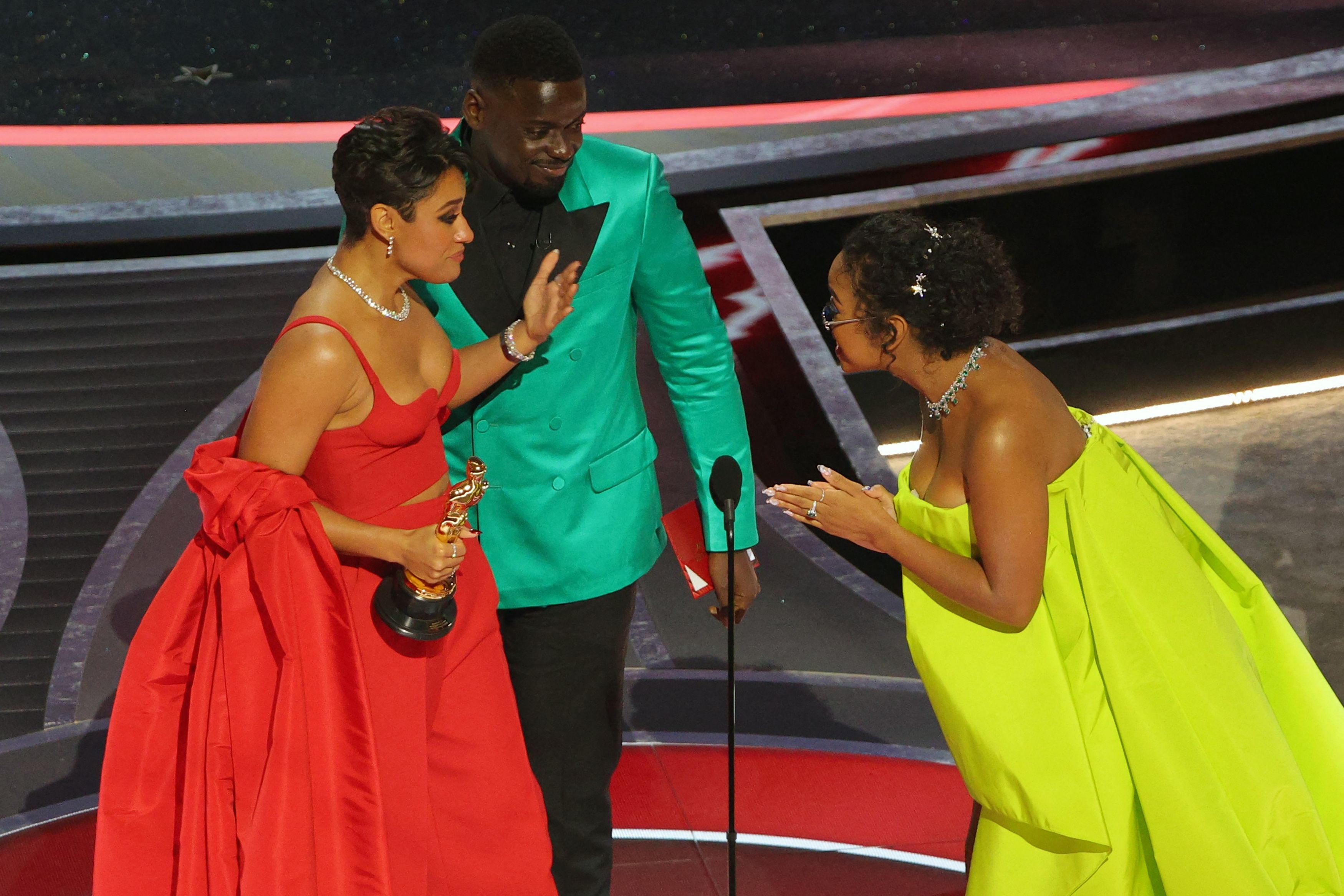
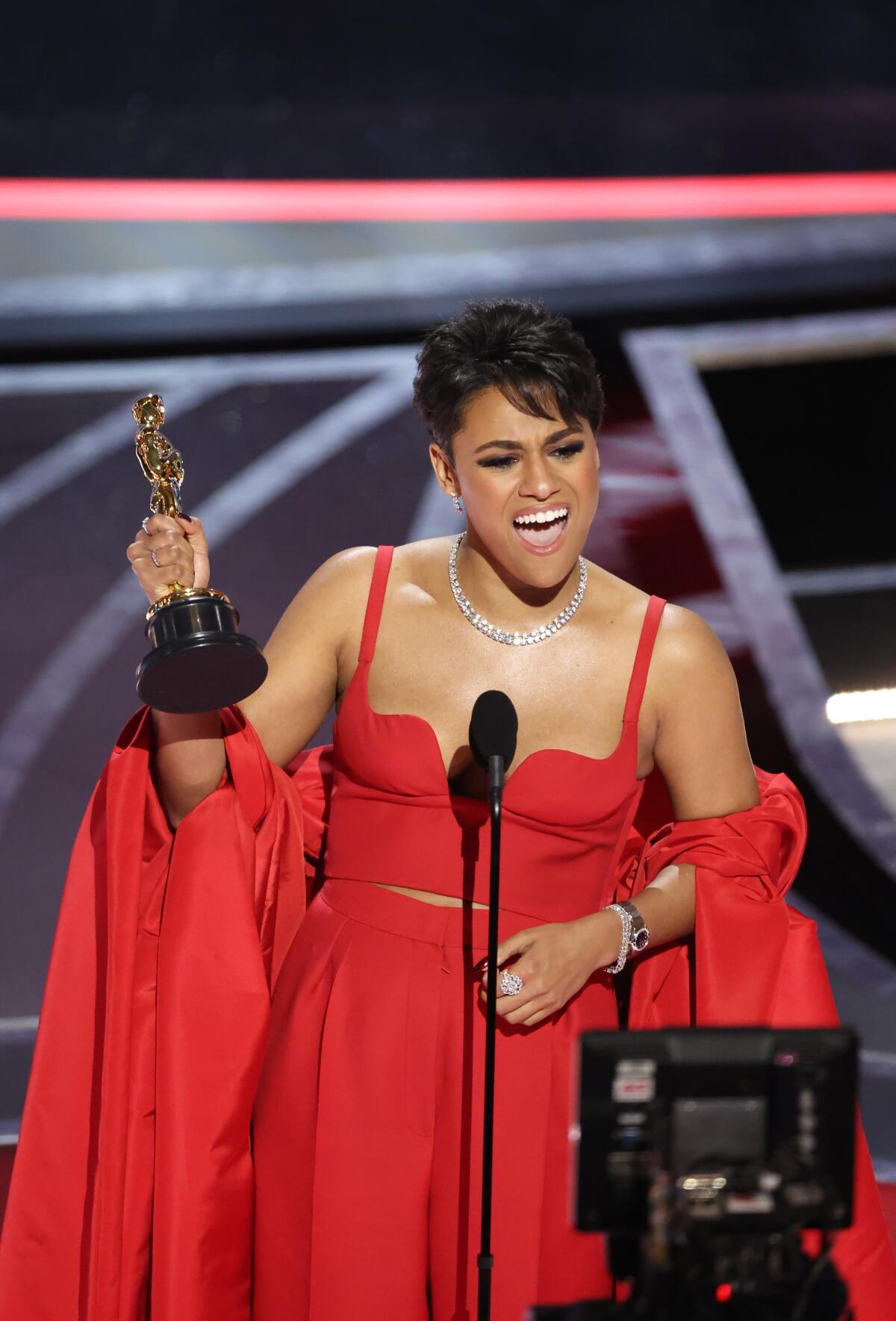
Ariana DeBose made history at the 94th Academy Awards by winning the Oscar for Best Supporting Actress for her vibrant portrayal of Anita in Steven Spielberg’s 2021 film adaptation of West Side Story. This victory marked a monumental milestone for representation, cementing her status as the first openly queer woman of color and the first Afro-Latina to win an Academy Award in an acting category.
The Historical Context of the 94th Academy Awards
The 94th Academy Awards, held on March 27, 2022, at the Dolby Theatre in Los Angeles, celebrated cinematic achievements from a turbulent pandemic-impacted era. Amidst a diverse field of nominees, Ariana DeBose emerged as the frontrunner early in the awards season, sweeping precursor accolades including the BAFTA, the Golden Globe, and the Screen Actors Guild (SAG) Award.
Her win was not merely an individual triumph for a standout performance; it bridged cinematic history. Exactly six decades prior, at the 34th Academy Awards in 1962, legendary Puerto Rican actress Rita Moreno won the exact same category—Best Supporting Actress—for playing the same character, Anita, in the original 1961 film version of West Side Story. DeBose acknowledged this profound passing of the torch during her emotional acceptance speech, noting that Moreno paved the way for a generation of performers.
Breaking Barriers: Intersectionality and Representation
To fully understand why Ariana DeBose's Oscar win resonated so deeply across the global entertainment industry, one must examine the severe historical underrepresentation of marginalized identities within the Academy Awards' nearly century-long history.
Until March 2022, no openly LGBTQ+ woman of color had ever claimed an acting statuette. DeBose's victory shattered multiple glass ceilings simultaneously:
- Gender and Identity: As an openly queer woman, her visibility on the global stage provided critical representation for LGBTQ+ youth and performers.
- Race and Ethnicity: As an Afro-Latina of Puerto Rican and African American descent, her win addressed longstanding systemic erasures within Hollywood casting and awards recognition, highlighting the rich intersectionality of modern Latinidad.
- The Shared Role Milestone: It marked a rare cinematic phenomenon where two different actresses won Oscars for playing the exact same fictional character in separate film adaptations.
Comparison of Historic West Side Story Supporting Actress Wins
| Metric | Rita Moreno (1962) | Ariana DeBose (2022) |
|---|---|---|
| Film Adaptation | West Side Story (1961) | West Side Story (2021) |
| Character Played | Anita | Anita |
| Category | Best Supporting Actress | Best Supporting Actress |
| Historic Distinction | First Hispanic woman to win an acting Oscar | First openly queer woman of color and Afro-Latina to win an acting Oscar |
| Director | Robert Wise and Jerome Robbins | Steven Spielberg |
Deconstructing the Performance: Why the Academy Voted for DeBose
Steven Spielberg’s West Side Story faced high scrutiny, particularly given the towering cultural footprint of Robert Wise and Jerome Robbins' 1961 original masterpiece. However, the creative team deliberately reimagined the material, grounding the Puerto Rican characters with greater cultural authenticity, utilizing bilingual dialogue without subtitles, and hiring authentic Caribbean and Nuyorican talent.
DeBose’s performance as Anita functioned as the emotional and rhythmic anchor of the film. Reviewers and Academy voters highlighted several standout components of her work:
- Vocal and Physical Dynamism: Trained extensively on Broadway, DeBose brought an elite level of athletic choreography and vocal strength to iconic musical numbers like "America."
- Dramatic Gravity: Beyond the song-and-dance sequences, DeBose handled the devastating dramatic turns in the second half of the film—particularly the harrowing garage assault scene—with searing vulnerability and psychological realism.
- Modern Agency: Working with screenwriter Tony Kushner, DeBose infused Anita with a fiercely modern sense of self-preservation and dignity, distinguishing her interpretation from the 1961 portrayal while paying respectful homage to Moreno.
The Cultural Ripple Effects and Acceptance Speech Legacy
An artist’s acceptance speech often crystallizes their cultural moment, and DeBose’s address at the Dolby Theatre became an instant touchstone. Opening with a direct nod to the realities of her identity, she famously declared:
"You see, now you know that’s what you get if you take a queer, openly queer woman of color, an Afro-Latina, who found her strength in life through art, and that’s what I believe we’re here to celebrate."
She followed this with an inspirational message directed toward anyone who has ever questioned their place in the world: "If you have ever questioned your identity ever, ever, or find yourself living in the gray spaces, I promise you this: there is indeed a place for us." This direct lyrical callback to Arthur Laurents and Leonard Bernstein’s song "Somewhere" from the musical encapsulated the overarching thematic resonance of her victory.
Industry analysts noted that the win galvanized studios to take more risks on diverse musical and dramatic projects while proving that intersectional casting does not limit commercial or critical appeal. For the Broadway community, from which DeBose launched her career after rising to prominence on So You Think You Can Dance and performing in shows like Hamilton and Summer: The Donna Summer Musical, her win validated stage-trained triple threats as premier cinematic leads.
Frequently Asked Questions
Did Ariana DeBose and Rita Moreno win for the exact same character?
Yes. Both actresses won the Academy Award for Best Supporting Actress for portraying Anita, the sharp-tongued, fiercely loyal girlfriend of Bernardo, in their respective film versions of West Side Story.
What specific records did Ariana DeBose break with her Oscar win?
DeBose became the first openly queer woman of color and the first Afro-Latina to win an Academy Award in an acting category. Her victory also made history by pairing two separate acting wins for the exact same character across different cinematic adaptations.
What films did Ariana DeBose star in before West Side Story?
Before breaking out in film, DeBose built an acclaimed career on Broadway. Her major stage credits include Hamilton (as part of the original ensemble), A Bronx Tale, Pippin, and a Tony-nominated starring turn in Summer: The Donna Summer Musical. She also appeared in Ryan Murphy’s film adaptation of The Prom and the musical series Schmigadoon!
How did Steven Spielberg’s version of West Side Story differ from the 1961 original regarding representation?
Spielberg and screenwriter Tony Kushner prioritized authenticity by casting Latino actors to play Puerto Rican characters. They also hired cultural consultants, incorporated untranslated Spanish dialogue to reflect the immigrant experience accurately, and reshaped character motivations to avoid mid-century cinematic stereotypes.
What did Ariana DeBose say in her Oscar acceptance speech?
DeBose thanked her support system, paid tribute to Rita Moreno, and delivered an empowering message to marginalized communities, stating that anyone questioning their identity can find a place in the world through art and perseverance.
Next Actions and Further Exploration
For those looking to explore the milestones surrounding this historic victory, recommended next steps include streaming Steven Spielberg’s West Side Story (2021) alongside the 1961 original to observe the generational evolution of the performances. Additionally, audiences can research the broader historical contributions of Afro-Latino and LGBTQ+ artists within Hollywood to gain deeper context on the ongoing evolution of representation in modern cinema.