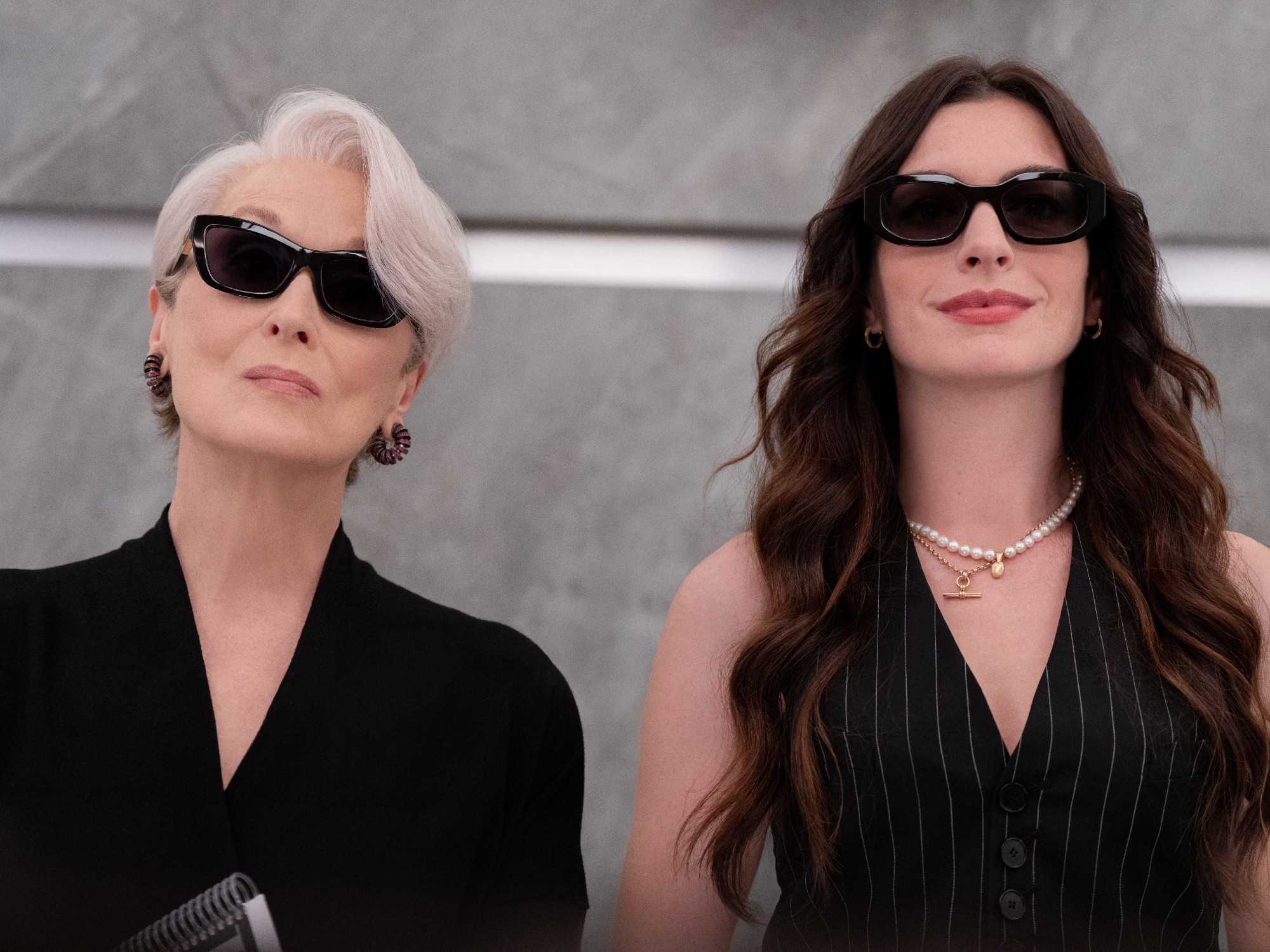
Anne Hathaway’s portrayal of Andrea "Andy" Sachs in The Devil Wears Prada (2006) serves as a definitive benchmark because of its nuanced emotional arc, physical transformation, and the rare technical ability to hold the screen against Meryl Streep. Decades later, her performance remains the standard for the "outsider-to-insider" narrative, blending relatability with professional precision.
The Evolution of Andrea Sachs: A Masterclass in Subtlety
The brilliance of Anne Hathaway’s performance in The Devil Wears Prada lies in its gradual, almost imperceptible shifts. While the film is often celebrated for its "makeover" montage, the true transformation happens in Hathaway’s eyes and posture. As we look back from the vantage point of 2026, it is clear that Hathaway did not just play a character who changed her clothes; she played a character whose entire worldview was restructured by the crucible of high-pressure corporate life.
In the first act, Hathaway portrays Andy with a specific type of intellectual arrogance. She is a Northwestern graduate who views fashion as "frivolous." Hathaway captures this through a slight slouch and a defensive, skeptical expression. This isn't just "bad styling"; it is a physical manifestation of Andy’s judgment toward the industry. When she laughs during the "Cerulean" monologue, Hathaway makes the mistake feel earned—it is the laugh of someone who believes they are superior to their surroundings.
As the film progresses, Hathaway’s physical performance tightens. Her movements become more efficient, and her facial expressions shift from confusion to a sharp, guarded alertness. This "technical evolution" is what makes the performance a benchmark. She demonstrates how a high-stakes environment can polish a person while simultaneously eroding their personal identity. By the time Andy reaches Paris, Hathaway’s poise is indistinguishable from the "Clackers" she once mocked, making the eventual realization of her loss of self all the more poignant.
Acting Against a Legend: The Hathaway-Streep Dynamic
One of the most challenging tasks for any young actor is sharing the majority of their screen time with a titan like Meryl Streep. In 2006, Streep was already a legend, and her portrayal of Miranda Priestly was destined for the history books. A lesser actor might have been overshadowed, disappearing into the background of Streep’s icy brilliance. However, Hathaway’s performance is a masterclass in "reactive acting."
Hathaway understands that for Miranda Priestly to be terrifying, the audience must see that terror reflected in Andy. She acts as the emotional surrogate for the viewer. Every time Miranda drops her coat or delivers a devastating critique, Hathaway’s micro-expressions—the tightening of the jaw, the quickening of her breath—validate Miranda’s power.
Furthermore, Hathaway manages to carve out a space for Andy’s own agency. In the scenes where the two characters are alone, such as the hotel room in Paris where Miranda is vulnerable about her divorce, Hathaway chooses restraint. She doesn't overact the sympathy; she shows a professional assistant who is stuck between human empathy and the realization that she is seeing a side of her boss she was never meant to see. This balance of power is what keeps the film grounded in reality rather than descending into a cartoonish "good vs. evil" dynamic.
The Technical Precision of Hathaway’s Craft
Analyzing Hathaway’s performance from a technical standpoint reveals why it has aged so much better than other mid-2000s protagonists. Her work in The Devil Wears Prada relies heavily on vocal modulation and timing.
Vocal Arc
At the start of the film, Andy’s voice is higher, faster, and more prone to rambling. She tries to explain herself. As she becomes more competent under Miranda’s tutelage, Hathaway lowers the register of her voice and speaks with more brevity. She stops "asking" for space in the room and starts "taking" it. This vocal maturity mirrors the character’s professional growth.
Physical Comedy and Grace
Hathaway has a background in physical theater, which she utilizes effectively here. The "clumsiness" of early Andy is not slapstick; it is the discomfort of someone who doesn't fit the "look" of their environment. Contrast this with the scene where she effortlessly navigates a gala, feeding Miranda names and details with surgical precision. Hathaway’s ability to transition from a "fumbling girl" to a "high-powered executive" without it feeling like a different character is a testament to her technical consistency.
Why the Performance Remains a Benchmark in 2026
As of 2026, the film industry has seen countless iterations of the "internship from hell" or "fashion world" tropes. Yet, Hathaway’s Andy remains the gold standard. There are several reasons why this performance has outlived its contemporaries:
- Authenticity of Ambition: Hathaway doesn't play Andy as a victim. She plays her as someone who is seduced by power. This makes the performance more complex. We see the sparkle in her eyes when she gets the free designer clothes and the pride she feels when she outmaneuvers Emily (Emily Blunt).
- Relatability of the "First Job" Struggle: Almost everyone has had a boss like Miranda or a job that demanded too much. Hathaway taps into the universal anxiety of wanting to succeed while fearing that the cost of success is too high.
- The Silent Narrative: Much of Hathaway’s best work in the film happens when she isn't speaking. The final scene, where she looks at Miranda from across the street and gives a simple, knowing nod, carries the weight of the entire movie. It is a performance of closure rather than triumph.
Comparative Analysis: The "Career Transformation" Arc
To understand why Hathaway’s performance is a benchmark, it is helpful to compare Andy Sachs with other iconic "career-focused" protagonists in cinema.
| Character | Film | Nature of Transformation | Hathaway’s "Prada" Difference |
|---|---|---|---|
| Tess McGill | Working Girl (1988) | Underdog uses deception to climb the corporate ladder. | Andy doesn't use deception; she adapts her soul to fit a pre-existing mold. |
| Andrea Sachs | The Devil Wears Prada | Intellectual outsider is "refined" by a toxic workplace. | The performance emphasizes the loss of identity over the gain of status. |
| Ben Whittaker | The Intern (2015) | Retired executive teaches a young CEO about work-life balance. | Hathaway (playing the CEO) uses her "Prada" experience to play the "Miranda" role with more empathy. |
| Joe Gardner | Soul (2020) | A musician learns that his career is not his entire life. | The transformation is metaphysical, whereas Hathaway’s is grounded in social and professional realism. |
The Cultural Impact and 2026 Perspective
In the two decades since the film’s release, the discourse surrounding The Devil Wears Prada has shifted. In 2026, many viewers look at Andy’s boyfriend, Nate, and her friends as the actual "villains" of the story for not supporting her career growth. Hathaway’s performance is the reason this debate even exists.
Because Hathaway played Andy with such competence and drive, modern audiences see a woman who was simply doing her job well. If Hathaway had played Andy as a helpless victim, the "Nate vs. Andy" debate would have no legs. It is Hathaway’s portrayal of a woman discovering her own potential—and liking it—that makes the conflict so enduring. She wasn't just "surviving" Miranda Priestly; she was learning to be her, and that nuance is what makes the performance a piece of high art.
Hathaway’s performance also laid the groundwork for her future Oscar-winning career. The vulnerability she displayed in The Devil Wears Prada can be seen in a more raw form in Rachel Getting Married and eventually in her legendary turn as Fantine in Les Misérables. However, Andy Sachs remains her most "complete" character study in terms of commercial appeal and technical execution.
Common Misconceptions About Hathaway’s Role
Despite the film’s popularity, certain aspects of Hathaway’s performance are often misunderstood.
The "Villain" Discourse
Many believe Andy was a "sell-out." However, Hathaway’s performance suggests something different. She portrays Andy as a "survivor." The benchmark is not that she became a fashionista, but that she learned the "language" of power. Hathaway shows us that Andy didn't lose herself; she found a version of herself that was stronger, even if she eventually chose to walk away from it.
The Ease of the Role
There is a misconception that playing the "straight man" to Meryl Streep’s "eccentric boss" is easy. On the contrary, the straight man is the most difficult role in a comedy-drama. Without Hathaway’s grounded, realistic reactions, the movie would have floated away into fashion-fantasy. She provides the emotional "weight" that keeps the audience invested in the stakes.
Frequently Asked Questions
Why is Anne Hathaway's performance considered a "benchmark"?
It is considered a benchmark because it perfected the "fish out of water" archetype. Hathaway balanced the comedy of the situation with a very real, grounded emotional stakes, making the character’s professional journey feel as important as a life-or-death thriller.
How did Hathaway prepare for the role of Andy Sachs?
Hathaway famously spent time as an intern at an auction house to understand the "assistant" lifestyle. She focused on the physical toll of the job—the constant running, the multitasking, and the psychological pressure of never being able to say "no."
Did Anne Hathaway do her own stunts in the fashion sequences?
While not "stunts" in the traditional sense, the physical demands of wearing high heels and restrictive couture while performing fast-paced dialogue and movement were significant. Hathaway has spoken about the technical difficulty of maintaining the "Andy poise" while in physical discomfort.
What does the 2026 retrospective say about Andy’s character?
Modern critics in 2026 emphasize the "professional agency" Hathaway brought to the role. Instead of a girl who just "got lucky" with a makeover, she is seen as a high-performing employee who successfully navigated a toxic workplace, making her a precursor to the modern "career-pivot" narrative.
How does this role compare to Hathaway’s other work?
While Les Misérables won her an Oscar, many critics argue The Devil Wears Prada is her most influential performance. It established her as a leading lady who could carry a major studio film while holding her own against the greatest actors of the era.
Final Recommendation: A Lesson in Professional Evolution
For aspiring actors or film students, studying Anne Hathaway in The Devil Wears Prada is essential. Focus specifically on her reaction shots. Notice how she says more with a sigh or a look of frustration than she does with a page of dialogue. For professionals in any field, the performance serves as a reminder that adapting to an environment is a skill, but knowing when you have adapted "too much" is an art.
If you are revisiting the film in 2026, pay close attention to the scene in the limousine in Paris. Watch the way Hathaway’s expression shifts from pride in her own cleverness to the sudden, chilling realization that she has become the very person she once feared. It is that specific moment of clarity—delivered without a single word—that cements this performance as a permanent benchmark in cinematic history.