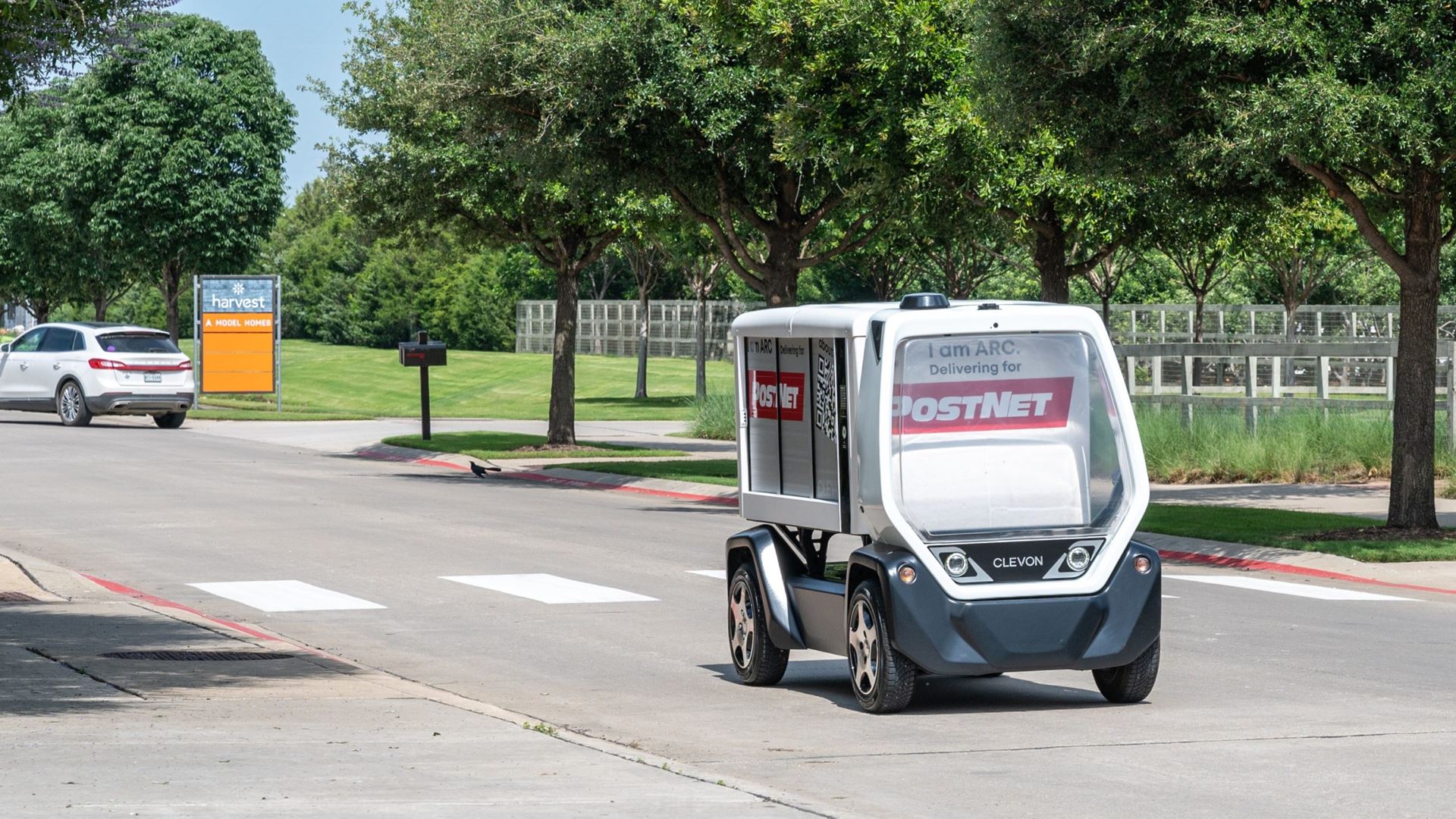
Refraction AI, led by CEO Andrew Farah, is a Michigan-based startup that has redefined last-mile logistics through its REV-1 autonomous delivery robot. Operating primarily in the "Goldilocks zone" of the bike lane, the company leverages Detroit’s deep automotive engineering heritage to provide low-cost, all-weather autonomous solutions for urban goods movement in 2026.
The Genesis of Refraction AI: Merging Robotics with the Motor City
The narrative of autonomous delivery often centers on Silicon Valley, but the emergence of Refraction AI shifted the focus back to the American Midwest. Founded by University of Michigan professors Matthew Johnson-Roberson and Ram Vasudevan, and scaled under the leadership of CEO Andrew Farah, the startup was born from a need to solve the "last-mile" problem—the most expensive and inefficient segment of the supply chain.
By 2026, the Detroit startup ecosystem has transitioned from traditional internal combustion manufacturing to a hub of "Software-Defined Vehicles" and robotics. Refraction AI stands as a primary example of this evolution. Unlike competitors that focused on sidewalk-crawling bots or full-sized autonomous vans, Farah and his team identified a regulatory and operational vacuum: the bike lane. This strategic choice allowed the startup to avoid the pedestrian congestion of sidewalks and the high-speed risks of main traffic lanes.
The company’s growth trajectory has been defined by its commitment to "frugal engineering." While many autonomous vehicle (AV) firms spent billions on high-end LIDAR and massive compute stacks, Refraction AI focused on a sensor suite that was "good enough" to navigate safely at moderate speeds (12–15 mph), significantly lowering the barrier to entry for local merchants and national franchises alike.
The REV-1: Technical Specifications and Design Philosophy
The cornerstone of Refraction AI’s success is the REV-1, a three-wheeled autonomous robot designed specifically for the rigors of urban delivery. In 2026, the REV-1 has undergone several iterations, refining its ability to handle the unpredictable infrastructure of cities like Detroit, Ann Arbor, and Austin.
Dimensions and Cargo Capacity
The REV-1 is roughly the size of a moped, standing five feet tall and four feet long. This footprint is intentional. It is large enough to carry approximately 16 cubic feet of cargo—roughly six to eight bags of groceries—yet narrow enough to operate comfortably within standard bike lanes. The internal compartment is modular, allowing for temperature-controlled segments that keep groceries cold and prepared meals hot simultaneously.
Sensor Suite and Perception
To maintain cost-effectiveness, the REV-1 utilizes a "vision-first" approach. In 2026, the sensor stack includes:
- 12 High-Definition Cameras: Providing a 360-degree field of view with overlapping coverage to eliminate blind spots.
- Opaque and Solid-State LIDAR: Used for short-range obstacle detection and depth verification in low-light conditions.
- Ultrasonic Sensors: Positioned at the base for curb detection and proximity alerts.
- Radar: Essential for detecting high-speed objects (like cars) approaching from the rear or side.
Braking and Stability
Safety in the bike lane requires exceptional stopping power. The REV-1 is engineered with a short braking distance, capable of coming to a full stop from its top speed of 15 mph in less than five feet. The three-wheel configuration provides the necessary stability to navigate potholes, debris, and uneven pavement—common challenges in Midwestern urban environments—without the tipping risks associated with narrower, two-wheeled designs.
Solving the Last-Mile Problem: The Economics of 2026
The primary driver behind the adoption of Refraction AI’s technology is the radical reduction in delivery costs. Traditionally, last-mile delivery represents up to 50% of the total shipping cost of a product. In 2026, labor shortages and rising fuel costs have pushed the price of a human-driven delivery to $10–$15 per trip in many urban centers.
Refraction AI has successfully brought this cost down to a range of $3 to $4 per delivery. This is achieved through several operational efficiencies:
- Lower Energy Consumption: The REV-1 is fully electric and significantly lighter than a 4,000-pound sedan, requiring a fraction of the kilowatt-hours per mile.
- Remote Supervision: Rather than a driver in every vehicle, Refraction AI utilizes a "teleoperation" model. A single human supervisor in a Detroit-based control center can monitor a fleet of up to 20 robots, intervening only when a robot encounters a scenario it cannot navigate autonomously.
- Reduced Insurance Premiums: Due to its lower mass and lower speeds, the REV-1 poses a significantly lower risk to public safety than a delivery van, leading to more favorable insurance structures for the startup and its partners.
The "Detroit Advantage": Navigating Weather and Infrastructure
One of the most significant technical hurdles for autonomous delivery is weather—specifically snow and rain. Many sidewalk robots struggle with even a few inches of snow, as their small wheels lose traction and their sensors become obscured.
Andrew Farah has frequently emphasized that Refraction AI’s Detroit roots provided a unique testing ground. The REV-1 was designed from day one to operate in Michigan winters. Its larger wheels and pneumatic tires allow it to plow through slush and navigate snowy bike lanes that would immobilize smaller bots. Furthermore, the company developed proprietary machine learning models trained specifically on "noisy" sensor data caused by falling snow and heavy rain, ensuring that the perception system remains reliable even when visibility is poor.
| Feature | Refraction AI (REV-1) | Sidewalk Robots (e.g., Starship) | Full-Size AVs (e.g., Nuro R2) |
|---|---|---|---|
| Primary Path | Bike Lanes | Sidewalks | Public Roads |
| Max Speed | 15 mph | 4 mph | 25-45 mph |
| Cargo Volume | 16 cu ft | 0.5 - 1 cu ft | 22+ cu ft |
| Weather Rating | High (All-weather) | Low (Fair weather) | Moderate/High |
| Weight | ~100 - 150 lbs | ~50 lbs | 2,500+ lbs |
| 2026 Cost/Delivery | $3.00 - $4.00 | $2.00 - $3.00 | $5.00 - $8.00 |
Operational Integration: How Businesses Use Refraction AI
In 2026, integrating autonomous delivery into a retail or restaurant workflow has become streamlined. Refraction AI provides a "Delivery-as-a-Service" (DaaS) model, which allows businesses to avoid the capital expenditure of purchasing robots.
Onboarding and Logistics
When a restaurant or grocery store partners with Refraction AI, they are integrated into the company’s dispatch platform. When an order is placed, a REV-1 is dispatched to the store’s designated loading zone. Store employees enter a unique code on the robot’s touchscreen to unlock the compartment, place the items inside, and confirm the departure.
The Customer Experience
The end-user receives a notification with a tracking link, similar to traditional delivery apps. Once the REV-1 arrives at the curb or the entrance of the customer's building, the customer receives a text with a one-time pick-up code. They enter the code, retrieve their items, and the robot proceeds to its next destination or returns to its hub for recharging.
Maintenance and Charging
Refraction AI operates "hubs" throughout its service areas. These hubs serve as docking stations where robots are cleaned, their batteries are swapped or charged, and preventative maintenance is performed. By 2026, the company has implemented automated battery-swapping stations, reducing the downtime of a single unit to less than five minutes.
Regulatory Landscape and Community Impact
Navigating the legal framework of autonomous delivery requires a nuanced approach to local and state laws. Michigan has been a pioneer in this regard, passing legislation that allows for the testing and operation of autonomous vehicles without a human driver present.
However, the use of bike lanes remains a point of discussion. Refraction AI has worked closely with city planners to ensure that the REV-1 does not obstruct cyclists. In 2026, the company uses "V2X" (Vehicle-to-Everything) communication to interact with smart city infrastructure, such as traffic lights and pedestrian sensors, to optimize flow and safety.
The impact on the local workforce is also a critical consideration. While the REV-1 automates the driving portion of the delivery, it creates new roles in teleoperation, fleet maintenance, and logistics management. Andrew Farah’s vision for the company includes a commitment to keeping these "new collar" jobs within the Detroit metropolitan area, reinforcing the city's status as a leader in mobility innovation.
Technical Challenges and 2026 Solutions
Despite its success, Refraction AI faces ongoing technical challenges that require constant iteration:
- Connectivity Dead Zones: In 2026, while 5G and 6G coverage is extensive, "urban canyons" can still cause signal drops. The REV-1 is equipped with enhanced edge-computing capabilities, allowing it to continue safe operation and execute a "safe stop" or return-to-route protocol even if it loses contact with the teleoperation center.
- Vandalism and Theft: Protecting the cargo and the robot itself is a priority. The REV-1 features internal and external alarms, GPS tracking, and a series of cameras that record all interactions. In 2026, theft rates for autonomous delivery bots have remained remarkably low due to these deterrents and the difficulty of reselling specialized robotic components.
- Predicting Human Behavior: The most complex task for the REV-1’s AI is predicting the actions of distracted drivers or unpredictable pedestrians. The startup utilizes deep reinforcement learning to train its bots on millions of miles of simulated and real-world interactions, focusing specifically on "edge cases" like a ball rolling into the street or a cyclist making an unsignaled turn.
The Future of Refraction AI Beyond 2026
As we look past 2026, the trajectory for Refraction AI involves geographic expansion and vertical integration. While the Midwest remains its heart, the company has begun licensing its platform to international partners in Europe and Asia, where bike lane infrastructure is often more robust than in the United States.
Furthermore, there is potential for the REV-1 platform to expand beyond food and grocery delivery. Possibilities include medical supply transport between hospital campuses, "last-yard" delivery for major couriers like FedEx or UPS, and even mobile waste collection. The flexibility of the REV-1's modular design makes it a versatile tool for the evolving smart city.
Frequently Asked Questions
How does the REV-1 handle steep hills or rough terrain? The REV-1 is designed with a high-torque electric motor and a low center of gravity. In 2026, it can navigate inclines up to a 10% grade comfortably. Its pneumatic tires and suspension system are specifically tuned to absorb the shock of cracked pavement and gravel, which are common in older urban infrastructures.
What happens if a REV-1 gets stuck or encounters a blocked bike lane? The robot is programmed to attempt a safe bypass if there is enough clearance. If the path is entirely blocked (e.g., by a parked car), the REV-1 will stop and alert a teleoperator. The human supervisor can then "see" through the robot's cameras and manually navigate it around the obstacle or coordinate with local authorities if necessary.
Is autonomous delivery safe for pedestrians and cyclists? Yes. The REV-1 weighs significantly less than a car and operates at speeds comparable to a casual cyclist. Its primary safety feature is its "passive safety" design—it is lightweight and made of materials designed to yield upon impact. Moreover, its perception system is biased toward extreme caution, often stopping well in advance of any potential collision.
Can the REV-1 operate at night? Absolutely. The REV-1 uses a combination of thermal imaging and high-sensitivity cameras, along with active lighting, to ensure it can "see" and "be seen" in total darkness. In fact, night-time deliveries are often more efficient due to lower traffic volume in bike lanes.
Practical Recommendations for Businesses
For merchants considering a transition to autonomous delivery with Refraction AI, the following steps are recommended:
- Analyze Delivery Density: Autonomous bots are most efficient in high-density areas with a high volume of orders within a 3–5 mile radius.
- Evaluate Infrastructure: Ensure your location has easy access to bike lanes or low-speed secondary roads where the REV-1 can operate legally and safely.
- Prepare the Loading Zone: Designate a specific "bot-loading" area near your exit to minimize the time employees spend taking orders to the vehicle.
- Monitor Customer Feedback: Early adoption of robotics can be a marketing advantage, but ensure your customers understand how to interact with the bot to ensure a positive experience.
Refraction AI represents more than just a robotics company; it is a testament to Detroit’s ability to reinvent itself. Under the guidance of Andrew Farah and his team, the startup has proven that the future of delivery isn't just about flying drones or high-speed vans—it's about finding the right-sized solution for the streets we already have.