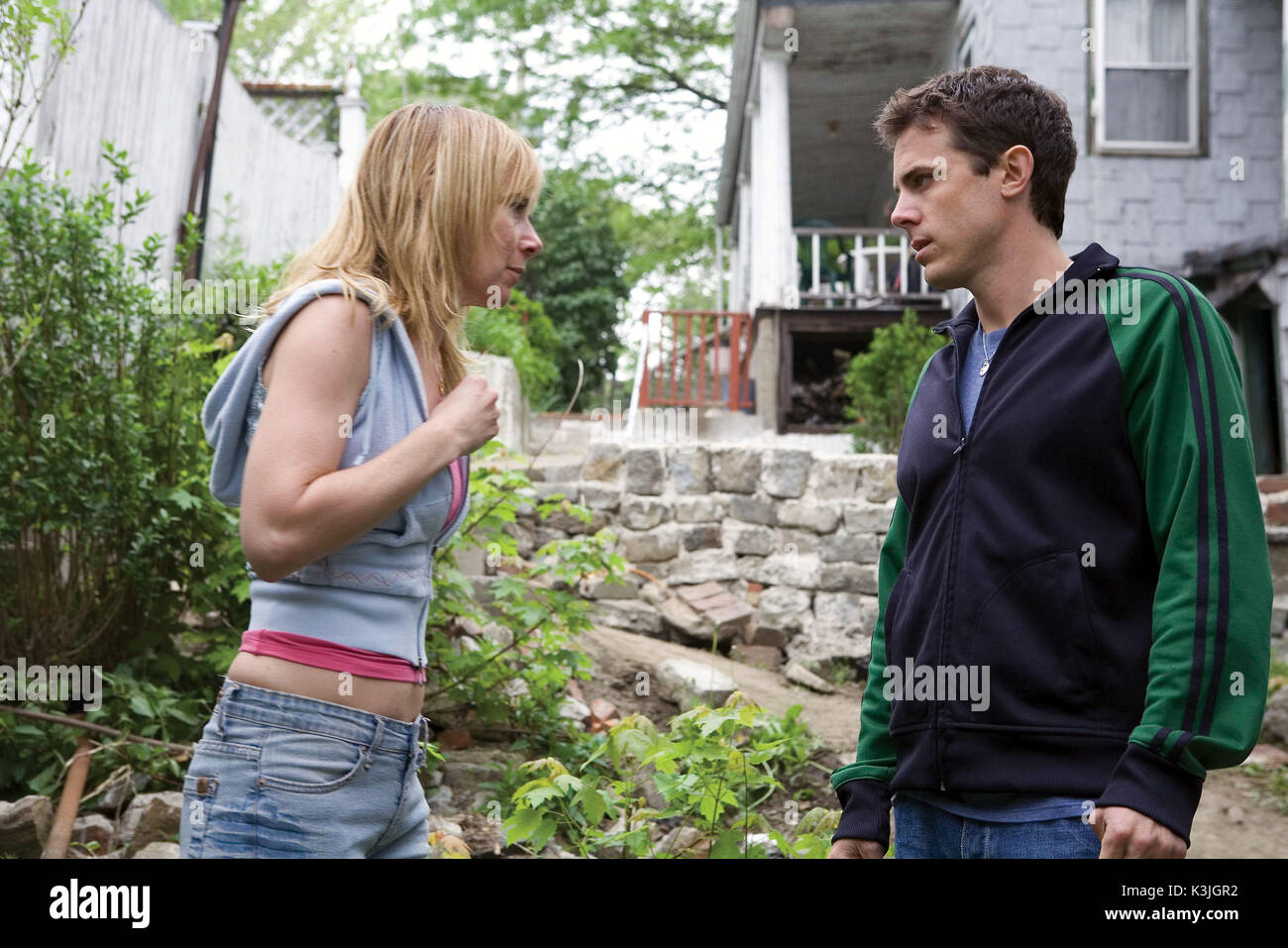
Amy Ryan’s portrayal of Helene McCready in the 2007 film Gone Baby Gone stands as a definitive example of transformative character acting, earning her widespread critical acclaim and an Academy Award nomination for Best Supporting Actress. Directed by Ben Affleck and based on the novel by Dennis Lehane, the film explores the dark underbelly of Boston’s Dorchester neighborhood. Ryan’s performance anchors the narrative, providing the necessary moral complexity that forces audiences to confront the harrowing ethical dilemmas posed by the script.
The Context and Significance of Helene McCready
In Gone Baby Gone, the plot centers on the abduction of a young girl named Amanda McCready. Amy Ryan plays Helene, the child’s mother, who is portrayed not as a sympathetic victim, but as a deeply flawed, neglectful, and substance-dependent individual. This departure from the typical "grieving mother" archetype was essential for the film’s narrative to function.
The film serves as a neo-noir mystery, but it is fundamentally a moral inquiry. By creating a mother figure who is arguably an unfit parent, the filmmakers force the audience to question whether Amanda is actually better off being raised by her biological mother or by the private investigators who eventually discover her. Ryan’s ability to portray Helene with a mixture of raw vulnerability, defensive hostility, and genuine, albeit stunted, maternal instinct creates a character who is impossible to dismiss.
Character Development and Performance Nuance
Amy Ryan approached the role of Helene McCready with a commitment to authenticity that avoided the caricatures often associated with depictions of poverty or addiction in cinema. Her performance is characterized by:
- Subtle Physicality: Ryan adopts a specific cadence and posture that suggests a woman worn down by her environment. Her movements are often frantic or defensive, mirroring her unstable internal state.
- Vocal Delivery: The use of a thick, authentic Boston accent serves to ground the character in the specific geography of the film. It isn’t merely a stylistic choice; it represents a socioeconomic identity that informs every decision Helene makes.
- Emotional Duality: Perhaps the most difficult aspect of the performance is balancing Helene’s selfishness with her grief. Ryan succeeds by showing that Helene’s love for her daughter, however distorted by her lifestyle, is the only genuine tether she has to the world.
The Role of the Supporting Actor in Moral Dramas
When discussing performances like Ryan’s in Gone Baby Gone, it is important to understand the role of the supporting actor in driving thematic tension. In many thrillers, the supporting cast is used primarily for exposition or as plot devices. In this film, however, the supporting characters—specifically the mothers, aunts, and neighborhood figures—are the thematic core.
The audience’s shifting perception of Helene is the primary vehicle for the film’s moral ambiguity. If Helene had been portrayed as a "perfect" mother, the choice at the end of the movie would be simple. By making Helene a complex, damaged human being, the film forces the audience to weigh the value of a biological connection against the promise of a stable, safe upbringing. Ryan’s ability to oscillate between appearing like a villain and a victim is what makes the final act of the movie so profoundly uncomfortable.
Critical Reception and Award Recognition
The critical consensus upon the film’s release in 2007 was overwhelmingly positive, with specific praise frequently directed at Amy Ryan. The following table illustrates the scope of recognition she received for the role:
| Awarding Body | Category | Result |
|---|---|---|
| Academy Awards | Best Supporting Actress | Nominated |
| Golden Globe Awards | Best Supporting Actress – Motion Picture | Nominated |
| Screen Actors Guild | Outstanding Performance by a Female Actor | Nominated |
| Broadcast Film Critics | Best Supporting Actress | Won |
| National Board of Review | Best Supporting Actress | Won |
These accolades underscore that her performance was not merely seen as a "good" turn, but as a masterclass in character work. The awards season buzz highlighted a shift in how the industry recognized performances that were grounded in gritty realism rather than traditional, audience-friendly tropes.
Analyzing the Impact of the "Gone Baby Gone" Narrative
To understand the weight of Amy Ryan’s contribution, one must look at the structural requirements of the screenplay. Ben Affleck’s direction relies on a documentary-style realism. The cinematography, the casting of local non-actors in background roles, and the stark depiction of Boston neighborhoods demand that the principal cast does not "stand out" as actors, but rather integrates into the environment.
Ryan’s performance is the bridge between the professional cast and the environment of Dorchester. Because her portrayal feels so grounded in the setting, the audience accepts the central premise of the film without doubting the reality of the stakes. If the character of the mother had felt staged or overly dramatized, the detective story would have collapsed into melodrama. Instead, the film remains a grounded, haunting piece of social commentary.
Comparison to Other Character Studies
It is useful to compare Helene McCready to other notable performances of the era to understand the technical depth required for the role.
- The "Addict" Archetype: Many actors rely on visible shaking or obvious "acting choices" when portraying addiction. Ryan opts for a more internal approach, where the addiction is part of the character’s fabric rather than her only defining trait.
- The "Working Class" Archetype: Often, films depict blue-collar characters with a patronizing, "salt-of-the-earth" veneer. Ryan avoids this by showing the frustration and anger that can arise from systemic poverty, refusing to make Helene a noble sufferer.
By refusing to solicit the audience’s sympathy, Ryan earns it anyway. This is a common hallmark of high-level acting—the moment a performer stops trying to make the audience "like" their character is often the moment they become truly compelling.
Frequently Asked Questions
Did Amy Ryan base her performance in Gone Baby Gone on a specific real-life person? While Ryan has discussed in interviews that she spent time in the Boston area to absorb the local culture and dialect, she did not base the character of Helene on a single specific individual. Instead, she utilized the observations she made regarding the social dynamics of the neighborhood to build a composite character that felt authentic to the specific setting of Dorchester.
Why was the performance of Helene McCready so polarizing for the audience? Helene is intentionally written as a morally complex character. The audience is torn because, while she is the victim of a kidnapping, her behavior—including her neglectful parenting and her involvement in the criminal underworld—makes her an unlikable protagonist. Ryan’s performance captures this duality, leaving the audience conflicted about whether to root for her reunification with her daughter.
How did the director, Ben Affleck, work with Amy Ryan to achieve such a raw performance? Affleck’s approach to the production was highly collaborative. He encouraged his cast to immerse themselves in the local setting, often using local residents as extras to create an environment that felt lived-in. By fostering a set environment that favored naturalism over polished perfection, he allowed Ryan the freedom to experiment with the more abrasive aspects of the character without the pressure of "softening" her for mass-market appeal.
Is Gone Baby Gone considered a career-defining role for Amy Ryan? Yes, while Amy Ryan has had a prolific career in both theater and television, her role in Gone Baby Gone is widely cited as her breakout performance in major motion pictures. The critical acclaim and the subsequent Oscar nomination significantly elevated her profile in Hollywood, transitioning her from a respected character actor to a household name and a choice for more complex, lead-adjacent roles.
What technical skills did Ryan employ to master the specific Boston accent? Ryan worked with dialect coaches to ensure the accent was not a caricature. The "Boston accent" is often parodied in media, but in Gone Baby Gone, the goal was regional accuracy specific to South Boston/Dorchester. Ryan focused on vowel shifts and the specific cadence of the working class, which required a high level of linguistic precision to maintain throughout a long shoot schedule.
Practical Guidance for Film Analysis
For those studying performance or cinema, the role of Helene McCready serves as an excellent case study in "active listening" and "reactive performance." In scenes where she is not speaking, Ryan remains entirely in character, reacting to the police investigations with a mixture of authentic panic and defensive arrogance.
When analyzing the film, pay close attention to:
- Eye Contact: Note how often she refuses to meet the eyes of the detectives, signaling her dishonesty or her shame.
- Personal Space: Observe how she interacts with the private investigators; she constantly shifts the boundaries of physical space to maintain control in a situation where she has lost her power.
- The Power Dynamics: Track how her attitude changes depending on whether she is talking to the police or her neighbors. This indicates the layers of survival instinct that define her character.
As you explore the film, consider how the performance would change if another actor were in the role. It is a testament to Ryan’s work that the film now feels inseparable from her specific choices. Her contribution to Gone Baby Gone remains a standard for how to portray complex, deeply flawed characters with empathy and rigorous detail.