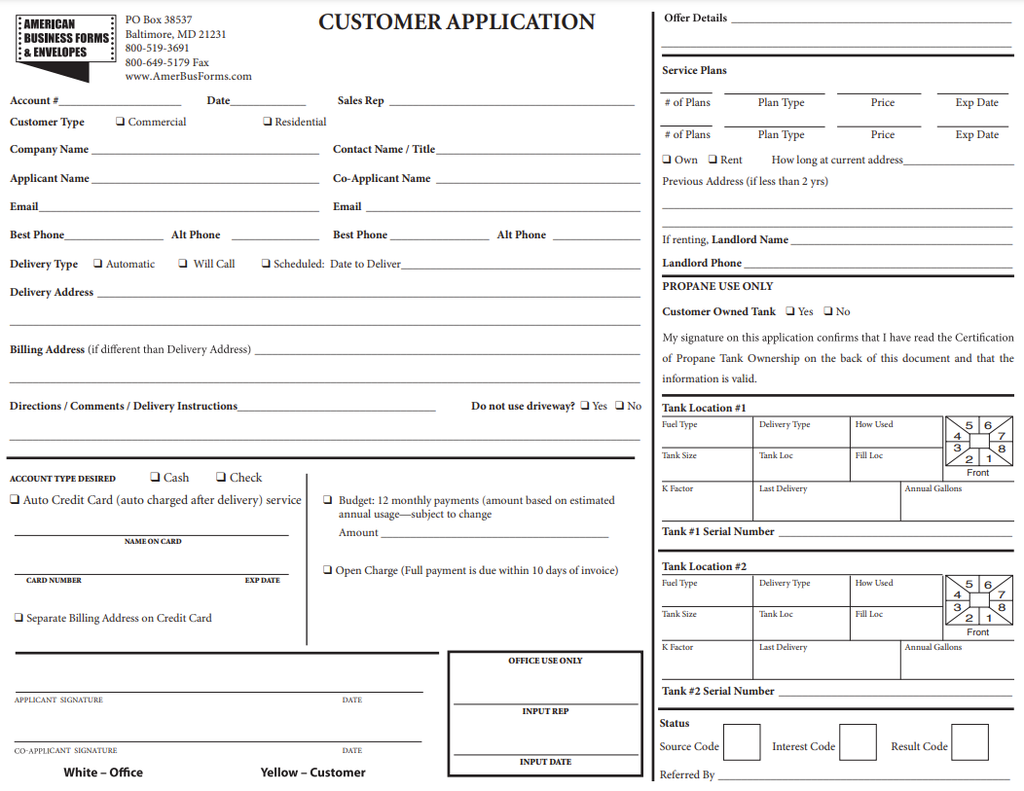
American business forms are the essential legal and administrative documents used to establish, govern, and report the activities of a United States commercial entity. These range from federal tax filings and employment eligibility verifications to state-level incorporation papers and internal operating agreements, ensuring regulatory compliance and legal protection.
In the complex landscape of 2026 commerce, maintaining a systematic approach to business documentation is not merely a clerical requirement; it is a fundamental pillar of risk management. Whether you are operating as a sole proprietor or managing a scaling corporation, the specific forms you file with federal, state, and local agencies define your legal standing, your tax liabilities, and your ability to hire and retain talent. This overview provides a comprehensive look at the critical forms required for modern American business operations, focusing on formation, employment, taxation, and internal governance.
The Hierarchy of American Business Documentation
Navigating the sea of paperwork requires an understanding of the three primary jurisdictions: federal, state, and local. Each level of government has its own set of requirements, often overlapping in their demand for information but differing in their ultimate purpose.
At the federal level, the primary focus is on taxation (the IRS), employment eligibility (USCIS), and anti-money laundering transparency (FinCEN). At the state level, the focus shifts to the legal existence of the entity and its right to conduct business within that specific geography. Local levels—including counties and cities—typically focus on specialized permits, professional licensing, and zoning compliance.
Failing to distinguish between these layers often leads to the most common administrative errors, such as a business owner believing that obtaining a federal Employer Identification Number (EIN) automatically registers their business name at the state level. In reality, these are distinct actions requiring separate forms and independent filing fees.
Formation and Initial Registration Forms
The birth of an American business is marked by the filing of specific formation documents. These documents vary based on the chosen legal structure, which dictates the level of personal liability protection and the method of taxation.
Articles of Incorporation and Articles of Organization
For those forming a Corporation, the Articles of Incorporation must be filed with the Secretary of State (or equivalent office) in the state where the business is headquartered or incorporated (such as Delaware). For a Limited Liability Company (LLC), the equivalent document is the Articles of Organization.
These forms generally require:
- The legal name of the entity.
- The name and address of the Registered Agent (the individual or service authorized to receive legal documents on behalf of the company).
- The names of the incorporators or organizers.
- The duration of the company (usually perpetual).
- The business purpose (often stated broadly to allow for operational flexibility).
Form SS-4: Application for Employer Identification Number (EIN)
Managed by the Internal Revenue Service (IRS), the Form SS-4 is perhaps the most universally used business form in the United States. The EIN acts as a social security number for the business. It is required for opening a business bank account, applying for business licenses, and filing tax returns. Even if a sole proprietor does not plan to hire employees, obtaining an EIN is a practical step to avoid using a personal Social Security Number on commercial documents, thereby reducing the risk of identity theft.
FinCEN Beneficial Ownership Information (BOI) Report
As of 2026, the Beneficial Ownership Information (BOI) Report is a standard compliance requirement for nearly all small and mid-sized businesses. Under the Corporate Transparency Act, most entities must file this report with the Financial Crimes Enforcement Network (FinCEN).
The form identifies the individuals who ultimately own or control the company. This is not a tax filing but a security measure aimed at preventing money laundering and anonymous shell company abuse. Most businesses created before 2024 have already fulfilled this requirement, but any entity formed in 2026 must typically file within 30 to 90 days of formation, depending on current FinCEN regulations.
Essential Employment and Labor Forms
Once a business moves beyond a single-member operation, the complexity of business forms increases exponentially. Federal law requires specific documentation for every individual performing work for the company.
Form I-9: Employment Eligibility Verification
Every employer in the U.S. must ensure that every employee hired is legally authorized to work. The Form I-9 is the mechanism for this verification. In 2026, many employers utilize the digital version of this form in conjunction with the E-Verify system. The form requires the employee to provide documentation of their identity and work authorization, which the employer must physically or virtually (under specific authorized programs) inspect. It is crucial to note that the I-9 should not be filed with the government; rather, it must be retained by the employer for three years after the date of hire or one year after employment is terminated, whichever is later.
Form W-4: Employee's Withholding Certificate
The Form W-4 tells the employer how much federal income tax to withhold from an employee's pay. Because tax laws and personal circumstances change, employees are encouraged to submit a new W-4 whenever their financial situation evolves. Employers are responsible for implementing these changes into their payroll systems to ensure accurate tax collection.
Form W-2 and Form 1099-NEC
At the end of the fiscal year, businesses must report the compensation paid to their workers.
- Form W-2: Issued to employees where the company has withheld taxes.
- Form 1099-NEC: Used to report non-employee compensation, typically paid to independent contractors and freelancers.
The distinction between an employee and a contractor is a major area of audit for both the IRS and state labor departments. Incorrectly using a 1099 form for someone who legally qualifies as an employee can lead to significant penalties and back-tax liabilities.
Internal Governance and Operational Forms
While government-mandated forms are necessary for compliance, internal forms are necessary for protection. These documents define the relationship between owners and the operational rules of the company.
Operating Agreements and Bylaws
An Operating Agreement (for LLCs) or Corporate Bylaws (for Corporations) functions as the "constitution" of the business. Although some states do not strictly require these to be filed with the Secretary of State, they are indispensable "American business forms" in a practical sense. They outline:
- Voting rights and percentage of ownership.
- Protocols for adding or removing members/shareholders.
- How profits and losses are distributed.
- The process for dissolving the company.
Without these forms, a business is subject to the "default" rules of the state, which may not align with the owners' intentions and often lead to protracted legal disputes.
Non-Disclosure Agreements (NDA) and Master Service Agreements (MSA)
In the daily course of business, standardized operational forms protect intellectual property and define client relationships. A practical overview of American business documentation must include the NDA, which ensures that trade secrets or client data remain confidential during negotiations. The MSA serves as a foundational contract that governs the long-term relationship between a business and its clients, allowing for specific projects to be defined later via Statements of Work (SOW).
Tax Compliance Forms by Entity Type
The IRS categorizes businesses not by their operational name, but by their tax classification. Choosing the right form is the difference between a smooth filing season and an expensive audit.
| Entity Type | Primary Income Tax Form | Frequency | Key Purpose |
|---|---|---|---|
| Sole Proprietorship | Form 1040 (Schedule C) | Annual | Reports business income on personal tax return. |
| Single-Member LLC | Form 1040 (Schedule C) | Annual | Default "disregarded entity" status for tax purposes. |
| Partnership / Multi-member LLC | Form 1065 | Annual | Information return; profits "pass through" to partners via Schedule K-1. |
| C-Corporation | Form 1120 | Annual | The entity pays its own taxes at the corporate rate. |
| S-Corporation | Form 1120-S | Annual | Pass-through entity that avoids double taxation on dividends. |
| All Entities (with workers) | Form 941 | Quarterly | Reports Social Security, Medicare, and withheld income tax. |
Practical Management of Business Forms
In 2026, the physical "paper" form has largely been superseded by digital portals. However, the legal weight of these digital submissions remains identical to their paper predecessors. To manage these forms effectively, businesses should adopt the following best practices:
- Centralized Digital Repository: Store all filed formation documents, EIN confirmations, and annual reports in a secure, encrypted cloud environment. Physical copies should be kept in a fireproof safe.
- Compliance Calendar: Most American business forms have strict deadlines. For example, most states require an Annual Report or Biennial Statement to keep the company in good standing. Missing this filing can result in "administrative dissolution," where the state legally ends your company's existence.
- Regular Audits of Form I-9: Periodically review employee I-9 forms to ensure they are complete and that any expiring work authorizations have been re-verified.
- Registered Agent Services: Utilizing a professional registered agent service ensures that state forms and legal notices are received and processed promptly, even if the business owner is traveling or the office is closed.
Common Mistakes and How to Avoid Them
Even experienced entrepreneurs can stumble over the nuances of American business documentation. One frequent error is the failure to update the IRS and the Secretary of State when a business moves. If a Statement of Information or Change of Address form is not filed, the business may miss critical tax notices or legal summons.
Another common mistake is the "commingling" of forms. This occurs when a business owner signs a contract or a government form in their own name rather than as a representative of the company. To maintain the "corporate veil" (the legal shield that protects personal assets), all forms must be signed in a representative capacity (e.g., "John Doe, Manager of Acme LLC").
Finally, many business owners neglect Form 1099-NEC requirements for vendors. As of 2026, the IRS has increased its focus on the "gig economy" and independent contractor compliance. Ensuring you have a Form W-9 (Request for Taxpayer Identification Number) on file for every contractor before you pay them more than $600 is a critical operational safeguard.
Frequently Asked Questions
What is the difference between a W-9 and a 1099?
A Form W-9 is used to collect information (name, address, and TIN) from a contractor or vendor. You keep this for your records. A Form 1099-NEC is the form you actually file with the IRS and send to the contractor at the end of the year to report the total amount paid to them. Think of the W-9 as the "intake" form and the 1099 as the "reporting" form.
Do I need a new EIN if I change my business structure?
Generally, yes. If you transition from a sole proprietorship to a corporation or a partnership, the IRS typically requires you to apply for a new EIN because the legal entity has fundamentally changed. However, changing the name of your business while keeping the same structure usually only requires a notification form rather than a new EIN. Detailed guidelines can be found on the IRS website.
How long should I keep copies of my business tax forms?
The standard recommendation is to keep tax-related forms and supporting documentation for at least seven years. This covers the window during which the IRS can audit your returns for most common issues. However, formation documents (like Articles of Incorporation) and ownership records should be kept permanently.
Is the BOI report a one-time filing?
The initial Beneficial Ownership Information report is filed once, but you are legally required to file an updated report within 30 days if any information about the company or its beneficial owners changes. This includes changes in legal name, address, or the identity of the individuals who own or control 25% or more of the company.
What happens if I lose my EIN confirmation letter (CP 575)?
The CP 575 is the original letter sent by the IRS when your EIN was assigned. If lost, you cannot get a "duplicate" original, but you can request an EIN Verification Letter (147C) by calling the IRS Business & Specialty Tax Line. This 147C letter serves as official proof of your EIN for banks and vendors.
Are state-level "Doing Business As" (DBA) forms mandatory?
A DBA (or Fictitious Business Name) form is required if you are conducting business under a name other than the legal name registered with the state. For example, if "Smith Enterprises LLC" wants to open a shop called "Green Valley Cafe," they must file a DBA form. This ensures transparency so the public knows the actual legal entity behind a brand name.
Practical Recommendation
To maintain a healthy business in 2026, perform a document audit every six months. Verify that your Registered Agent address is current, ensure all new hires have completed their I-9s within three days of starting work, and check that your BOI report reflects your current ownership structure. Leveraging a digital compliance platform can automate these reminders, allowing you to focus on growth while the platform handles the recurring "American business forms" that keep the entity legally sound. For specific legal or tax advice, always consult with a qualified attorney or Certified Public Accountant (CPA) familiar with your jurisdiction’s latest requirements.