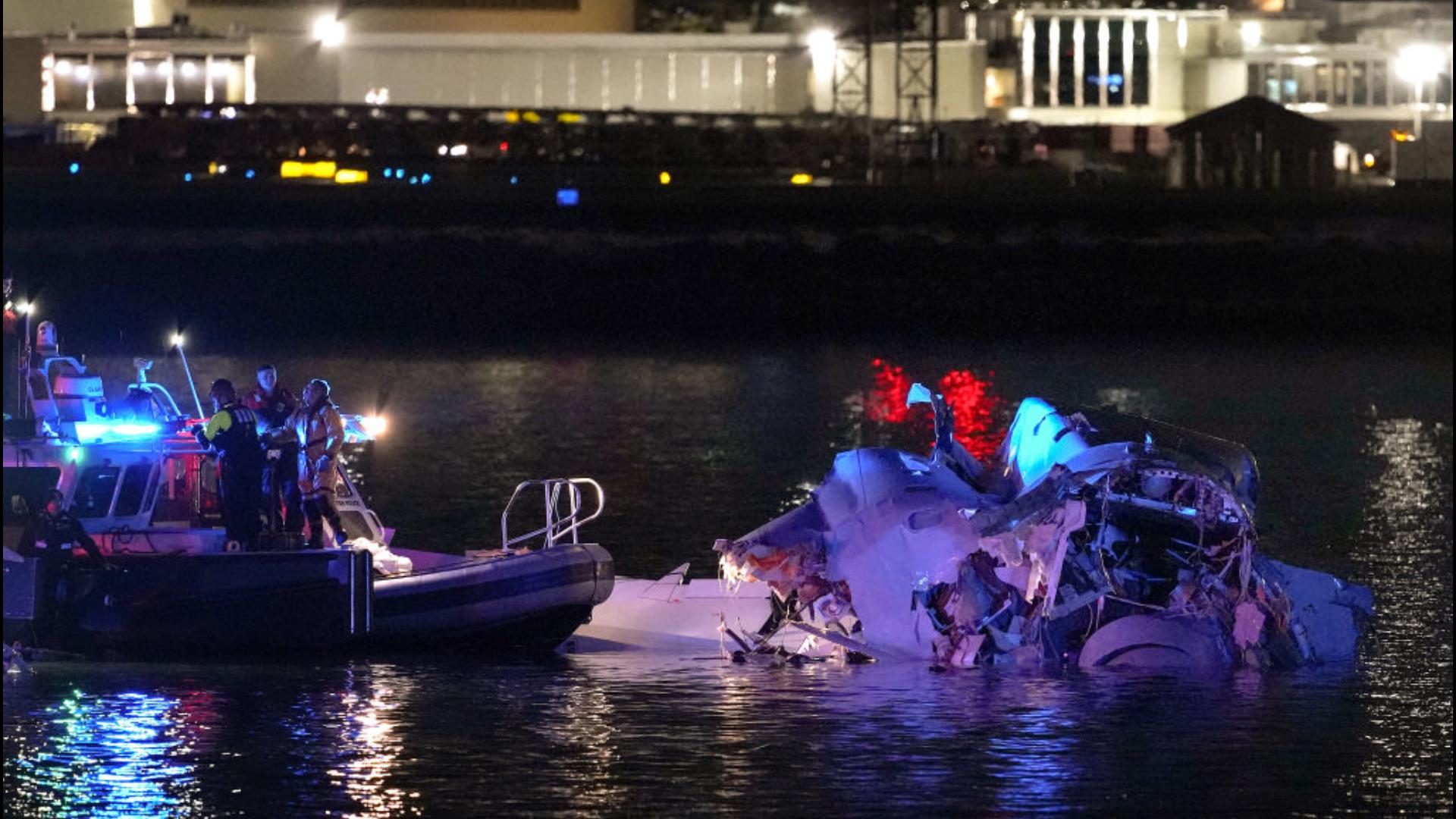
On March 1, 1962, American Airlines Flight 1, a Boeing 707-123B, crashed into the marshy waters of Jamaica Bay shortly after taking off from New York’s Idlewild Airport (now John F. Kennedy International). All 95 people on board perished in what was then the deadliest single-aircraft accident in United States history, caused by a mechanical failure in the rudder control system.
The disaster of American Airlines Flight 1 remains a pivotal moment in aviation history, serving as a catalyst for significant changes in aircraft maintenance, design, and investigative procedures. In 2026, as we look back 64 years after the event, the lessons learned from the murky waters of Jamaica Bay continue to underpin modern flight safety protocols. This article provides a comprehensive analysis of the flight’s final moments, the technical causes of the crash, the harrowing recovery efforts, and the long-term impact on the aviation industry.
The Final Moments of Flight 1
American Airlines Flight 1 was a regularly scheduled non-stop service from New York City to Los Angeles. On the morning of March 1, 1962, the aircraft, registered as N7506A and named "Flagship Oklahoma," was relatively new, having been delivered to the airline less than a month prior. The flight was commanded by Captain James Heist, a veteran pilot with over 18,000 hours of flight experience.
The aircraft pushed back from the gate at Idlewild Airport and was cleared for takeoff on Runway 31L at 10:07 AM. The weather was clear, with high visibility and moderate winds—ideal conditions for a cross-country journey. The takeoff roll and initial climb appeared normal to observers and air traffic control.
However, less than two minutes into the flight, the situation deteriorated with terrifying speed. As the Boeing 707 reached an altitude of approximately 1,500 feet, it began a planned gentle left turn as part of its noise-abatement departure procedure. Suddenly, the bank angle increased drastically. The aircraft rolled past the vertical point and entered a steep, nose-down dive.
Witnesses on the ground and in other aircraft reported seeing the massive jet flip onto its back before plunging into the shallow, marshy waters of Jamaica Bay. The impact occurred at 10:08 AM, barely 90 seconds after the wheels had left the runway. The force of the crash was so immense that the aircraft was shattered into thousands of fragments, and a massive plume of water and debris rose several hundred feet into the air.
Recovery Operations in the Marshes
The location of the crash—the tidal marshes of Jamaica Bay—presented an immediate and grueling challenge for rescue and recovery teams. Unlike a crash on solid land or in deep open water, the marshy terrain consisted of thick mud, tall seagrass, and shallow water that varied with the tides.
The Immediate Response
Emergency services from the Fire Department of New York (FDNY), the New York Police Department (NYPD), and the Coast Guard arrived within minutes. However, the soft silt of the bay made it impossible for heavy vehicles to reach the site. Rescuers had to use small boats, helicopters, and even flat-bottomed skiffs to navigate the area.
By midday, it became clear that there were no survivors. The focus shifted from a rescue mission to a recovery and investigation operation. The debris field was concentrated in an area known as Pumpkin Patch Channel, a section of the bay that was particularly difficult to access.
Challenges of Evidence Collection
To reconstruct the aircraft and determine the cause of the crash, investigators from the Civil Aeronautics Board (CAB)—the predecessor to today’s National Transportation Safety Board (NTSB)—had to retrieve as much of the wreckage as possible. This required:
- Dredging operations: Much of the heavy machinery, including the four Pratt & Whitney JT3D-1 engines, had buried themselves deep in the mud.
- Sifting through silt: Smaller components, such as the flight data recorder (which was in its infancy at the time) and flight control cables, had to be meticulously recovered from the sludge.
- Tidal interference: Work could only proceed during certain hours of the day when the tide permitted access to the mudflats.
The CAB Investigation: Uncovering the Mechanical Flaw
The investigation into the crash of American Airlines Flight 1 was one of the most intensive of its era. At the time, the Boeing 707 was the flagship of the jet age, and the possibility of a fundamental design flaw sent shockwaves through the industry.
The Rudder Servo Unit
After months of analyzing the wreckage and flight data, the CAB focused its attention on the aircraft's rudder control system. The Boeing 707 utilized a hydraulic boost system to assist pilots in moving the large rudder. At the heart of this system was a rudder servo unit, manufactured by the Bendix Corporation.
Upon dismantling and examining the recovered servo unit from N7506A, investigators discovered evidence of a short circuit. This was not a random electrical failure but a result of a manufacturing defect. It was found that during the assembly of these units, tweezers were sometimes used in a way that damaged the insulation on small wires.
Uncommanded Rudder Input
The damaged insulation led to a short circuit that bypassed the pilot's inputs. This caused the rudder to move to its maximum limit (hard-over) without any command from the cockpit. Because the aircraft was at a low altitude and in the middle of a low-speed turn, the sudden, extreme rudder deflection created a "crossover speed" situation where the aerodynamic forces became uncontrollable. The plane rolled into an inverted position, and the pilots had neither the altitude nor the manual control authority to recover.
| Technical Specification | Details of N7506A |
|---|---|
| Aircraft Model | Boeing 707-123B |
| Engines | 4x Pratt & Whitney JT3D-1 (Turbofans) |
| First Flight of Airframe | February 12, 1962 |
| Total Airframe Hours | 81 hours |
| Primary Flight Control System | Hydraulic boost with manual backup |
| Failed Component | Bendix Rudder Servo (Short circuit in wiring) |
| Investigation Body | Civil Aeronautics Board (CAB) |
Notable Passengers and the Impact on Public Perception
The crash was a major national news story, not only because of the loss of life but also because of the high-profile individuals on board. The passenger list reflected the elite of business and society who were early adopters of jet travel.
- W. Alton Jones: The former president and chairman of Cities Service (now CITGO) and a close personal friend of Dwight D. Eisenhower. He was reportedly carrying a significant amount of cash and documents related to his business interests.
- George T. Felbeck: A vice president of Union Carbide and a key figure in the development of the gaseous diffusion process for uranium enrichment during the Manhattan Project.
- Arnold Genthe's Legacy: While the photographer Arnold Genthe had died years prior, his famous collection was reportedly being transported or curated by individuals on the flight, though this remains a point of historical niche interest.
The loss of such prominent figures, combined with the sheer violence of the crash in a metropolitan area, heightened the public's anxiety regarding the safety of the relatively new "Jet Age." It forced airlines and manufacturers to realize that the speed and efficiency of jets required a higher standard of precision in maintenance and manufacturing than the previous era of piston-engine aircraft.
Engineering the Future: How Jamaica Bay Changed Aviation Safety
The crash of American Airlines Flight 1 led to several industry-wide changes that remain standard practice in 2026. These changes were not limited to the Boeing 707 but influenced the certification of all future transport-category aircraft.
1. Manufacturing Standards and Quality Control
The discovery that a simple pair of tweezers used in a factory could bring down a giant jet led to a total overhaul of Quality Assurance (QA) protocols. Manufacturing processes were redesigned to include more rigorous inspections of electrical harnesses and servo-mechanisms. Today, "Foreign Object Debris" (FOD) and tool-control programs in aerospace manufacturing are direct descendants of the lessons learned from the Bendix servo failure.
2. Redundancy in Flight Controls
Modern aircraft are designed with "fail-safe" or "fail-passive" systems. If a rudder servo fails today, multiple redundant systems and software "limiters" prevent the rudder from moving to a hard-over position that would cause an upset. The 1962 crash highlighted the danger of "single-point failures" in critical flight systems.
3. Flight Data Recorder (FDR) Evolution
In 1962, the flight data recorder on Flight 1 provided only rudimentary data: heading, altitude, airspeed, and vertical acceleration. It did not record specific control surface movements. The difficulty in determining exactly what the rudder did prompted the FAA to mandate more sophisticated recorders. By 2026, modern "Black Boxes" record thousands of parameters, allowing investigators to recreate every millisecond of a flight's final moments.
4. Pilot Training for Upset Recovery
While the Flight 1 crew was helpless due to the mechanical nature of the failure, the crash contributed to the development of Upset Prevention and Recovery Training (UPRT). Pilots are now trained extensively in simulators to recognize and recover from extreme bank angles and uncommanded rolls, a direct response to the "Graveyard Spiral" dynamics seen in the Jamaica Bay disaster.
Frequently Asked Questions
Was the crash of American Airlines Flight 1 caused by pilot error?
No. The official investigation by the Civil Aeronautics Board (CAB) concluded that the cause was a mechanical failure. A manufacturing defect in the rudder servo unit caused an uncommanded hard-over signal, which the pilots could not override in time given their low altitude.
Where exactly in Jamaica Bay did the plane crash?
The aircraft crashed into the Pumpkin Patch Channel area of the Jamaica Bay marshlands. This is located just southwest of what is now John F. Kennedy International Airport (JFK). The area remains a protected wildlife refuge today.
How did this crash change the Boeing 707?
Following the investigation, Boeing and the FAA issued directives to inspect and modify the rudder boost systems on all 707s. The wiring in the servo units was improved, and maintenance intervals for the flight control systems were shortened to ensure no electrical shorts could occur.
Did anyone survive American Airlines Flight 1?
No. All 83 passengers and 12 crew members perished instantly upon impact. The speed of the aircraft and the shallow nature of the water meant there was no chance for survival or a controlled water landing.
Is there a memorial for the victims?
There is no large-scale public monument at the crash site itself, as it is a sensitive marshland environment. However, many of the victims are remembered in local New York and Los Angeles histories, and the crash is frequently cited in aviation safety museums and textbooks as a landmark case study.
Historical and Technical Perspective
The crash of American Airlines Flight 1 remains a somber chapter in the history of New York City and the global aviation community. It serves as a reminder that in the world of aerospace engineering, there is no such thing as a minor detail. The microscopic scratch on a wire in a Bendix factory led to a catastrophe that claimed 95 lives and changed the course of aviation safety forever. As we look back from 2026, the reliability of modern air travel is built upon the meticulous investigations and subsequent engineering triumphs that followed tragedies like the one in Jamaica Bay.