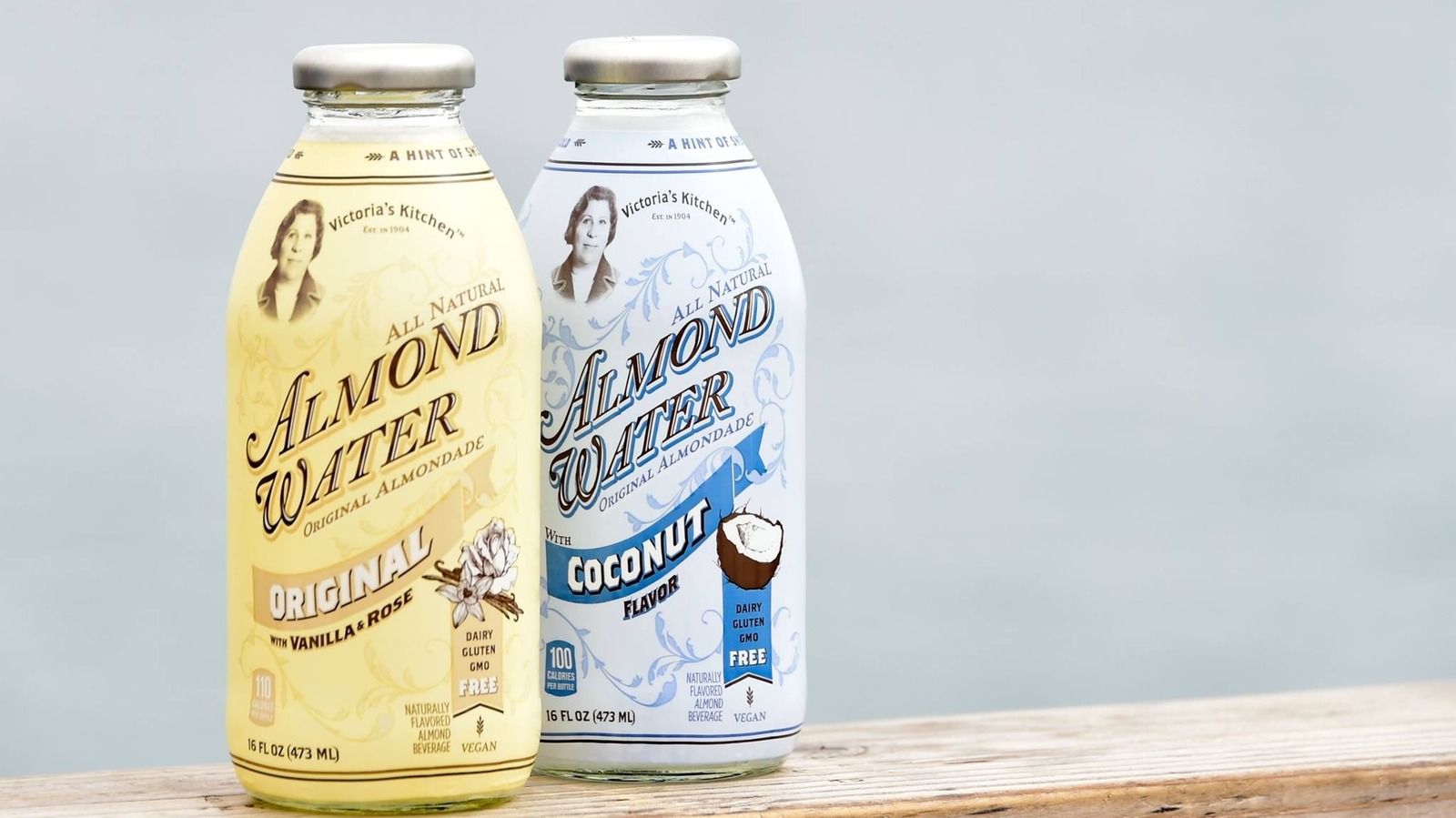
Victoria’s Kitchen Almond Water held an estimated brand valuation of $1 million during its appearance on Shark Tank in 2015, later achieving peak annual revenues between $1 million and $1.5 million. Although the company did not secure an investment on the show, it expanded into major retail chains before being acquired in 2017. As of 2026, the standalone brand is no longer active, and its net worth is dormant following the acquisition.
The Origin of Victoria’s Kitchen Almond Water
Victoria’s Kitchen was founded in 2011 by husband-and-wife entrepreneurs David and Laura Nicolas in Los Angeles, California. The flagship product, Almond Water, was inspired by a traditional French recipe crafted by David’s grandmother, Victoria. In Southern France, almond-infused beverages (often related to traditional orgeat syrup recipes) are commonly enjoyed as refreshing, non-alcoholic drinks.
David Nicolas sought to modernize this traditional family recipe for American consumers looking for alternatives to high-calorie sodas, sugary juices, and standard dairy milk alternatives. Unlike commercial almond milk, which is designed as a heavy dairy substitute for cereal or cooking, Victoria’s Kitchen Almond Water was engineered as a light, refreshing specialty beverage.
Initial Product Positioning and Ingredients
When Victoria’s Kitchen introduced Almond Water to the market, it focused on clean-label, natural ingredients. The original beverage contained clean water, pure cane sugar, natural almond flavor, and citric acid. The key selling points included:
- Low Calorie Profile: Containing approximately 50 calories per 8-ounce serving (or roughly 100 calories per 16-ounce bottle), positioning it as a lower-calorie alternative to fruit juices and traditional sodas.
- Gluten-Free and Non-Dairy: Safe for consumers with lactose intolerance or soy allergies.
- Non-GMO and Eco-Friendly Packaging: Produced without artificial flavors, preservatives, or high-fructose corn syrup, packaged in recyclable PET bottles.
Between 2011 and 2014, David and Laura Nicolas built localized distribution across Southern California, pitching specialty food stores, regional grocers, and boutique markets. By 2013, the company generated approximately $150,000 in gross revenue, which grew to over $400,000 in 2014. To take the brand to national scale, the founders sought external investment on ABC’s Shark Tank.
The Shark Tank Pitch (Season 6, Episode 17)
David and Laura Nicolas appeared on Season 6, Episode 17 of Shark Tank, which aired in February 2015. They entered the tank seeking an investment of $200,000 in exchange for 20% equity in Victoria’s Kitchen, valuing the business at $1 million.
Pitch Summary: • Seeking: $200,000 for 20% equity * Implied Valuation: $1,000,000 • Primary Product: Victoria's Kitchen Original Almond Water
Financial Breakdown Presented to the Sharks
During their presentation, the founders detailed the unit economics and financial trajectory of Victoria’s Kitchen:
- Production Cost (COGS): Producing a 16-ounce bottle cost approximately $0.63 to $0.65.
- Wholesale Price: The company sold the product to distributors and retailers for $1.50 per bottle.
- Retail Price (MSRP): Retailers sold the product to end consumers for $2.49 to $2.99 per bottle.
- Historical Revenue:
- 2011–2012: Initial regional market testing.
- 2013 Sales: ~$150,000.
- 2014 Sales: ~$400,000 (projected at time of filming).
While the profit margins per bottle appeared healthy on paper (over 55% gross margin at wholesale), the operational reality of national retail distribution revealed significant financial pressure points.
The Sharks’ Feedback and Objections
Despite liking the flavor of the beverage, the panel of investor Sharks raised severe operational and financial concerns:
- Kevin O’Leary questioned the $1 million valuation relative to net profits. He argued that the beverage space requires massive capital expenditure to secure shelf space (slotting fees) and that the financial returns did not justify a $200,000 risk for only 20% equity.
- Mark Cuban emphasized the brutal nature of the Consumer Packaged Goods (CPG) beverage category. He pointed out that heavy liquid products incur exorbitant shipping costs relative to their retail price, making direct-to-consumer fulfillment unprofitable and wholesale logistics complex.
- Lori Greiner expressed reservations about consumer market confusion. She noted that buyers might mistake "Almond Water" for "Almond Milk," leading to poor consumer adoption in mainstream grocery aisles.
- Barbara Corcoran felt the cash flow requirements to achieve scale were too high for a early-stage business without established national distributor contracts.
- Robert Herjavec acknowledged the product's pleasant taste but declined to invest due to the intense competition from global beverage conglomerates.
Ultimately, all five Sharks passed, and Victoria’s Kitchen left the tank without a deal.
Financial History and Valuation Timeline
Despite failing to secure an investor on national television, Victoria’s Kitchen leveraged the public visibility of Shark Tank to scale operations rapidly over the following two years. Below is a detailed historical overview of the brand's financial evolution and net worth trajectory.
| Timeline / Event | Estimated Business Valuation | Annual Sales / Revenue | Key Operational Milestone |
|---|---|---|---|
| 2013 (Pre-Shark Tank) | ~$300,000 – $400,000 | ~$150,000 | Regional retail footprint in Southern California specialty markets. |
| 2014 (Pitch Preparation) | $1,000,000 (Self-Assessed) | ~$400,000 | Filmed Shark Tank episode; expanded into regional natural food stores. |
| 2015 (Shark Tank Air Date) | $1,000,000 – $1,500,000 | ~$800,000 | Experiencing the "Shark Tank Bump"; expanded distribution across North America. |
| 2016 (Peak Growth) | $2,000,000 – $3,000,000 | ~$1,200,000 – $1,500,000 | Added new product flavors (Ginger Lemonade, Green Tea); nationwide store placement. |
| 2017 (Acquisition) | Undisclosed Deal Value | Undisclosed | Assets and brand acquired by a private CPG group / beverage investor. |
| 2018–2026 (Post-Acquisition / Current) | $0 (Brand Discontinued) | $0 | Standalone operations ended; product line integrated/retired. Founders pivoted to executive CPG careers. |
Post-Shark Tank Expansion and Strategic Pivot
Failing to get a deal on Shark Tank often acts as a double-edged sword for beverage companies. While it deprives founders of immediate growth capital, the broadcast exposure exposes the product to millions of potential consumers and regional retail buyers.
The "Shark Tank Bump" and Retail Expansion
Immediately following the broadcast of Season 6, Episode 17, Victoria’s Kitchen experienced a major surge in direct-to-consumer online orders and inbound wholesale inquiries. The founders capitalized on this momentum by partnering with major broadline food distributors like United Natural Foods, Inc. (UNFI) and KeHE Distributors.
Through these distribution networks, Victoria’s Kitchen expanded its footprint into major retail chains across the United States, including:
- Whole Foods Market (regional and national placements)
- Sprouts Farmers Market
- Fresh Thyme Market
- H-E-B
- Independent natural food stores and gourmet grocers
At its peak in 2016, Victoria’s Kitchen Almond Water was distributed in over 2,000 retail locations across North America.
Product Line Diversification
To address the Sharks' critique regarding single-product vulnerability, David and Laura Nicolas expanded the company’s product line beyond the original Almond Water flavor. They launched several new product variants to capture a broader market segment:
- Coconut Almond Water: Combining coconut water with traditional almond flavor to tap into the rapidly growing functional coconut water trend.
- Organic Ginger Lemonade: A high-margin non-almond beverage designed to appeal to consumers seeking organic digestive and immune-support drinks.
- Organic Peach Mate Green Tea: Entering the ready-to-drink (RTD) iced tea category.
This product expansion helped increase overall revenue, allowing the company to hit peak sales exceeding $1 million annually.
Acquisition and Founder Career Transitions
By late 2016 and early 2017, the financial pressures of operating a national independent CPG beverage brand became increasingly challenging. Beverage distribution requires substantial ongoing capital to fund slotting fees, trade promotions, freight charges, and co-packing minimum run requirements.
The 2017 Sale of Victoria's Kitchen
In 2017, founders David and Laura Nicolas finalized an agreement to sell Victoria’s Kitchen to a corporate buyer / CPG investment entity. While the exact financial terms and valuation of the acquisition were kept confidential under non-disclosure agreements, the transaction allowed the founders to successfully exit the business.
Following the acquisition, the new owners restructured the product operations. Over time, manufacturing of the original Almond Water line was phased out as market demand shifted toward alternative plant-based beverages like oat milk and functional protein waters. By 2020, Victoria’s Kitchen Almond Water was officially discontinued in physical retail stores and major e-commerce platforms.
Where Are the Founders Now?
After exiting Victoria’s Kitchen, David Nicolas leveraged his extensive operational experience in the CPG sector to take on senior leadership roles in food and beverage manufacturing.
- David Nicolas transitioned into corporate brand leadership, serving as Director of Sales and senior operations executive for prominent food companies, including Boba Bam (an at-home boba tea brand distributed nationally across Costco and major grocers).
- Laura Nicolas shifted her professional focus toward creative direction, marketing consulting, and family enterprises.
Key Financial Lessons from the Victoria’s Kitchen Journey
The story of Victoria's Kitchen Almond Water offers clear strategic lessons for entrepreneurs evaluating consumer packaged goods, market valuation, and equity growth.
1. The Bottled Beverage Logistics Problem
Liquid beverages are inherently heavy and expensive to ship. A case of 12-ounce or 16-ounce glass/plastic bottles carries substantial freight costs relative to its retail price point. Without vast distribution scale or ultra-high gross margins (70%+), shipping costs can quickly erode e-commerce and wholesale profitability.
2. Retail Slotting Fees vs. Cash Flow
Securing distribution in major supermarket chains often requires paying "slotting fees"—upfront payments made by manufacturers to secure shelf placement. For early-stage brands like Victoria’s Kitchen, these fees, combined with distributor chargebacks and promotional allowances, can create severe cash flow strain despite strong top-line sales growth.
3. TV Visibility as Capital Replacement
Not securing a Shark investment does not mean a business fails. The multi-million dollar promotional value of an appearance on Shark Tank can be leveraged to negotiate better distributor contracts, secure regional retail shelf space, and increase brand value prior to an acquisition exit.
Frequently Asked Questions
Did Victoria’s Kitchen Almond Water get a deal on Shark Tank?
No. Founders David and Laura Nicolas pitched Victoria’s Kitchen on Season 6, Episode 17 of Shark Tank asking for $200,000 for 20% equity. All five Sharks (Mark Cuban, Kevin O'Leary, Lori Greiner, Barbara Corcoran, and Robert Herjavec) declined to invest due to high shipping costs, thin margins, and fierce competition in the beverage industry.
What was Victoria’s Kitchen Almond Water’s valuation on Shark Tank?
The company sought an investment based on an implied valuation of $1 million ($200,000 for 20% equity). The Sharks considered this valuation excessive given the company's annual net earnings and high capital needs at the time of filming.
What is Victoria’s Kitchen’s net worth in 2026?
As of 2026, Victoria’s Kitchen as an independent operating business has a net worth of $0. The brand was sold in an acquisition deal in 2017, and the original Almond Water product line has since been retired from market distribution.
Why was Victoria’s Kitchen Almond Water discontinued?
The beverage market transitioned rapidly between 2017 and 2020 toward functional zero-sugar drinks, high-protein RTD beverages, and alternative milks like oat milk. Combined with high production costs and distributor slotting fees, the new parent company ultimately opted to cease production of the brand.
Can you still buy Victoria’s Kitchen Almond Water today?
No, Victoria’s Kitchen Almond Water is no longer produced or available for purchase in stores or online via Amazon. Consumers seeking similar flavor profiles typically rely on traditional French orgeat syrups mixed with mineral water or specialty craft almond drinks.
Final Strategic Summary
Victoria’s Kitchen Almond Water stands as a textbook example of a Shark Tank brand that successfully capitalized on national television exposure despite walking away without an investor deal. By expanding revenues past the $1 million mark and scaling distribution to more than 2,000 retail doors, founders David and Laura Nicolas built a brand that ultimately achieved an acquisition exit in 2017. While the beverage itself is no longer produced, the brand's trajectory demonstrates how specialized CPG products can leverage public media exposure to maximize exit value in competitive retail markets.