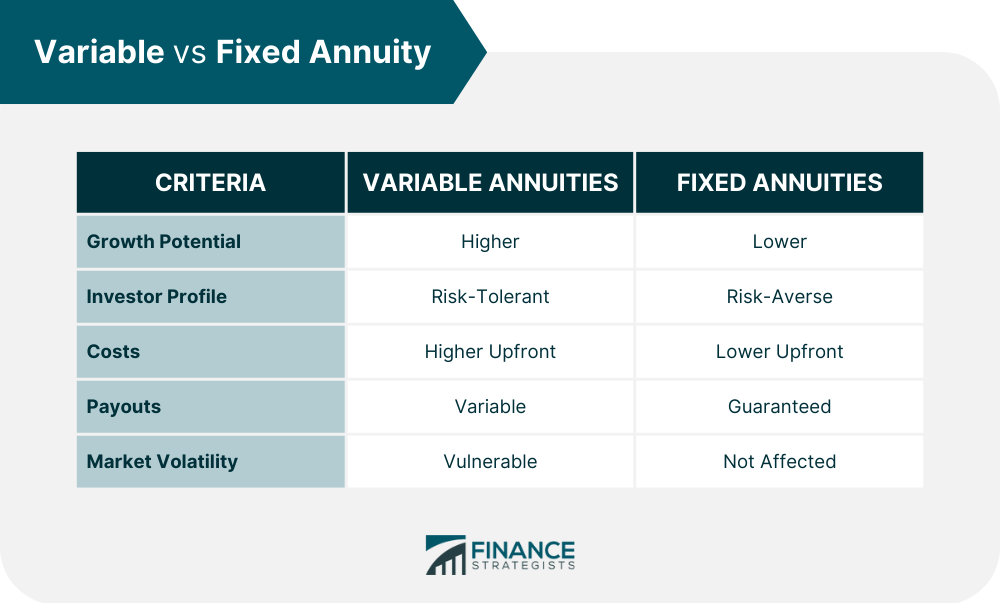
Allstate fixed annuities are low-risk retirement vehicles designed to provide guaranteed interest rates and tax-deferred growth. While Allstate agents continue to offer fixed annuity products, most legacy policies issued prior to 2021 are now managed by Everlake Life Insurance Company following a major corporate divestiture. These products function as contracts between an individual and an insurance provider to ensure capital preservation and predictable future income.
The Evolution of Allstate Fixed Annuities
To understand Allstate fixed annuities in 2026, one must first understand the structural shift that occurred within the organization. For decades, Allstate issued its own proprietary annuity products. However, in 2021, Allstate completed the sale of Allstate Life Insurance Company (ALIC) to entities managed by Blackstone. This entity was subsequently rebranded as Everlake Life Insurance Company.
For the consumer, this means "Allstate fixed annuities" generally fall into two categories:
- Legacy Policies: Contracts purchased before the divestiture that are now serviced by Everlake but may still carry the Allstate name on original documentation.
- New Issues: Annuity products currently sold by Allstate agents which are typically underwritten by third-party insurance providers rather than Allstate itself.
Regardless of the underwriter, the primary goal of these fixed annuities remains the same: providing a safe harbor for retirement savings where the principal is protected from market volatility.
How Allstate Fixed Annuities Work
A fixed annuity is essentially a specialized savings account held within an insurance wrapper. When you purchase an Allstate fixed annuity, you agree to deposit a lump sum (single premium) or make periodic payments (flexible premium). In exchange, the insurer guarantees a specific interest rate for a set period, often ranging from three to ten years.
The Accumulation Phase
During this phase, your money earns interest at a fixed rate. This growth is tax-deferred, meaning you do not pay taxes on the earnings until you begin making withdrawals. This allows for compound growth on the principal, the interest, and the money that would have otherwise gone to annual taxes.
The Distribution Phase (Annuitization)
Once you reach retirement or the end of the contract term, you can choose to "annuitize" the contract. This converts the accumulated value into a stream of guaranteed income payments. These payments can be structured to last for a specific number of years or for the remainder of your life, providing a "pension-like" security that addresses the risk of outliving your assets.
Types of Fixed Annuity Products Available
While specific product names may change depending on the underwriting partner, the core structures offered through the Allstate distribution network generally include:
1. Traditional Fixed Annuities
These are the most straightforward products. They offer a guaranteed interest rate for a specific term (e.g., 5 years). At the end of the term, the owner can typically renew for another term at the current market rate, move the money to a different annuity, or withdraw the funds.
2. Multi-Year Guaranteed Annuities (MYGAs)
A MYGA is a subset of fixed annuities where the interest rate is locked in for the entire duration of the surrender charge period. For example, a 7-year MYGA will pay the exact same interest rate every year for seven years, regardless of how the broader economy performs.
3. Fixed Indexed Annuities (FIAs)
FIAs are slightly more complex. While they protect the principal from market losses, the interest earned is linked to the performance of a market index, such as the S&P 500. If the index goes up, the annuity earns a portion of that gain (subject to caps or participation rates). If the index goes down, the annuity earns 0% but does not lose value.
Key Features and Contractual Provisions
When evaluating an Allstate or Everlake fixed annuity, several technical provisions dictate the value and liquidity of the investment.
Interest Rate Guarantees
Every fixed annuity includes a Guaranteed Minimum Interest Rate (GMIR). This is the absolute lowest rate the insurer can pay, regardless of economic conditions. Even if the initial "teaser" or "locked-in" rate expires, the contract ensures the account never earns less than this stated floor.
Death Benefits
Unlike a standard bank CD, fixed annuities typically include a death benefit provision. If the owner passes away before the distribution phase begins, the accumulated value of the annuity is paid directly to the named beneficiaries, often bypassing the lengthy and expensive probate process.
Tax-Deferred Growth
Under Internal Revenue Code Section 72, the growth within an annuity is not taxed as current income. This is particularly advantageous for high-income earners who have already maximized their contributions to 401(k)s and IRAs but require additional retirement savings vehicles.
Understanding Costs, Fees, and Surrender Charges
Fixed annuities do not typically charge an explicit "management fee" like a mutual fund. Instead, the insurance company earns money on the "spread"—the difference between what they earn on their investments and what they pay you in interest. However, there are significant costs associated with early withdrawal.
Surrender Charges
Most Allstate fixed annuities include a surrender charge period. If you withdraw more than the allowed "free withdrawal" amount (usually 10% per year) before the term ends, you will be penalized. These charges are often tiered, such as 7% in the first year, 6% in the second, and so on, until the period expires.
Market Value Adjustment (MVA)
Some contracts feature an MVA. If you withdraw funds early, the insurer may adjust the amount you receive based on current interest rates compared to the rate when you started the contract. If rates have risen, the adjustment might decrease your payout; if rates have fallen, it might increase it.
10% Federal Tax Penalty
Because annuities are retirement vehicles, the IRS imposes a 10% additional tax penalty on earnings withdrawn before age 59½, in addition to standard income tax.
Comparison of Fixed Annuity Structures
| Feature | Traditional Fixed Annuity | Fixed Indexed Annuity (FIA) | Multi-Year Guaranteed (MYGA) |
|---|---|---|---|
| Interest Source | Declared by insurer | Performance of market index | Locked-in fixed rate |
| Principal Risk | None (Insurance backed) | None (Insurance backed) | None (Insurance backed) |
| Upside Potential | Moderate/Stable | Higher (Market-linked) | Predictable/Fixed |
| Liquidity | Limited (Surrender fees) | Limited (Surrender fees) | Lowest (Locked term) |
| Complexity | Low | High | Low |
| Best For | Predictable growth | Inflation protection | High-rate lock-ins |
The Role of Financial Strength Ratings
When buying a fixed annuity, you are relying on the insurance company’s ability to pay claims in the future. Since Allstate’s legacy annuities are now managed by Everlake Life Insurance Company, it is vital to monitor their specific financial health.
Ratings from agencies like A.M. Best, Moody’s, and Standard & Poor’s (S&P) provide a window into the insurer's solvency. A high rating (such as A or A+) indicates that the company has sufficient reserves to meet its long-term obligations to policyholders. Even though Allstate rebranded its life division, the underlying capital requirements and regulatory oversight remain stringent.
Pros and Cons of Allstate Fixed Annuities
Advantages
- Safety of Principal: Your initial investment is protected from stock market downturns.
- Predictable Income: You know exactly what your minimum return or future income will be.
- No Probate: Direct beneficiary designations allow for a faster transfer of wealth.
- Tax Efficiency: Deferring taxes until retirement can result in a lower overall tax bracket upon withdrawal.
Disadvantages
- Liquidity Constraints: Your money is "locked away" for several years, with heavy penalties for early access.
- Inflation Risk: Traditional fixed annuities may not keep pace with high inflation, potentially reducing your purchasing power over time.
- Complexity: Fixed indexed versions can be difficult to understand, with caps and participation rates that change.
- Opportunity Cost: In a bull market, you will likely earn significantly less than you would in an equity-based investment.
Is an Allstate Fixed Annuity Right for You?
Fixed annuities are generally most appropriate for individuals approaching retirement (ages 50–70) who are seeking to shift a portion of their portfolio from growth-oriented assets to preservation-oriented assets.
You should consider one if:
- You have a low tolerance for market risk and cannot afford to lose principal.
- You have already maximized other tax-advantaged accounts like a 401(k).
- You want a guaranteed stream of income that you cannot outlive.
You should avoid one if:
- You may need immediate access to your capital for emergencies.
- You are in a very low tax bracket (where tax deferral offers little benefit).
- You are young and have a long time horizon that favors higher-risk, higher-reward investments.
Common Mistakes to Avoid
- Ignoring the Surrender Period: Many investors buy a 10-year annuity without realizing they might need that cash for a home purchase or medical bill in year five.
- Not Understanding the Underwriter: Assuming Allstate Corp is the insurer for an old policy can lead to confusion. Always verify if your policy is serviced by Everlake or another third party.
- Over-funding: Never put all of your liquid assets into an annuity. Most financial advisors recommend limiting annuity holdings to 25–40% of a total portfolio.
- Neglecting the "Free Look" Period: Most states require a 10-to-30-day "free look" period during which you can cancel the contract and get your money back without penalty. Use this time to read the fine print.
Frequently Asked Questions
What happened to my Allstate annuity?
If you purchased your annuity before 2021, it was likely part of the sale to Blackstone. It is now serviced by Everlake Life Insurance Company. Your contract terms, interest rates, and guarantees remain legally binding and unchanged by the change in ownership.
Can I withdraw money from my fixed annuity in an emergency?
Most Allstate fixed annuities allow for a "free withdrawal" of 10% of the account value annually. If you need more than that, you will likely incur a surrender charge and potentially a Market Value Adjustment (MVA), in addition to ordinary income taxes and a possible 10% IRS penalty if you are under 59½.
Are Allstate fixed annuities FDIC insured?
No. Annuities are insurance products, not bank products. They are not insured by the FDIC. Instead, they are backed by the financial strength of the issuing insurance company and, to a limited extent, by State Guaranty Associations.
How are the interest rates determined for renewal?
After the initial guarantee period ends, the insurance company will declare a renewal rate based on the current interest rate environment and the performance of their general account. This rate will never be lower than the Guaranteed Minimum Interest Rate stated in your original contract.
Is the income from a fixed annuity taxable?
Yes, but only the portion that represents earnings. If you purchased the annuity with "after-tax" dollars (non-qualified), a portion of each payment is considered a return of principal (tax-free) and a portion is interest (taxable). If you used "pre-tax" dollars (qualified, like an IRA), the entire payment is generally taxable as ordinary income.
Final Recommendation
If you are seeking stability in an uncertain 2026 economic landscape, an Allstate fixed annuity—whether a legacy Everlake policy or a new third-party product—offers a disciplined way to protect your retirement nest egg. Before committing, request a "Product Illustration" from your agent. This document will provide a year-by-year breakdown of your guaranteed values and surrender charges, ensuring there are no surprises regarding liquidity or growth. Always compare the current offered rates against high-yield CDs and Treasury bonds to ensure the annuity's tax-deferred benefits outweigh the liquidity restrictions.
Disclaimer: This article is for informational purposes only and does not constitute financial, legal, or tax advice. Annuity regulations vary by state, and individual financial situations require personalized professional consultation.