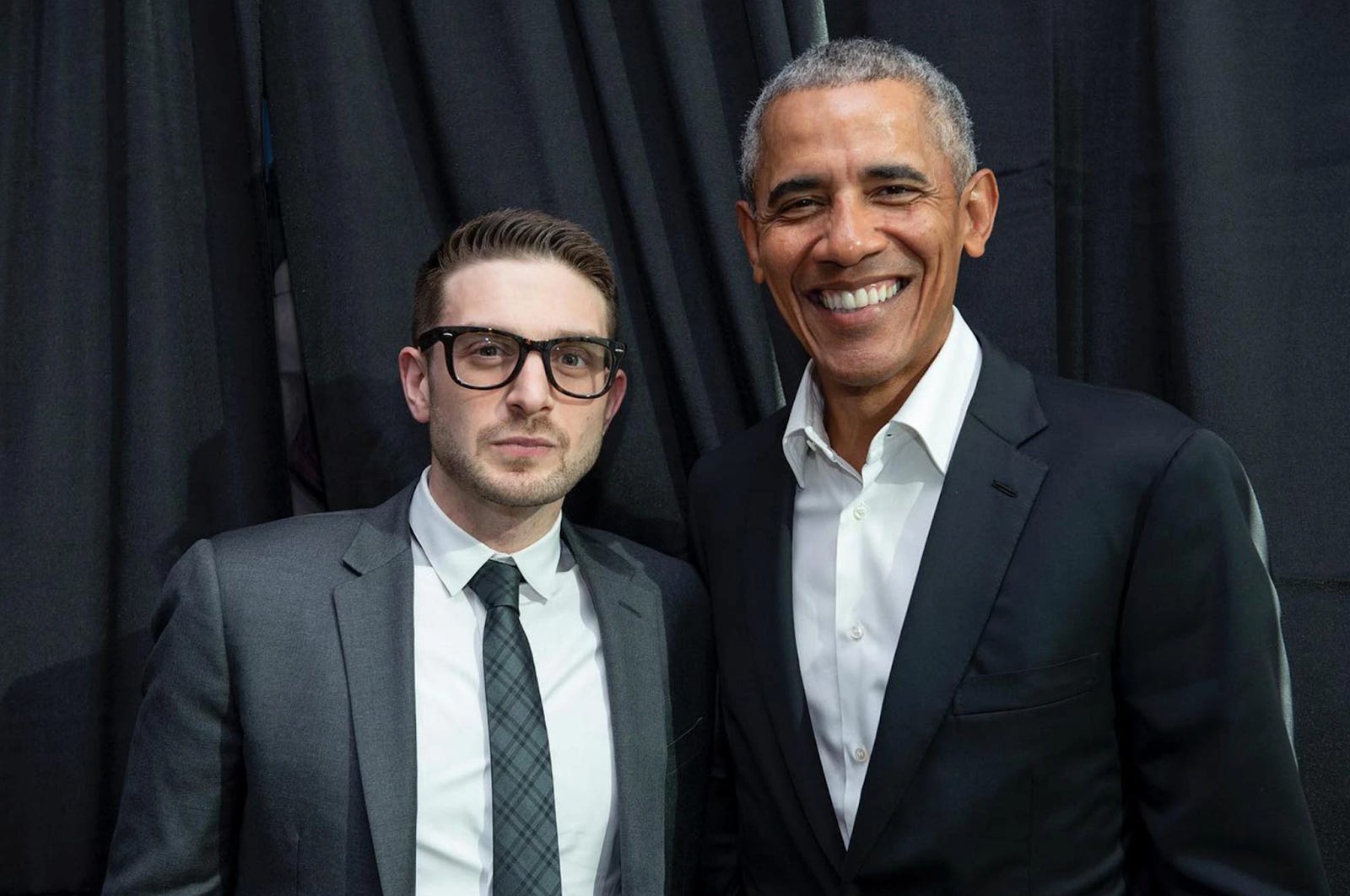
As of 2026, Alexander Soros possesses a personal net worth estimated between $100 million and $400 million, though his primary power lies in his control over the Open Society Foundations (OSF) and its approximately $25 billion endowment. Since succeeding his father, George Soros, as Chairman in late 2022, Alexander has redirected the organization toward a more overtly political and domestic-focused strategy, wielding significant influence over global democratic initiatives and American electoral politics.
The Succession: From George to Alexander Soros
The transition of leadership within the Soros empire was one of the most closely watched successions in the world of high finance and global philanthropy. For decades, it was widely speculated that Alexander’s older brother, Jonathan Soros, a lawyer with a background in finance, would take the helm. However, a shift in family dynamics and strategic alignment led George Soros to appoint Alexander (often referred to as "Alex") as the Chairman of the Open Society Foundations in December 2022.
This decision was not merely a family matter but a strategic pivot for the foundation. Alexander, who holds a PhD in history from the University of California, Berkeley, was viewed as more aligned with his father’s "fighting spirit" regarding political activism. While Jonathan had focused on more institutional and stabilized growth, Alex expressed a desire to be "more political" than his father. By 2026, this shift has become the defining characteristic of his tenure, as he has streamlined OSF operations to focus on immediate political and social threats to democratic institutions.
The "passing of the torch" was formalized through Alex’s election as chairman of the OSF board and his role as the only family member on the investment committee for Soros Fund Management. This dual role ensures that he not only oversees how the money is spent but also maintains a significant voice in how the underlying capital is managed and preserved for future generations of activism.
Alexander Soros Net Worth Analysis
Understanding Alexander Soros's wealth requires a clear distinction between his personal assets and the institutional wealth he controls. In the world of ultra-high-net-worth individuals, "control" is often more significant than "ownership" when it comes to global influence.
Personal Assets vs. Institutional Control
Most of Alexander's personal wealth is derived from family trusts, inheritance, and his own earnings from board positions and previous ventures. While $100 million to $400 million makes him exceptionally wealthy by any standard, it is a fraction of the total Soros family fortune, which George Soros largely transferred to the OSF over the last decade to avoid heavy taxation and ensure long-term philanthropic viability.
The $25 billion endowment of the Open Society Foundations represents the true engine of Alex's influence. As Chairman, he directs the annual distribution of approximately $1.5 billion in grants. These funds support a sprawling network of non-profits, human rights groups, and educational programs in over 120 countries.
The Role of Soros Fund Management
Soros Fund Management (SFM) serves as the primary investment vehicle for the family and the foundation. While the firm transitioned into a family office years ago, it remains one of the most sophisticated investment engines in the world. Alex’s presence on the investment committee allows him to ensure that the foundation’s capital remains robust enough to fund his more aggressive political agenda. By 2026, the fund has increasingly integrated Environmental, Social, and Governance (ESG) criteria, reflecting Alex’s personal commitment to climate change and social justice.
The Strategic Shift in Global Influence
Since taking control, Alexander Soros has moved the OSF away from its traditional "broad-spectrum" philanthropy toward a more targeted, agile, and political approach. His influence is most visible in three primary arenas: American domestic politics, European institutional stability, and global human rights.
1. American Domestic Politics and Democracy PAC
Alexander Soros has been significantly more active in U.S. politics than his father was at a similar age. He serves as the president of Democracy PAC, the family’s primary vehicle for political contributions. Under his leadership, Democracy PAC has funneled tens of millions of dollars into various campaigns, focusing heavily on:
- District Attorney Races: Continuing his father’s legacy of supporting progressive prosecutors who favor criminal justice reform.
- Voting Rights: Funding litigation and grassroots organizing to combat restrictive voting laws.
- National Elections: Providing "dark money" and transparent contributions to support Democratic candidates in swing states.
His influence in Washington D.C. is substantial; Alex has visited the White House dozens of times during the current and previous administrations, maintaining close ties with high-ranking officials to coordinate on policy issues ranging from Ukraine aid to domestic civil rights.
2. European Reorganization
In 2023 and 2024, Alex oversaw a controversial but necessary "right-sizing" of OSF operations in Europe. By 2026, the foundation has moved away from funding general civil society in Western Europe—where institutions are deemed more stable—to focus intensely on the "fringes" where democracy is seen as under threat. This includes heavy investment in the Balkans, Moldova, and supporting pro-democracy movements in countries experiencing democratic backsliding.
3. Global Human Rights and AI Governance
A newer pillar of Alex’s influence is his focus on the intersection of technology and human rights. Under his guidance, the OSF has become a major donor to organizations researching the impact of Artificial Intelligence on marginalized communities. He has frequently spoken at the World Economic Forum about the need for "democratic guardrails" on AI, positioning himself as a bridge between the billionaire class and social activists.
Comparative Overview: George Soros vs. Alexander Soros
The following table outlines the key differences in leadership style, financial priorities, and areas of influence between the founder and his successor.
| Feature | George Soros (Founder) | Alexander Soros (Chairman as of 2026) |
|---|---|---|
| Primary Philosophy | "Reflexivity" and Open Society theory | Pragmatic political activism and social justice |
| Leadership Style | Visionary, somewhat detached from daily ops | Hands-on, politically engaged, collaborative |
| Political Focus | Post-Cold War transition, global macro | Domestic U.S. politics, voting rights, AI ethics |
| Asset Control | Built the $25B endowment from SFM | Manages the $25B endowment via OSF Board |
| Public Profile | Enigmatic, media-shy for many years | Socially active, frequent meetings with world leaders |
| Key Legacy Goal | Establishing the OSF as a global institution | Ensuring democratic survival in the digital age |
The "Soros Brand" and Public Perception
The influence of Alexander Soros cannot be discussed without addressing the significant backlash and scrutiny the Soros name attracts. As of 2026, the "Soros" brand remains a lightning rod for political discourse. For supporters, Alex is a vital financier of the thin line holding back authoritarianism. For critics, he represents unelected billionaire influence over sovereign nations and local legal systems.
Alexander has been more vocal in defending the family's work than his father. He often uses social media and high-profile interviews to counter what he terms "antisemitic tropes" and "disinformation" directed at the foundation. His influence is thus not just financial, but also involves a sophisticated communications strategy aimed at legitimizing progressive philanthropy as a necessary counterweight to right-wing populism.
Academic and Intellectual Foundation
Unlike many heirs to massive fortunes, Alexander Soros spent a significant portion of his early adulthood in academia. His doctoral dissertation at UC Berkeley focused on Heinrich Heine and the "Jewish Question," an intellectual undertaking that deeply informs his current worldview.
This academic background provides him with a historical perspective that he applies to modern politics. He frequently argues that the current global political climate mirrors the instability of the 1930s, a belief that drives his urgency in funding democratic safeguards. This "intellectual-activist" persona has allowed him to gain respect in European diplomatic circles, where he is often treated more as a political peer than a mere donor.
Risks and Operational Challenges
Managing a $25 billion endowment while being a primary target of political opposition presents unique challenges. By 2026, Alex has had to navigate:
- Legislative Barriers: Several countries have passed "Foreign Agent" laws specifically designed to curb OSF funding to local NGOs.
- Security Concerns: The high profile of the Soros family necessitates a massive private security apparatus, impacting how Alex engages with the public.
- Endowment Sustainability: In a volatile global economy, ensuring the $25 billion continues to generate enough returns to cover $1.5 billion in annual grants requires precise financial management at Soros Fund Management.
Frequently Asked Questions
Is Alexander Soros richer than George Soros?
No. While Alexander controls the majority of the family’s institutional wealth through the Open Society Foundations, George Soros remains the primary source of the fortune. Most of the wealth is held within the foundation's endowment rather than as personal liquid cash for either individual. George Soros’s personal net worth was significantly reduced intentionally when he transferred $18 billion to the OSF in 2017.
How does Alexander Soros spend his money?
Alex directs the OSF to spend roughly $1.5 billion annually on grants. Personally, he is known for a lifestyle that includes high-level networking, travel to global summits like Davos, and supporting the arts. However, the bulk of his professional life is dedicated to the strategic allocation of OSF funds toward political and social causes.
What is Alexander Soros's role in U.S. elections?
He is the President of Democracy PAC. Through this organization, he influences U.S. elections by funding campaigns that align with OSF's goals, such as criminal justice reform, climate action, and protecting voting access. He is a major donor to the Democratic Party and associated Super PACs.
Why did George Soros choose Alex over his other children?
George Soros cited Alex’s "fighting spirit" and their shared political alignment as the primary reasons. While his other children are successful in their own right—Jonathan in finance and law, Andrea in philanthropy, and Robert in business—Alex showed the most interest in the day-to-day political activism required to lead the OSF in a more polarized era.
What is the relationship between Alexander Soros and the WEF?
Alexander Soros is a regular participant in the World Economic Forum (WEF) in Davos. He uses this platform to lobby world leaders and corporate executives on issues like human rights, the regulation of AI, and support for Ukraine. His influence at the WEF is a key part of his global diplomatic strategy.
Where did Alexander Soros go to school?
He graduated from New York University (NYU) and later earned his PhD in history from the University of California, Berkeley. His academic focus was on European history and philosophy, which remains a cornerstone of his approach to global philanthropy.
Practical Guidance: Monitoring Global Philanthropic Trends
For researchers, investors, or political analysts looking to track the influence of Alexander Soros and the OSF through 2026 and beyond, the following actions are recommended:
- Review IRS Form 990-PF: For those in the U.S., the Open Society Foundations’ annual tax filings provide a line-by-line breakdown of every grant made, offering a transparent look at where the money is flowing.
- Monitor FEC Filings: Tracking Democracy PAC contributions through the Federal Election Commission website reveals Alex’s current priorities in the American political landscape.
- Follow OSF "Impact Reports": The foundation regularly publishes strategic shifts. The transition toward AI governance and "fringe" European democracy is currently the most significant trend to watch.
- Analyze Soros Fund Management (SFM) Holdings: While a family office, SFM’s 13F filings (for public equities) can provide insight into the financial health and sectors favored by the Soros investment committee.
Alexander Soros has successfully stepped out of his father's shadow by 2026, not by replicating George’s path, but by evolving the "Soros influence" into a more direct, politically potent force suited for the challenges of the mid-2020s.