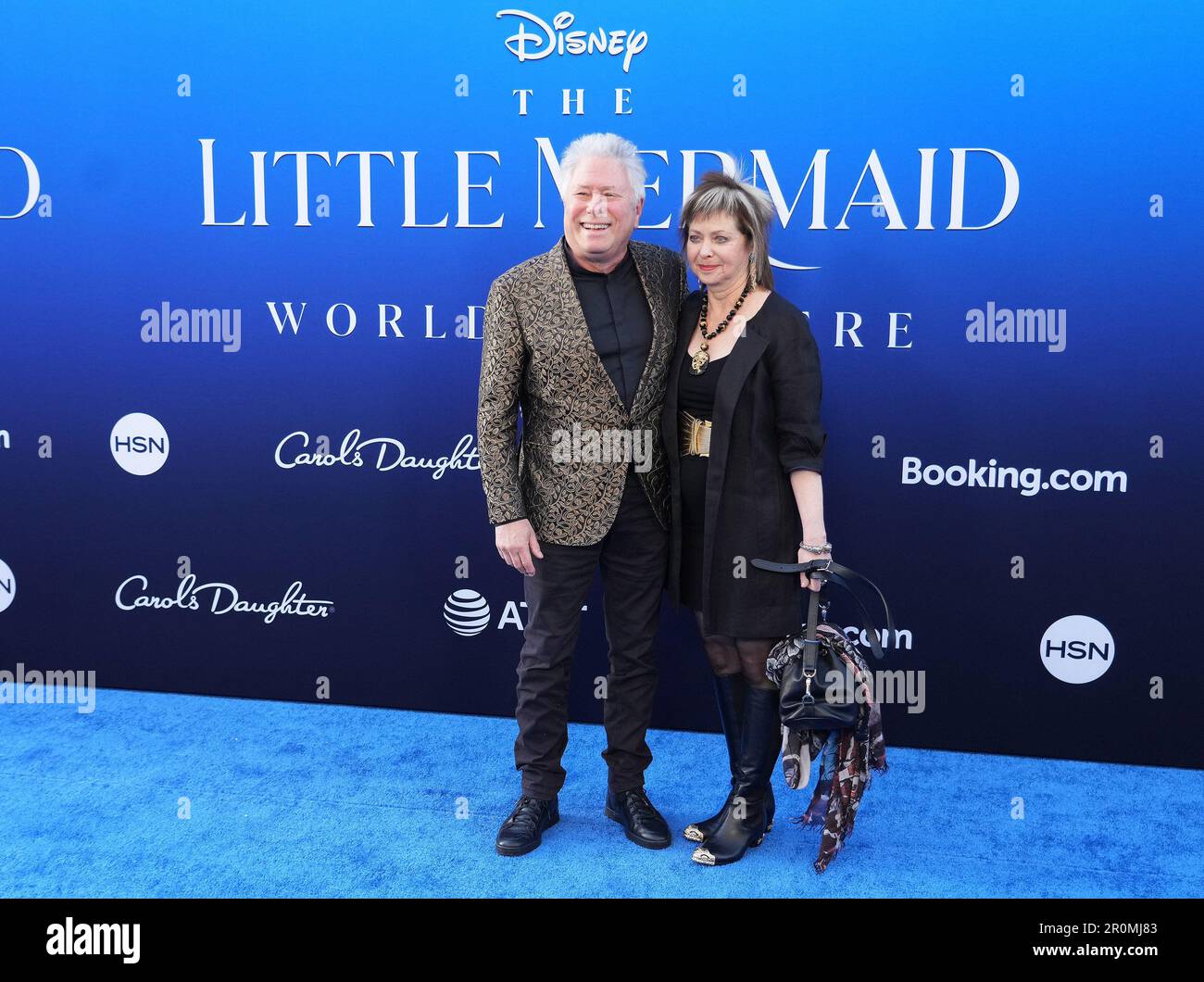
As of 2026, the legendary composer and songwriter Alan Menken is 77 years old, having been born on July 22, 1949. He remains one of the most decorated figures in entertainment history, holding the rare EGOT status with a career defined by revitalizing the animated movie musical and shaping the childhoods of multiple generations.
Alan Menken is a name synonymous with the "Disney Renaissance," a period of creative resurgence that saved Disney’s animation department and redefined the American musical film. His ability to blend traditional musical theater structures with contemporary pop, rock, and world music has earned him a permanent place in the pantheon of great American composers. Beyond his work for the screen, his contributions to the Broadway stage and his mastery of the "I Want" song have influenced countless songwriters.
The Early Life and Musical Foundation of Alan Menken
Born in New Rochelle, New York, Alan Menken was raised in a family with deep ties to both medicine and music. His father, Norman Menken, was a dentist who also played piano, and his mother, Judith Menken, was an actress and playwright. This dual exposure to the arts and a structured professional environment helped shape Menken’s approach to his craft—one that balances immense creativity with a rigorous, almost mathematical understanding of melody and structure.
Menken’s path to becoming a world-renowned composer was not a straight line. He originally enrolled at New York University as a pre-med student, adhering to family expectations. However, his passion for music ultimately prevailed. He graduated with a degree in music and subsequently joined the BMI Lehman Engel Musical Theatre Workshop. It was here that he honed the specific skills required for narrative songwriting—learning how a song can advance a plot, develop a character, and provide emotional catharsis.
In the late 1970s and early 1980s, Menken worked as a songwriter and accompanist, eventually finding his most significant creative partner in Howard Ashman. This partnership would change the course of his career and the history of musical theater and film.
The Ashman and Menken Era: Birth of the Modern Movie Musical
The collaboration between Alan Menken and lyricist Howard Ashman began in the Off-Broadway circuit. Their first major success was the 1982 musical Little Shop of Horrors, a rock musical based on a low-budget 1960 film. The show was a massive hit, blending 1960s doo-wop and rock and roll with traditional musical theater storytelling. Its success caught the attention of Disney executives Jeffrey Katzenberg and Michael Eisner.
The Disney Renaissance
When Menken and Ashman were brought into the Disney fold in the late 1980s, the studio's animation department was struggling. Their first project, The Little Mermaid (1989), was a monumental risk that paid off. By applying the principles of Broadway storytelling to animation—specifically the use of "leitmotifs" (recurring musical themes associated with specific characters) and the "I Want" song (where the protagonist expresses their core desire)—they created a formula that resonated globally.
- The Little Mermaid (1989): Menken's score and the song "Under the Sea" won Academy Awards. The soundtrack brought Caribbean influences (Calypso and Reggae) into mainstream animation.
- Beauty and the Beast (1991): This film was a cultural phenomenon, becoming the first animated feature to be nominated for the Academy Award for Best Picture. Menken’s score and the title song secured more Oscars, proving that animated films could possess the sophistication of live-action operettas.
- Aladdin (1992): While Ashman passed away during the production of Aladdin, Menken finished the project with lyricist Tim Rice. The resulting "A Whole New World" remains one of the most successful Disney ballads of all time.
Expansion and Post-Ashman Success
Following the tragic death of Howard Ashman in 1991, Menken continued to dominate the film industry by collaborating with other legendary lyricists, including Stephen Schwartz, David Zippel, and Glenn Slater. This period demonstrated Menken’s versatility and his ability to adapt his melodic style to various historical and cultural settings.
Collaborative Highlights
- Pocahontas (1995): Working with Stephen Schwartz, Menken moved toward a more folk-inspired, symphonic sound. "Colors of the Wind" became a signature anthem, winning Menken his fourth Oscar for Best Original Song.
- The Hunchback of Notre Dame (1996): Often cited by critics as Menken’s most complex and darker work, this score utilized choral arrangements and gothic operatic structures to reflect the setting of 15th-century Paris.
- Hercules (1997): In a stark departure from the gothic tones of Hunchback, Menken incorporated Gospel music into the Greek myth, creating an energetic and unique soundtrack.
- Tangled (2010): Proving his longevity into the era of CGI animation, Menken collaborated with Glenn Slater to create a 1960s folk-rock-inspired score that felt both modern and classic.
Alan Menken's Impact on the Broadway Stage
While Menken is perhaps most famous for his film work, his contributions to Broadway are equally significant. Many of his film scores were eventually adapted for the stage, requiring Menken to write additional music to fill a full-length theatrical production.
- Newsies (2012): Originally a cult-favorite live-action film from 1992, the Broadway adaptation of Newsies earned Menken his first Tony Award for Best Original Score. The high-energy, anthem-driven music became a staple for a new generation of theater fans.
- Sister Act: Adapting the 1992 film into a musical, Menken utilized 1970s disco and soul influences, demonstrating his "pastiche" style—the ability to write music that sounds like a specific era or genre while remaining original.
- A Bronx Tale: Collaborating with Glenn Slater once again, Menken returned to his doo-wop and early rock roots for this adaptation of Chazz Palminteri’s story.
His ability to translate the magic of animation to the physical stage has made him a vital figure in the "Disney on Broadway" movement, which includes massive hits like the stage version of Aladdin and the reimagined Beauty and the Beast.
Achieving EGOT Status: The Pinnacle of Entertainment Awards
In 2020, Alan Menken became the 16th person in history to achieve EGOT status—winning at least one Emmy, Grammy, Oscar, and Tony Award. This achievement is a testament to his excellence across all mediums of recorded and live performance.
Award Breakdown and Milestones
| Award Type | Total Wins | Significant Works / Milestones |
|---|---|---|
| Academy Awards (Oscars) | 8 | The Little Mermaid, Beauty and the Beast, Aladdin, Pocahontas |
| Grammy Awards | 11 | "A Whole New World," "Under the Sea," "Colors of the Wind" |
| Tony Awards | 1 | Best Original Score for Newsies (2012) |
| Emmy Awards | 1 | Primetime Emmy for Rapunzel's Tangled Adventure (2020) |
| Golden Globes | 7 | Recognition for multiple scores and songs throughout the 90s |
His eight Academy Awards make him the most awarded living individual in the music categories of the Oscars, and he holds more Oscars than any other person in the history of the Walt Disney Company except for Walt Disney himself.
Musical Style and Technical Composition
What distinguishes Alan Menken from his contemporaries is his mastery of "musical pastiche." This involves mimicking the style of a specific period or genre with extreme precision while maintaining the emotional core of the narrative.
For example, in The Little Mermaid, he uses Calypso to represent the freedom and joy of the sea. In Hercules, he uses Gospel to represent the divine. In Little Shop of Horrors, he uses 1960s girl-group harmonies to set a nostalgic but eerie tone. This versatility allows the music to serve as an atmospheric tool, immediately grounding the audience in the world of the story.
Furthermore, Menken is a master of the "leitmotif." This technique, famously used by Richard Wagner and later John Williams, involves creating specific melodic phrases for characters or themes. In Beauty and the Beast, the "transformation" theme is woven throughout the score, subtly building until the climactic final scene. This creates a cohesive listening experience that feels more like a symphony than a collection of pop songs.
Frequently Asked Questions
How many Oscars does Alan Menken have?
As of 2026, Alan Menken has won 8 Academy Awards. He won two Oscars each for The Little Mermaid, Beauty and the Beast, Aladdin, and Pocahontas (one for Best Original Score and one for Best Original Song for each film). This makes him one of the most decorated composers in the history of the Academy.
When did Alan Menken achieve EGOT status?
Alan Menken officially achieved EGOT status on July 26, 2020. The final piece of the puzzle was a Primetime Emmy Award for "Outstanding Original Song in a Children's, Young Adult or Animated Program" for the song "Waiting in the Wings" from the Disney Channel series Rapunzel's Tangled Adventure.
Is Alan Menken still active in 2026?
Yes, Alan Menken remains an active figure in the industry. While he has moved into a more elder-statesman role, his works continue to be adapted for live-action remakes, stage productions, and international tours. His influence is seen in the work of younger composers like Lin-Manuel Miranda, who frequently cites Menken as a primary inspiration.
What is Alan Menken's most famous song?
While "most famous" is subjective, "A Whole New World" from Aladdin and the title track from Beauty and the Beast are statistically his most successful, both reaching high positions on the Billboard charts and winning Song of the Year accolades. However, "Under the Sea" and "Part of Your World" are often cited as the songs that defined the modern Disney era.
Who was Alan Menken’s most frequent collaborator?
Historically, his most impactful collaborator was Howard Ashman. Their work together redefined the genre. However, following Ashman's death, Menken has had a long and productive partnership with Glenn Slater and Stephen Schwartz.
Alan Menken's Enduring Legacy
At age 77 in 2026, Alan Menken’s legacy is firmly cemented in the cultural fabric of global entertainment. He did not just write songs; he built the musical architecture for stories that have become modern myths. From the underwater grottoes of Atlantica to the bells of Notre Dame, his melodies have provided the emotional heartbeat for dozens of films and plays.
For aspiring composers, Menken’s career serves as a masterclass in thematic development and genre flexibility. His ability to stay relevant across five decades is a result of his commitment to storytelling over ego. As he often states in interviews, the song must always serve the character first.
Recommendation for Fans: To truly appreciate the depth of Menken’s work, listen to the Alan Menken Songbook or explore the "Legacy Collection" soundtracks released by Disney, which often include demos and early drafts of his most famous works, offering a window into his creative process.