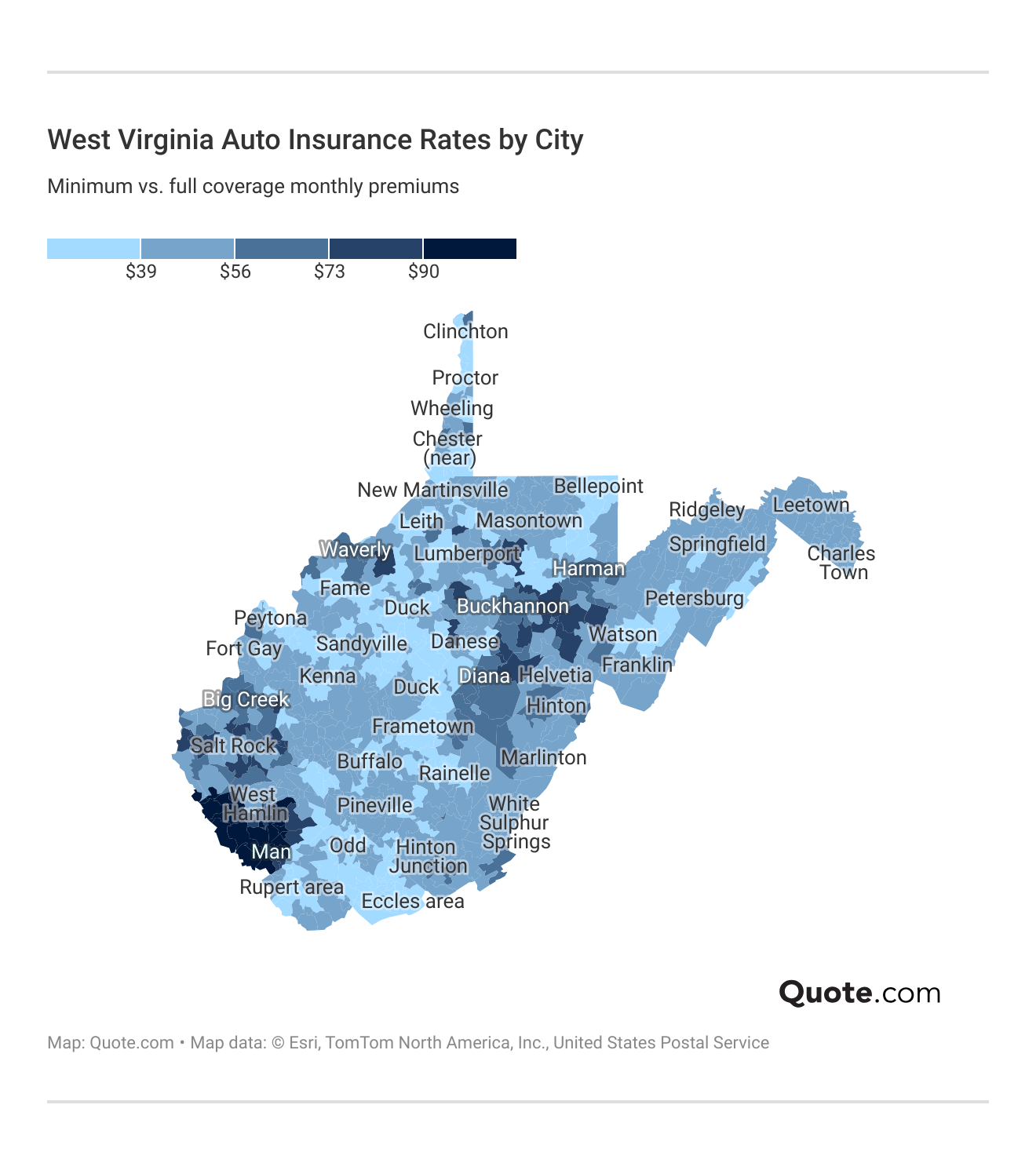
Securing affordable commercial auto insurance covers in West Virginia requires a strategic approach that balances state-mandated minimum liability limits with the unique operational risks of navigating the Mountain State's challenging terrain. Business owners must evaluate fleet size, vehicle usage classifications, driver history, and policy deductibles while complying with the West Virginia Offices of the Insurance Commissioner and the West Virginia Division of Motor Vehicles to maintain legal and financial protection.
Understanding the Landscape of West Virginia Commercial Auto Coverage
Operating a business vehicle in West Virginia presents unique challenges and regulatory requirements that every owner must understand before shopping for a policy. Unlike personal auto insurance, commercial auto insurance covers vehicles owned, leased, hired, or borrowed by a business, protecting against financial losses from accidents, property damage, and bodily injury liabilities.
West Virginia law mandates specific minimum liability limits for motor vehicles operating within the state. However, commercial operations often face significantly higher exposure due to corporate asset vulnerability, heavy equipment transport, and employee driving habits. Finding an affordable policy does not mean stripping away vital protections; rather, it involves identifying the exact risk profile of your enterprise and matching it with an insurer that understands regional underwriting factors.
The Mountain State's topography introduces distinct operational hazards. Winding mountain roads, steep grades, severe winter weather, and rural highway corridors increase the likelihood of collisions, vehicle wear, and cargo damage. Insurers factor these geographical elements into their pricing models, making it essential for business owners to implement robust safety protocols to secure competitive rates.
State Legal Requirements and Minimum Limits
Every commercial vehicle operating in West Virginia must carry liability insurance that meets or exceeds the statutory minimums established by the state. Failure to maintain continuous coverage can result in severe penalties, including vehicle registration suspension, heavy fines, and personal financial liability in the event of an accident.
Under West Virginia law, the mandatory minimum liability coverage limits for motor vehicles are commonly referred to as 25/50/25 limits:
- $25,000 for bodily injury or death of one person in any one accident.
- $50,000 for total bodily injury or death when two or more persons are injured in any one accident.
- $25,000 for property damage in any one accident.
While these statutory limits satisfy basic legal requirements, they are rarely sufficient for commercial enterprises. If a business vehicle causes a major accident resulting in severe injuries or multiple vehicle collisions, a $25,000 property damage limit or a $50,000 bodily injury limit will be exhausted almost immediately. Any remaining financial judgment becomes the direct responsibility of the business, threatening corporate assets and personal property if the business structure allows for it. Therefore, insurance experts strongly recommend higher liability limits, typically starting at $500,000 to $1,000,000 combined single limit (CSL) for standard commercial operations.
Key Coverage Components of a Commercial Auto Policy
A comprehensive commercial auto insurance policy in West Virginia is built from several distinct coverage parts. Customizing these options allows business owners to protect their specific assets without paying for unnecessary extras.
| Coverage Type | What It Protects Against | Recommended Scenario |
|---|---|---|
| Liability Coverage | Bodily injury and property damage caused to third parties by your business vehicle. | Mandatory for all vehicles; higher limits recommended for high-risk operations. |
| Collision Coverage | Physical damage to your own vehicle resulting from a crash with another vehicle or object. | Essential for newer, financed, or high-value commercial vehicles and fleets. |
| Comprehensive Coverage | Non-collision events such as theft, fire, vandalism, animal strikes, and weather damage. | Crucial in West Virginia due to high deer populations and severe winter storms. |
| Medical Payments / PIP | Medical expenses for the driver and passengers regardless of fault in an accident. | Valuable for covering immediate healthcare costs and reducing employee friction. |
| Uninsured/Underinsured Motorist | Accidents caused by drivers who carry no insurance or insufficient coverage limits. | Highly recommended given national and regional uninsured driver statistics. |
Beyond these standard forms, specialized businesses may need endorsements such as hired and non-owned auto insurance (HNOA) if employees use their personal vehicles for company errands, or motor truck cargo insurance for freight carriers operating across state lines or within West Virginia's commercial zones.
Factors Influencing Commercial Auto Insurance Rates in West Virginia
Insurance carriers calculate premiums based on an actuarial assessment of risk. Understanding how insurers evaluate your business will help you identify areas for improvement and cost reduction.
Vehicle Classification and Radius of Operation
The type of vehicles you operate directly impacts your premium. Heavy-duty dump trucks, semi-trucks, and passenger vans cost more to insure than light-duty service sedans or small delivery crossovers. Furthermore, your operating radius matters: a local plumber staying within a single county presents a different risk profile than a regional distributor crossing state lines through complex mountain terrain.
Driver Motor Vehicle Records (MVRs)
Your drivers are your biggest risk factor or your greatest asset. Insurers thoroughly check the MVRs of anyone authorized to drive company vehicles. Drivers with speeding tickets, driving under the influence (DUI) convictions, or at-fault accidents will drastically drive up your policy costs. Implementing a strict driver screening process is one of the most effective ways to keep premiums down.
Claims History and Loss Run Reports
Insurance companies review your business's loss run history—a formal report detailing past claims and payouts over the last three to five years. A clean loss history signals a safe, well-managed operation, whereas frequent claims indicate higher risk and lead to steep premium surcharges.
Proven Strategies to Lower Your Commercial Auto Insurance Premiums
Achieving affordable commercial auto insurance covers in West Virginia does not require sacrificing necessary protection. By applying specific risk-management strategies, businesses can negotiate better rates with top-tier carriers.
- Increase Policy Deductibles: Opting for a $1,000 deductible instead of a $500 deductible on collision and comprehensive coverage can significantly lower your annual premium, provided your business has the cash flow to absorb the higher out-of-pocket cost in the event of a claim.
- Enforce Safe Driving Programs: Establish formal company driving policies, conduct regular safety training, and reward employees with clean driving records. Some insurers offer direct discounts for businesses with documented safety protocols.
- Install Telematics and GPS Tracking: Many modern insurers offer usage-based insurance programs or discounts for fleets equipped with telematics devices. These tools monitor vehicle speed, braking habits, and location in real time, proving to insurers that your drivers exercise caution.
- Bundle Policies: If your business already holds general liability, property, or workers' compensation insurance, keeping your commercial auto policy with the same carrier often unlocks multi-policy bundle discounts.
- Audit Your Fleet Regularly: Remove inactive or sold vehicles from your policy immediately. Paying for insurance on vehicles that sit idle or no longer belong to the company is a common and avoidable waste of capital.
Shopping and Comparing Quotes Effectively
Navigating the insurance market requires patience and diligence. Because commercial auto insurance pricing varies widely between insurance providers, relying on a single quote is a mistake.
Business owners should work with independent insurance agents who have access to multiple regional and national carriers licensed in West Virginia. Independent agents can shop the market on your behalf, comparing coverage options, deductibles, and premium structures without bias toward a single company.
When reviewing quotes, look beyond the bottom-line price. A cheap policy with high deductibles, restrictive coverage clauses, or a carrier with poor claims-handling reputation can end up costing your business far more when an emergency occurs. Verify that the insurance company maintains a strong financial stability rating from agencies like A.M. Best, ensuring they have the capital reserves to pay out large commercial claims promptly.
Frequently Asked Questions
What is the difference between personal auto insurance and commercial auto insurance?
Personal auto insurance is designed for everyday personal commuting and errands, and it typically excludes coverage for business-related activities. Commercial auto insurance covers vehicles used primarily for business purposes, accommodating higher liability risks, heavy equipment, employee drivers, and specialized cargo.
Is commercial auto insurance required if employees use their own cars for work?
Yes, if employees use their personal vehicles for company business—such as making deliveries or visiting clients—your business faces liability exposure. Standard business liability policies usually exclude auto accidents, making Hired and Non-Owned Auto Insurance (HNOA) an essential addition to protect the company.
How do West Virginia's winter weather conditions affect commercial auto rates?
West Virginia winters bring heavy snowfall, ice, and hazardous mountain driving conditions, leading to higher frequencies of winter-related collisions. While weather itself is factored into regional base rates, maintaining winter-ready vehicles and safe driving training helps mitigate overall premium increases.
Can I get commercial auto insurance with a newly formed business in West Virginia?
Yes, new businesses can secure commercial auto insurance, though rates may be higher due to the lack of an established business credit history or commercial driving record. Working with an independent agent who understands the West Virginia market can help new business owners find lenient underwriting options.
What documents do I need to get a commercial auto insurance quote?
To receive an accurate quote, you will need your business details (including your Federal Employer Identification Number), vehicle identification numbers (VINs) for all company autos, estimated annual mileage, operating radii, and the driver's license numbers and employment histories for all authorized drivers.
Next Actions for West Virginia Business Owners
To secure the right policy without overpaying, start by auditing your current vehicle inventory, driving rosters, and historical loss runs. Contact multiple independent insurance agents or licensed carriers across West Virginia to gather at least three comprehensive quotes tailored to your exact operational scope. Prioritize adequate liability protection above the state minimums to shield your enterprise from catastrophic financial exposure, and implement internal safety protocols to drive down long-term premium costs.