Advanced Encryption Standard (AES) cybersecurity requires a strategic compromise between high encryption strength and low processing overhead. By selecting appropriate key lengths—such as 128-bit, 192-bit, or 256-bit—and optimizing implementation strategies through hardware acceleration and block cipher modes, organizations can secure sensitive data without sacrificing network throughput or system performance.
In the digital landscape, encryption is the bedrock of confidentiality. Whether protecting data at rest on enterprise storage arrays or data in transit across global cloud networks, security professionals rely heavily on the Advanced Encryption Standard (AES). However, introducing heavy cryptography into high-traffic environments often creates bottlenecks.
Balancing speed and security is not merely about choosing the strongest algorithm available; it requires a nuanced understanding of cryptographic primitives, hardware constraints, operational requirements, and threat models.
The Fundamentals of AES in Modern Architecture
Adopted by the National Institute of Standards and Technology (NIST) in 2001, AES replaced the aging Data Encryption Standard (DES). It is a symmetric block cipher, meaning the same secret key is used for both encrypting plaintext and decrypting ciphertext.
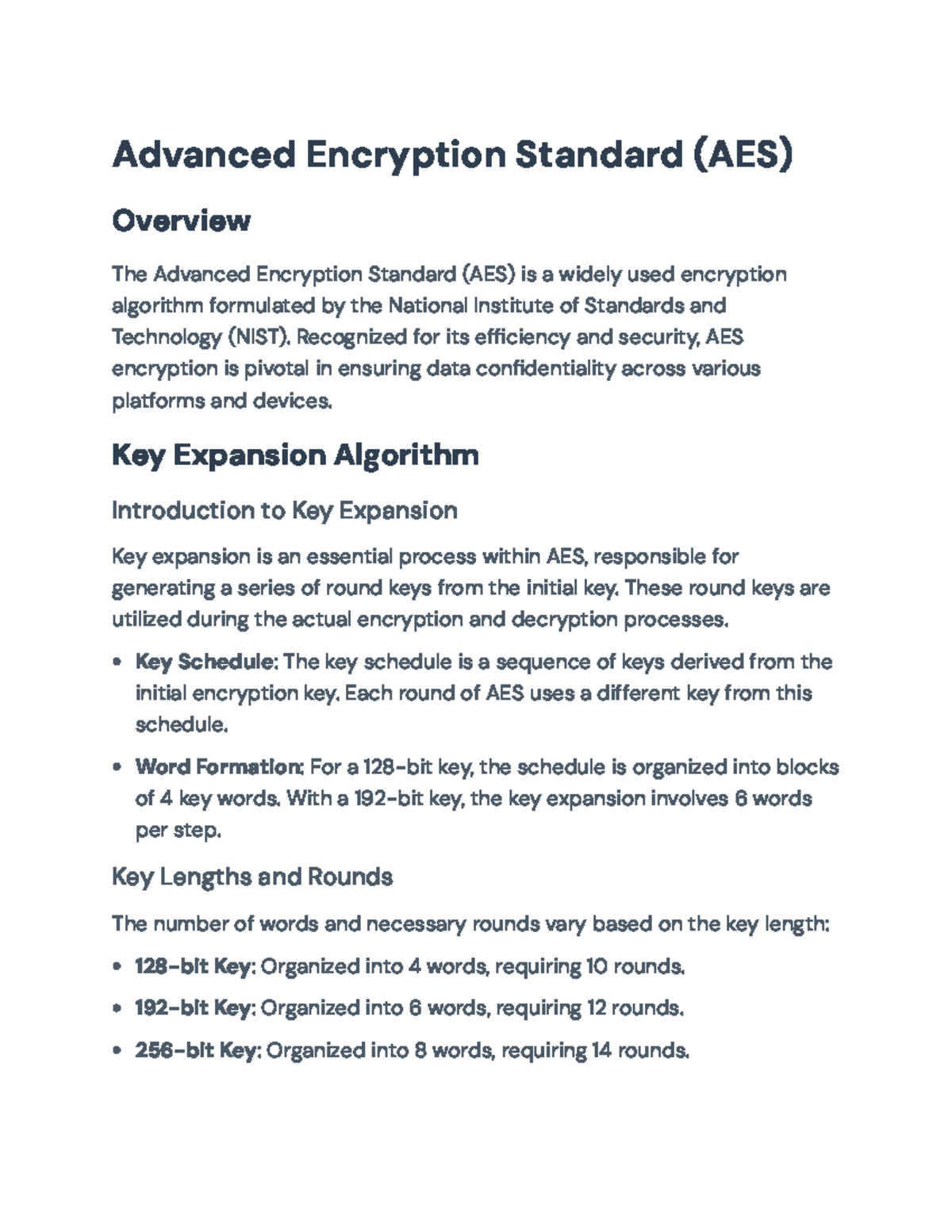
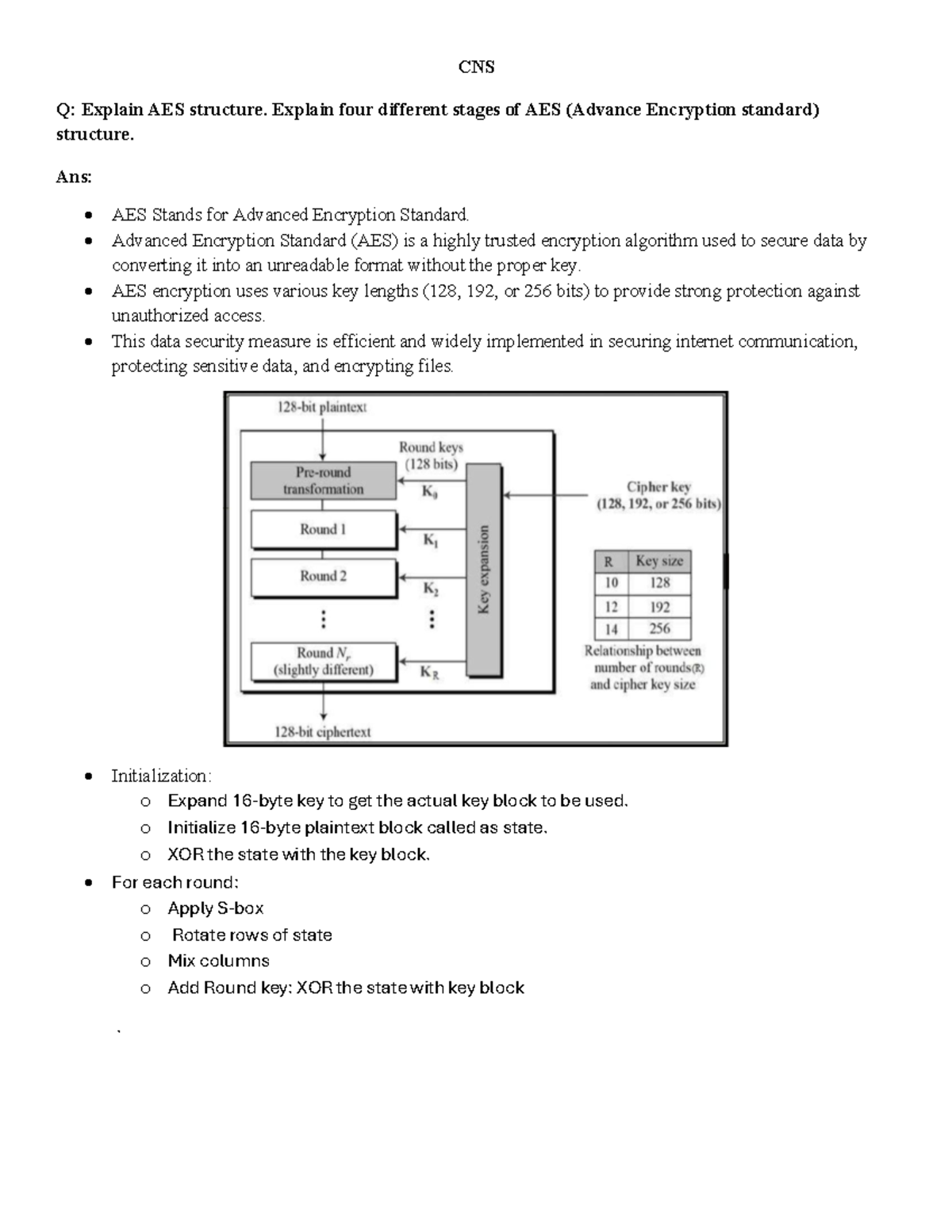
The algorithm operates on fixed block sizes of 128 bits, utilizing key sizes of 128, 192, or 256 bits. Each key size determines the number of internal transformation rounds the data undergoes:
- AES-128: 10 rounds
- AES-192: 12 rounds
- AES-256: 14 rounds
Understanding the Trade-Offs of Key Length
The primary trade-off in AES configuration involves key length versus computational complexity. While a longer key increases the theoretical cryptographic work factor required for a brute-force attack, it also increases the number of processing rounds.
For instance, AES-256 requires 14 rounds of substitution, permutation, and mixing operations compared to the 10 rounds of AES-128. In resource-constrained environments, this extra computational burden can noticeably impact CPU utilization and latency.
However, against modern computing threats, the practical security gap between AES-128 and AES-256 is narrower than it appears. Both keys offer exceptional security, with AES-128 widely considered sufficient for most commercial and government classifications, provided the implementation is robust.
The Performance Dilemma: Speed Versus Security
When deploying encryption across enterprise networks, architects frequently encounter the tension between maximum protection and acceptable latency. Every cryptographic operation consumes CPU cycles, memory bandwidth, and power.
Latency and Throughput Impact
In high-performance computing, financial trading platforms, and telecommunications backbones, microseconds matter. Encryption overhead can introduce latency that disrupts real-time applications.
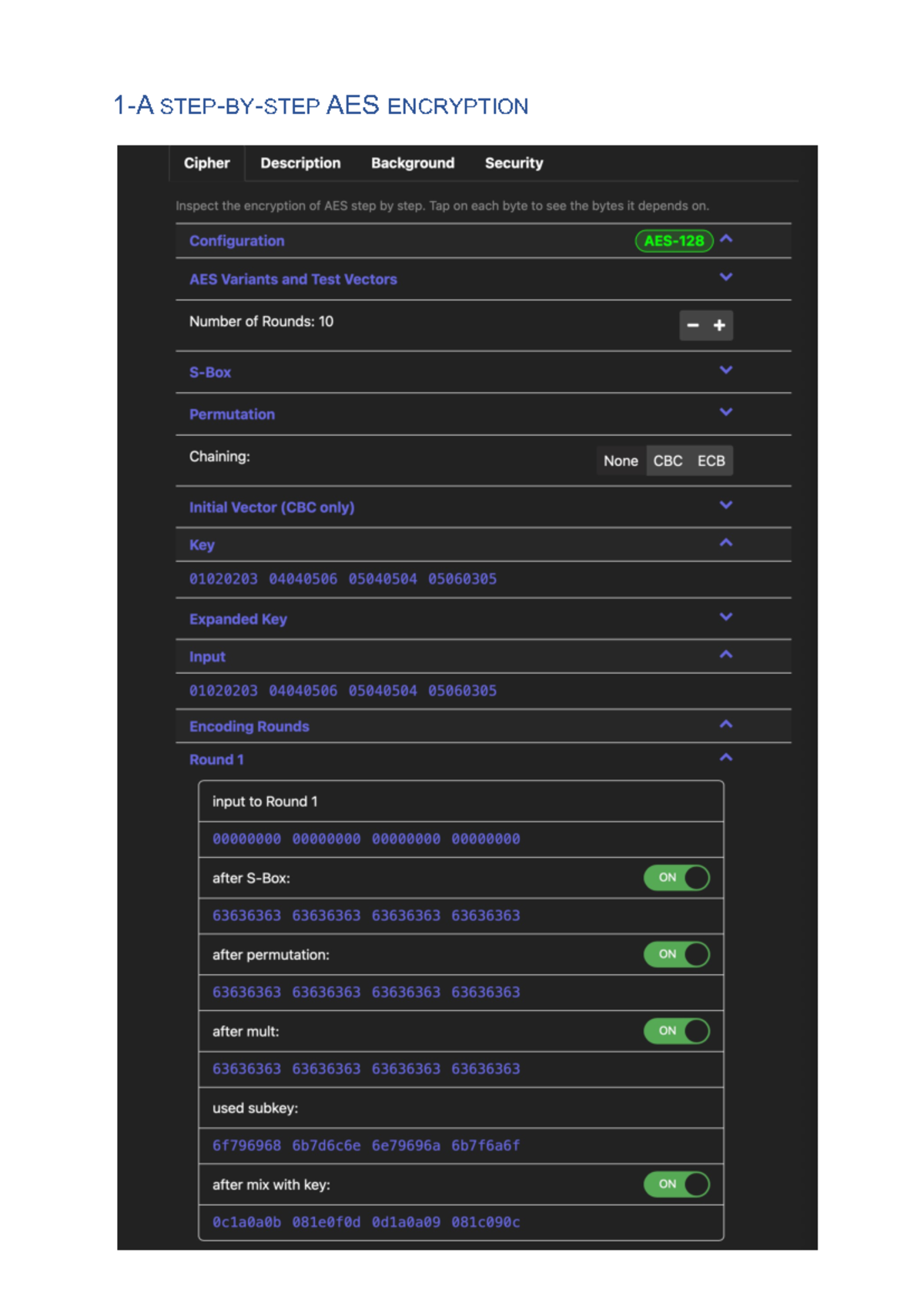
When data passes through unoptimized software implementations of AES, the CPU must execute complex mathematical transformations—such as SubBytes, ShiftRows, MixColumns, and AddRoundKey—sequentially for every block.
- Software-Only Overhead: Without hardware support, software-based AES can saturate CPU cores, reducing overall system throughput and increasing response times for client requests.
- Memory Bandwidth Consumption: Frequent fetching of encryption keys and substitution boxes (S-boxes) from system RAM into CPU caches can create memory bottlenecks.
The Threat Landscape and Risk Assessment
Balancing speed and security requires evaluating the actual threat model rather than defaulting to maximum settings everywhere.
For example, temporary session tokens or streaming media with short lifespans may not warrant the same computational overhead as long-term financial records or classified state secrets. Aligning key lengths and operational modes with data classification policies prevents wasted computing resources.
Hardware Acceleration: Overcoming the Performance Penalty
The historical performance penalty of robust encryption has been largely mitigated by modern hardware acceleration. Instead of relying purely on general-purpose CPU instructions, modern processors integrate dedicated cryptographic co-processors directly onto the silicon die.
Intel AES-NI and ARM Cryptographic Extensions
Instruction set architectures like Intel Advanced Encryption Standard New Instructions (AES-NI) and ARM Cryptographic Extensions provide native hardware support for AES operations.
- Instruction-Level Parallelism: AES-NI introduces specialized instructions that execute the heavy lifting of encryption and decryption rounds directly in hardware.
- Performance Multipliers: Systems equipped with AES-NI can achieve multi-fold increases in throughput while drastically reducing CPU utilization compared to pure software implementations.
Offloading to Dedicated Hardware Security Modules (HSMs)
Beyond CPU-level instructions, enterprises often utilize Hardware Security Modules (HSMs) or dedicated cryptographic accelerators (such as PCIe crypto cards) to handle heavy encryption workloads.
These dedicated devices manage key generation, storage, and cryptographic processing independently from the host operating system, ensuring that high-speed network traffic remains secure without starving application workloads of CPU resources.
Choosing the Right Block Cipher Mode
The performance and security of AES depend significantly on the operational mode chosen. A block cipher mode describes how the algorithm encrypts blocks of data larger than 128 bits. Selecting the correct mode is crucial for both security and speed.
| Cipher Mode | Description | Security Level | Speed / Efficiency | Best Use Cases |
|---|---|---|---|---|
| CBC (Cipher Block Chaining) | Each plaintext block is XORed with the previous ciphertext block before encryption. | High (Requires IV) | Moderate (Sequential processing limits parallelization) | Legacy systems, file encryption. |
| GCM (Galois/Counter Mode) | Combines counter mode with Galois authentication for authenticated encryption (AEAD). | Very High (Integrity + Confidentiality) | High (Supports parallel processing) | TLS/HTTPS, cloud storage, high-speed networks. |
| ECB (Electronic Codebook) | Encrypts identical plaintext blocks into identical ciphertext blocks. | Low (Leaks data patterns) | High | Avoid. Not recommended for secure applications. |
| CTR (Counter Mode) | Turns the block cipher into a stream cipher by encrypting successive counter values. | High | Very High (Highly parallelizable) | Disk encryption, streaming data. |
The Rise of Authenticated Encryption (AEAD)
In modern cybersecurity, confidentiality alone is insufficient; data integrity must also be guaranteed to prevent tampering. Traditional methods combined a cipher mode (like CBC) with a separate message authentication code (like HMAC).
However, modern standards favor Authenticated Encryption with Associated Data (AEAD) modes, most notably AES-GCM. AES-GCM provides both encryption and integrity verification in a single pass, optimizing CPU efficiency and reducing the vulnerability window for implementation flaws.
Common Implementation Pitfalls and Mitigation Strategies
Even with a mathematically secure algorithm like AES, implementation vulnerabilities can completely compromise system security. Balancing speed and security must never involve cutting corners on foundational cryptographic practices.
1. Poor Initialization Vector (IV) and Nonce Management
Modes like CBC and GCM require unique Initialization Vectors (IVs) or nonces for every encryption operation using the same key. Reusing an IV in GCM mode can catastrophically compromise confidentiality and integrity, allowing attackers to forge authenticated messages.
- Mitigation: Utilize cryptographically secure pseudo-random number generators (CSPRNGs) to generate unpredictable IVs, or employ strictly managed counters for nonce generation.
2. Insecure Key Storage and Management
Hardcoding encryption keys into source code or storing them alongside encrypted data files negates the security provided by AES.
- Mitigation: Implement centralized Key Management Systems (KMS) or cloud-based key vaults that enforce role-based access control (RBAC), automatic key rotation, and audit logging.
3. Ignoring Side-Channel Vulnerabilities
In high-security environments, sophisticated attackers can analyze power consumption, electromagnetic radiation, or cache-timing variations to extract AES keys from hardware.
- Mitigation: Utilize constant-time software implementations and certified tamper-resistant hardware (such as FIPS 140-2 or FIPS 140-3 validated modules) to neutralize side-channel analysis.
Best Practices for Balancing Speed and Security in 2026
Achieving an optimal balance between performance and protection requires a structured operational framework. Organizations should adopt the following guidelines when designing encrypted systems:
- Leverage Hardware Acceleration: Ensure all production servers and cloud instances have CPU-level cryptographic extensions (such as AES-NI) enabled and utilized by underlying software libraries.
- Standardize on AES-GCM: Where applicable, use AES-GCM for authenticated encryption to secure data in transit, ensuring both privacy and tamper-resistance efficiently.
- Right-Size Key Lengths: Evaluate whether AES-256 is strictly necessary for your workload. AES-128 offers robust, quantum-resistant-adjacent symmetric security with lower overhead for performance-critical applications.
- Automate Key Lifecycle Management: Implement regular key rotation policies without manual intervention to minimize the impact of potential key compromise.
- Perform Cryptographic Profiling: Regularly benchmark application throughput and latency under simulated load to identify bottlenecks caused by inefficient cryptographic libraries or unoptimized block modes.
Frequently Asked Questions
Is AES-256 always slower than AES-128?
Yes, mathematically and practically, AES-256 requires 14 internal transformation rounds compared to the 10 rounds of AES-128. However, on modern hardware utilizing CPU-level acceleration (like AES-NI), the performance difference is often negligible for standard application workloads, though it can still matter in ultra-high-throughput network routing.
Why is Electronic Codebook (ECB) mode discouraged?
ECB mode encrypts identical blocks of plaintext into identical blocks of ciphertext without incorporating randomness or chaining. This means patterns in the underlying data—such as shapes in bitmap images—remain visible in the encrypted output, making it vulnerable to replay and frequency analysis attacks.
How does hardware acceleration improve AES performance?
Hardware acceleration moves the complex mathematical operations of the AES rounds from general-purpose CPU registers into dedicated silicon circuits. This reduces the number of CPU instructions required per block, drastically lowering latency and freeing up processing power for application logic.
Can AES withstand attacks from quantum computers?
Symmetric encryption algorithms like AES are relatively resilient against quantum computing threats compared to asymmetric algorithms like RSA or ECC. Grover's algorithm can theoretically speed up brute-force attacks against AES, but doubling the key size (e.g., using AES-256) effectively neutralizes this advantage, ensuring long-term security.
Conclusion and Next Actions
Balancing speed and security in AES cybersecurity is an engineering discipline that bridges mathematics, hardware design, and software architecture. By abandoning the false dichotomy that strong security must cripple performance, organizations can build lightning-fast, highly resilient systems.
To take immediate action, audit your current cryptographic implementations to verify that hardware acceleration is active, review your block cipher modes to adopt efficient AEAD standards like AES-GCM, and align your key lengths with realistic data classification and threat models.