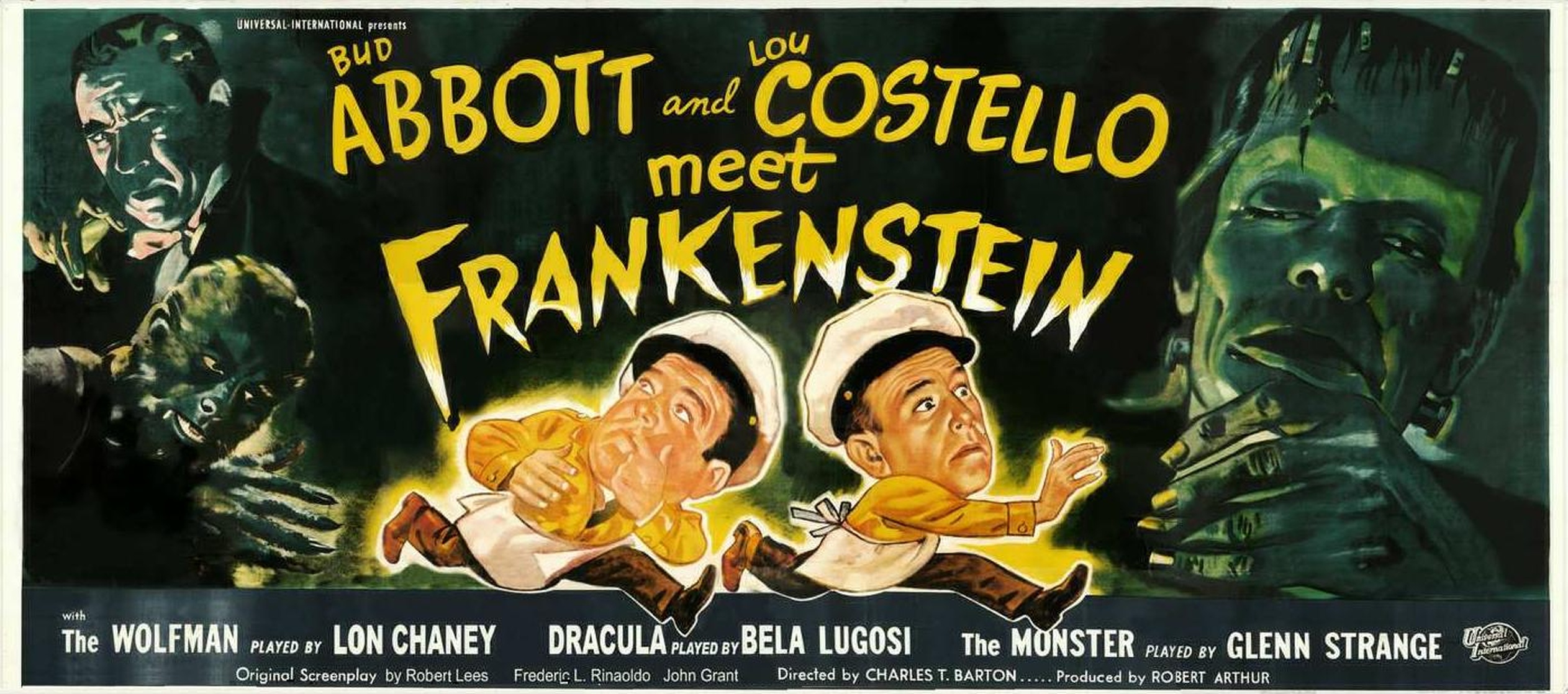
While many fans search for "Abbott and Costello Meet the Wolf Man," the official title of this legendary cinematic crossover is Abbott and Costello Meet Frankenstein, released in 1948. It features the iconic Larry Talbot (The Wolf Man), played by Lon Chaney Jr., as a central figure who attempts to warn the comedic duo about the impending resurrection of Count Dracula and Frankenstein’s Monster.
Released during a pivotal transition in Hollywood history, this film successfully blended the "Golden Age" of Universal Monsters with the high-energy slapstick of America’s favorite comedy team. In 2026, as the film celebrates its 78th anniversary, it remains the gold standard for horror-comedy, praised for its respectful treatment of the monsters and its impeccable comedic timing.
Disambiguating the Title and Subject
The search for "Abbott and Costello Meet the Wolf Man" frequently points to the 1948 film Abbott and Costello Meet Frankenstein. This confusion is understandable, as the Wolf Man is arguably the film's most active supernatural protagonist. Unlike Count Dracula (Bela Lugosi) or Frankenstein’s Monster (Glenn Strange), Lawrence Talbot serves as a tortured hero-antagonist who spends the majority of the film trying to stop the villains, albeit while struggling with his own lycanthropic curse.
It is important to distinguish this film from other entries in the "Abbott and Costello Meet..." series, such as their encounters with the Invisible Man (1951), the Mummy (1955), or Dr. Jekyll and Mr. Hyde (1953). However, the 1948 production is the only one to feature the "Big Three" of the Universal lineup: Dracula, the Wolf Man, and Frankenstein’s Monster.
The Historical Context: Saving Universal Pictures
By the mid-1940s, the Universal Horror cycle was in a state of decline. The once-fearsome icons had been relegated to "monster rallies" like House of Frankenstein (1944) and House of Dracula (1945), where the plots became increasingly thin and the scares less effective. Simultaneously, the comedy duo of Bud Abbott and Lou Costello, who had been top box-office draws during the early war years, were seeing a dip in their popularity.
The decision to pair the fading monsters with the struggling comedians was seen as a "hail mary" by Universal executives. Initially, Lou Costello hated the script, famously stating, "My five-year-old daughter could write better than this." However, director Charles Barton and the studio persisted. The result was a massive commercial success that revitalized the studio's bank account and cemented the legacy of the monsters for a new generation of children.
Detailed Plot Summary: Baggage, Castles, and Full Moons
The story follows Chick Young (Abbott) and Wilbur Grey (Costello), two baggage handlers in Florida. They receive a shipment of two crates destined for "McDougal’s House of Horrors," a local wax museum. Unbeknownst to them, the crates contain the actual remains of Count Dracula and Frankenstein’s Monster.
The Arrival of Lawrence Talbot
While Chick and Wilbur are handling the crates, they receive a frantic long-distance phone call from London. The caller is Lawrence Talbot (the Wolf Man), who warns them not to open the crates. Predictably, Wilbur—the "bumbling" half of the duo—witnesses the monsters coming to life, while the skeptical Chick misses every supernatural event. This dynamic forms the core of the film's humor.
The Plot to Swap Brains
Count Dracula, who has assumed the identity of Dr. Lejos, plans to revive Frankenstein’s Monster. To make the Monster obedient, Dracula needs to replace its brain with one that is "simple and easily led." He selects Wilbur’s brain for the procedure. Lawrence Talbot arrives in Florida to stop Dracula, but his efforts are hampered by his transformation into the Wolf Man whenever the full moon rises.
The Climax at the Castle
The film culminates in a chaotic chase through a gothic castle. The Wolf Man battles Dracula, eventually tackling him over a balcony and into the rocky surf below. Meanwhile, Chick and Wilbur are pursued by Frankenstein’s Monster, leading to a series of high-stakes comedic set pieces involving secret passages, rotating walls, and a harrowing escape by boat.
Cast and Characters: The Intersection of Comedy and Horror
One reason the film works where others failed is that the monsters are played straight. They are not caricatures; they are the same menacing figures audiences had grown to fear in the 1930s.
- Bud Abbott (Chick Young): The quintessential "straight man," Chick is the rationalist who refuses to believe in the supernatural, often bullying Wilbur for his "imagination."
- Lou Costello (Wilbur Grey): Costello’s performance is a masterclass in physical comedy. His "scare takes" and vocal undulations became the template for horror-comedy protagonists.
- Lon Chaney Jr. (The Wolf Man/Lawrence Talbot): Chaney is the only actor to play the Wolf Man in all five of his original Universal appearances. His portrayal of Talbot in this film is deeply sympathetic, emphasizing the character's exhaustion and desperation.
- Bela Lugosi (Count Dracula): This was only the second (and final) time Lugosi played Dracula in a feature film. Despite his age, his presence brought an air of authenticity and elegance to the production.
- Glenn Strange (Frankenstein’s Monster): Strange, a veteran of Westerns, took over the role from Boris Karloff. His massive physical presence and the legendary makeup by Jack Pierce (refined by Bud Westmore) created a truly imposing figure.
Production and Technical Excellence
Despite its comedic nature, the film boasted high production values. The cinematography by Charles Van Enger utilized "low-key" lighting typically reserved for pure noir or horror films, which helped maintain the atmosphere.
Special Effects and Animation
A notable technical highlight is the animation used for Dracula’s transformation into a bat. Unlike the clumsy wire-work seen in earlier films, Universal hired animators to create a fluid, stylized transition. This gave the film a polished look that helped it stand out in the 1948 marketplace.
Makeup Evolution
By 1948, the laborious makeup processes of the 1930s were being streamlined. While Lon Chaney Jr. still required hours of application for the Wolf Man's yak-hair layers, the process was becoming more efficient. This film also represents one of the final times the classic "Universal look" for these characters would be seen on the big screen before the 1950s shifted toward sci-fi and "atomic age" monsters.
Universal Monster Appearances Comparison
The following table outlines the appearances of the primary monsters within the Universal Horror cycle leading up to and including the 1948 crossover.
| Character | Original Debut | Actor in 1948 Film | Total Universal Appearances |
|---|---|---|---|
| Dracula | Dracula (1931) | Bela Lugosi | 2 (As Dracula) |
| The Wolf Man | The Wolf Man (1941) | Lon Chaney Jr. | 5 |
| Frankenstein's Monster | Frankenstein (1931) | Glenn Strange | 8 (Various Actors) |
| The Invisible Man | The Invisible Man (1933) | Vincent Price (Voice) | 6 |
Note: Vincent Price provides the voice of the Invisible Man in a comedic cameo during the final scene of the 1948 film.
Legacy and Cultural Impact in 2026
In 2026, Abbott and Costello Meet Frankenstein is regarded as more than just a spoof. It is a historical document that preserved the icons of the 1930s while paving the way for the future of the genre.
- National Film Registry: In 2001, the United States Library of Congress deemed the film "culturally, historically, or aesthetically significant" and selected it for preservation in the National Film Registry.
- Influence on Modern Horror-Comedy: Without this film, modern classics like Shaun of the Dead, Young Frankenstein, and What We Do in the Shadows might not exist. It proved that you could respect the horror elements while still making the audience laugh.
- The "Shared Universe" Prototype: This film is often cited as an early example of a shared cinematic universe, a concept that dominates the film industry in 2026. Universal’s ability to weave multiple franchises into a single narrative was decades ahead of its time.
Where to Watch and Technical Specifications
As of 2026, the film has undergone several digital restorations. For the best viewing experience, seek out the 4K Ultra HD versions, which have been painstakingly scanned from the original 35mm fine-grain master.
- Streaming: The film is a staple of the Peacock streaming service (Universal's digital home) and is frequently available on platforms like Criterion Channel during the October season.
- Physical Media: The "Universal Classic Monsters: Complete 30-Film Collection" includes a high-definition transfer.
- Aspect Ratio: 1.37:1 (Academy Ratio).
- Audio: Original Mono (DTS-HD Master Audio 2.0 is common on modern releases).
Frequently Asked Questions
Why didn't Boris Karloff play the Monster in this movie?
Boris Karloff had moved on from the role of the Monster by 1948, fearing that the character had become a "prop" rather than a character. Interestingly, Karloff actually helped promote the film and later starred in Abbott and Costello Meet the Killer, Boris Karloff (1949), showing he had no ill will toward the duo.
Is the Wolf Man a "good guy" in this film?
In a sense, yes. Lawrence Talbot is the only character who truly understands the danger Dracula poses. While his transformations make him a threat to Chick and Wilbur, his human persona is entirely dedicated to stopping the villains. This continues the "tragic hero" arc established in the 1941 original.
Did Abbott and Costello actually meet the Wolf Man again?
While they met many "monsters," this was their only feature-length encounter with the Lawrence Talbot version of the Wolf Man. They did, however, face a "wolf man" transformation in the 1953 film Abbott and Costello Meet Dr. Jekyll and Mr. Hyde, though that was a distinct character (Mr. Hyde's beast form).
Does the film contain any real scares?
For a modern audience, the film is more "spooky" than terrifying. However, the scenes involving the Wolf Man’s transformation and Dracula’s hypnotic powers are handled with atmospheric seriousness, making them quite effective compared to other comedies of the era.
How did they film the bat-to-Dracula transformations?
The 1948 film used traditional hand-drawn animation for the bat, which was then optically composited with the live-action footage of Bela Lugosi. This was a significant upgrade from the physical "bat-on-a-wire" props used in the 1931 original.
Final Recommendations for Viewers
Whether you are a lifelong fan of classic cinema or a newcomer exploring the roots of horror-comedy, Abbott and Costello Meet Frankenstein (the true "Meet the Wolf Man" film) is essential viewing. In 2026, its humor remains remarkably fresh, largely because the "straight man" dynamic between Abbott and Costello is timeless.
To get the most out of the experience, it is recommended to watch the original The Wolf Man (1941) and Dracula (1931) first. Understanding the "rules" of these monsters makes the subversion of those rules in the comedy much more satisfying. For collectors, the 2020s-era 4K restorations are the definitive way to see the intricate work of the makeup artists and set designers who defined the look of horror for nearly a century.