ABB Combustion Engineering represents a pivotal chapter in the history of global power generation, marking the decade between 1990 and 2000 when the Swiss-Swedish conglomerate ABB (Asea Brown Boveri) owned the American industrial giant Combustion Engineering (CE). This era combined CE’s world-leading boiler and nuclear reactor designs with ABB’s advanced automation and electrical systems, shaping much of the infrastructure still powering the world’s electrical grids in 2026.
The Strategic Significance of the ABB-CE Era
To understand ABB Combustion Engineering, one must look at the industrial landscape of the late 20th century. Combustion Engineering was founded in 1912 and had established itself as a premier provider of steam-generation equipment and nuclear power systems. By the late 1980s, ABB sought to expand its footprint in the North American market and acquire high-end thermal power technology. In 1990, ABB finalized the acquisition of Combustion Engineering for approximately $1.6 billion.
This merger created a powerhouse capable of offering "turnkey" power plants. Before the acquisition, ABB was primarily an electrical and automation firm, while CE was a mechanical and thermal engineering firm. The integration allowed for the development of fully integrated power solutions where the boiler, turbine, and control systems were designed to work in perfect synchronization.
In 2026, many of the operational coal, oil, and gas-fired power plants across the United States, China, and Southeast Asia still utilize the core designs developed during the ABB Combustion Engineering era. While the ownership of these technologies has since transitioned—primarily to GE Power (General Electric)—the "ABB-CE" designation remains a standard reference point for technical manuals, spare parts, and retrofitting projects.
Core Fossil Fuel Technologies: The Tangential Firing Legacy
The hallmark of ABB Combustion Engineering’s fossil fuel division was its mastery of boiler technology, specifically the development and refinement of Tangential Firing (T-Firing) systems. Unlike wall-fired boilers, where burners are mounted on the walls facing each other, T-fired boilers place burners at the corners of the furnace.
These burners aim the fuel and air toward the center of the furnace, creating a rotating "fireball." This design provides several distinct advantages that are still leveraged in modern 2026 emissions-reduction retrofits:
- Fuel Flexibility: The vortex created by T-firing allows for the combustion of a wide range of coal ranks, including low-quality lignite and sub-bituminous coals, as well as biomass blends.
- Lower NOx Emissions: The inherent staging of air and fuel in a tangential system leads to lower nitrogen oxide (NOx) production compared to older, high-intensity burner designs.
- Improved Heat Distribution: The rotating fireball ensures more uniform heat absorption by the water walls, reducing the risk of localized overheating and tube failures.
During the 1990s, ABB Combustion Engineering expanded the "VU" series of industrial boilers and the "CE" utility-scale boilers. These units were often paired with ABB’s steam turbines, creating a highly efficient thermal cycle that became the blueprint for rapid industrialization in emerging markets.
Nuclear Power Systems: From System 80 to System 80+
Combustion Engineering was a pioneer in Pressurized Water Reactor (PWR) technology. When ABB took over, they inherited the System 80 design, which was already one of the most advanced nuclear steam supply systems (NSSS) in the world.
Under ABB’s leadership, the design was evolved into the System 80+, a standardized Advanced Light Water Reactor (ALWR). This design was significant because it emphasized safety through redundancy and simplification. Key features included:
- Standardized Design: This reduced construction times and costs, a precursor to the modular construction techniques favored in the mid-2020s.
- Enhanced Safety Systems: System 80+ incorporated passive safety features and improved containment structures to withstand extreme external events.
- Digital Instrumentation and Control (I&C): ABB integrated its state-of-the-art digital control systems into the nuclear plant's "brain," moving away from the analog controls of the 1970s.
The legacy of this technology is perhaps most visible in South Korea. The Korean Standard Nuclear Power Plant (KSNP) design, which evolved into the OPR1000 and the APR1400, is fundamentally based on the ABB Combustion Engineering System 80 technology. In 2026, these reactors continue to be among the most successful and exported nuclear designs globally.
The Integration of Control Systems: Advant and MOD 300
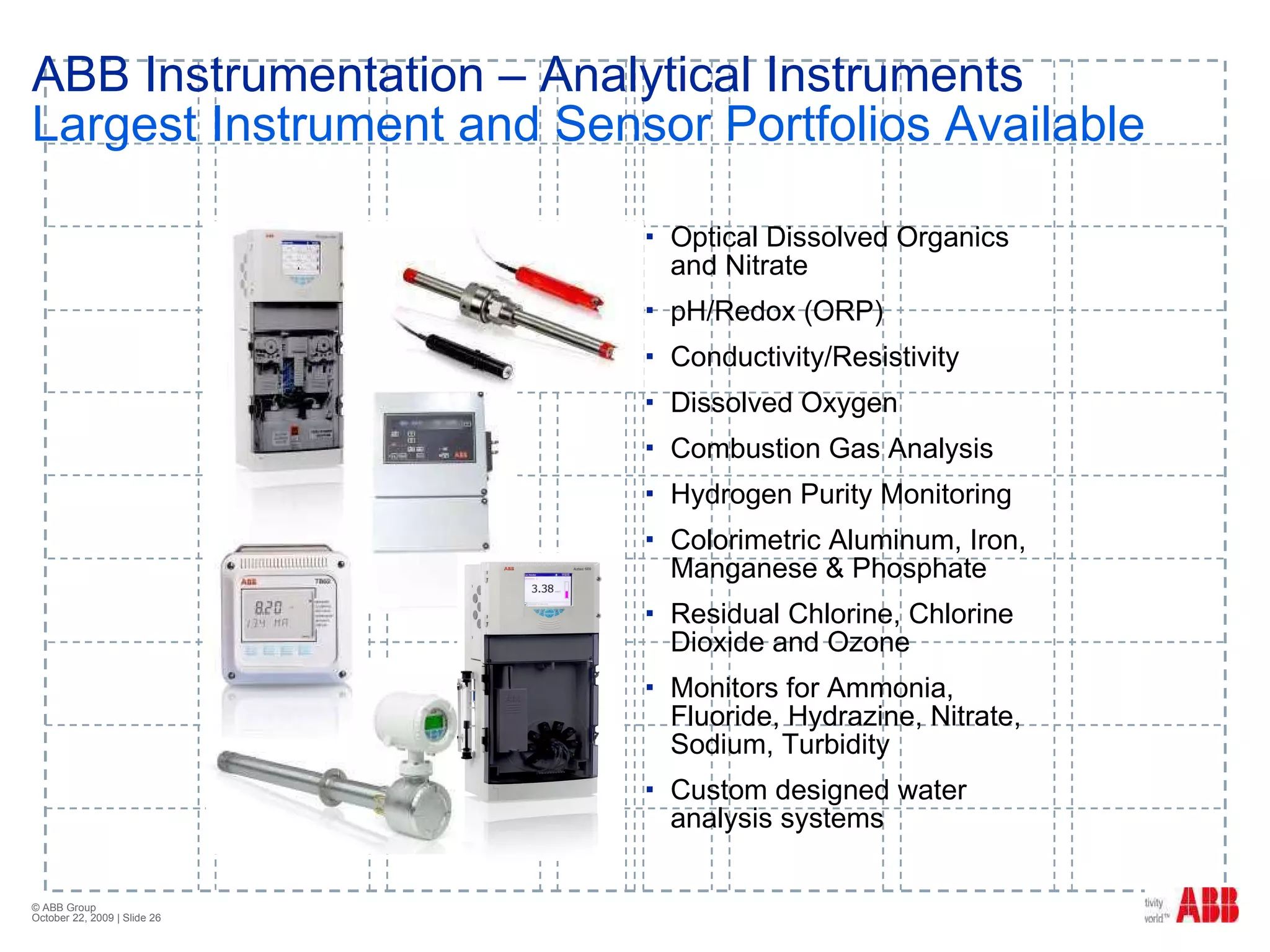
One of the greatest successes of the ABB-CE era was the modernization of industrial control systems. ABB introduced its Advant OCS (Open Control System) and integrated it with CE's legacy MOD 300 systems. This allowed power plant operators to move from manual or semi-automated operations to fully automated, software-driven environments.
By the mid-1990s, ABB Combustion Engineering units were being equipped with sophisticated boiler optimization software. This software could analyze gas temperatures, fuel flow, and air ratios in real-time to maximize efficiency and minimize emissions. Today, these systems have evolved into the "Digital Twin" and AI-driven platforms used in 2026 to manage aging power assets, but the foundational logic and sensor arrays often date back to the ABB-CE integration.
Comparison of Legacy ABB-CE Power Technologies
The following table outlines the primary product lines that defined the ABB Combustion Engineering era and their current status in the global power market.
| Technology Category | Key Brand/Model | Primary Application | 2026 Market Status |
|---|---|---|---|
| Utility Boilers | CE Series (T-Fired) | Large-scale power plants | Maintained/Retrofitted by GE Power |
| Industrial Boilers | VU-40, VU-60 | Paper mills, refineries, steam | Many still in active service |
| Nuclear Systems | System 80 / 80+ | Base-load electricity | Basis for Korean APR1400 designs |
| Control Systems | MOD 300 / Advant | Plant automation | Migrated to ABB Ability / 800xA |
| Pulverizers | Bowl Mills (RS, HP) | Coal grinding/preparation | Standard industry equipment |
The Asbestos Crisis and Financial Restructuring
The history of ABB Combustion Engineering is also inextricably linked to one of the most significant legal challenges in industrial history: the asbestos litigation. Combustion Engineering had used asbestos in its boiler insulation for decades prior to the ABB acquisition.
By the late 1990s, the mounting legal liabilities from asbestos-related health claims began to threaten the financial stability of the entire ABB Group. This led to a complex series of events:
- Sale to Alstom: In 2000, ABB sold its share of the joint venture ABB-Alstom Power to the French firm Alstom. However, the legal liabilities associated with CE remained a major hurdle.
- Bankruptcy Protection: Combustion Engineering eventually filed for Chapter 11 bankruptcy protection in 2003 to resolve its asbestos liabilities through the creation of a multi-billion dollar trust fund.
- Resolution: This restructuring allowed ABB to survive as a company focused on robotics and automation, while the "Combustion Engineering" name began to fade from the corporate masthead, replaced by Alstom and later GE.
Maintenance and Parts Support in 2026
For facility managers and engineers operating ABB-CE equipment in 2026, the primary concern is the sourcing of authentic parts and specialized engineering support. Because the power generation business was sold to Alstom, and Alstom’s power business was subsequently acquired by GE in 2015, GE Power is the current Original Equipment Manufacturer (OEM) for legacy Combustion Engineering boilers and pulverizers.
Sourcing Spare Parts
Genuine parts for CE Bowl Mills (such as the HP and RS series) are critical for maintaining the grind fineness required for low-NOx combustion. In 2026, third-party manufacturers offer "will-fit" parts, but OEM parts from GE are generally preferred for critical pressure parts like superheater headers and water-wall panels to ensure compliance with modern ASME (American Society of Mechanical Engineers) codes and insurance requirements.
Modernization and Life Extension
Many ABB-CE units have reached the end of their original 30-year design life. However, in 2026, the trend is toward Life Extension Programs (LEP) rather than decommissioning, especially in regions where grid stability is a concern. These programs typically involve:
- Pressure Part Replacement: Replacing aging alloy tubes with higher-grade materials (like T91 or T92) to handle cycling operations.
- Low NOx Burner Retrofits: Replacing original 1990s burners with ultra-low NOx designs to meet 2026 environmental standards.
- Control System Migration: Upgrading legacy Advant or MOD 300 controllers to modern platforms like ABB 800xA or GE Mark VIe.
Environmental and Safety Compliance
Operating legacy ABB-CE equipment in 2026 requires strict adherence to updated environmental regulations. While these units were "clean" by 1995 standards, they often require supplemental systems to meet today's limits on mercury, SO2, and particulate matter.
The integration of Selective Catalytic Reduction (SCR) systems and Flue Gas Desulfurization (FGD) units is common for these boilers. Engineers must be careful when adding these systems to ABB-CE T-fired units, as the change in backpressure can affect the performance of the original forced-draft (FD) and induced-draft (ID) fans.
Safety protocols also remain a priority. Given the history of asbestos in CE products, any maintenance involving the insulation of older units must be preceded by certified hazardous material testing. Most units have been abated by 2026, but older documentation should always be verified.
Frequently Asked Questions
Who currently owns the ABB Combustion Engineering technology?
The fossil fuel and nuclear power generation technologies formerly owned by ABB Combustion Engineering are now largely owned by GE Power (General Electric). However, ABB retained its automation and robotics divisions, which still support the digital control systems used in many of these plants.
Can I still get parts for a CE Bowl Mill?
Yes. GE Power remains the OEM provider for CE pulverizers and bowl mills. There is also a robust secondary market of third-party engineering firms that specialize in these specific components, given the massive global installed base of CE grinding equipment.
What is the difference between a CE boiler and an ABB-CE boiler?
The distinction is primarily chronological. A "CE boiler" usually refers to a unit designed and built before 1990 by Combustion Engineering Inc. An "ABB-CE boiler" refers to units built or significantly upgraded between 1990 and 2000. The underlying technology—tangential firing—remains consistent across both eras.
Is System 80 nuclear technology still in use?
Absolutely. The System 80 design is the backbone of the South Korean nuclear fleet. Several units in the United States, such as those at the Palo Verde Generating Station, also utilize the System 80 NSSS. It is considered one of the most reliable large-scale PWR designs ever built.
How do I modernize the controls on an old ABB-CE unit?
The most common path in 2026 is a migration to a modern Distributed Control System (DCS). If the plant originally used ABB Advant or MOD 300, staying within the ABB ecosystem (moving to ABB 800xA) often allows for a smoother transition of logic and I/O wiring. Alternatively, GE offers migration paths to their Mark VIe platform.
Practical Recommendation for Asset Managers
If you are responsible for an industrial or utility site operating ABB Combustion Engineering equipment in 2026, your primary objective should be a Comprehensive Asset Integrity Audit. Many of these units are operating in a "cycling" mode (turning on and off frequently) for which they were not originally designed.
Engage with a qualified engineering firm to perform high-energy piping inspections and boiler circulation studies. Updating your control logic to include "smart start-up" sequences can significantly reduce thermal stress on these legacy assets, extending their operational life by another 10 to 15 years while maintaining compliance with current safety and environmental mandates.