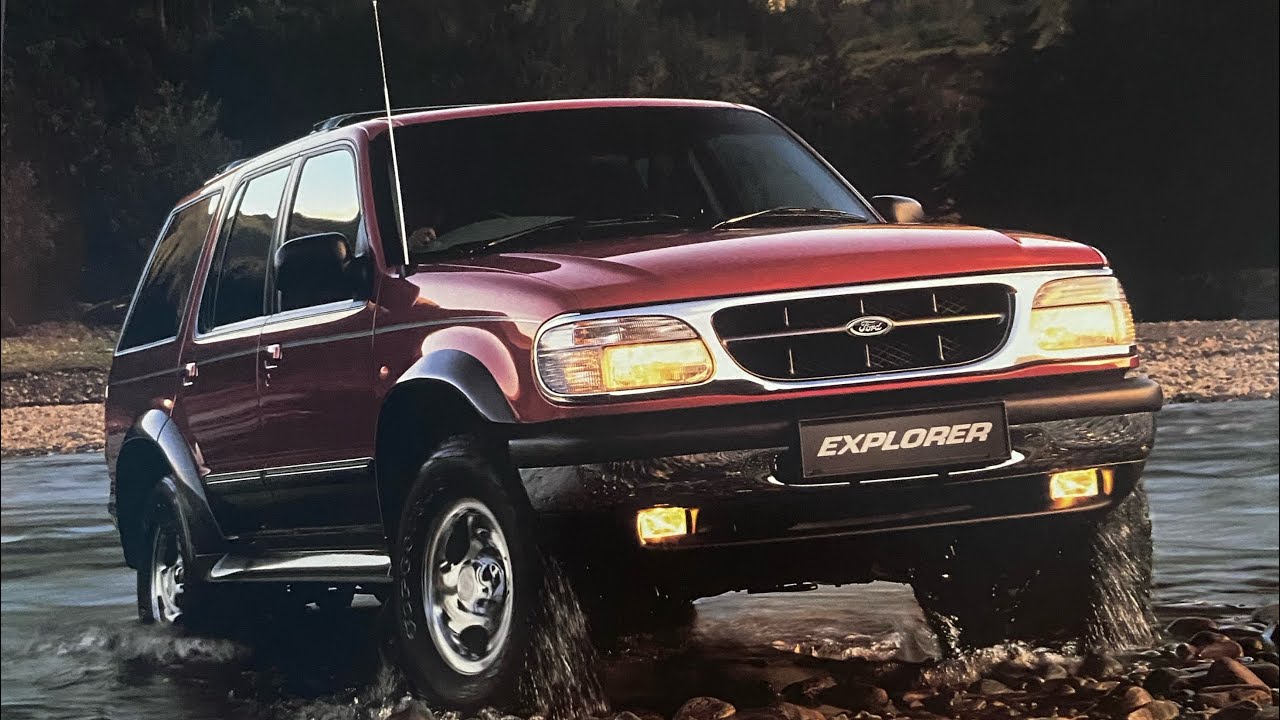
The 90s Ford Explorer transformed the American automotive market by shifting the SUV from a rugged, niche off-road tool into the dominant family vehicle of the modern age. Launched in 1990 for the 1991 model year, it combined truck-based capability with car-like interior refinements, effectively replacing the station wagon and setting the architectural blueprint for the mid-size SUV segment.
The Genesis of the Mid-Size Revolution
To understand the legacy of the 90s Ford Explorer, one must look at the landscape of the late 1980s. At the time, families primarily chose between the traditional station wagon or the rapidly ascending minivan. SUVs existed, but they were largely utilitarian. Vehicles like the Jeep Cherokee (XJ) had proven there was a market for a four-door compact SUV, but Ford recognized a gap for something slightly larger, more comfortable, and more prestigious.
The Explorer was designed to replace the Ford Bronco II. While the Bronco II was a capable off-roader, its short wheelbase and narrow track led to stability concerns and a cramped interior. Ford’s engineers realized that by lengthening the chassis and widening the body, they could create a vehicle that felt substantial and safe to the average consumer. When the first Explorer rolled off the assembly line in Louisville, Kentucky, in 1990, it didn't just replace a model; it launched a cultural phenomenon.
The "mid-size" designation was crucial. It offered enough room for a family of five and their luggage but remained small enough to fit into a standard suburban garage. This Goldilocks sizing, combined with a command seating position that gave drivers a better view of the road, made it an instant success. By the mid-90s, the Explorer was consistently among the top ten best-selling vehicles in the United States, often moving over 400,000 units annually.
First Generation (1991–1994): Building the Foundation
The first-generation Ford Explorer utilized a body-on-frame construction derived from the Ford Ranger pickup. However, Ford went to great lengths to ensure the ride quality didn't feel like a commercial truck. The front suspension featured Ford's "Twin I-Beam" setup for two-wheel-drive models and "Twin Traction Beam" for four-wheel-drive versions. While technologically older than independent setups, it provided a robust feel that resonated with buyers.
Technical Specifications: The Cologne V6
The heart of the first-generation Explorer was the 4.0-liter Cologne V6 engine. This overhead valve (OHV) powerplant produced 155 horsepower and 220 lb-ft of torque. While these numbers seem modest by 2026 standards, in 1991, they provided ample low-end grunt for towing boats or traversing light trails.
The transmission options included a 5-speed manual (the M5OD) and the 4-speed A4LD automatic. The automatic, in particular, became a point of technical discussion among enthusiasts; it was one of the first Ford transmissions to use electronic shift control for the overdrive gear, though it was often criticized for being under-built for the vehicle's weight.
The Eddie Bauer Influence
Perhaps the most significant contribution of the first generation was the Eddie Bauer edition. By partnering with the outdoor apparel brand, Ford successfully marketed the SUV as a lifestyle accessory. With two-tone paint, tan leather interiors, and specialized badging, the Eddie Bauer Explorer convinced suburbanites that they weren't just buying a truck; they were buying an adventurous, upscale identity. This trim level pioneered the "luxury SUV" concept that would eventually lead to the multi-billion dollar premium SUV market of the 21st century.
Second Generation (1995–2001): Refining the Formula
If the first generation introduced the concept, the second generation perfected it. Launched for the 1995 model year, the second-gen Explorer featured a more rounded, aerodynamic exterior and a vastly improved interior. The most critical change, however, was hidden underneath the front fenders.
From Twin I-Beam to Short-Long Arm
Ford ditched the aging Twin I-Beam suspension in favor of a modern short-long arm (SLA) independent front suspension. This change significantly improved on-road handling and ride comfort, moving the Explorer further away from its "truck" roots. It also allowed for the fitment of rack-and-pinion steering, providing a more precise driving experience that felt more like a sedan than a utility vehicle.
The Power of the V8 and the SOHC V6
In 1996, Ford finally answered the demand for more power by offering the 5.0-liter (302 cubic inch) Windsor V8. Borrowed from the Mustang and F-150, this engine produced 210 horsepower and 280 lb-ft of torque. Because the V8 was physically larger, it required a unique all-wheel-drive system (viscous coupling) rather than the standard selectable 4WD.
Simultaneously, Ford introduced a more advanced version of the 4.0-liter engine: the SOHC (Single Overhead Cam) V6. Producing 205 horsepower, it nearly matched the V8's output while offering better fuel efficiency. However, this engine gained a reputation for timing chain cassette failures, a technical nuance that collectors and owners must still monitor in 2026.
The Firestone Tire Controversy: A Dark Chapter
No history of the 90s Ford Explorer is complete without addressing the Firestone tire crisis. Starting in the late 1990s, reports began to surface of tread separation on Firestone ATX and Wilderness tires equipped on Explorers. When the tread separated at high speeds, it often led to vehicle rollovers.
The Engineering and PR Fallout
The controversy led to a massive legal and public relations battle between Ford and Firestone. Ford blamed the tire design, while Firestone argued that Ford's recommended tire pressure (26 psi) was too low, leading to heat buildup and failure. The National Highway Traffic Safety Administration (NHTSA) eventually linked the issue to over 270 deaths and hundreds of injuries.
The legacy of this event changed the automotive industry forever. It led directly to the passage of the TREAD Act (Transportation Recall Enhancement, Accountability and Documentation Act) in 2000. This legislation mandated that all new vehicles be equipped with Tire Pressure Monitoring Systems (TPMS), a feature we now take for granted in 2026. It also forced manufacturers to be more transparent with the NHTSA regarding potential safety defects.
90s Ford Explorer Generations Comparison
| Feature | First Generation (1991–1994) | Second Generation (1995–2001) |
|---|---|---|
| Engine (Base) | 4.0L OHV V6 (155 hp) | 4.0L OHV/SOHC V6 (160–205 hp) |
| Optional Engine | None | 5.0L Windsor V8 (210 hp) |
| Front Suspension | Twin I-Beam / Twin Traction Beam | Independent Short-Long Arm (SLA) |
| Steering | Recirculating Ball | Rack-and-Pinion |
| 4WD System | Touch Drive (Electric Shift) | ControlTrac (Auto 4WD) |
| Body Styles | 2-Door and 4-Door | 2-Door, 4-Door, and Sport Trac |
| Safety Milestones | Rear Anti-lock Brakes (Standard) | Dual Airbags (Standard '95+) |
The Cultural Impact: Killing the Station Wagon
The 90s Ford Explorer is the primary reason the American "Woody" station wagon went extinct. Throughout the 70s and 80s, the wagon was the quintessential family hauler. However, the Explorer offered something the wagon couldn't: the "Cool Factor."
By sitting higher up, drivers felt more secure and "empowered." The 4WD capability, even if rarely used by the average suburban buyer, provided the promise of adventure. This psychological shift was so profound that by the year 2000, almost every major manufacturer—including luxury brands like BMW and Mercedes-Benz—had scrambled to release their own mid-size SUVs to compete with the Explorer.
The Explorer also birthed the Mercury Mountaineer in 1997, a "near-luxury" twin that helped Lincoln-Mercury dealers capture the SUV boom. This badge-engineering strategy was a hallmark of 90s automotive corporate structure, proving that the platform was versatile enough to span multiple market segments.
Maintaining a 90s Explorer in 2026
As of 2026, the 90s Ford Explorer has officially transitioned into "modern classic" or "radwood" territory. While many were driven into the ground as high-mileage commuters, well-preserved examples are increasingly sought after by collectors who grew up in the backseat of one.
Common Issues to Watch For
If you are looking to acquire or maintain a 1991–2001 Explorer today, several technical areas require attention:
- Transmission Health: The A4LD and 4R55E transmissions are notorious for overheating. Adding an external transmission cooler is a highly recommended preventative measure.
- SOHC Timing Chain Guides: On 1997–2001 V6 models, the plastic timing chain cassettes can brittle and break. Listen for a "marbles in a can" sound at idle.
- Chassis Rust: Like many 90s vehicles, the Explorer’s boxed frame is prone to internal corrosion, especially near the rear leaf spring shackles.
- Blending Door Actuators: A common interior failure where the HVAC system loses the ability to regulate temperature, often requiring a dashboard-out repair.
Despite these issues, parts availability remains exceptionally high. Because Ford shared so many components with the Ranger pickup, mechanical parts are affordable and widely stocked by major retailers.
The Collector’s Market and "Modern Classic" Status
In 2026, the valuation of the 90s Explorer is bifurcated. Beaten-down "beaters" still exist at low price points, but low-mileage Eddie Bauer and Limited trims are seeing a steady rise in value. Collectors value the first-generation models for their rugged, boxy 90s aesthetic and the second-generation V8 models for their legendary reliability and towing capability.
The 1991 two-door models (often called the "Sport") are also gaining traction for their unique proportions. They represent a time when SUVs were still allowed to be small and quirky, before the market consolidated into the massive three-row behemoths common in the 2020s.
FAQ: Understanding the 90s Explorer Legacy
Was the 90s Ford Explorer a safe vehicle?
Statistically, the Explorer was as safe or safer than many of its contemporaries in standard crash tests. However, its high center of gravity made it more prone to rollovers than sedans, and the Firestone tire issue significantly damaged its safety reputation. Modern stability control, which wasn't standard in the 90s, has since addressed many of these inherent SUV risks.
Which 90s Explorer engine is the most reliable?
The 5.0-liter Windsor V8 (1996–2001) is widely considered the most durable engine offered in the 90s. It is an old-school, cast-iron pushrod engine with a massive aftermarket and a reputation for easily exceeding 250,000 miles if properly maintained. The 4.0L OHV V6 is also very robust, though it offers less power.
How did the Explorer affect the Ford-Firestone relationship?
The crisis ended a nearly 100-year business partnership between the Ford and Firestone families (which were even joined by marriage). The fallout was one of the most significant corporate breakups in history, leading both companies to overhaul their quality control and communication protocols.
Is a 90s Explorer good for off-roading?
Yes, particularly the first-generation models. Because they are based on the Ranger chassis and feature a true low-range transfer case, they are quite capable on trails. The second-generation 5.0L V8 models are also popular for "overlanding" builds, although their AWD systems require modifications for serious rock crawling.
Why did Ford replace the Bronco II with the Explorer?
The Bronco II had gained a reputation for instability due to its narrow track and high center of gravity. By moving to the wider, longer Explorer platform, Ford could offer a more stable ride and the four-door configuration that families were increasingly demanding.
Future Outlook and Recommendations
The legacy of the 90s Ford Explorer is one of transition. It moved the world from the era of the station wagon to the era of the SUV. In 2026, it stands as a symbol of 90s optimism and the American "bigger is better" philosophy.
For those looking to buy one today, prioritize the 1996–2001 V8 models for their longevity, or a 1991–1994 Eddie Bauer for the pure nostalgia of the original design. Ensure any vehicle you consider has had its tires updated to modern standards and check the frame for structural integrity. As these vehicles continue to age, they will remain important touchstones of automotive history, representing the moment the "truck" became the "family car."