As of 2026, the Boeing 777-9 has officially transitioned from a highly anticipated flight-test program to the flagship workhorse for the world’s leading long-haul carriers. The aircraft’s seat map configurations primarily center on a 10-abreast (3-4-3) economy layout, facilitated by a cabin interior that is 4 inches wider than the previous 777-300ER. Despite the increased width, the debate continues over whether these configurations prioritize airline profitability through high-density seating or genuinely improve the passenger experience compared to legacy 9-abreast standards.
The Engineering Behind the 777-9 Interior Space
To understand the current configurations of the 777-9, one must first look at the structural changes Boeing implemented to the fuselage. While the external diameter of the 777X remains the same as the "Classic" 777, Boeing engineers "sculpted" the interior sidewalls. By using thinner, more advanced insulation and repositioning the internal framing, they carved out an additional 4 inches of internal cabin width, bringing the total to approximately 235 inches (597 cm).
This engineering feat was specifically designed to address the "10-abreast" problem. On the older 777-300ER, a 3-4-3 configuration often resulted in seat widths of roughly 17 inches, which many passengers and advocates found cramped for ultra-long-haul missions. With the 777-9, the extra 4 inches allows airlines to offer 10-abreast seating with seat widths between 17.5 and 18 inches—dimensions that were previously only achievable in a 9-abreast layout on older models.
The cabin also features larger windows, positioned higher on the fuselage to increase the line of sight to the horizon, and an architecture inspired by the 787 Dreamliner. These elements are designed to mitigate the psychological feeling of "density" that occurs when over 400 passengers are seated in a single-deck aircraft.
Economy Class: The 10-Abreast Standard and the 9-Abreast Outliers
In 2026, the industry has almost entirely converged on the 10-abreast (3-4-3) economy configuration for the 777-9. The primary driver is Cost per Available Seat Mile (CASM). By adding a tenth seat in every row, airlines can increase the passenger count by approximately 10% without a proportional increase in fuel burn or crew costs.
The 10-Abreast (3-4-3) Reality
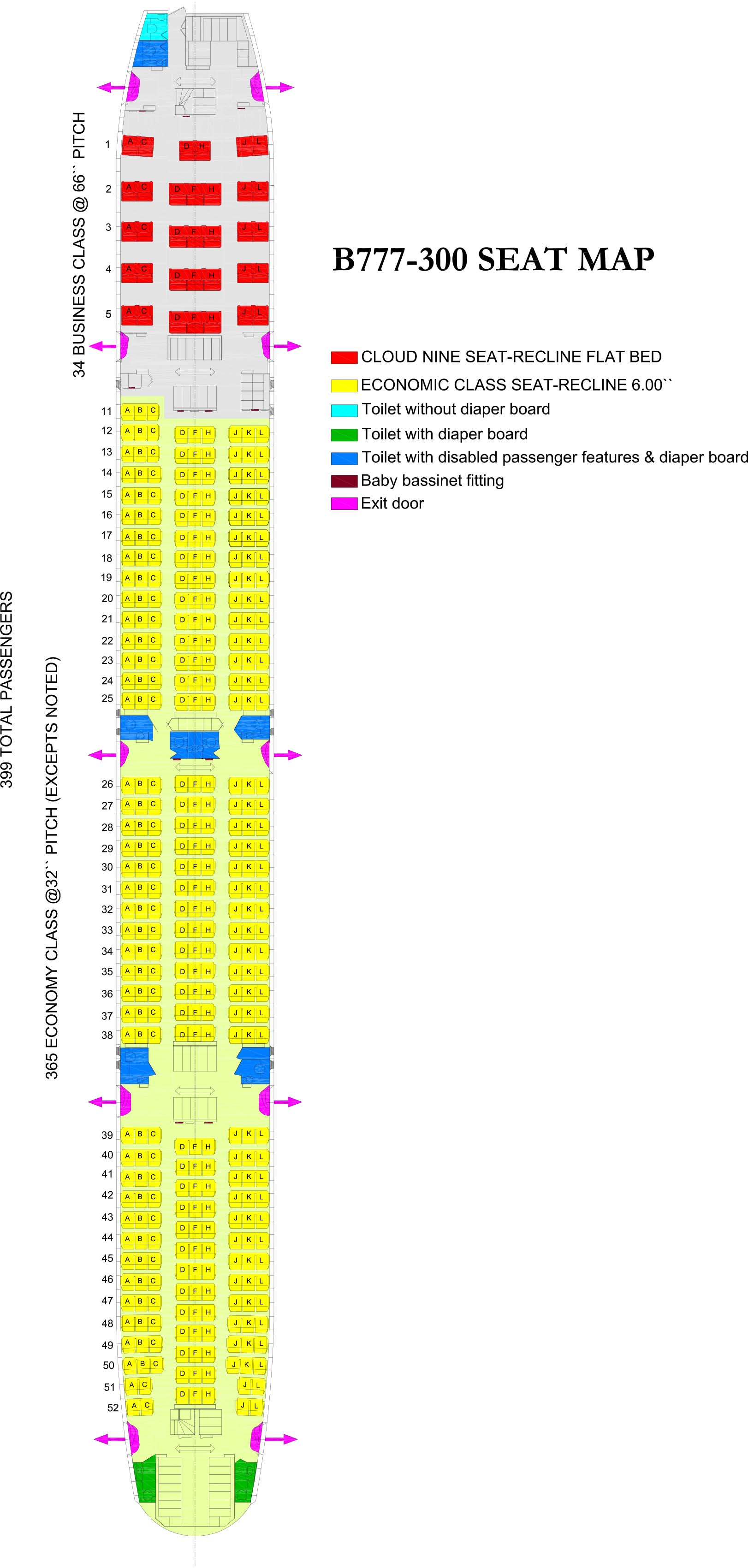
For most Tier-1 carriers like Emirates, Qatar Airways, and United Airlines, the 777-9 seat map shows a sea of 3-4-3 rows. The debate here focuses on the aisle width versus seat width. To achieve an 18-inch seat width in a 10-abreast 777-9, the aisles must remain relatively narrow. This creates logistical challenges during meal service and boarding, as cabin crew and passengers struggle to pass one another.
The 9-Abreast (3-3-3) Debate
In the early planning stages of the 777X, there was speculation that "boutique" or "premium-focused" airlines might opt for a 3-3-3 layout. A 9-abreast 777-9 would offer seat widths of nearly 19.5 inches, rivaling domestic First Class comfort in an Economy cabin. However, by 2026, almost no major airline has commercialized this configuration. The revenue loss from removing 30 to 40 seats is simply too high to justify, even with a premium price point. Instead, airlines are using Premium Economy as the "middle ground" for passengers who refuse to fly 10-abreast.
Premium Economy: The New Battleground
The 777-9 has become the premier platform for the latest generation of Premium Economy cabins. Because the cabin is so wide, airlines have significant flexibility in how they transition from the 1-2-1 Business Class layout to the 3-4-3 Economy layout.
Most 777-9 operators have settled on an 8-abreast (2-4-2) configuration for Premium Economy. This allows for a seat width of roughly 19 inches and a pitch (the space between seat rows) of 38 inches.
Key Debates in Premium Economy:
- The "Double-Aisle" Comfort: Some passengers argue that the 2-4-2 layout on a 777-9 feels more cramped than the 2-3-2 layout found on the Boeing 787.
- Fixed-Back Shells vs. Traditional Recline: In 2026, more airlines are experimenting with fixed-back shells (where the seat slides forward rather than reclining backward) to prevent the "intrusion" of the seat in front. On the 777-9, the extra width helps make these shells feel less restrictive.
Business Class: Consistency and Privacy
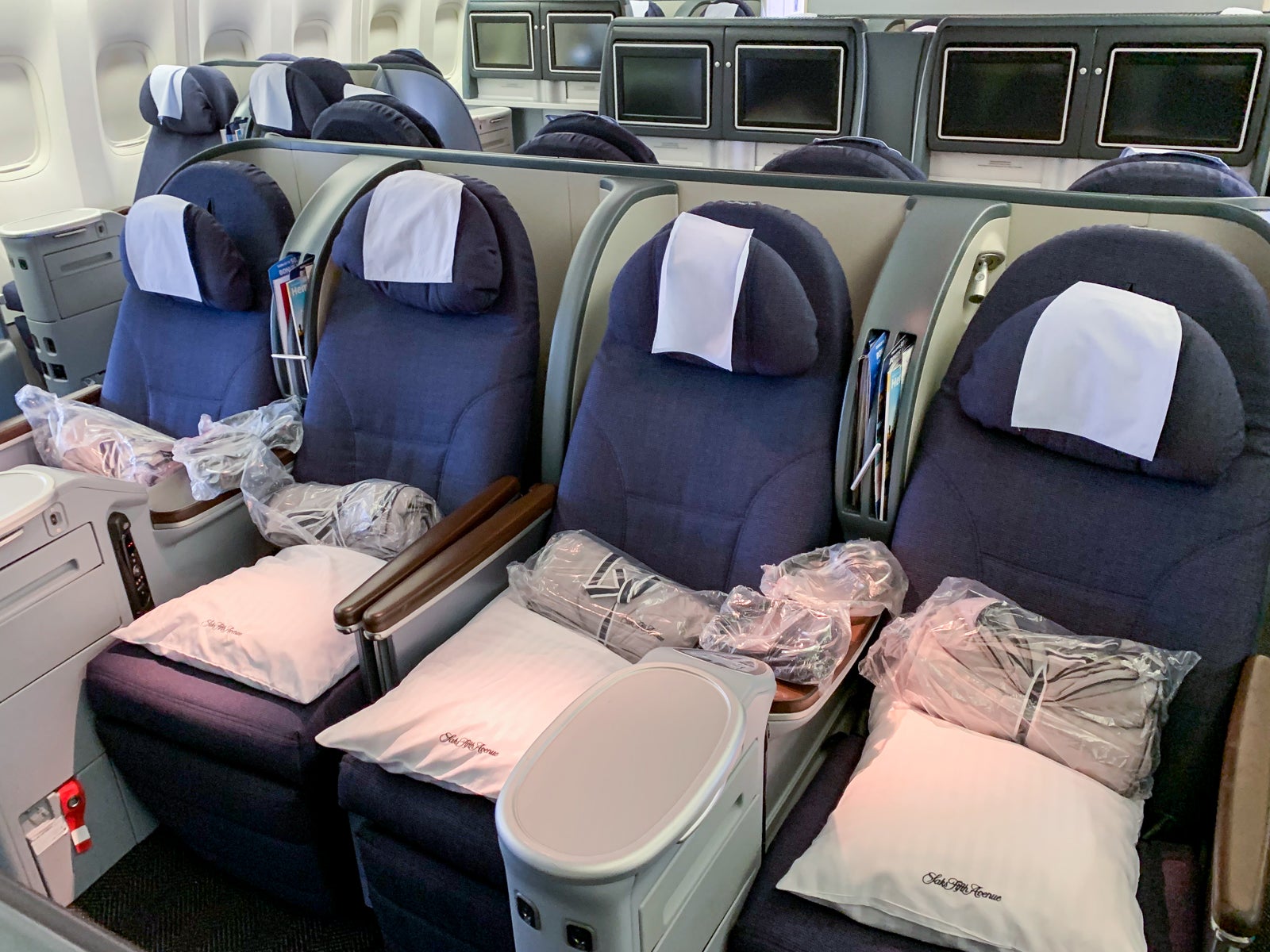
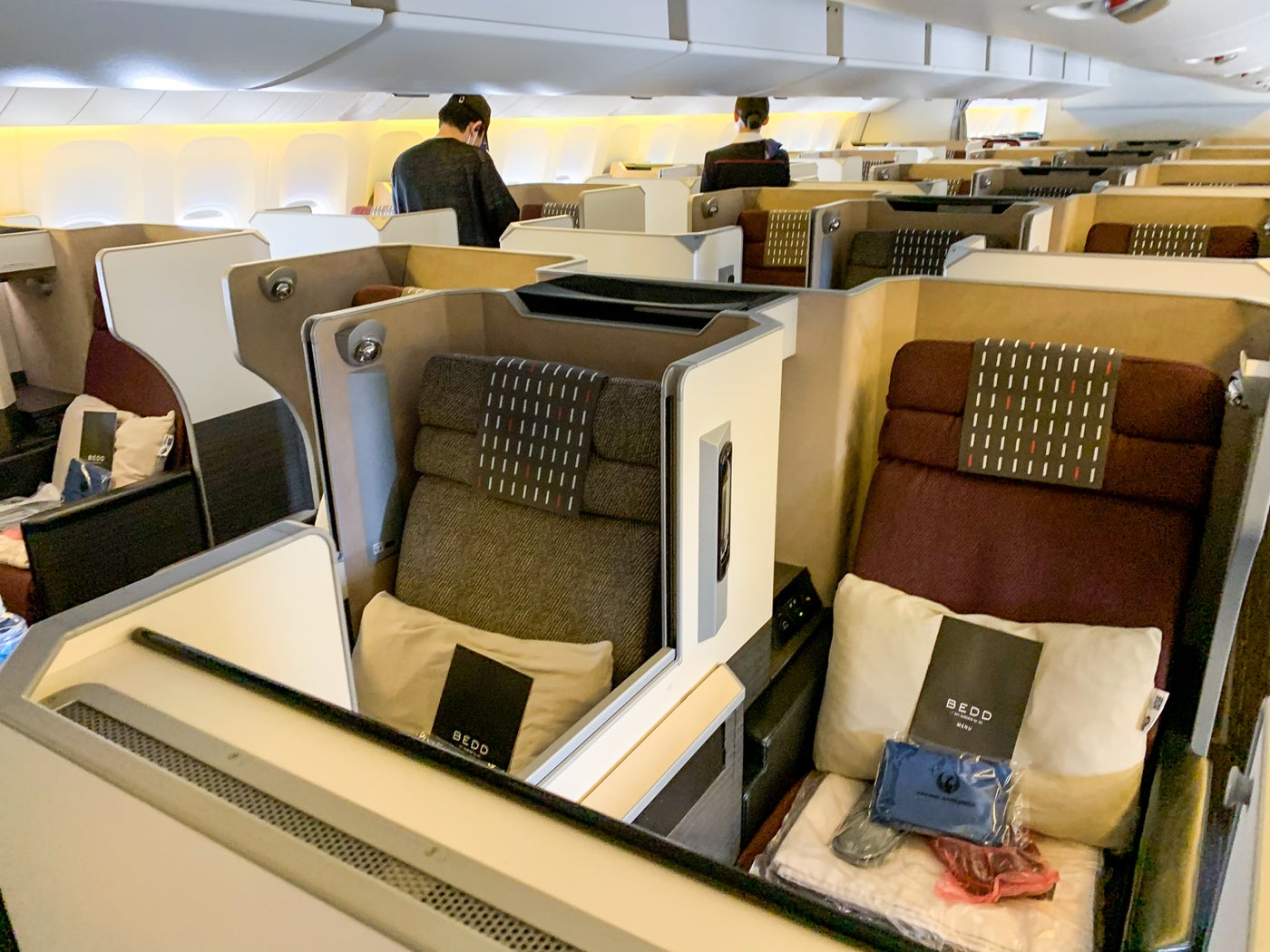
In the Business Class cabin of the 777-9, the 1-2-1 configuration is the undisputed global standard. The debate here is not about density, but about the Layout of Passenger Accommodations (LOPA) and the integration of privacy doors.
The 777-9’s wide fuselage allows for "staggered" or "herringbone" arrangements that offer every passenger direct aisle access. Lufthansa’s "Allegris" system, which debuted shortly before the 777-9 entered service, takes full advantage of the 777-9’s width by offering seven different seat types within the same Business Class cabin, including "throne" seats with extra desk space and "extra-long" beds for taller passengers.
The ongoing debate in this cabin involves the weight of privacy doors. While passengers demand them, the cumulative weight of 40 to 60 doors on a 777-9 significantly impacts fuel efficiency. Carriers like Cathay Pacific and Singapore Airlines have had to balance the thickness of these suites against the total weight of the aircraft to maintain the 777-9’s impressive range.
First Class: The "Studio" Concept
While many airlines have retired First Class, the 777-9 has seen a resurgence of the "super-premium" tier for flagship routes (e.g., Dubai to London, New York to Hong Kong). The 777-9 seat maps for Emirates and Singapore Airlines feature massive First Class suites.
In a 1-1-1 or 1-2-1 First Class configuration, the 777-9 offers more square footage per passenger than almost any other twin-engine aircraft. The debate here is whether First Class should be an open "suite" or a fully enclosed "room" with floor-to-ceiling walls. The 777-9’s high ceiling allows for these enclosed designs without making the passenger feel claustrophobic, a feat that is harder to achieve on the smaller 787 or A350.
Comparative Seat Map Analysis (777-9 vs. 777-300ER)
The following table compares the typical high-density configurations seen in 2026 for the 777-9 versus its predecessor, the 777-300ER.
| Feature | 777-300ER (Legacy) | 777-9 (2026 Standard) | Impact of Change |
|---|---|---|---|
| Economy Configuration | 3-4-3 (10-Abreast) | 3-4-3 (10-Abreast) | Same density, more width |
| Typical Seat Width | 17.0 – 17.3 inches | 17.7 – 18.0 inches | Reduced shoulder-clash |
| Internal Cabin Width | 231 inches | 235 inches | 4 inches of extra lateral space |
| Window Size | 140 sq. inches | 162 sq. inches | Better natural light, less "tube" feel |
| Cabin Altitude | 8,000 feet | 6,000 - 7,000 feet | Lower fatigue, higher humidity |
| Premium Economy | 2-4-2 (8-Abreast) | 2-4-2 (8-Abreast) | Wider aisles in the PE section |
The "A350-1000 vs. 777-9" Debate
A major point of contention among aviation enthusiasts and corporate travel buyers in 2026 is how the 777-9’s 10-abreast layout compares to the Airbus A350-1000.
Airbus originally marketed the A350 as a "comfortable 9-abreast" aircraft. However, to compete with the 777-9’s capacity, Airbus introduced an "Extra Wide Body" (EWB) cabin for the A350, which also allows for 10-abreast seating.
The 777-9 generally wins the debate on individual seat width because its cabin remains slightly wider than the A350's. However, the A350 is often cited as having a "quieter" cabin environment. Passengers frequently debate whether an extra 0.5 inches of seat width on the 777-9 is more valuable than the lower noise decibels of the A350.
Common Controversies in 777-9 Seating Charts
1. The "Middle Seat of Four"
In a 3-4-3 layout, the two middle seats in the center section are often considered the least desirable in the sky. On the 777-9, even with the extra width, the "middle-of-four" experience remains a significant pain point. Frequent flyers often scrutinize seat maps to avoid these rows, leading to a debate about whether airlines should move toward a 3-3-3 or 2-5-2 layout (though 2-5-2 has effectively vanished from modern aviation).
2. Lavatory and Galley Placement
With the 777-9 carrying upwards of 420 passengers in some configurations, the placement of lavatories is critical. Many 2026 seat maps show "space-saving" lavatories located in the galleys. This has led to ongoing debates regarding passenger flow. When multiple passengers wait for a lavatory, they often block the aisles or interfere with the cabin crew’s ability to prepare meals, particularly in the mid-cabin section.
3. Exit Row and Bulkhead Trade-offs
The 777-9’s massive GE9X engines are positioned slightly differently relative to the wing than on previous models. This has led to minor shifts in where the "ideal" quiet seats are located. Furthermore, the exit row seats on the 777-9 often have protruding door slides that can restrict legroom for the window-seat passenger, a common complaint found in recent 2026 passenger reviews.
Frequently Asked Questions
Is the 777-9 really more comfortable than the 777-300ER in Economy?
Yes, generally. While both use a 10-abreast layout, the 777-9 provides approximately 0.7 to 0.9 inches of additional width per seat. While this sounds marginal, it significantly reduces "shoulder overlap" between passengers. Additionally, the lower cabin altitude and larger windows contribute to a greater sense of well-being, even if the floor plan is dense.
Which airlines offer the best 777-9 seat maps?
In 2026, Singapore Airlines and Qatar Airways are widely considered to have the most passenger-friendly layouts. Singapore Airlines focuses on seat ergonomics and padding, while Qatar’s "Qsuite 2.0" on the 777-9 remains the gold standard for Business Class privacy and space.
Why didn't Boeing make the 777-9 wide enough for 11-abreast?
There was brief industry discussion about 11-abreast (3-5-3) seating to further drive down CASM. However, this would have required a fuselage stretch or even thinner walls that were not structurally or economically feasible. Furthermore, an 11-abreast configuration would result in seat widths below 16 inches, which would fail to meet the safety and comfort standards of most aviation regulators and premium carriers.
How does the folding wingtip affect the seat map?
The folding wingtips do not directly change the interior seat map, but they do affect the boarding process. Because the wingtips only unfold once the aircraft is on the taxiway, the "view" from the window seats while at the gate is of a vertical wingtip. This has become a popular "AvGeek" feature but doesn't impact the physical dimensions of the cabin.
What is the "best" seat on a 777-9?
In Economy, the best seats are typically the bulkhead rows at the start of each cabin section, provided they are not near the lavatories. In Business Class, "true" window seats (where the console is between the seat and the aisle) are the most sought after for privacy. On 777-9s equipped with First Class, the "center suites" are often the most spacious, sometimes featuring a "buddy seat" for dining with a companion.
Final Recommendations for Passengers
When booking a flight on a 777-9 in 2026, the primary goal is to manage the density of the 10-abreast layout. If flying Economy, prioritize carriers that have invested in the 18-inch seat width standard rather than those that have opted for wider aisles.
For those sensitive to noise or motion, the mid-cabin area over the wings remains the most stable, though it offers the most obstructed views. Always check a live seat map tool prior to check-in, as airlines frequently swap 777-9s with older 777-300ERs, which may have significantly different seat dimensions and IFE (In-Flight Entertainment) capabilities. The 777-9 is a marvel of efficiency, but your comfort ultimately depends on how your chosen airline has decided to slice those 235 inches of internal space.