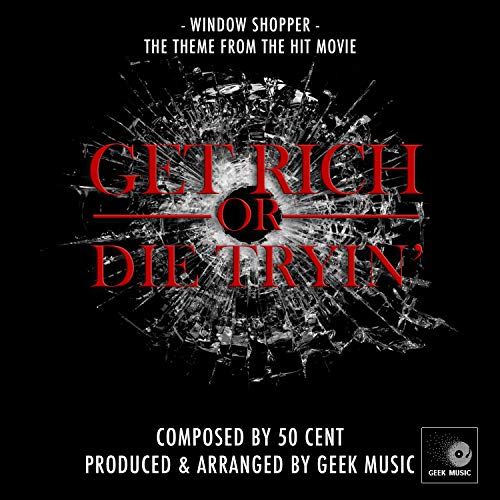
50 Cent’s "Window Shopper" serves as the primary sonic anchor for the Get Rich or Die Tryin’ film soundtrack, epitomizing the transition from street-level struggle to global opulence. Released in 2005, the track uses a melodic, mocking tone to distinguish between true financial power and those merely "looking from the outside in," perfectly mirroring the film's autobiographical narrative.
The Historical Context of the Get Rich or Die Tryin’ Era
To understand why "Window Shopper" remains such a potent theme in 2026, one must look back at the landscape of 2005. At that time, 50 Cent was not merely a rapper; he was a cultural phenomenon and a burgeoning business mogul. Following the massive success of his debut album, Get Rich or Die Tryin’ (2003), the release of a semi-autobiographical film of the same name was the next logical step in his "Interscope-Aftermath-G-Unit" dominance.
The film, directed by Jim Sheridan, sought to dramatize the life of Marcus (played by 50 Cent), a character whose journey from drug dealing to music stardom mirrored the real-life Curtis Jackson. While the 2003 album provided the raw energy of the streets, the 2005 soundtrack needed a more polished, aspirational, yet still confrontational sound. "Window Shopper" was selected as the lead single because it encapsulated the "mogul" phase of 50 Cent’s career while still keeping one foot firmly planted in the competitive nature of hip-hop rivalries.
By 2026, the track has aged into a classic "hustler’s anthem." It represents a specific era where the goal of the "Get Rich or Die Tryin’" mantra had been achieved, and the protagonist was now looking back at those who hadn't made the cut. This shift in perspective—from the one who wants the life to the one who has it—is what gives the song its enduring shine.
Lyrical Analysis: Defining the "Window Shopper" Vernacular
The term "window shopper" traditionally refers to someone who admires goods in a store window without the intent or means to buy them. In the hands of 50 Cent, this term was weaponized into a metaphor for social and financial status within the hip-hop community.
The Hook and Its Psychological Impact
The chorus of the song is deceptively simple: "Ja, you's a window shopper / Mad at me, I think I know why / Man, you's a window shopper / In the jewelry store, lookin' at shit you can't buy." By naming his rivals directly—or by using "Ja" (referencing Ja Rule)—50 Cent turned a catchy melody into a targeted strike. The brilliance of the hook lies in its relatability; everyone has experienced the feeling of wanting something they cannot afford, but 50 Cent flips that vulnerability into a point of ridicule for his enemies.
Verse Breakdown: Status as a Weapon
In the verses, 50 Cent contrasts his reality with the perceived "fakeness" of others. He discusses his bulletproof vehicles, his international travel, and his massive wealth. He isn't just rapping about money; he is rapping about the utility of money to insulate oneself from the dangers of the street. This aligns perfectly with the film's theme: Marcus (the protagonist) realizes that the only way to truly survive and protect his family is to transcend the street economy and enter the global elite.
The lyrics also touch on the concept of "clout," long before the term became a staple of social media. He critiques those who try to maintain a certain image without the bank account to back it up. In the context of 2026, where digital "window shopping" via social media is the norm, these lyrics feel more prescient than ever.
Musical Production: The Technical Foundation of a Hit
"Window Shopper" was produced by C.P Dubb (with additional production credits often associated with the G-Unit in-house team). The technical brilliance of the track lies in its choice of samples and its minimalist arrangement.
The Power of the Sample
The song prominently samples "Sweet Sticky Thing" by the Ohio Players, a soul classic from 1975. The interpolation of this smooth, laid-back melody provides a stark contrast to the aggressive lyrical content. This was a signature move for 50 Cent during the mid-2000s—using "pretty" melodies to deliver "ugly" messages. The bassline was boosted to ensure it resonated in car speakers and clubs, while the percussion was kept crisp and steady, allowing 50's distinctive flow to take center stage.
Mixing and Mastering for the Mid-2000s
During the "loudness wars" of the mid-2000s, "Window Shopper" stood out for its clarity. Unlike some of the more distorted, aggressive tracks on the soundtrack like "I’ll Whip Ya Head Boy," "Window Shopper" has a spacious mix. Each element—the kick drum, the sampled guitar lick, and the vocal layers—occupies its own frequency range without clashing. This professional polish signaled 50 Cent’s transition from a "mixtape rapper" to a global superstar with access to the world's best engineering.
The Music Video: A Visual Representation of Global Success
The music video for "Window Shopper," directed by Benny Boom, is essential to the song's status as a theme for the Get Rich or Die Tryin’ brand. Filmed in Monte Carlo, Monaco, it serves as a visual "flex" that few rappers at the time could replicate.
- Location Choice: Monaco is synonymous with extreme wealth, yachting, and high-stakes gambling. By placing himself in this environment, 50 Cent was visually stating that his "Get Rich" mission was accomplished.
- Narrative Elements: The video shows 50 and the G-Unit crew attempting to buy high-end luxury items—a Maserati, expensive shoes, and designer clothes—while mocking the locals and "fakers" who are just looking.
- The Contrast: The video occasionally cuts to scenes from the movie, showing the grimy, grey streets of New York. This visual juxtaposition reinforces the song's role as the "reward" at the end of the film's struggle. It tells the audience: "This is where the hustle leads."
Comparison of Key Tracks on the Get Rich or Die Tryin’ Soundtrack
While the soundtrack featured 18 tracks, "Window Shopper" was the clear commercial and thematic standout. The following table compares it to other major singles from the project to show its unique positioning.
| Track Title | Primary Artist | Theme/Mood | Role in the Narrative |
|---|---|---|---|
| Window Shopper | 50 Cent | Aspirational/Mocking | The "Mogul" anthem; success realized. |
| Hustler's Ambition | 50 Cent | Gritty/Determined | The "Struggle" anthem; the drive to escape. |
| Best Friend | 50 Cent ft. Olivia | Romantic/Soft | The protagonist's personal life/relationships. |
| I'll Whip Ya Head Boy | 50 Cent ft. Young Buck | Aggressive/Street | The "Action" theme; the violence of the streets. |
| Have A Party | Mobb Deep ft. 50 Cent | Celebration/Club | The lifestyle of the G-Unit collective. |
The "Beef" Factor: How Rivalries Fueled the Theme
You cannot discuss "Window Shopper" without discussing the rivalries that defined 50 Cent’s career. At the time of the song's release, 50 was embroiled in a high-profile feud with Ja Rule, Fat Joe, and Jadakiss.
"Window Shopper" was a strategic masterstroke in this conflict. Instead of a traditional "diss track" filled with threats of violence, it was a "diss track" based on economic superiority. 50 Cent wasn't saying he would hurt his rivals; he was saying he was richer than them. In the consumer-driven world of mid-2000s hip-hop, being called "broke" or a "fake" was often more damaging than being called a "snitch."
This economic warfare became a central theme of the Get Rich or Die Tryin’ marketing campaign. It suggested that 50 Cent had won the "war" because he had successfully converted his street credibility into corporate equity (most notably with the Vitamin Water deal and his G-Unit clothing line). "Window Shopper" was the victory lap for that conversion.
Technical Specifications and Performance Metrics
From a commercial standpoint, "Window Shopper" was a massive success that solidified the soundtrack's viability.
- Chart Performance: The song peaked at number 20 on the US Billboard Hot 100 and number 14 on the Hot R&B/Hip-Hop Songs chart. Internationally, it was a top-five hit in the UK and several European markets.
- Certifications: It received Gold certification from the RIAA, though its digital streaming numbers in the years leading up to 2026 have pushed its cumulative impact into the multi-platinum territory.
- Radio Airplay: The song’s clean version was a staple of "Urban Contemporary" radio, thanks to its melodic hook which made it accessible to listeners who might have found 50 Cent’s earlier work too aggressive.
Common Misconceptions About the Song
As the song has reached its 21st anniversary in 2026, several misconceptions have surfaced among younger listeners.
- It’s Only About Ja Rule: While the "Ja" line is famous, the song is a broader critique of the "faking" culture in hip-hop. It was meant to apply to anyone who claimed a lifestyle they hadn't earned.
- It Was on the Debut Album: Many fans confuse the 2003 Get Rich or Die Tryin’ album with the 2005 movie soundtrack. "Window Shopper" is exclusively a soundtrack product, though it often appears on "Best Of" compilations for 50 Cent.
- The Beat was Made for Someone Else: There are persistent rumors that the beat was originally intended for other Aftermath artists, but C.P Dubb has clarified in various interviews that the specific "energy" of the track was always tailored for 50's unique cadence.
Legacy and Impact: The 2026 Perspective
In 2026, the term "window shopper" has taken on new life. In the era of influencers and digital facades, the song's critique of people "lookin' at shit they can't buy" resonates deeply. The "Get Rich or Die Tryin’" theme has transitioned from a literal street mantra to a broader symbol of financial literacy and entrepreneurial spirit—values that 50 Cent himself has championed in his later career as a television producer and businessman.
The song also remains a case study in how to market a film through its music. "Window Shopper" didn't just promote a movie; it promoted a lifestyle. It told the audience that if they followed the story of Marcus, they too could go from the window to the interior of the store.
FAQs
What does "Window Shopper" mean in the context of the song?
In the song, a "window shopper" is a person who pretends to have wealth or status but is actually broke or unsuccessful. 50 Cent uses the term to mock his rivals, suggesting they are on the "outside" looking in at his massive success and fortune.
Who produced "Window Shopper"?
The song was produced by C.P Dubb. It is famous for sampling the 1975 track "Sweet Sticky Thing" by the Ohio Players, which gives the song its smooth, melodic, and slightly taunting atmosphere.
How does the song relate to the Get Rich or Die Tryin' movie?
The song is the lead single for the movie's soundtrack. It represents the final stage of the protagonist Marcus's journey—transitioning from a life of crime and poverty to becoming a wealthy, successful artist who can afford the luxury items he once only dreamed of.
Is "Window Shopper" a diss track?
Yes, it is widely considered a "subliminal" diss track. While it doesn't mention every name explicitly in every version, the lyrics and the music video are clearly targeted at 50 Cent’s rivals at the time, specifically Ja Rule and Fat Joe, mocking their perceived lack of financial power.
Where was the "Window Shopper" music video filmed?
The music video was primarily filmed in Monte Carlo, Monaco. This location was chosen specifically for its reputation as one of the wealthiest places in the world, reinforcing 50 Cent's message of global financial dominance.
Why is the song considered a "theme" for the era?
It captures the mid-2000s hip-hop obsession with "bling" and corporate success. It marked the moment where 50 Cent shifted his brand from "dangerous street rapper" to "untouchable business mogul," which was the ultimate goal of the "Get Rich or Die Tryin'" philosophy.
Final Recommendation for Fans and Historians
For those looking to understand the cultural shift of the 2000s, re-watching the Get Rich or Die Tryin’ film alongside a deep listen to "Window Shopper" is essential. The track is more than a hit; it is a historical marker of the moment hip-hop fully embraced the "Mogul Era." If you are analyzing 50 Cent’s career, pay close attention to the production choices of this track—they represent the "G-Unit Sound" at its most refined and commercially potent.