Procedural workflows replace manual execution with rule-based systems that generate content, manage infrastructure, or execute tasks through algorithmic logic. In 2026, these workflows—ranging from AI-driven agentic chains and parametric architectural design to automated DevOps pipelines—allow organizations to scale complexity linearly without a corresponding increase in manual labor or human error.
The shift toward procedural systems represents a fundamental transition in how value is created. Instead of focusing on the final output, professionals now focus on the "recipe" or the set of rules that governs that output. This systemic approach ensures consistency, enables rapid iteration, and provides a level of scalability that manual processes cannot match. By defining parameters and constraints, teams can explore thousands of variations in the time it once took to produce a single manual draft.
As we examine the five primary examples of procedural workflows shaping modern industry in 2026, it is essential to understand the underlying logic: the move from "imperative" (telling a system exactly what to do step-by-step) to "declarative" and "procedural" (defining what the result should be and the rules to get there).
1. Procedural Content Generation (PCG) in Digital Media and Gaming
Procedural Content Generation (PCG) has evolved from a niche tool for indie roguelikes into the backbone of AAA game development and cinematic production. In 2026, the integration of the Unreal Engine 6.x Procedural Content Generation framework and SideFX Houdini has standardized "non-destructive" environments.
In this workflow, artists do not place every tree, rock, or building manually. Instead, they define a "biomes" script. This script contains rules: "Trees cannot grow on slopes steeper than 45 degrees," "Rocks cluster near water sources," and "Grass density decreases under heavy canopy shadows."
Technical Mechanics of PCG
The core of modern PCG relies on noise functions (such as Simplex or Worley noise) and point clouds. An artist might define a spline (a path), and the procedural engine automatically generates a road, adds streetlights at 20-meter intervals, and creates weathered textures based on "ambient occlusion" data—which calculates where dirt would naturally accumulate in crevices.
The Impact on Modern Workflows
This procedural approach allows a team of ten environment artists to build world-scales that previously required hundreds. Because the workflow is non-destructive, if the creative director decides the road should move 50 meters to the left, the artist simply moves the spline. The procedural system recalculates the terrain, moves the streetlights, and adjusts the foliage automatically, saving weeks of manual rework.
2. Infrastructure as Code (IaC) and GitOps in Software Engineering
The days of manually configuring servers via a Command Line Interface (CLI) are largely over. Modern software workflows rely on Infrastructure as Code (IaC), where the entire data center environment is defined in a procedural script.
Declarative vs. Procedural Logic in IaC
Tools like Terraform and OpenTofu allow engineers to write code that describes the desired state of a cloud environment. For example, a procedural script might specify the need for three load-balanced web servers, a secure database cluster, and a specific firewall configuration.
When this code is "applied," the procedural engine compares the current state of the cloud to the desired state and executes the necessary steps to bridge the gap. This is often integrated into a GitOps workflow, where any change to the infrastructure must be committed to a version control system (Git) before it is automatically deployed.
Why It Shapes Modern Workflows
- Idempotency: Running the same procedural script multiple times will always result in the same environment, eliminating "configuration drift."
- Disaster Recovery: If a regional data center fails, the procedural script can recreate the entire infrastructure in a new region within minutes.
- Security: Compliance rules are baked into the procedure. If a developer tries to launch an insecure server, the procedural gate blocks the deployment.
3. Parametric and Generative Design in Architecture (AEC)
In the Architecture, Engineering, and Construction (AEC) sector, procedural workflows manifest as Parametric Design. Using tools like Grasshopper (for Rhino) or Autodesk Revit, architects define the "parameters" of a building rather than just its static shape.
The Procedural Loop in 2026
An architect might input variables such as:
- Site Boundary: The physical limits of the land.
- Solar Orientation: The path of the sun to maximize natural light.
- Structural Load: The weight-bearing requirements based on local building codes.
- Material Constraints: The cost and availability of steel or timber.
The procedural engine then generates hundreds of potential building forms that satisfy all these requirements. This is often referred to as Generative Design.
Efficiency and Sustainability
This workflow is crucial for modern sustainability goals. A procedural script can calculate the exact amount of carbon-sequestering timber needed to support a structure, minimizing waste. If the client asks for an extra floor, the architect adjusts the "floor count" parameter, and the procedural system automatically updates the structural beams, the plumbing stack, and the window schedules across the entire project.
4. Agentic Workflows and Procedural Prompting in AI
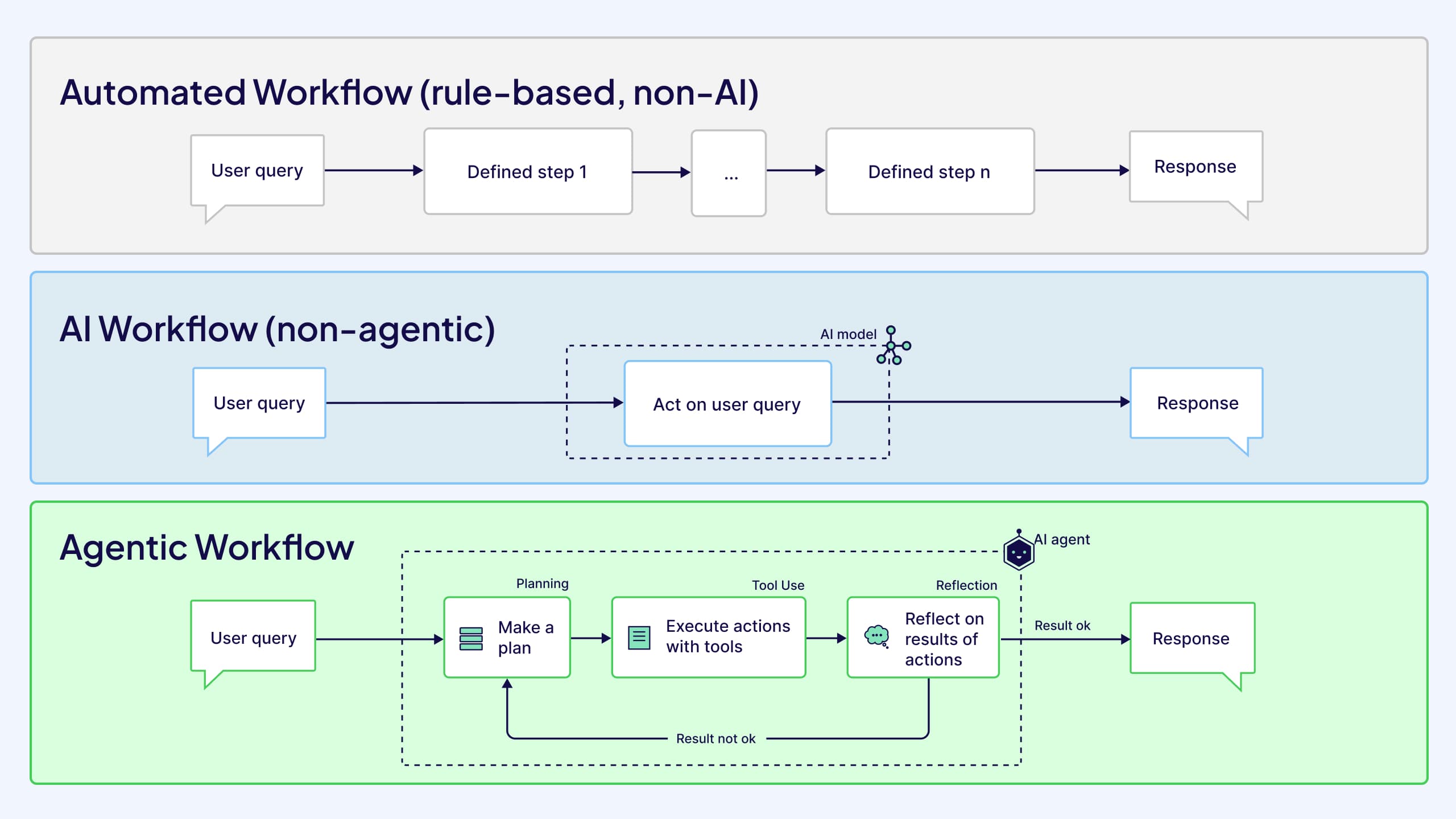
By 2026, the "single prompt" era of Artificial Intelligence has transitioned into Agentic Workflows. This is the application of procedural logic to Large Language Models (LLMs). Instead of asking an AI to "write a report," a procedural workflow breaks the task into a series of autonomous steps handled by specialized agents.
Example of an Agentic Procedural Chain
- Researcher Agent: Scours verified databases and news feeds for specific data points.
- Analyst Agent: Cross-references the research for contradictions and validates sources.
- Writer Agent: Drafts the report based on the Analyst’s structured data.
- Editor Agent: Reviews the draft against brand voice and legal compliance guidelines.
- Publisher Agent: Formats the final output for various platforms (PDF, Web, Slack).
Solving the Hallucination Problem
Procedural AI workflows significantly reduce "hallucinations" (AI-generated errors). By forcing the AI through a procedural "Chain of Thought" or "Reasoning Loop," each step is verified before the next begins. This procedural rigor makes AI viable for high-stakes environments like legal discovery and medical documentation.
5. Hyper-automation and Procedural Logic in Business Operations
The final example is the rise of Hyper-automation within Enterprise Resource Planning (ERP) and Customer Relationship Management (CRM) systems. Business processes that once required manual data entry—such as invoice processing, employee onboarding, or insurance claims—are now handled by procedural logic.
Procedural Financial Workflows
In a 2026 finance department, an incoming invoice triggers a procedural sequence:
- Optical Character Recognition (OCR): Extracts data from the document.
- Verification: Matches the invoice against a Purchase Order (PO) and a Warehouse Receipt.
- Anomaly Detection: Uses procedural rules to flag any price discrepancies above 5%.
- Approval Routing: Automatically sends the invoice to the correct department head based on the dollar amount.
- Payment Execution: Schedules the wire transfer to optimize for early-payment discounts.
Comparison of Procedural Workflow Applications
The following table compares these five procedural examples based on their primary logic, tools, and the "Human-in-the-Loop" (HITL) requirement in 2026.
| Procedural Example | Primary Logic Type | Common Tools (2026) | Scalability Impact | HITL Requirement |
|---|---|---|---|---|
| Digital Media (PCG) | Stochastic / Rule-based | Houdini, UE6 PCG Framework | Massive (World-scale) | Medium (Artistic Review) |
| Infrastructure (IaC) | Declarative / State-based | Terraform, Crossplane, Pulumi | High (Global Clusters) | Low (Code Review) |
| Architecture (BIM) | Parametric / Constraint | Grasshopper, Revit, Rhino | Medium (Site-specific) | High (Safety/Design) |
| AI Agentic Chains | Sequential / Reasoning | LangChain, AutoGPT, CrewAI | Exponential (Task-based) | Medium (Fact-check) |
| Business Operations | Deterministic / Logic Gate | SAP S/4HANA, UiPath, Zapier | High (Transaction-based) | Low (Exception-only) |
Implementation Prerequisites and Challenges
Transitioning to a procedural workflow is not merely a software upgrade; it requires a shift in organizational mindset. To successfully implement these examples, certain prerequisites must be met.
Data Standardisation
Procedural systems are only as good as the data they consume. If a procedural architectural script receives incorrect site measurements, the resulting building design will be flawed. Organizations must invest in "Clean Data" initiatives to ensure that the inputs for their procedural rules are accurate and standardized.
Technical Debt and Version Control
In procedural workflows, the "Code" is the source of truth. This means that teams must adopt software engineering best practices, such as version control (Git). If a procedural rule in a business workflow is changed without proper documentation, it can cause "silent failures" that are difficult to trace.
The "Black Box" Risk
A common challenge in 2026 is the "Black Box" effect, where a procedural system becomes so complex that no single human understands how it arrives at an output. To mitigate this, modern procedural workflows emphasize observability—tools that allow users to "peek under the hood" and see exactly which rule or parameter triggered a specific result.
Troubleshooting Common Procedural Failures
Even the most robust procedural systems can encounter issues. Understanding how to troubleshoot these is key to maintaining modern workflows.
- Rule Conflicts: This occurs when two procedural rules contradict each other (e.g., an AI agent told to be "concise" but also "comprehensive"). Solution: Establish a hierarchy of constraints where one rule always takes precedence.
- Edge Case Cascades: A procedural system may handle 99% of tasks perfectly but fail spectacularly on a 1% "edge case." Solution: Implement "fallback" mechanisms that automatically divert unusual cases to a human operator.
- Performance Bottlenecks: Procedural generation, especially in 3D media or complex AI chains, can be computationally expensive. Solution: Use "caching" (storing previously calculated results) to avoid re-running the entire procedure for minor changes.
FAQs
What is the difference between automation and procedural workflows?
Automation typically refers to the execution of a single, repetitive task (e.g., sending an email when a form is submitted). A procedural workflow is a complex system of rules that can generate varied and sophisticated outputs based on different inputs. Automation is a tool; proceduralism is a methodology.
Do procedural workflows replace human jobs?
Procedural workflows change the nature of jobs rather than eliminating them. In 2026, the "doer" becomes the "architect of the procedure." An artist who used to paint textures now designs the algorithm that generates textures. The focus shifts from manual execution to high-level system design and quality assurance.
How do I start implementing procedural workflows in a small business?
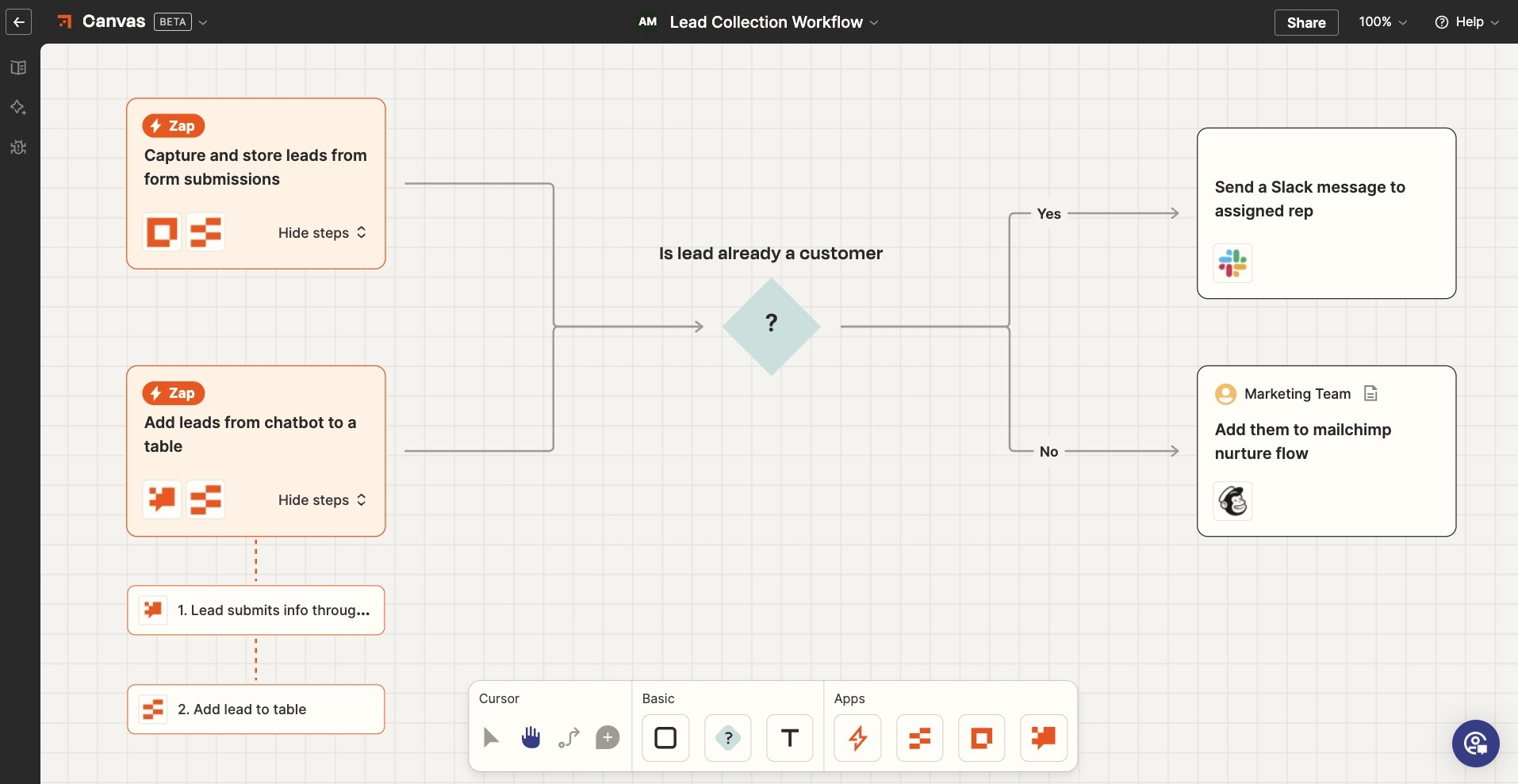
Start with "Low-Code" or "No-Code" procedural tools like Zapier or Make. Define a simple business process—like lead intake—and write down the rules that govern it. Once the logic is sound, use these tools to build a procedural chain that handles the data according to those rules.
Are procedural workflows expensive to maintain?
While the initial setup of a procedural system (like IaC or PCG) requires a higher investment in time and expertise, the long-term maintenance costs are significantly lower than manual workflows. The ability to update thousands of instances by changing a single line of code provides a massive Return on Investment (ROI) over time.
Can procedural systems be used in creative fields?
Yes, as seen in the PCG and Parametric Design examples, proceduralism is a powerful creative partner. It handles the "grunt work"—like ensuring a building is structurally sound or a forest looks natural—allowing the human creator to focus on the high-level aesthetic and emotional impact of the work.
Next Steps for Organizations
To remain competitive in 2026, organizations should audit their current manual processes to identify candidates for procedural transition. Focus on areas with high repetition, high error rates, or significant scaling bottlenecks.
Begin by documenting the "logic" of these processes in plain English before attempting to code them. Once the procedural rules are clearly defined, select the appropriate tool—whether it be an IaC framework for IT or an agentic AI chain for content—and run a pilot program to refine the parameters. The goal is to move toward a state where the system handles the complexity, and the human provides the vision and the oversight.