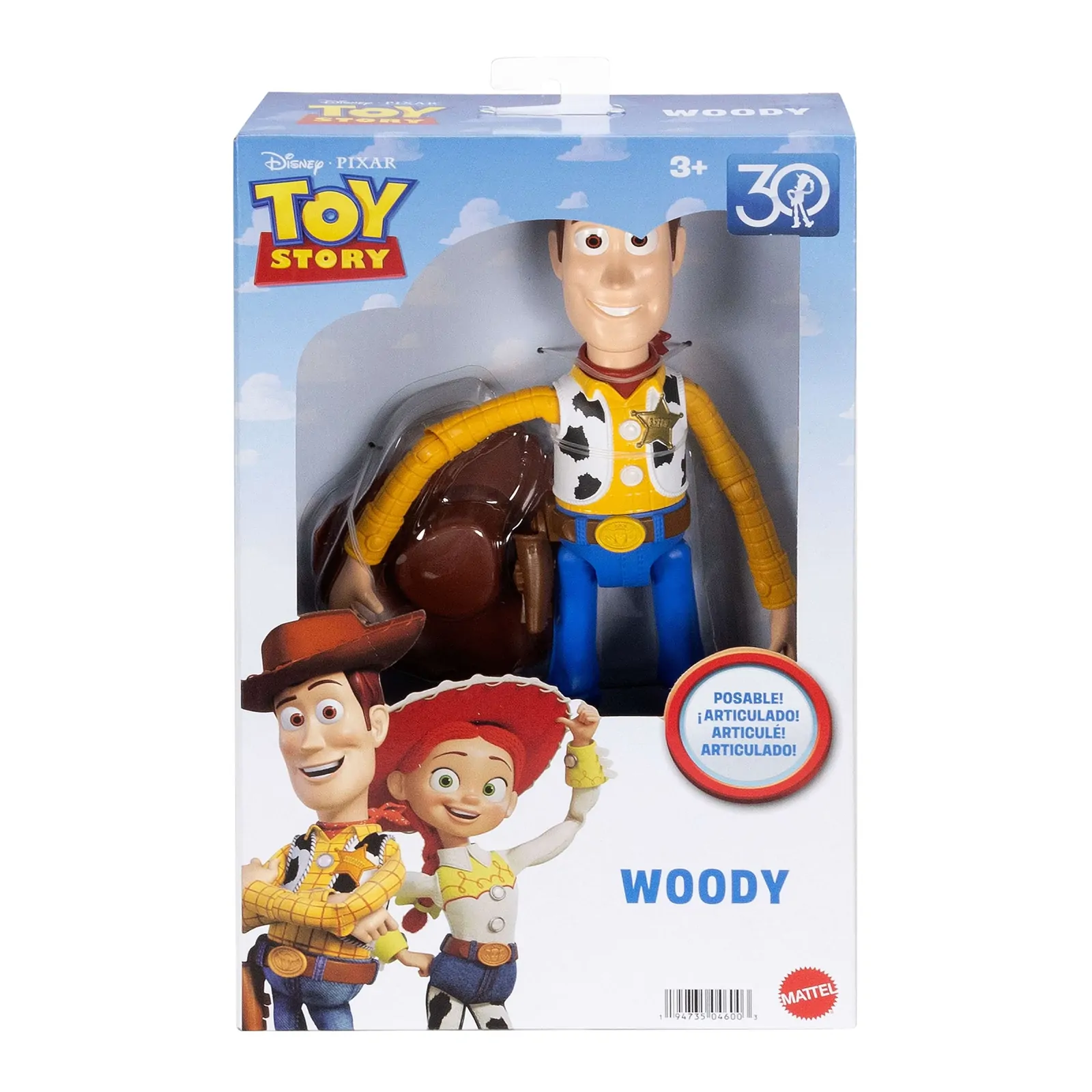
The 30th anniversary of Toy Story marks a monumental milestone for Pixar Animation Studios and the entire film industry, celebrating the 1995 release of the world’s first entirely computer-animated feature film. This anniversary honors the enduring legacy of Woody, Buzz Lightyear, and groundbreaking technological achievements that permanently transformed modern cinema.
Introduction: A Look Back at a Cinematic Milestone
When Walt Disney Pictures released Toy Story on November 22, 1995, it changed the landscape of filmmaking forever. Directed by John Lasseter, the film was more than just a box-office success; it was a profound technological leap that replaced traditional hand-drawn animation with fully dimensional computer-generated imagery (CGI).
As the cultural footprint of the franchise spans three decades, audiences, historians, and industry professionals look back at how a modest startup studio in Emeryville, California, redefined storytelling. This comprehensive retrospective explores the historical context of its release, the technological innovations that made it possible, the enduring cultural impact of its characters, and the legacy it left on the animation industry heading into 2026.
The Historical Context of 1995: How Pixar and Disney Changed Cinema
To understand the magnitude of Toy Story, one must understand the state of animation in the early 1990s. Traditional 2D animation was experiencing a renaissance led by Disney's musical fairy tales like The Little Mermaid (1989), Beauty and the Beast (1991), and The Lion King (1994). However, computer graphics were largely confined to short experimental shorts, television commercials, and brief special effects sequences in live-action films like Terminator 2: Judgment Day (1991) and Jurassic Park (1993).
Pixar, originally a hardware division of Lucasfilm spun off under the leadership of Steve Jobs, specialized in high-end graphics computers. When the hardware division struggled, the creative team—led by John Lasseter, Ed Catmull, and Ralph Guggenheim—focused on producing animated shorts like Luxo Jr. (1986) and Tin Toy (1988). Tin Toy won the Academy Award for Best Animated Short Film, catching the attention of Walt Disney Feature Animation.
Disney approached Pixar to produce a computer-animated feature film under a landmark co-production agreement. The partnership faced immense creative and technical friction, but it ultimately birthed a cinematic titan that grossed over $373 million worldwide against a modest production budget, proving that feature-length computer animation was commercially viable and creatively resonant.
Technological Innovations and Production Challenges
Creating a 77-minute computer-animated film in the mid-1990s required overcoming staggering technical limitations. Every asset, from character models to background props, had to be built from scratch in a digital space.
Key Technological Hurdles Overcome by Pixar
- Rendering Power: The render farm used by Pixar consisted of a collection of Sun Microsystems and Silicon Graphics (SGI) workstations operating in parallel. Rendering a single frame of Toy Story often took hours, and complex frames required days.
- Surface Shading and Texturing: Early CGI often looked overly glossy and plastic. Pixar developed proprietary software shaders to simulate matte plastic, shiny enamel, fuzzy cloth, and glossy vinyl, giving toys realistic physical properties.
- Organic Movement vs. Rigid Bodies: Animators mastered the art of making rigid plastic toys feel expressive through body language and facial articulation, while also tackling complex simulations for clothing and soft materials.
Character Dynamics and Storytelling Excellence
While the technology grabbed headlines, the true engine behind Toy Story was its narrative depth and character development. Breaking away from the traditional musical formula of Disney animated films, Pixar focused on buddy-comedy dynamics rooted in universal emotional truths: jealousy, friendship, insecurity, and the fear of replacement.
The Central Duo
- Sheriff Woody (Voiced by Tom Hanks): An old-fashioned pull-string cowboy doll who serves as Andy's undisputed favorite toy. Woody's character arc explores the painful transition from secure leadership to bitter insecurity when a superior toy arrives.
- Buzz Lightyear (Voiced by Tim Allen): A state-of-the-art space ranger action figure who suffers from a classic comedic flaw: he genuinely believes he is a real space ranger stationed on a distant planet, entirely unaware that he is a toy.
The psychological tension between Woody's desperate clinging to the past and Buzz's absolute delusion forms the backbone of the narrative. Supported by an ensemble cast including Mr. Potato Head, Slinky Dog, Rex, and Hamm, the film established a gold standard for multi-generational appeal, writing scripts that entertained children with slapstick while engaging adults with sophisticated existential humor.
Critical Reception and Cultural Legacy
Upon release, Toy Story achieved a rare feat: universal critical acclaim alongside massive commercial success. It holds a rare 100% approval rating on Rotten Tomatoes, with critics praising its visual inventiveness, sharp wit, and emotional resonance.
Furthermore, the Academy of Motion Picture Arts and Sciences recognized its cultural and artistic significance by awarding John Lasseter a Special Achievement Academy Award, alongside Oscar nominations for Best Original Screenplay, Best Original Score, and Best Original Song ("You've Got a Friend in Me" by Randy Newman). This paved the way for the creation of the Academy Award for Best Animated Feature, established in 2001.
Franchise Expansion Through the Decades
The success of the original film spawned one of the most reliable and critically acclaimed franchises in cinematic history:
- Toy Story 2 (1999): Initially planned as a direct-to-video sequel, it was upgraded to a theatrical release after proving to have theatrical-quality storytelling, expanding the lore of Woody's origins.
- Toy Story 3 (2010): A deeply emotional exploration of growing up, college departures, and letting go, which became only the third animated film in history to be nominated for Best Picture.
- Toy Story 4 (2019): A philosophical epilogue focusing on purpose, independence, and life beyond a child's bedroom.
Milestone Comparison: Animation Then and Now
The table below contrasts the production realities of the original 1995 release with the modern standards of contemporary computer animation.
| Production Metric | Toy Story (1995) | Modern Animation Standards (2020s) |
|---|---|---|
| Primary Render Farm | ~117 Sun & SGI workstations | Cloud-based hyper-scale data centers |
| Average Render Time per Frame | 2 to 15 hours per frame | Minutes or real-time ray tracing |
| Total Computing Cores | Hundreds | Hundreds of thousands |
| Hair and Fur Simulation | Minimal (e.g., Buster, sheep) | Millions of individual dynamic strands (e.g., Elemental) |
| Software Used | Proprietary Marionette software | Universal Scene Description (USD) pipelines |
Frequently Asked Questions
Why is the 30th anniversary of Toy Story significant for the film industry?
It marks three decades since the release of the first feature-length film created entirely using computer-generated imagery. It proved that CGI could carry a feature-length narrative, permanently altering studio investment away from traditional 2D animation.
Was Toy Story the first computer-animated film ever made?
No, Toy Story was the first feature-length computer-animated film. Numerous computer-animated short films and commercials had been produced prior to 1995, including Pixar's own Academy Award-winning shorts.
Who directed Toy Story?
The film was directed by John Lasseter, who later served as Chief Creative Officer of Pixar and Walt Disney Animation Studios, leading an influential generation of digital animators.
How did Toy Story change the Academy Awards?
Following its massive cultural impact and critical praise, members of the industry successfully lobbied the Academy of Motion Picture Arts and Sciences to create a dedicated category for Best Animated Feature, which was introduced at the 74th Academy Awards in 2002.
Conclusion and Next Actions
The 30th anniversary of Toy Story serves as an invitation for cinephiles, families, and industry professionals to revisit the film that launched an animation revolution. Whether through re-watching the original digital files, exploring behind-the-scenes documentaries on the history of Pixar, or examining the technological evolution of ray-tracing and physics engines, fans can appreciate how a small group of artists and engineers reshaped visual culture. To celebrate this milestone, film retrospectives, theatrical re-releases, and special-edition physical media collections offer viewers a chance to experience the magic that started it all.